Meaning
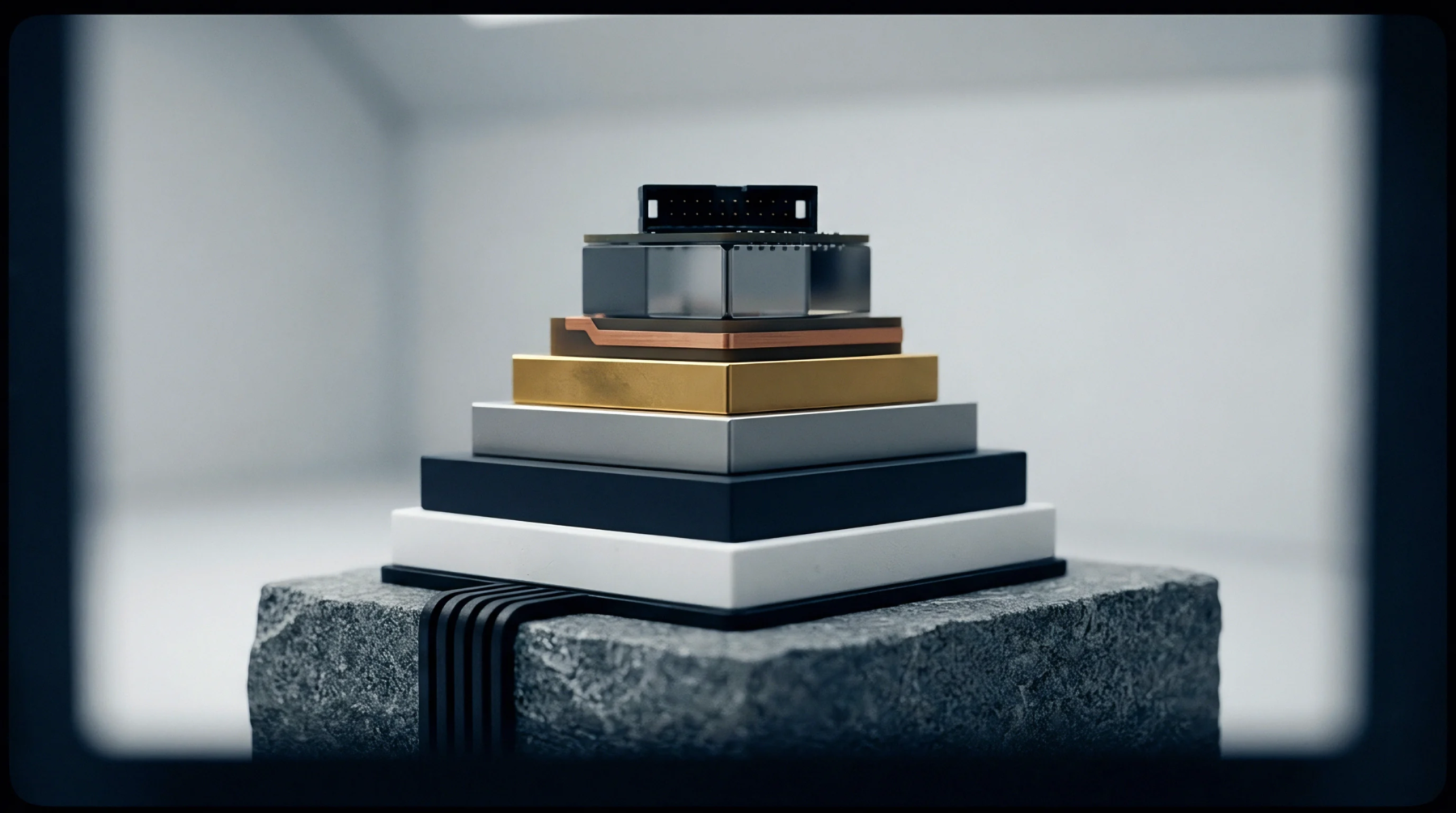
Metal matrix composite formulations combine high thermal conductivity with low coefficients of thermal expansion to manage mechanical strain across semiconductor interfaces. Sintered or infiltrated variations of copper molybdenum serve as baseplates, heat spreaders and carrier flanges beneath high-power radio frequency power amplifiers. The material matches the expansion rates of gallium nitride, gallium arsenide and alumina ceramic substrates across operational temperature excursions from minus fifty-five degrees Celsius to one hundred and fifty degrees Celsius.
Thermal dissipation requirements limit its use where weight budgets demand lower density metals such as aluminium, or where extreme flux requires pure diamond heat spreaders.
Material Composition
Powder metallurgy processes control the structural distribution of pure elemental phases throughout the composite matrix. Liquid phase sintering or molten copper infiltration of a porous molybdenum skeleton yields blends ranging from fifteen to forty percent copper by weight. Raising the molybdenum fraction reduces thermal expansion closer to five parts per million per Kelvin, matching bare silicon and ceramic packages.
Increasing the copper content elevates thermal conductivity up to two hundred and fifty watts per meter-kelvin, dissipating concentrated thermal flux from power transistor junctions. Structural integrity depends on uniform interfacial wetting, preventing microscopic voids that act as localized heat bottlenecks.
Package Integration
Mechanical mounting requires precise mechanical flatness across module carrier assemblies to avoid fracturing brittle semiconductor dies. Planar milling, diamond grinding and double-disk lapping prepare copper molybdenum flanges to tolerances below five micrometres across mounting spans. Electroplated nickel layers prevent copper leaching, while final immersion gold layers provide corrosion protection and facilitate eutectic gold-tin or gold-silicon solder attachment.
Clamping bolts apply predetermined torque profiles across cold plate boundaries, compressing thermal interface materials without warping the carrier structure. Structural rigidity prevents thermal warpage under repeated power cycling, maintaining low contact resistance across thermal interfaces over extended product lifecycles.
Qualification Testing
Environmental screening protocols subject populated power packages to thermal cycling and high-acceleration shear testing. Standard verification profiles expose components to military standard environmental cycles between minus sixty-five degrees Celsius and one hundred and seventy-five degrees Celsius to verify joint integrity. Ultrasonic acoustic microscopy scans metallized boundaries for sub-surface delamination between the semiconductor die and the copper molybdenum substrate.
Thermal transient testing monitors thermal resistance changes, flagging degradation exceeding ten percent as a mechanical interface failure. Certified compliance records accompany production lots to guarantee high reliability across aerospace radar payloads, cellular base station transceivers and microwave links.