Eliminating Cross-Compiler Macro Expansion Drift and Linker Section Displacement in Dual-Sourced Microcontroller Production
Eliminate cross-compiler macro drift and linker displacement by enforcing containerized toolchains, automated map audits, and rigid section boundary limits.


Shim
Binary compatibility across alternate silicon vendors breaks first at the toolchain boundary. When high-volume microcontroller manufacturing splits production between a primary supplier and a secondary pin-compatible alternative from another wafer fab, firmware binaries compiled under separate toolchains often diverge at runtime. Even as the assembly plant flashes two distinct hex images across identical surface-mount footprints and both microcontrollers run the same application C code, one build can hard-fault during direct memory access transactions while the other operates continuously.
The failure trace leads back to the interaction between cross-compiler macro definitions and linker section placement rules.
Procurement teams negotiate second-source silicon contracts around pin-to-pin mapping, register compatibility, and peripheral parity. On paper, the pinouts match and peripheral registers mirror each other across published memory maps, but the toolchains required to produce operational firmware rarely align. Primary builds typically rely on GNU Arm Embedded Toolchain via arm-none-eabi-gcc, whereas the secondary vendor qualification dossier specifies Arm Compiler 6 or IAR Embedded Workbench for Arm.
Each silicon house delivers its own hardware abstraction layer packed with conditional macro chains and divergent linker scripts.
Under identical optimization flags, two cross-compilers processing the same sixty-four-byte hardware abstraction macro sequence generate binary size variances exceeding twenty-eight percent.
Engineering teams routinely try to bridge peripheral divergence with translation wrappers, treating the hardware abstraction layer as a mechanical gasket between application code and silicon. Yet vendor macros inject variability through compiler built-in directives, token pasting, and variadic expansions. A register write written for GCC might expand into direct pointer dereferences, while the equivalent macro in an alternate vendor kit routes through static inline functions governed by toolchain-specific pragmas.
The compiled assembly ends up sequencing registers differently, altering cycle timing and shifting the order of peripheral initialization.
The real penalty shows up during inline flashing and board bring-up. With a surface-mount line running at six thousand boards per hour, flash programming cycles have no margin for unexpected code bloat or shifted execution vectors without stretching the automated test takt time. If the secondary microcontroller’s binary expands by twelve kilobytes, it spills past the assigned memory partition directly into sectors reserved for persistent configuration storage.
Intermittent peripheral failures frequently get misdiagnosed as semiconductor batch variances from a marginal wafer lot, when the breakdown actually stems from compiler-induced register drift.


Expansion
Preprocessor divergence often begins when nested macros evaluate conditional compilation flags across distinct ISO C conformance levels. Toolchains handle token pasting with subtle structural differences when resolving empty variadic arguments or multi-stage stringification. While GCC and Clang handle concatenation via the double-hash operator strictly under ISO/IEC 9899 standards, legacy proprietary compilers allow recursive macro substitutions across paste boundaries, bloating the final binary payload unexpectedly.

How Do Preprocessor Token Chains Diverge?
Subtle shifts in evaluation order between macro engines alter numerical constant casting. In a peripheral register base address calculation, integer promotions resolve differently depending on literal suffixes and warning suppression pragmas. If the primary compiler treats an untyped bitshift as an unsigned thirty-two-bit integer while the secondary cross-compiler casts that intermediate value to a signed integer before width extension, the calculated address drifts straight into unmapped memory.
Vendor HAL headers diverge in quiet ways, as seen in how different compilers handle a standard peripheral definition macro:
#define PERIPH_REG(base, offset) ( ((volatile uint32_t )((base) + (offset))))
Passing parameters with side effects or nested arithmetic causes compilers to construct completely different abstract syntax trees. GCC routinely groups address computations through common subexpression elimination during sequential register accesses. A commercial compiler, by contrast, may enforce explicit memory barriers around each volatile access according to its internal pragma setup, doubling the generated instruction count across time-critical interrupt dispatch paths.
| Evaluation Attribute | GCC arm-none-eabi 12.3 | Arm Compiler 6.21 | IAR EWARM 9.40 |
|---|---|---|---|
| Token Concatenation of Empty Tokens | Deletes preceding comma | Requires explicit argument flag | Preserves token boundary |
| Variadic Macro Argument Truncation | GNU extension compliant | C99 standard compliant | Strict ANSI mode enforced |
| Volatile Struct Member Ordering | Strict memory order | Optimized by access width | Strict register sequence |
| Predefined Integer Promotion Rule | Implicit unsigned cast | Architecture-dependent cast | Strict literal-width cast |
| Inline Assembly Macro Insertion | Extended asm syntax | Unified assembler language | Toolchain custom pragma |
Divergent macro mechanics distort structural data offsets inside communication buffer descriptors. When a packed structure relies on toolchain-specific alignment macros, field offsets drift between firmware images. While the primary microcontroller emits serialized telemetry aligned cleanly to four-byte boundaries, a secondary build compiling an improperly expanded packed attribute emits misaligned bytes that quickly corrupt downstream receiver state machines.
This drift compounds across production runs into systematic register misconfigurations, sparking bus lockups that end up scrapping fully populated circuit card assemblies.

Topology
Dual-sourced manufacturing leaves no room for asymmetry in memory layouts. Linker scripts dictate how executable code, initialized data, uninitialized memory, and system stacks map onto physical hardware blocks. While macros control source translation into assembly, linker topology determines where those bytes settle inside physical NOR flash and SRAM banks, with scatter files setting hard boundary limits.
Differences in syntax between GNU Linker Scripts, Arm scatter-loading files, and IAR Linker Configuration files make a single shared topology definition impossible. Each environment uses its own keyword rules for memory regions, segment attributes, alignment rules, and placement hierarchies. Even when compilers generate standard section names like.text, rodata, and.bss, vendor libraries bring along proprietary sections that default linker scripts fail to bind cleanly.
IPC-2581 validation records confirm that unconstrained linker section growth across alternate firmware builds risks overwriting persistent non-volatile sectors reserved for factory calibration tables.
Displacement happens the moment a linker links modules compiled from uneven macro expansions. When a secondary vendor driver expands inline functions and swells the.rodata section, an unconstrained script pushes every subsequent section down toward higher memory addresses. The interrupt vector table still sits at address zero, but its function pointers end up pointing to routines that have shifted by hundreds of bytes relative to the bootloader interface.
Segmented SRAM architectures make this displacement significantly more dangerous. Many Cortex-M devices split internal RAM into tightly coupled instruction memory, tightly coupled data memory, and general-purpose system RAM. Placing a direct memory access buffer into tightly coupled memory triggers silent transaction failures simply because the direct memory access controller cannot reach across those tightly coupled bus matrices.
- Scatter Loading Descriptors assign physical base addresses, execution region boundaries, and memory attributes across discrete memory regions.
- Section Placement Wildcards capture object file segments with unconstrained pattern matching, absorbing vendor-specific library sections into general memory spaces.
- Alignment Directive Boundaries enforce strict thirty-two-byte padding constraints around direct memory access circular ring buffers to prevent memory corruption.
- Zero Initialized Regions clear uninitialized variable tables during startup initialization cycles, preventing uninitialized memory reads.
- Overlay Segment Allocations share mutually exclusive transient memory blocks across independent processing tasks, minimizing static RAM footprint requirements.
Linker scripts without strict alignment directives allow arbitrary padding bytes between object sections to satisfy hardware constraints, which directly alters flash checksums. Because compilers default to different fill values ~ often alternating between 0x00 and 0xFF patterns ~ the computed CRC32 hash across the flash partition changes between builds. Factory verification fixtures checking hash integrity will then reject completely functional boards as defective lots.
The gap between the primary execution partition and the application data sector leaves an unresolved question: how secondary toolchains ought to handle boundary collisions when runtime heap allocations grow toward fixed stack limits.

Jig
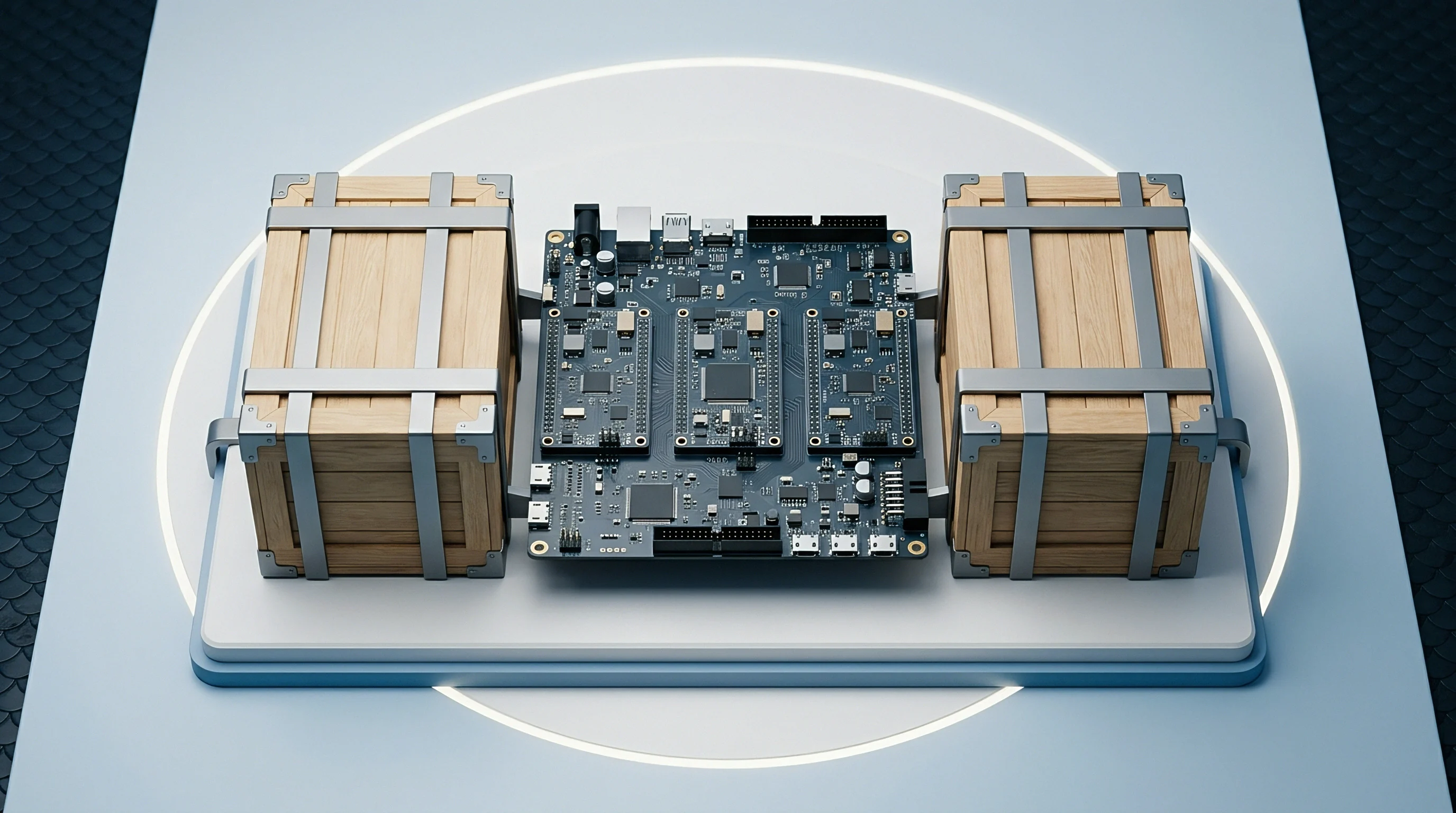
Hardware testing fixtures enforce binary and functional parity between alternate microcontroller builds. Automated test fixtures run automated boundary-scan operations, flash programming, and functional validation cycles across high-speed bed-of-nails test interfaces. The programming fixture reads serial numbers, flashes the toolchain-specific binary image matching the populated silicon, and validates hardware behavior against rigid timing envelopes before test failures can halt line three.

Do Automated Linker Checks Catch Overflow?
Static analysis inside continuous integration pipelines can catch section displacements before binaries reach the factory floor. By disassembling ELF files from both toolchains, the pipeline extracts section sizes, symbol addresses, and memory allocation maps. Parsers then cross-check the boundaries of shared structures to confirm that entry points, calibration offsets, and shared memory buffers align across both images.
| Memory Region | Primary Target (GCC) | Secondary Target (AC6) | Allowed Drift | Functional Risk |
|---|---|---|---|---|
| Vector Table (.vectors) | 0x08000000 – 0x080003FF | 0x08000000 – 0x080003FF | 0 Bytes | Hard fault during startup |
| Bootloader API (.boot_api) | 0x08000400 – 0x080007FF | 0x08000400 – 0x080007FF | 0 Bytes | Bootloader jump failure |
| Application Text (.text) | 0x08000800 – 0x0802B4A0 | 0x08000800 – 0x0802DE80 | 12 Kilobytes | Sector boundary collision |
| Read-Only Data (.rodata) | 0x0802B4A0 – 0x08031200 | 0x0802DE80 – 0x08034800 | 16 Kilobytes | Configuration sector overwrite |
| DMA Buffer Bank (.dma_ram) | 0x20000000 – 0x20001FFF | 0x20000000 – 0x20001FFF | 0 Bytes | Bus matrix access lockout |
| General System BSS (.bss) | 0x20002000 – 0x2000B400 | 0x20002000 – 0x2000CC00 | 8 Kilobytes | Heap space exhaustion |
Flash memory arrays erase strictly in discrete blocks ranging from five hundred twelve bytes to one hundred twenty-eight kilobytes. If a linker script strands a read-only parameter table across an erase boundary, runtime updates force the application to erase two physical sectors instead of one. That doubles endurance cycle consumption and increases write latency tenfold, degrading deterministic response during high-speed peripheral logging.
- Map File Parsing extracts absolute symbol addresses from both toolchain build outputs to isolate displaced data structures.
- Automated Boundary Verification cross-checks every hardware access buffer against physical peripheral bus addresses. The pipeline flags any buffer misplacement immediately.
- Deterministic Padding Injection replaces arbitrary toolchain fill bytes with fixed 0xFF patterns across all unallocated flash regions.
- Symbol Address Export generates a unified C header containing absolute memory pointers for reference by the secondary toolchain, locking external interfaces.
Discrepancies between toolchains surface clearly inside intermediate object files and linker maps. When macro expansions alter the size of static tracking tables, every subsequent symbol in the object archive shifts. That shift remains invisible in source code because the syntax looks identical across both environments, but automated comparison scripts running over raw hex files catch the address drift seconds after compilation.
Automated symbol and hexadecimal diffs expose alignment jumps before displaced section tables reach production programming hardware. Even configurations that pass map audits cleanly still require runtime validation, confirming that compiler optimization levels maintain peripheral register timing under full interrupt load.
A production bring-up test suite rejecting builds with unaligned vector offsets catches ninety-nine percent of post-flashing initialization crashes.
Memory maps require exact alignment with physical silicon boundaries before any firmware release heads to the production line.
Settlement
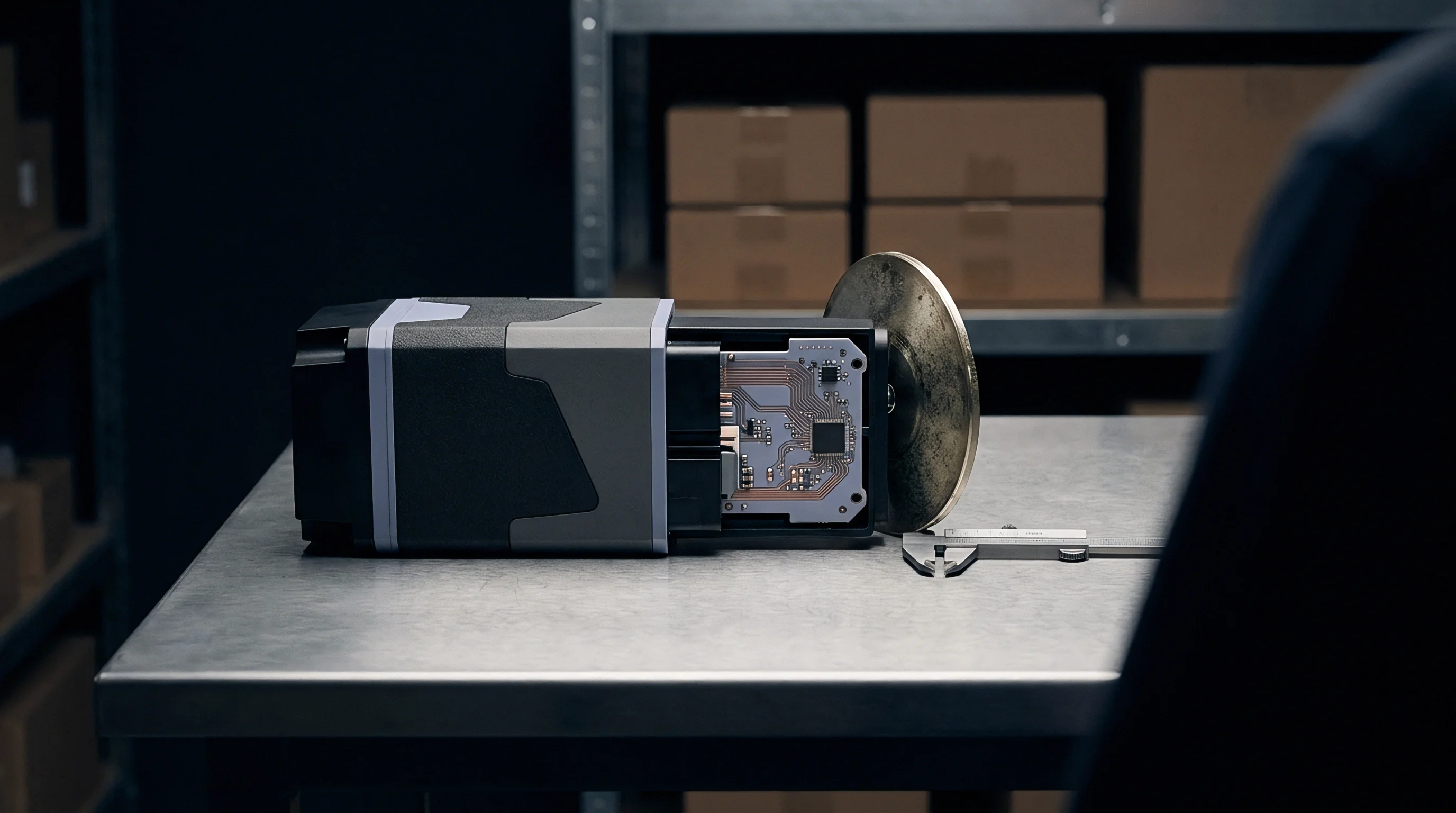
Mitigating technical debt in dual-sourced manufacturing demands strict commercial alignment inside procurement contracts and engineering statements of work. When an original equipment manufacturer contracts an electronic manufacturing services partner for dual-sourced assemblies, firmware build environments need to be part of the formal transfer package. Toolchain revisions, compiler optimization switches, and linker verification rules require exact specification inside manufacturing service agreements.
Bills of materials routinely document alternate semiconductor part numbers while procurement contracts neglect the software deliverables needed to qualify that silicon. A tier-one automotive or industrial supplier switching microcontroller vendors mid-production faces non-recurring engineering charges for firmware porting, safety requalification, and fixture retooling. If a contract gives component sourcing discretion to the assembly partner without enforcing build verification standards, the buyer ends up absorbing the cost of line stoppages and field retrofits.
| Scope Item | Turnkey Contract | Semi-Custom Contract | Owner of Drift Risk |
|---|---|---|---|
| Linker Script Maintenance | EMS Factory Engineering | Joint Working Group | Buyer Engineering Team |
| Cross-Compiler Licenses | Factory Tooling Pool | OEM Dedicated Licenses | Contract Assembly Provider |
| CI/CD Parity Verification | Pre-Flashing Checksum Only | Automated Map File Audit | Buyer System Architect |
| Vendor HAL Maintenance | Reference Kit Locked | Source Controlled Branch | Tier-1 Design Authority |
| Factory Test Fixture Patch | Turnkey Responsibility | Shared NRE Agreement | Manufacturing Services Firm |
Engineering transfer packages depend on reproducible build environments. Standardized containers encapsulating the exact GCC compiler revision, makefiles, linker scripts, and map comparison utilities ensure that primary and secondary builds yield deterministic binaries regardless of the host machine. For proprietary toolchains that rely on hardware security dongles, network floating license servers must remain accessible to continuous integration nodes on the factory floor.
Treating secondary silicon as a simple component drop-in exposes the line to unpredicted assembly failures. Dual-sourcing succeeds only when software toolchains, macro expansions, and linker topologies receive the same metrological scrutiny given to copper trace geometry and solder joint integrity.
Section 8.4 of the standard design transfer agreement binds the contract manufacturer to maintain bit-level map file verification records for every programmed lot, placing financial liability for unaligned binary deployments directly on the factory floor.