Buying a Ready Module against Building a Custom One
Selecting between ready modules and custom builds requires balancing upfront non-recurring costs and regulatory testing against long-term serial unit margins.
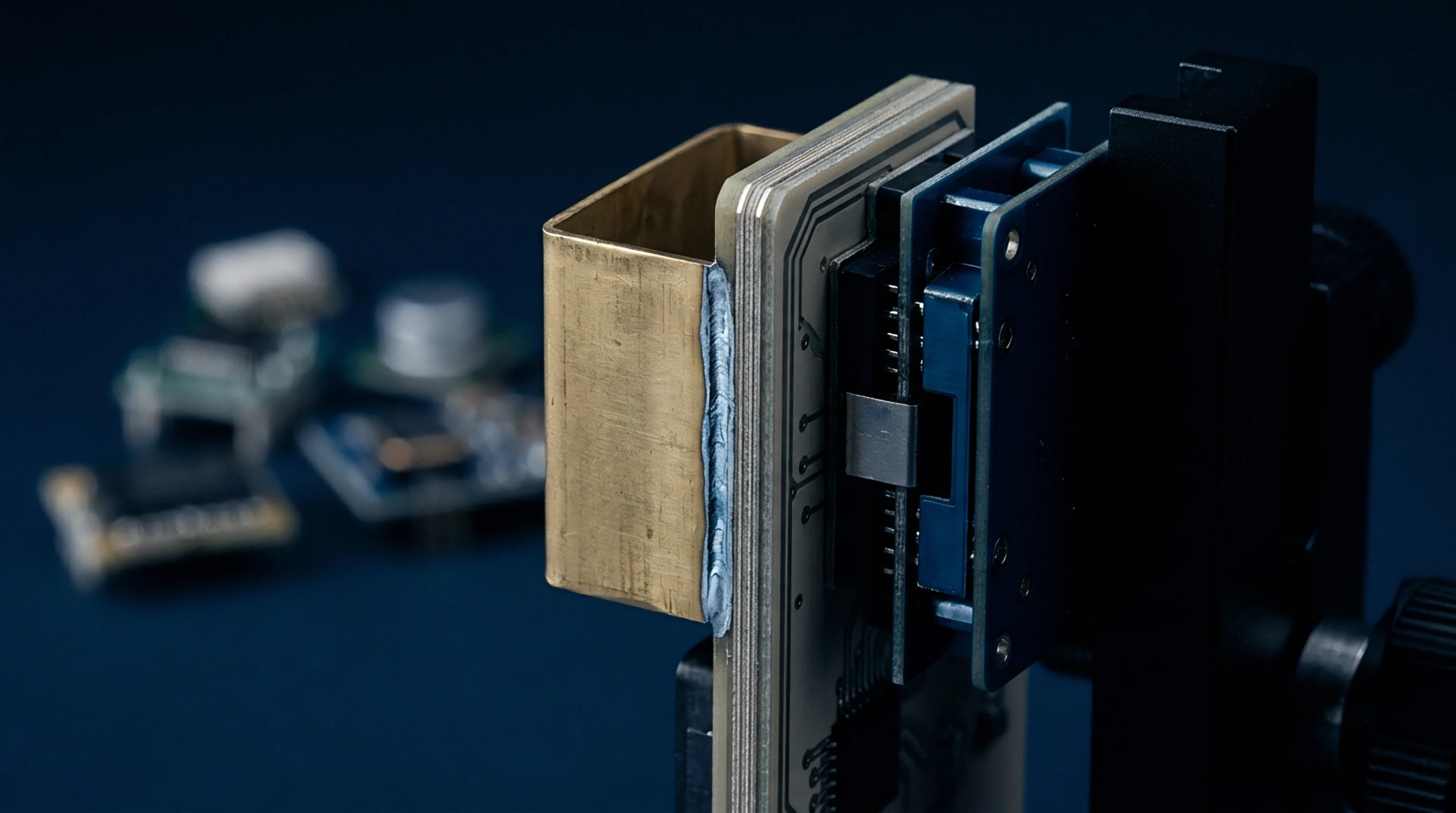
An engineering approach where a radio circuit is built using individual transistors and inductors rather than a pre-certified integrated module. This custom discrete layout allows the designer to optimize the physical footprint and the electrical performance for a specific application. It involves the precise placement of every component on the main printed circuit board to minimize signal loss and electromagnetic interference.
This method provides total control over the bill of materials and the supply chain because the buyer is not dependent on a single module vendor. It requires significant expertise in radio frequency design to ensure that the assembly meets regulatory requirements and performance targets. The approach is often chosen for high volume products where reducing the unit cost is the primary objective.
Placing individual components directly on the board enables the creation of a very thin and compact device. While a standard module has a fixed height and width, a custom discrete layout can be shaped to fit around other mechanical constraints like batteries or curved enclosures. The designer can select high quality inductors and capacitors that offer better performance than the miniature parts found inside a generic module.
This choice directly affects the sensitivity of the receiver and the efficiency of the power amplifier. Every trace length and via placement must be carefully calculated to maintain the proper impedance and to avoid parasitic capacitance. The lack of a secondary substrate between the radio and the main board also improves the thermal dissipation for high power components.
A major challenge with this design style is that the entire product must undergo full regulatory testing as a new intentional radiator. Unlike using a pre-certified module, a custom discrete layout does not allow for a simple permissive change or a reuse of existing test data. The manufacturer must verify the radiated emissions and the frequency stability of the unique design.
This process typically involves multiple rounds of testing in an electromagnetic compatibility lab to identify and fix any unwanted harmonics. The documentation required for the filing is more extensive because it must include the full schematic and the layout of the radio section. Achieving compliance confirms that the bespoke design is safe and does not interfere with other wireless services.
The initial investment for this approach is considerably higher due to the increased engineering time and the cost of the certification process. However, the lower cost of the individual parts results in a smaller bill of materials cost for each unit produced. A custom discrete layout becomes financially viable when the total volume of the product is large enough to amortize the non-recurring engineering expenses.
This transition point is carefully calculated by the project manager before the start of the design phase. The move away from a module also gives the company more leverage with component suppliers and reduces the risk of a single point of failure in the supply chain. Long term savings are realized once the product enters mass production.
Selecting between ready modules and custom builds requires balancing upfront non-recurring costs and regulatory testing against long-term serial unit margins.
Expertise is a utility, not a secret. sentiention™ publishes its working knowledge as open reference: intelligence layer covering the materials it sources, the markets it enters, and the reference that serves both.