Meaning
An instrument configured with three orthogonal sensing elements detects electromagnetic energy regardless of the spatial orientation of the incoming wave. This isotropic field probe provides a scalar sum of the total power density by combining readings from the X, Y, and Z axes simultaneously. Accuracy depends on the calibration of these internal sensors against a known reference field, a process that ensures the measurement remains independent of the polarization of the source.
The hardware operates within defined frequency bands and power ranges, where sensitivity drops outside the manufacturer specifications.
Integration Constraint
System designers select the probe based on the physical size of the housing relative to the measurement volume to minimize field perturbation during testing. A large enclosure distorts the local energy distribution, leading to errors in the reported values. Small sensor geometries reduce this disruption, though they necessitate higher sensitivity to overcome the reduction in signal capture area.
Engineers must verify the thermal budget of the electronics inside the probe, as heating alters the dielectric constant of the housing materials. Stable operation relies on the consistent electrical characteristics of the protective radome, particularly in high-power environments where heat dissipation influences measurement precision.
Certification Standard
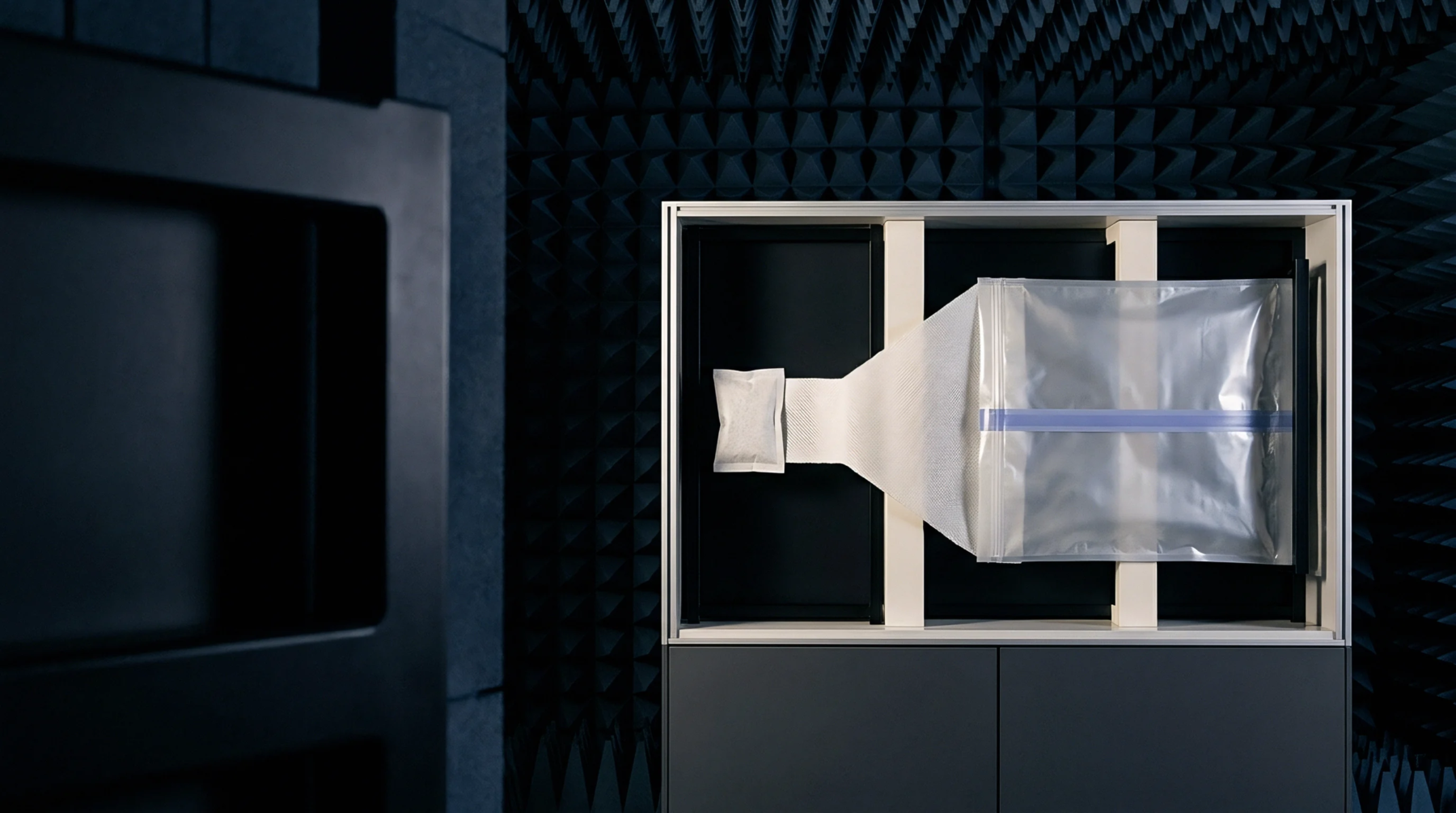
Regulatory bodies mandate the use of these tools during compliance testing to verify that devices meet established safety exposure limits. Test labs employ the hardware to map the radiation pattern of a radio frequency source during final product validation. Verification of a device requires the probe to document peak spatial values in a controlled anechoic chamber.
Data collection follows a predefined grid, where the movement of the sensor captures the volumetric energy distribution required for a passing certification result. Correct alignment with these standards demands an annual calibration cycle to account for sensor drift over time.
Operational Range
Accuracy in the field diminishes when the incoming wave front encounters metallic obstructions near the measurement point. Multi-path interference creates reflections that confuse the isotropic reading, as the sensors capture both incident and reflected components. Proximity to the operator also introduces phantom measurements if the probe lacks sufficient shielding from body-coupled signals.
Precise data acquisition occurs only when the operator positions the equipment far from reflective surfaces and maintains a consistent orientation relative to the primary emission source. Stable field environments yield the most reliable data for density assessments.