Meaning
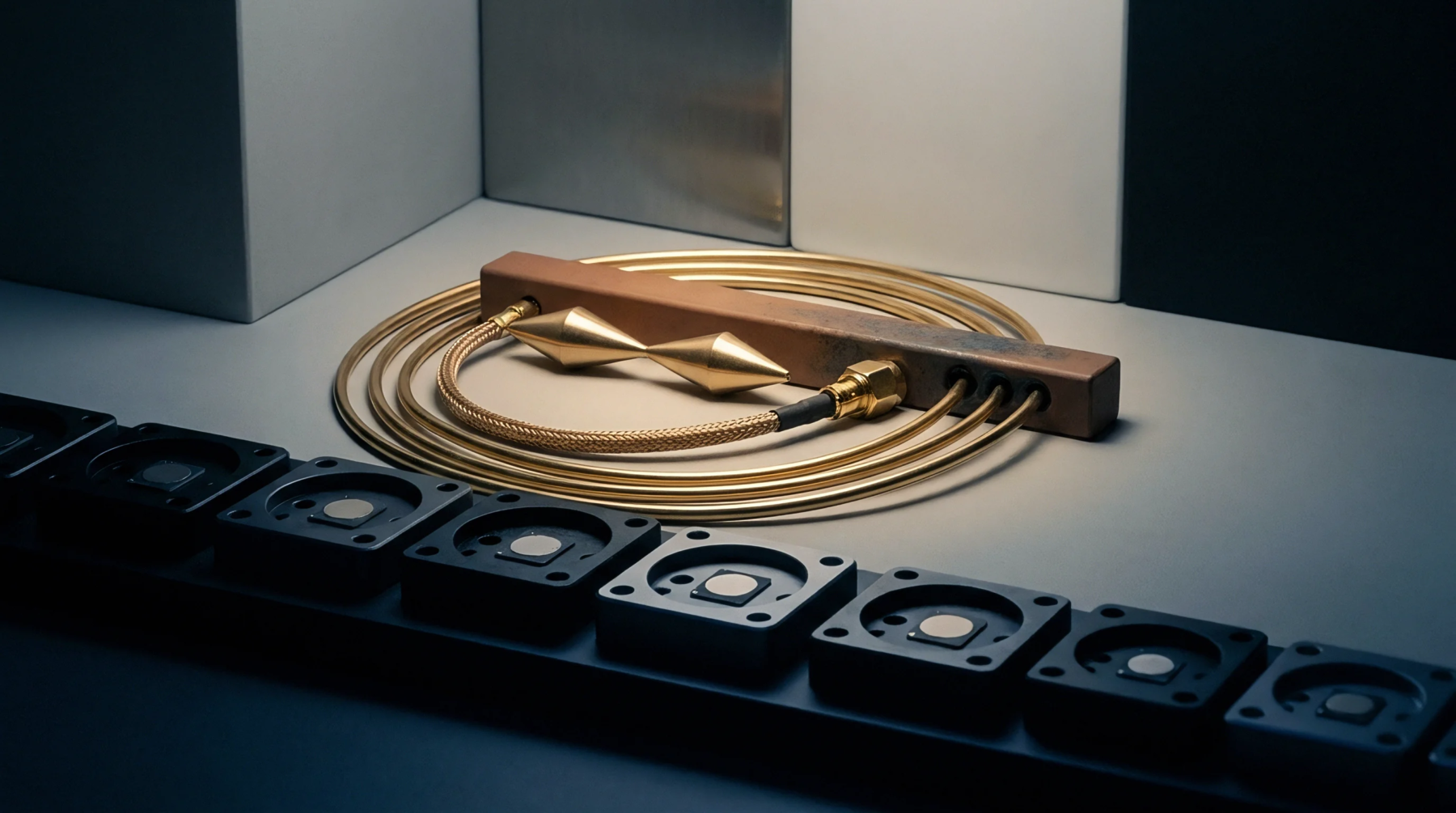
Mechanical coupling interfaces provide repeatable positioning for optical modules and sensor subassemblies during production and testing. By mounting a kinematic nest on the assembly station, operators ensure that components are aligned to identical coordinates every time they are inserted. The fixture restricts all six degrees of freedom by utilizing a set of three balls and corresponding grooves.
This design prevents binding and eliminates the over-constraint problems common with traditional pins.
Contact Interface
Hardened steel spheres mate with V-grooves or conical sockets to establish three localized points of contact. Using a kinematic nest reduces the physical area of contact, which prevents contaminants from interfering with the alignment. Preload forces from springs or magnets keep the component seated securely without causing structural deformation.
The interface remains stable despite changes in temperature or handling.
Repeatability Metric
Positional deviation must remain below single-micron limits to guarantee the reliability of sub-assembly testing. Technicians measure the deviation of the kinematic nest by cycles of insertion and removal under test conditions. If the spheres wear down or the grooves deform, the alignment accuracy drops and the fixture requires replacement.
Assembly Integration
Machine designers integrate these positioning systems into automated testing cells where high throughput is required. When a kinematic nest is loaded by robotic arms, the interface prevents friction damage and guides the target into its exact seated position. Hardened materials must be chosen for the mounting block to resist the continuous impact of high-volume production cycles.
Optical alignment tasks are completed faster because the mechanical alignment is guaranteed by the physical geometry of the fixture.