Arbitral Interim Measure Enforcement Limits for Contract Manufacturing Tooling Custody
Arbitral interim measures securing contract manufacturing tooling face strict local court enforcement limits that frequently necessitate immediate replacement NRE tooling.

Custody
Placing precision tooling in a contract manufacturing plant splits legal title from physical control the day the hardware arrives. Custom injection molds, progressive stamping dies, and automated test fixtures represent major non-recurring engineering commitments, easily running past hundreds of thousands of dollars for a single line. A manufacturing agreement might state unequivocally that title vests with the buyer once final NRE milestones clear, but practical control remains with the plant where the steel is bolted directly into press frames.
Plant managers hold the keys, oversee site security, and handle daily maintenance on the floor. In steady state, the arrangement works well enough so long as purchase orders clear and unit pricing holds. The moment a dispute flares over yields, minimum order volumes, or invoice schedules, the supplier has an immediate physical lever: withholding the assets and stopping production lines cold.
A dual-cavity injection mold operating under a 400-ton clamp requirement incurs an average replacement delay of 22 weeks when retained under an un-enforced arbitral stay.

Physical Possession Boundaries in Contract Assemblies
Production equipment answers to the floor supervisor on duty. If a buyer needs to inspect, service, or retrieve custom fixtures, nobody enters without the plant’s permission. Standard audit and site-access clauses quickly lose practical force once commercial relations sour; gate staff manage badges, bay doors, and shipping logistics, keeping the hardware squarely behind the fence.
Retention often begins quietly long before anyone files a formal claim. While buyers press for equipment handover, plants frequently cite scheduled maintenance, pending engineering change orders, or unamortized modification balances to keep tools mounted on active lines. Unless the buyer embedded independent tracking hardware or custody monitors inside the tool frame, confirming the mold’s exact location and mechanical condition in real time is virtually impossible.

Title Retention Trigger Mechanics
Supply contracts frequently pin title transfer to staged financial milestones. Problems arise when poor drafting tethers tooling ownership to general contract performance instead of isolated NRE sign-offs. If title stays tied to ongoing minimum purchase commitments or unsettled balances on separate component runs, the manufacturer can claim a possessory lien over every tool on site.
Preventing title ambiguity requires drawing a hard line between piece-part payment obligations and equipment ownership. Standard master service agreements routinely blur the two, failing to wall off capital tooling accounts from rolling working capital balances.
| Tooling Category | Ownership Transfer Trigger | Physical Custody Risk | NRE Amortization Impact |
|---|---|---|---|
| Custom Injection Molds | Final First-Article Inspection Sign-Off | High (Factory floor mounting) | Direct NRE Invoice Line Item |
| Progressive Stamping Dies | 50% NRE Deposit / 50% Sample Approval | High (Heavy press line integration) | Amortized across initial 50k units |
| Automated Optical Test Jigs | Factory Acceptance Test Certificate | Medium (Proprietary software key dependent) | Buyer-funded custom engineering fee |
| Surface Mount Assembly Carriers | Full Upfront NRE Settlement | Low (Standardized, easily transportable) | Direct line purchase item |
During payment disputes, suppliers routinely assert ongoing tool maintenance liabilities and unpaid storage surcharges against buyer release demands.


Relief
Arbitral tribunals draw their jurisdiction entirely from the underlying contract. When a manufacturer sits on customer tooling, buyers often petition for emergency interim relief to force a turnover. Institutional frameworks under the International Chamber of Commerce, the Singapore International Arbitration Centre, or the Hong Kong International Arbitration Centre can seat an emergency arbitrator within days of an application, granting them power to mandate the preservation, protection, or redelivery of contested equipment.
Interim orders bind the parties as a matter of contract, prohibiting the supplier from modifying, running, or hiding the tooling. Yet without coercive police power, state enforcement officers, or direct authority over local logistics providers, an arbitral tribunal cannot give its directives self-executing force.

Emergency Arbitrator Jurisdictional Powers
Obtaining emergency relief hinges on proving irreparable harm alongside a prima facie case on the merits. Applicants usually point to broken customer supply agreements, factory shutdown penalties down the chain, or permanent loss of market share. In each case, the arbitrator must decide whether financial damages alone could ever genuinely compensate for the lost production capacity.
Tribunals balance the hardships on both sides. Where carting away a die threatens to idle an entire plant or leaves local sub-tier machine shops unpaid, an emergency arbitrator will routinely condition any mandatory turnover on the buyer posting heavy financial security.

Model Law Enforcement Architecture
Article 17 of the UNCITRAL Model Law on International Commercial Arbitration lays out the statutory blueprint for issuing and enforcing interim relief. Modern revisions establish that interim orders, whatever their procedural label, bind the parties and can be taken directly to national courts for enforcement, subject to specific refusal grounds like procedural defects or unpaid security bonds.
Enforcement splits along jurisdictional lines because individual countries adopt the Model Law with local quirks. Certain domestic courts will not enforce an interim arbitral measure unless it mirrors the procedural form of a local preliminary injunction down to the letter.

How Do Local Bailiffs Execute Interim Restraining Orders?
Turning an arbitral directive into action at a defiant plant requires converting that order into an execution writ from a domestic judge. Court bailiffs verify the physical address, inspect tool markings, and assess access constraints on site. If the local legal system lacks explicit statutory procedures for interim arbitral execution, bailiffs will simply decline to enter a factory without a final, non-appealable domestic judgment in hand.
- Submission of the emergency arbitral order and certified translations to the designated local intermediate court possessing territorial jurisdiction over the manufacturing facility.
- Fulfillment of mandatory local court collateral requirements, often requiring cash security deposits equivalent to the full replacement value of the tooling.
- Issuance of a formal domestic judicial enforcement order directing local court bailiffs to conduct an asset inspection at the factory site.
- On-site execution where bailiffs audit tool serial numbers, supervise mechanical unmounting from press equipment, and transfer physical possession to designated freight forwarders.
Whether local courts can move quickly enough to close the operational gap between an emergency arbitral order and boots on the ground remains an ongoing risk for supply chain planners.


Dock
Courts in the host manufacturing hub maintain exclusive jurisdiction over physical enforcement on their home turf. An emergency order issued in London, Singapore, or New York remains just paper inside an industrial zone until a local intermediate court issues a domestic execution ruling under its own civil procedure code. Local judges examine whether the foreign order conflicts with domestic public policy, statutory labor claims, or insolvency proceedings.
Execution procedures follow the lex fori. In several critical manufacturing regions, municipal courts have strictly limited authority to enforce interlocutory arbitral orders. While final awards travel smoothly under the New York Convention on the Recognition and Enforcement of Foreign Arbitral Awards, interim rulings fall outside the treaty’s core definitions in many jurisdictions, leaving domestic benches with full discretion to refuse assistance.
An explicit election of Article 17 of the UNCITRAL Model Law without local court-assisted execution mechanisms leaves interim relief reliant entirely on voluntary party compliance.
Local Court Recognition Barriers
Gaps in national civil codes frequently block judges from executing foreign interim awards. In several key Asian manufacturing centers, for example, pre-award preservation remains reserved strictly for domestic arbitral institutions or requires specific bilateral judicial arrangements. Without an applicable bilateral framework in place, local courts will dismiss the petition out of hand for lack of jurisdiction.
Judges are cautious about exposure as well. If a local court seizes high-value production equipment and the final arbitral award later favors the supplier, the plant may face insolvency, worker wage arrears, and lease breach. To insulate against that liability, judges routinely require substantial financial counter-security before signing off on an attachment.
| Jurisdiction | Statutory Enforcement Mechanism | Emergency Arbitrator Recognition | Security Bond Expectation |
|---|---|---|---|
| Hong Kong (SAR) | Arbitration Ordinance (Cap. 609) Sec 45 | Explicitly Recognized | Court discretion, typically 20-50% value |
| Singapore | International Arbitration Act Sec 12 | Explicitly Recognized | Variable based on counter-party harm |
| Mainland China | PRC Civil Procedure Law Art 272 (Arrangement framework) | Restricted (Designated mainland institutions only) | High (Up to 100% replacement value cash bond) |
| Vietnam | Law on Commercial Arbitration 2010 | Limited Court Enforcement Assistance | High collateral deposit required |
| Mexico | Commerce Code Article 1470 | Recognized under Model Law adoption | Moderate court security undertaking |

Ex Parte Seizure Limits
Recovering production tooling before a supplier can hide, dismantle, or alter it depends heavily on surprise. Yet domestic courts sharply limit ex parte relief. Judges generally insist on serving formal notice on factory management, giving them a statutory window to file counter-motions and plead possessory liens.
That notice period creates immediate exposure. Between initial service and the arrival of bailiffs, plant staff can strip hot runner manifolds, pull cavity inserts, or shift die blocks to unlisted subcontractor warehouses, depriving bailiffs of the precise physical coordinates required to execute an attachment.
Take an electronics brand attempting to recover a 64-cavity connector mold valued at $320,000 from an industrial facility in Jiangsu province. The buyer secures an emergency order within five days under institutional rules, but translating that order into physical recovery requires an application to the local Intermediate People’s Court. Certified translations, consular legalization, and preliminary court review consume eight weeks.
Before even setting a hearing date, the court demands a cash bond equal to 100 percent of the claimed tooling value in escrow. Meanwhile, factory management files a statutory wage-retention claim, establishing a priority judicial attachment over every machine on site. The emergency arbitral order cannot pierce the local labor lien, leaving the buyer with no practical choice but to write off the recovery effort.
Chasing foreign interim orders without first confirming local enforcement mechanisms burns legal budgets, lengthens downtime, and often ends in the permanent loss of proprietary hardware.

Friction
Enforcement plans usually break down at the factory gate. Even armed with a court preservation order, recovery teams encounter immediate friction on the ground. Industrial estates rely on private security guards, deep local political connections, and competing landlord claims, all of which complicate a bailiff’s entry.
Precision tooling is heavy, delicate machinery. Unbolting, lifting, and hauling multi-ton stamping dies or injection molds requires specialized rigging crews, overhead cranes, and trained logistics handlers. If factory personnel refuse to cooperate or shut down facility power, handling that equipment in an openly hostile shop floor becomes an intricate technical problem.

Physical Removal Resistance Factors
Contract manufacturers exploit physical complexity to stall recovery. While buyers view the tooling as discrete property, plants often argue that the hardware forms an inseparable part of a proprietary manufacturing cell, asserting that extraction will damage plant-owned machinery. Floor staff may lock down press beds, cut power to gantry cranes, or invoke workplace safety codes to prevent outside riggers from touching the machinery.
Covert sabotage is another difficult variable to price. Leader pins can be backed out, optical mirror finishes on cavity inserts scuffed, hydraulic pull cylinders contaminated, or hot-runner wiring bundles sheared flush inside the manifold box. A mold that leaves the facility with hidden mechanical damage simply cannot run when delivered to a backup facility.

Jurisdictional Asset Commingling Risk
Tooling often accumulates modifications made during volume production. When a manufacturer machines proprietary runner blocks, adds custom ejector plates, or applies specialized surface treatments, it routinely claims joint ownership over the entire tool. Unraveling buyer-owned core inserts from supplier-owned mold bases creates an evidentiary mess during a court-supervised inspection.
Tier-two vendors complicate the picture further. If the primary manufacturer outsourced texturing, polishing, or EDM maintenance to local machine shops without settling its bills, those subcontractors will file statutory mechanic’s liens against the tooling under local commercial law.
Physical removal of precision steel dies requires specialized rigging expertise and complete technical schematics rather than simple court mandates.
- Unresolved Sub-tier Mechanic Liens asserting legal retention rights over mold frames for unpaid surface texturing or tool modification work.
- Commingled Proprietary Sub-Assemblies where factory-owned hot runner systems are physically welded or integrated into buyer-owned core blocks.
- Evidentiary Failure in Serial Identification caused by missing, scrubbed, or altered physical tool tags during factory site inspections.
- Local Municipal Economic Interventions protecting factory employment levels by stalling judicial execution writs during regional industrial down-cycles.
Standard boilerplate declaring that “Supplier agrees to immediately surrender all buyer-owned tooling upon demand without setoff or delay” carries zero weight against statutory possessory liens or locked factory gates.

Metrics
Deciding whether to pursue emergency enforcement or cut replacement steel comes down to arithmetic. Sourcing teams have to weigh the full landed cost of litigation against revenue lost while the product line sits idle. Between emergency arbitrator fees, local retainers, sworn translations, consular certifications, and local court bond escrows, the legal bill mounts fast.
Time governs the trade-off. An emergency arbitrator can issue an order in three to ten days, but enforcing it through local courts takes six to twenty-six weeks depending on the venue. If commissioning new tooling requires sixteen weeks from rough machining to T1 qualification samples, litigating an interim order produces an outright financial loss.

Replacement Lead Time Valuation
A 32-cavity liquid silicone rubber injection mold in S136 hardened steel priced at $185,000 in Guangdong province can see costs jump by 35 percent once expedited shop time and air freight enter the quote. If factory downtime bleeds $15,000 a day in lost gross margin and customer delivery penalties, a twelve-week enforcement cycle represents $1,260,000 in operational damage. In that scenario, paying for a replacement build right away is vastly cheaper than fighting in court.
On the other hand, high-tonnage progressive stamping dies requiring fifty-two weeks of forging, CNC work, and trial runs justify an aggressive legal offensive. When lead times for new tooling outlast the business’s commercial runway, buyers have no choice but to fund emergency enforcement and provide the necessary court collateral.

Arbitral Bond Reserve Arithmetic
Arbitrators and judges demand security before moving on an interim request. While cash requirements reflecting Shanghai Maritime Court precedents hit 100 percent of claimed tooling replacement value, courts will sometimes accept bank guarantees at 30 percent. Either way, these bonds lock up serious liquidity for the duration of the fight.
Tying up capital in court escrows generates a concrete carrying cost that belongs in the balance sheet alongside counsel retainers, rigging contractors, and secondary plant onboarding costs.
| Evaluation Metric | Interim Arbitral Enforcement Path | Immediate Replacement NRE Path |
|---|---|---|
| Time to Initial Operational Capability | 8 to 26 Weeks (Dependent on court bailiff efficiency) | 12 to 20 Weeks (Guaranteed build schedule) |
| Direct Cash Outlay (Legal/NRE) | $75,000 – $200,000 Legal Fees + Local Court Bond | $120,000 – $350,000 Tooling Engineering Cost |
| Required Capital Immobilization | 100% Asset Value in Court Escrow / Bank Guarantee | 50% Upfront NRE Deposit / 50% Sample Approval |
| Technical Quality Certainty | High Risk (Potential factory tool sabotage) | High Certainty (New tool qualification cycle) |
| Intellectual Property Exposure | Ongoing exposure while asset stays inside factory | Mitigated via new secure toolmaker selection |
With informal practitioner surveys placing the success rate of interim tooling recovery through local enforcement courts in Tier-3 inland Chinese industrial zones between 15 and 35 percent, budgeting for replacement tooling NRE often proves more reliable than depending on interim recovery.
- Critical Replacement Threshold Assessment evaluating whether total legal enforcement lead time exceeds the complete fabrication and qualification cycle of fresh replacement steel.
- Bond Liquidity Impact Analysis calculating the corporate opportunity cost of immobilizing 100 percent of asset value in local court escrow accounts for extended periods.
- Subordinated Sabotage Risk Premium factoring an expected 25 to 40 percent rework cost for recovered tooling due to intentional storage damage or missing components.
Whenever replacement tooling lead times undercut domestic enforcement timelines, cutting fresh steel immediately saves both capital and calendar time.


Covenant
Managing the limits of interim relief starts at contract drafting, not at the courthouse door. Waiting until a supplier locks the gates exposes buyers to every delay in the local court system. Solid contracts connect clear asset descriptions, chosen dispute forums, physical tracking hardware, and pre-negotiated dual-tooling arrangements.
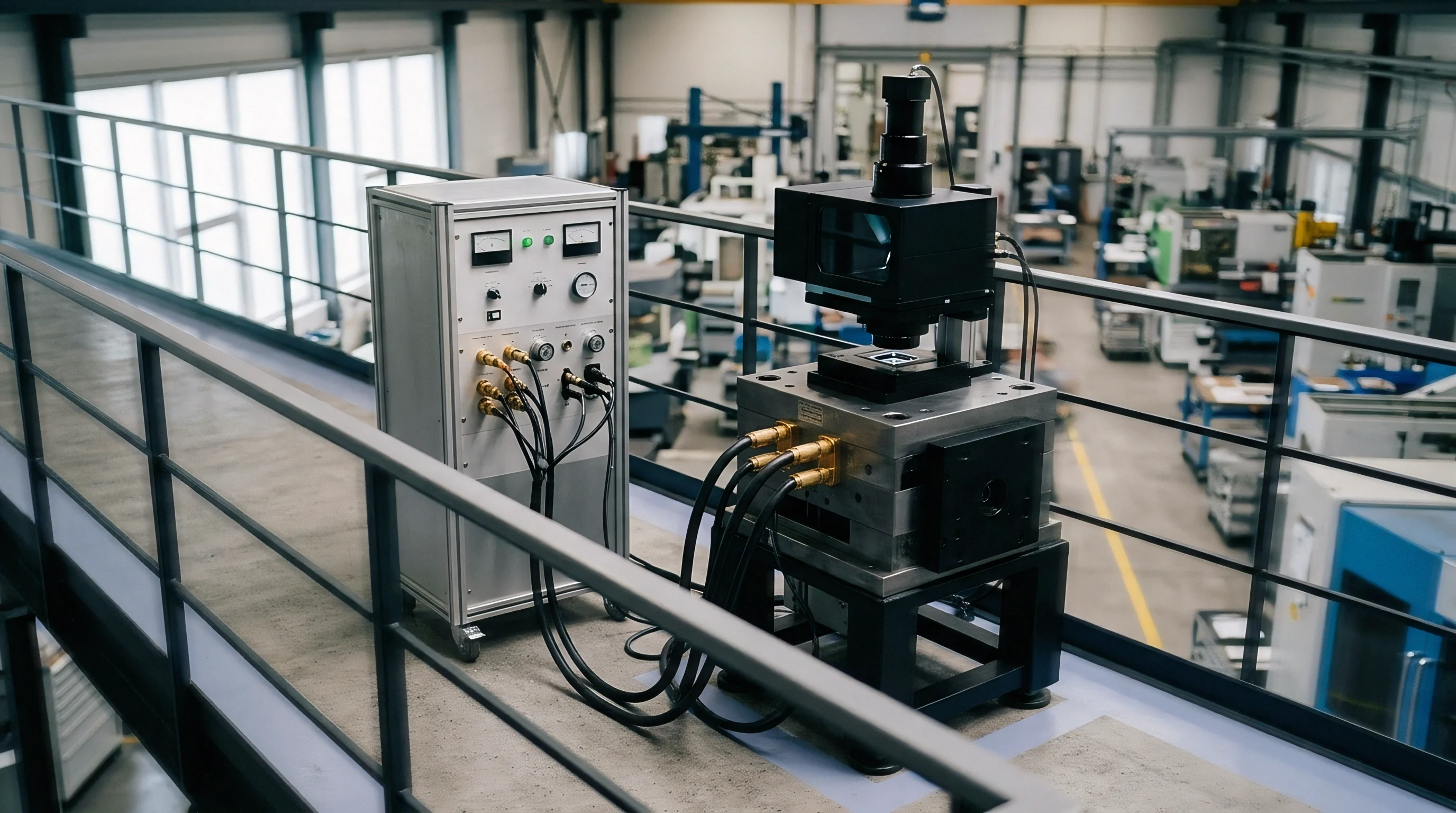
The cleanest operational hedge is divorcing tool custody from contract assembly lines. Staging custom molds in independent logistics hubs or dedicated mold-maintenance centers under direct buyer contract prevents an assembly partner from seizing hardware during commercial deadlocks.
Dual Sourcing Escrow Terms
Sophisticated procurement teams rely on comprehensive tooling escrow covenants. Under these agreements, full CAD databases, 3D tool drawings, EDM electrode files, CNC programs, and bill-of-materials documentation reside with an independent technical escrow agent, funded alongside the build.
If a deadlock occurs, the escrow agent releases the manufacturing package to a pre-qualified second-source shop within twenty-four hours. Having immediate access to native engineering data breaks reliance on recovering the original steel, letting a buyer commission parallel tooling without paying demands to a hostile plant.

Design Transfer Repossession Rights
Contracts should include pre-executed powers of attorney and site-access authorizations signed before equipment ever enters the building. These provisions explicitly permit buyer-appointed riggers to enter the grounds, unbolt fixtures, and verify tool tags following a declared default. If security guards resist, these pre-signed documents at least eliminate trespass claims when local authorities get involved.
Agreements should also set liquidated damages for unauthorized detention, structured as daily loss-of-use fees alongside automatic title-perfection clauses designed to clear preliminary judicial reviews.
- Mandatory Physical Asset Tagging requiring deep-engraved RFID tracking markers and immutable ownership plates cast directly into the tool base steel.
- Irrevocable Local Site Access Covenants authorizing independent third-party rigging teams to enter facilities and unmount equipment upon documented milestone defaults.
- Technical Escrow Repository Submissions mandating quarterly deposits of updated 3D CAD files, electrode drawings, and CNC toolpaths into secure vaults.
- Bilateral Judicial Enforcement Choice selecting arbitration seats that hold established, active bilateral interim enforcement treaties with local manufacturing courts.
Pairing off-site custody nodes with pre-filed local site-access authorizations gives buyers a practical defense against asset retention, maintaining continuity regardless of how slowly local courts move.