Quantifying Firmware Repository Custody and Toolchain Containerization for Second Sourcing
Containerized firmware toolchains and cryptographic binary parity verification eliminate multi-week bring-up delays and vendor lock-in during secondary sourcing.


Crate
Transferring an embedded product line between manufacturing facilities most often stalls over missing software dependencies. Firmware archives delivered by original design manufacturers frequently arrive with precompiled hexadecimal images, scattered source trees, and unversioned header files that refuse to compile outside the original workstation. A clean checkout depends on identifying every external library, hardware abstraction layer, proprietary board support package, and silicon vendor patch.
Without complete ownership of the exact instruction generation pipeline, a secondary contract manufacturer cannot verify or flash firmware on line two.
Custody begins at the root of the source tree. Every sub-repository, external module reference, and linker configuration script forms part of the bill of materials. If a repository clone pulls dynamic head branches from remote servers during checkout, the build breaks as soon as an upstream dependency changes.
Sourcing teams avoid generic branch pointers by pinning submodules to immutable commit hashes, isolating production code from unannounced vendor changes.

Package Boundaries for Design Transfers
Delivery specifications outline the exact hierarchy of deliverables required for commercial release approval. The primary development house must supply an unbroken lineage of commit logs instead of a single squashed snapshot archive. Squashing commits wipes out developmental history, hiding bug patches, workarounds, and chip errata compensations applied during initial board bring-up.
Without revision histories, incoming engineers burn billable hours trying to determine whether a timing loop compensates for a board revision erratum or is just leftover prototype code.
Silicon vendors frequently supply peripheral drivers through proprietary distribution channels under distinct licensing terms. When an original manufacturer incorporates proprietary algorithmic modules ~ like specialized digital signal processing libraries or Bluetooth Low Energy protocol stacks ~ licensing restrictions can block redistribution to a secondary assembly partner. Transfer audits map each proprietary binary blob, its runtime redistribution rights, and the legal path needed to re-license the asset to another facility.

Uncommitted Patches and Hardware Abstraction Gaps
Engineers under tight production deadlines often modify source files directly in local directories, bypassing source control. These uncommitted edits surface as missing function prototypes, undeclared hardware register offsets, and undocumented board rev strap pins the moment the project compiles on a secondary workstation. Hardware abstraction layers exist to isolate target-specific details from application logic.
When an abstraction layer mixes direct register manipulation into high-level application calls, porting the code to another microcontroller variant means rewriting core state machines rather than remapping peripherals.
- Commit Lineage Audit establishes that every commit from initial reference implementation through final manufacturing verification remains intact within the git database. Missing branches or flattened tarballs trigger an immediate rejection of the milestone delivery.
- Submodule Reference Pinning verifies that external libraries connect through static commit object identifiers rather than mutable branch heads. Static references prevent upstream repository owners from breaking production firmware builds.
- Vendor Blob Disclosure catalogues all pre-linked proprietary object archives alongside written redistribution authorizations. Undisclosed binary objects halt transfer acceptance until licensing transfers clear corporate legal counsel.
- Linker Map Reconciliation matches symbol addresses from factory binaries against freshly compiled source trees to catch local workspace overrides. Unmatched symbol tables expose undeclared source deviations before hardware assembly commences.
Discrepancies in build steps frequently stem from delivered tarballs that reflect only an internal engineering baseline tailored to the original developer’s local environment.

Image
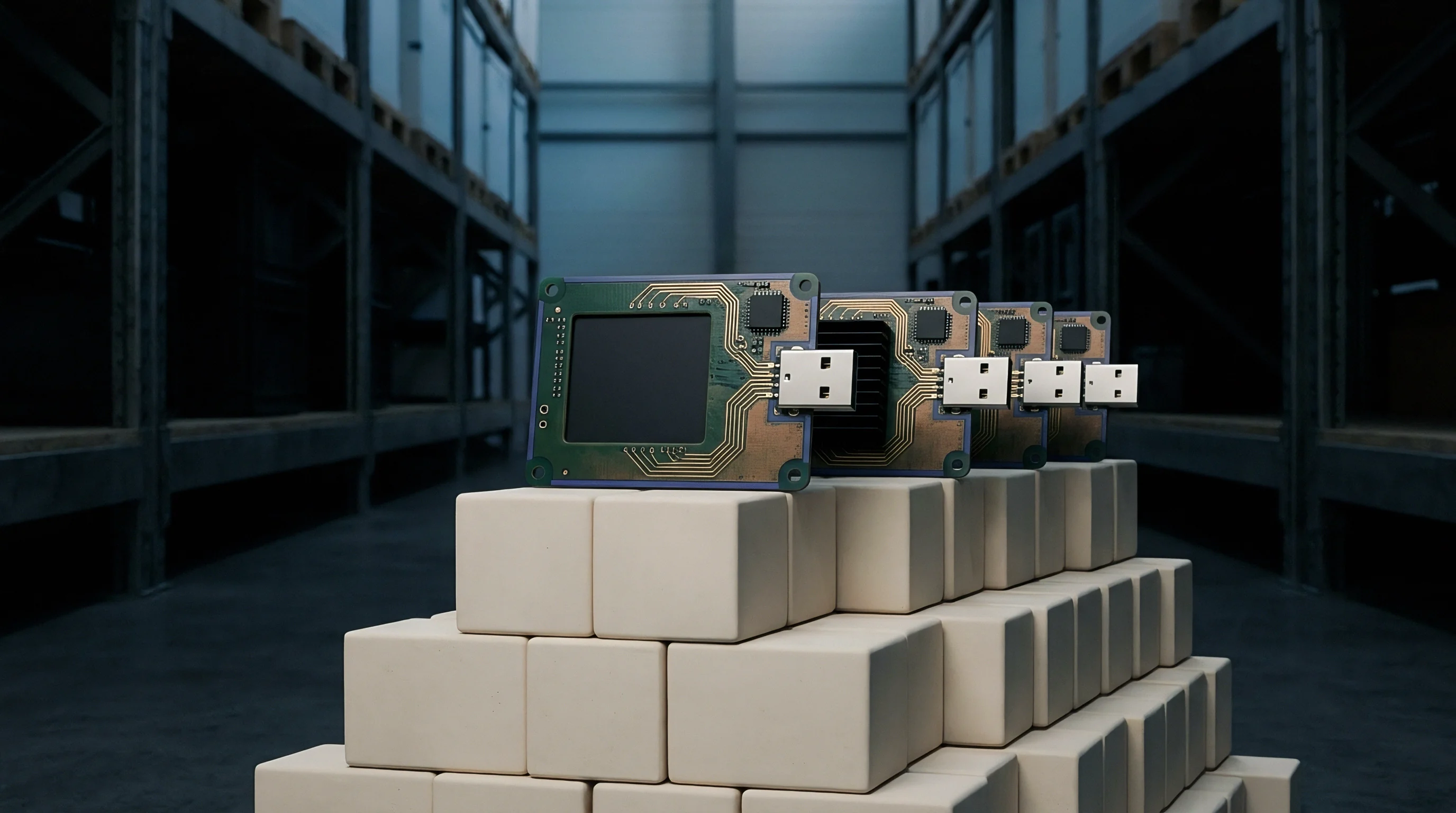
Containers standardize the operating system userspace, system libraries, cross-compiler binaries, and environment variables across corporate boundaries. A raw GNU Arm Embedded Toolchain or LLVM distribution installed directly on bare metal varies based on host OS, glibc minor versions, and locale encoding. Packaging the toolchain inside an Open Container Initiative image eliminates host-specific variance, ensuring that every factory, test bench, and engineering workstation executes the exact same compiler binary under identical paths.
Bitwise equivalence confirms that a containerized toolchain operates with absolute reproducibility. When compiling firmware version 1.0.4 inside the container, the output binary must match the SHA-256 cryptographic hash of the factory-flashed image byte for byte. Embedded builds introduce non-determinism through source timestamp macros, variable file ordering during linker passes, and absolute path leaks in debug symbols.
Docker execution flags strip environment variables, clamp file creation timestamps, and mount source trees into standardized directory targets to guarantee identical binary output.

Deterministic Compilers and Host Environment Isolation
Reproducible builds separate genuine code modifications from compiler artifact noise. Without strict toolchain pinning, moving the build host from an Ubuntu release to an enterprise Linux distribution introduces micro-optimizations that shift symbol addresses across memory banks. In safety-critical or certified wireless designs, these shifts can invalidate existing electromagnetic compatibility and protocol conformity certifications.
Pinning the container SHA-256 digest guarantees that every stakeholder compiles through the exact certified toolchain.
A reproducible build environment captures the entire operating userspace alongside the cross-compiler.
The container recipe defines every layer using immutable package manager references. Running generic package manager updates during container generation destroys build determinism over time. Sourcing specifications mandate that container images ship as pre-built archive bundles saved in the corporate artifact registry, complete with frozen dependency manifests and cryptographic signatures.

How Does Compiler Caching Compromise Bitwise Parity?
Build acceleration tools like ccache introduce subtle non-determinism across diverse host configurations. Distributed caching mechanisms store compiled object files based on preprocessed source hashes, occasionally bypassing local header differences or subtle macro definitions. If a developer uses a compiler cache populated by an uncommitted local patch, that cached object links cleanly into what looks like a pristine build.
Clean containerized builds disable compiler caches entirely, forcing cold compilation runs for production verification releases.
| Toolchain Component | Unpinned Host Risk | Containerized Specification | Bitwise Parity Impact |
|---|---|---|---|
| Cross-Compiler (GCC/Clang) | Minor patch divergence alters opcode selection | Explicit binary release pinned by SHA-256 hash | Prevents branch optimization and register allocation drift |
| Standard C Library (Newlib) | Host libc version differences alter string routines | Hermetic sysroot mounted inside isolated container | Guarantees identical memory footprint and stack depth |
| Build Orchestrator (Make/Ninja) | Parallel execution alters object link sequencing | Deterministic file list sorting within build script | Eliminates section displacement within generated ELF binary |
| Macro Preprocessors | __DATE__ and __TIME__ inject variable tokens | SOURCE_DATE_EPOCH environment variable override | Eliminates variable hash drift across build dates |
| Debug Symbol Generators | Full filesystem paths leak into DWARF structures | -fdebug-prefix-map flag remapping host roots | Ensures identical ELF binary hash regardless of clone path |
Neglecting compiler isolation produces silent binary shifts that cause severe debugging delays on the factory floor, where engineers end up chasing ghost defects caused by compiler optimizations rather than real code bugs.


Shift
Onboarding an alternate assembly house usually uncovers latent hardware dependencies in low-level firmware drivers. A secondary manufacturing partner frequently requests component substitutions to cut procurement costs or manage supply shortages. Swapping the primary serial NOR flash memory for a pin-compatible alternative from another vendor seems simple on the schematic, but SPI flash read command sequences, fast-read dummy cycles, and sector erase timings vary by manufacturer.
Without clean driver boundaries, minor silicon differences trigger bootloader failures.
Silicon stepping revisions create similar bring-up hurdles. Microcontroller vendors update silicon wafers to fix errata, altering internal flash write timing limits or peripheral interrupt priority behaviors. When the primary factory runs silicon revision A and the secondary site procures revision B, identical firmware images can lock the peripheral bus during flash write cycles.
Sourcing specifications must require firmware repositories to include comprehensive register configuration profiles tested across all active silicon steppings.

Why Do Binary Vendor Blobs Defeat Silicon Migration?
Semiconductor vendors often supply advanced protocol stacks as closed-source object libraries compiled for specific chip sub-variants. These precompiled static libraries hold hardcoded hardware register addresses and timing assumptions tied directly to proprietary silicon blocks. When moving an embedded product from an active microcontroller to an alternate pin-compatible derivative, the closed library fails to initialize the new peripheral revision.
Dual-sourcing strategies depend on open-source drivers or contractually guaranteed re-compilation deliverables from the silicon supplier.
Secondary flash memory alternative qualifications require 120 engineering hours when vendor bootloader timings lack documented strap margins.
Proprietary radio calibration routines present another angle on the closed-blob problem. Sourcing an alternate RF power amplifier or crystal oscillator requires tuning factory calibration tables stored in internal flash sectors. If those calibration algorithms remain locked inside unalterable vendor libraries, the secondary manufacturing plant cannot calibrate the radio module to meet regulatory output power limits.

Production Programming and Test Fixture Transfer
Physical test jigs on the factory floor rely on automated programming scripts that communicate with target devices over Serial Wire Debug or JTAG interfaces. Transferring production lines requires recreating these flashing stations at the receiving plant. Delivery packages must include not just the firmware repository, but also the automated test scripts, production programming sequences, and hardware in-circuit test images.
- Uncalibrated Internal Oscillators cause asynchronous serial communication framing errors on factory test beds when firmware skips external clock fallback checks. Technicians lose days troubleshooting microcontrollers that simply lack clock trimming routines.
- Hardcoded JTAG Clock Frequencies exceed the routing capacitance limits of longer bed-of-nails wiring harnesses at secondary contract manufacturing plants. Programming scripts fail intermittently until clock dividers match the physical test jig layout.
- Missing Flash Protection Clearance prevents secondary production programmers from overwriting factory security bits during re-flashing cycles. Boards halt on the assembly line with locked debug access ports.
- Undeclared Voltage Thresholds trigger internal brownout reset circuits during high-current flash programming routines on under-specified secondary test jigs. Incomplete programming sequences corrupt flash memory sectors during functional testing.
Disputes frequently arise over whether the secondary factory or the original development team owns the labor hours needed to adapt test fixture scripts to alternate automated test equipment architectures.


Tally
Quantifying the investment needed for full toolchain containerization reveals a clear cost-benefit curve over production lifecycles. Setting up a fully containerized, bitwise-deterministic build system takes upfront engineering labor. Sourcing teams weigh that expense against the measurable risk of line shutdowns, multi-week transfer delays, and lost engineering hours spent troubleshooting compiler variations.
Industrial module designs average three component substitutions over a five-year lifecycle due to supply chain disruptions. When an uncontainerized project undergoes an emergency secondary sourcing transfer, engineering teams spend between 80 and 200 billable hours per event recreating legacy toolchains, installing obsolete host operating systems, and manually resolving package conflicts. Containerized repositories drop that secondary bring-up window to under four hours.

Engineering Labor Allocation for Build Portability
Building deterministic containerized environments takes upfront engineering hours spread across distinct phases. An embedded systems architect allocates roughly 30 hours to strip non-deterministic macros, configure linker scripts, map directory prefixes, and containerize the toolchain. Maintenance requires about 8 hours per quarter to apply security patches to the base image while preserving build determinism.
Contract manufacturers treat uncontainerized build environments as billable custom engineering during factory bring-up.
A secondary contract manufacturing facility bases its onboarding fee on the completeness of the design transfer package. Handing over a loose collection of source files and a generic build README incurs between 15,000 and 35,000 dollars in factory integration surcharges. Delivering a validated, containerized image that produces verifiable bitwise binary outputs cuts that charge to a baseline fixture integration fee of 3,000 to 5,000 dollars.
Break-Even Unit Economics across Dual Manufacturing Sites
Volume economics justify toolchain containerization even for medium-scale production runs. At an average fully burdened engineering rate of 150 dollars per hour, uncontainerized firmware transfers expose procurement to heavy cost overruns during emergency second-sourcing events. Toolchain containerization acts as balance-sheet insurance against single-source lock-in.
| Cost Element | Uncontainerized Single-Source Handover | Containerized Dual-Source Transfer | Variance Rationale |
|---|---|---|---|
| Initial Toolchain Configuration | $2,400 (16 hrs @ $150/hr) | $6,900 (46 hrs @ $150/hr) | Container creation, macro normalization, and hash verification |
| Secondary Facility Toolchain Setup | $18,000 (120 hrs @ $150/hr) | $600 (4 hrs @ $150/hr) | Single command container image pull vs manual environment build |
| Binary Parity Verification Labor | $9,000 (60 hrs @ $150/hr) | $750 (5 hrs @ $150/hr) | Automated cryptographic hash comparison vs manual symbol debugging |
| Production Flashing Script Adaptation | $7,500 (50 hrs @ $150/hr) | $1,500 (10 hrs @ $150/hr) | Standardized containerized flashing interface scripts |
| Line Downtime Risk During Transfer | $35,000 (Estimated 3-week delay) | $0 (Immediate verified cutover) | Elimination of software build disputes between factory teams |
| Total Program Expenditure | $71,900 | $9,750 | Net programmatic savings of $62,150 per transfer event |
Evaluating firmware transfer packages requires a strict verification checklist before finance authorizes milestone disbursements.
- Container Image Digest Validation confirms that the published container image hash matches the cryptographic checksum in the integration contract. Mismatched digests block commercial acceptance testing.
- Zero-Host-Dependency Compilation verifies that the container builds the binary target on a freshly provisioned host with no pre-installed local toolchains. Any requirement for external host utilities invalidates the delivery ticket.
- Bitwise SHA-256 Parity establishes that the generated binary output matches the production hex file released for regulatory certification. Cryptographic divergence requires immediate supplier correction.
- Complete Offline Rebuild Verification ensures that the compilation script executes within a sandboxed network environment without calling external domains. Dynamic network fetches during build phases result in contractual delivery failure.
A procurement team that pays for firmware development without securing containerized build reproducibility purchases an ongoing billing relationship rather than a transferable asset.


Covenant
Contractual agreements turn technical requirements into enforceable protections. Standard manufacturing service agreements and design contracts frequently treat firmware as an ancillary deliverable, referencing code delivery through vague phrases like complete source code and necessary documentation. Sourcing professionals insert schedule exhibits that define repository custody, toolchain containerization, and acceptance criteria in precise engineering terms.
Without explicit contractual levers, factories can hold repository access hostage during pricing disputes.
Continuous escrow mechanisms protect buyers against sudden insolvency or operational abandonment by a primary development partner. Instead of relying on physical escrow services that store outdated source archives on optical media, modern contracts mandate automated escrow pipelines integrated into the supplier’s continuous integration system. Every verified production build triggers an automated push of the full containerized repository to an independent, buyer-controlled cloud mirror.

Continuous Escrow and Automated Build Verification
Automated escrow agreements require that every code commit deployed to the factory floor builds cleanly inside the independent buyer repository mirror before release to production programming jigs. If an automated build fails to produce the matching binary hash, the continuous deployment pipeline halts, preventing the assembly line from flashing unverified code. This keeps the escrow repository synchronized with the physical units shipping off the line.
IEEE 12207 configuration management provisions enforce escrow binary hash validation prior to milestone invoice settlement.
Commercial contracts specify that failure to maintain repository parity constitutes a material breach. Payment milestones for design transfer phases must link directly to independent verification passes executed by buyer engineering staff. If the buyer cannot pull the container image, run the automated build script, and produce an identical binary image on an isolated workstation, the milestone invoice stays unpaid.

Part Change Notifications and Firmware Maintenance Boundaries
Part change notification clauses obligate the primary design partner to maintain toolchain and firmware compatibility across component lifecycle events. When a passive component, memory chip, or silicon stepping reaches end-of-life, the engineering scope defines who funds and executes the firmware adaptation. Contracts assign clear responsibility for firmware maintenance, regression testing, and container updates throughout the product’s commercial lifetime.
The master services agreement requires the supplier to deliver updated containerized environments and updated source repositories within thirty calendar days of issuing a formal part change notification, ensuring that the secondary manufacturing facility can integrate the replacement component without halting active production schedules.