Automated Continuous Build Synchronization and Hardware Key Custody across Dispersed Manufacturing Partners
Automated build pipelines eliminate factory key custody by generating deterministic binaries and injecting hardware credentials via isolated local enclaves.


Pipeline
Targeting bare-metal microcontrollers with signed bootloaders, an automated continuous integration pipeline ties Git commit histories straight to physical silicon on contract assembly lines. Without explicit build reproducibility constraints, identical source trees compiled across separate plants in Shenzhen, Penang, and Guadalajara yield divergent runtime binaries. Locking this down requires a build manifest covering exact compiler versions, toolchain hash digests, linker scripts, and fixed memory layouts down to individual register boundaries.
Unsigned hex files generated by the build engine route directly to a dedicated signing service; private cryptographic keys are never dropped onto remote build servers. Instead, keys stay inside a secure enclave or Hardware Security Module (HSM) held within the buyer’s sovereign perimeter.
Surface-mount assembly lines pull these compiled payloads through automated bed-of-nails test fixtures equipped with custom flashing agents. At no point does the contract assembler receive an unencrypted binary holding production secrets or raw root-of-trust keys. Delivery to factory automated test equipment (ATE) runs over mutually authenticated TLS tunnels terminating at plant-floor gateways, which serve only as untrusted proxies passing flash requests when an operator triggers a cycle.
Versioning is bundled directly into cryptographically sealed metadata envelopes alongside standard machine code. Before releasing binaries to external partners, firmware teams validate each metadata block with detached signatures calculated through elliptic curve cryptography algorithms like Ed25519 or ECDSA P-256.
Tagging a commit for production spins up an immutable, containerized build runner. To guarantee bit-for-bit matching binaries across different host kernels, the environment suppresses build timestamps and forces explicit symbol path remapping with flags like -fdebug-prefix-map in GCC or Clang. Any drift in the toolchain standard library or an unpinned dependency hash halts the execution queue immediately.
In the resulting elf binary, memory maps leave dedicated sectors reserved for flash signatures, firmware version headers, cryptographic initialization vectors, and device certificate chains.
The factory floor receives binary payloads sealed with ephemeral session tokens rather than perpetual cryptographic authority.
The contract manufacturer receives only reproducible artifacts paired with signing manifests containing target SHA-256 digests. Local flashing utilities log serial numbers, silicon unique device identifiers (UID), and hardware revisions back to the orchestration cluster. Validation daemons on local plant servers inspect the structure and signatures of each payload before feeding it to the programmer interface.
Any invalid signature or mismatched image length trips an execution exception, terminating the staging run before a single target board accepts electrical contact.
Centralized image signing over international links introduces latency that conflicts directly with rapid factory takt times.

Airgap
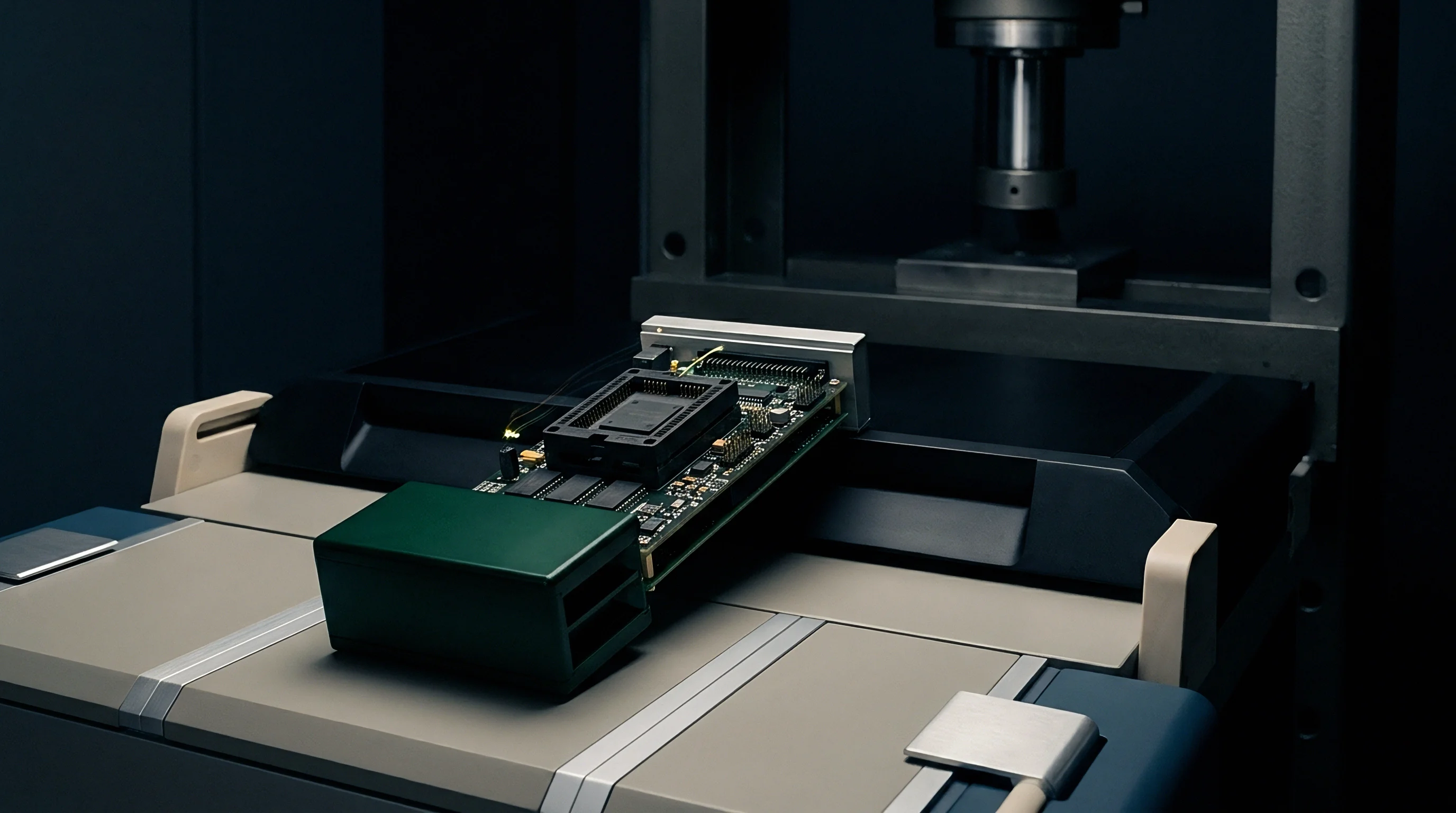
Physically separating development infrastructure from factory provisioning hardware keeps private root keys off untrusted manufacturing networks. The programming units installed on contract assembly lines run as airgapped or strictly firewalled network appliances, enforcing key isolation throughout the manufacturing run. Dedicated hardware security modules keep provisioning keys inside silicon certified to FIPS 140-2 Level 3 or higher.
Operators initiate flashing runs through automated ATE commands without keys ever surfacing in memory analyzers, logical sniffers, or unauthorized terminal sessions.

Is Factory Isolation Enforceable across Segmented Facilities?
On lines running fast Pick-and-Place machinery feeding into in-circuit testers, boundary control is maintained by confining cryptographic tasks inside tamper-evident modules bolted straight to the programmer chassis. This hardware encloses the root injection mechanisms, non-volatile audit loggers, and hardware cryptoprocessors. The injection system exposes only constrained application programming interfaces over isolated industrial subnets, dropping any arbitrary flash modification calls.
Communication between the central continuous deployment orchestrator and the remote factory programmer travels as asynchronous, cryptographically signed job tickets.
| Provisioning Architecture | Physical Boundary Rating | Credential Exposure Risk | Per-Unit Programming Time | Line Downtime Vulnerability |
|---|---|---|---|---|
| Central Cloud HSM Proxy | FIPS 140-2 Level 4 Host | Negligible Transmission Leakage | 850 ms to 1200 ms | WAN Disconnection Halts Line |
| On-Line Physical HSM Appliance | FIPS 140-2 Level 3 Chassis | Restricted Local Session Limit | 120 ms to 250 ms | Appliance Hard Lockout |
| Encrypted Secure Memory Vault | Common Criteria EAL5+ IC | Zero Plaintext Bus Exposure | 45 ms to 80 ms | Certificate Expiration Event |
| Local Host Worker Daemon | None (Commercial Linux PC) | High Memory Core Extraction | 30 ms to 60 ms | Host OS Compromise |
Each job ticket authorizes a fixed number of flash programming cycles. The corporate operations desk issues these allotments to match purchase order quotas, denying contract assemblers the structural capacity to run unauthorized production units during off-shift hours. With every completed key generation and flash sequence, the programming appliance decrements its internal counter and writes an execution digest to non-volatile audit logs.
Once the job ticket balance reaches zero, the appliance halts injection cycles automatically until the central server signs an authorization extension.
Contract assemblers often push back on the capital expense of dedicated programming appliances, preferring software-only key storage daemons operating inside generic industrial personal computers. Software key storage exposes cryptographic secrets to operating system compromises, administrative memory scraping, and persistent supply-chain extraction. Hardware enclaves counter this by zeroizing memory contents whenever internal sensors detect chassis intrusion, voltage manipulation, or out-of-spec thermal variations.
Master manufacturing agreements treat any hardware zeroization event as an immediate key custody breach, triggering automatic impoundment of all production inventory on the line.

Silicon
Modern microcontrollers and secure elements terminate root-of-trust custody within hardware features embedded during semiconductor fabrication. Secure boot execution, protected key storage, and authenticated debug access depend directly on dedicated on-chip engines: physically unclonable functions (PUFs), internally masked Read-Only Memory (ROM) bootloaders, and electrically alterable eFuses. System architects configure the primary boot path to verify digital signatures before allowing execution to branch to application code in internal NOR flash memories.
Cryptographic key custody relies on an explicit sequence of hardware initialization states:
- Internal ROM Execution starts immediately at power-on, setting core hardware clocks and locking all non-essential debug buses against external access probes.
- Fuse Array Interrogation reads cryptographic configuration bits, public key hashes, and device lifecycle states directly from one-time-programmable non-volatile memory arrays.
- Signature Block Authentication calculates a SHA-256 digest over the primary application partition, validating the result against the embedded cryptographic signature using the provisioned public key digest.
- Hardware Security Engine Transition restricts cryptographic key registers, preventing subsequent user firmware routines from reading root credentials directly through peripheral interfaces.
- Boot Vector Branching transfers execution directly to the validated application entry point inside internal flash memory once all validation criteria clear without faults.
Writing to eFuse arrays during in-circuit testing requires tightly regulated electrical supplies. Programming an eFuse takes a specific programming voltage ~ commonly between 1.8V and 2.5V held within tolerances tighter than 50 millivolts ~ to ensure complete dielectric breakdown. Incomplete fuse programming leaves floating junction states that shift unpredictably across thermal changes.
This programming step sets irreversible flags that disable joint test action group (JTAG) boundary scans, enforce authenticated secure boot, and assign cryptographic identity registers.
A single unblown security fuse invalidates an entire supply chain security architecture by leaving memory debug gates unlocked.
Silicon components advance through distinct states during manufacturing: Blank, Provisioned, Customer Secure, and Locked. Transitions occur through verifiable register updates, and reversing a transition is impossible once anti-rollback fuses blow. Hardware key custody transfers along this path, passing from the semiconductor vendor through the design authority down to the factory line programmer.
The secure injection apparatus programs unique symmetric keys, device private keys, and intermediate root certificates directly into internal battery-backed or non-volatile storage blocks.
Blowing fuses too early inflates functional test scrap. Functional testing failures on securely locked units render internal flash unreadable, preventing standard engineering root-cause analysis without specialized failure-analysis authorization sequences. Modern test architectures counter this by running comprehensive peripheral boundary checks before blowing permanent cryptographic configuration fuses.
A line operator failing to blow the terminal JTAG-disable fuse creates field units vulnerable to unauthorized physical firmware extraction within minutes of interception.

Ledger
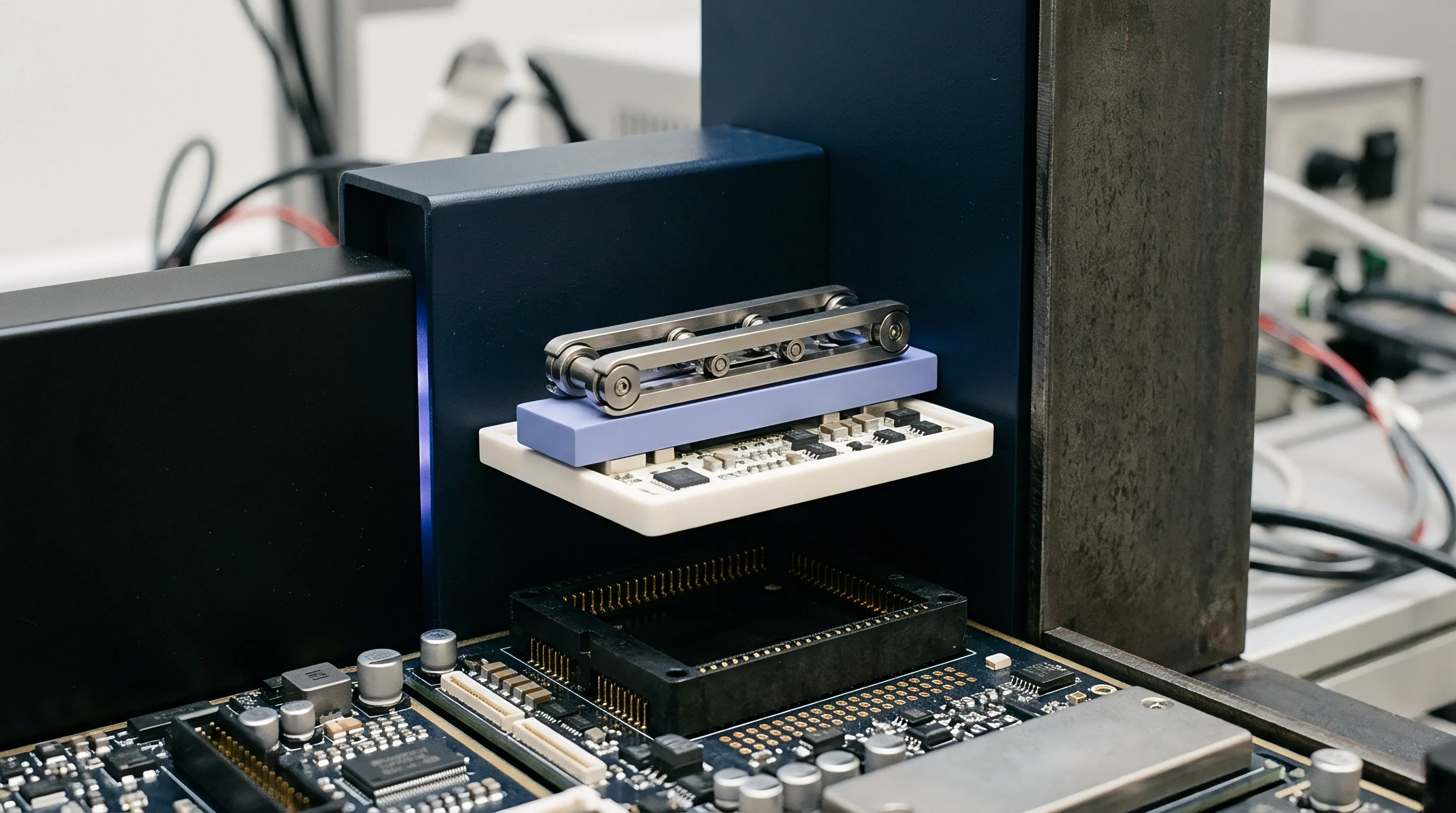
Tracking firmware binaries and device identities across multiple dispersed factories requires an immutable, cryptographically verifiable transaction ledger. Continuous integration servers push build hashes, package configurations, and signing manifests into an append-only transparency log. Each production station generates cryptographic certificates of manufacturing that capture the target silicon UID, programmed firmware hash, timestamp, and programmer appliance signature.
Dispersed partners submit these verification receipts back to the central repository before units move to final mechanical packaging.

Which Identity Elements Form the Device Identity Envelope?
The provisioning station packages device records into standardized cryptographic payloads based on the IEEE 802.1AR standard for Secure Device Identity (DevID). The injection appliance triggers internal keypair generation inside the microcontroller or companion secure element, extracting only the generated public key certificate request. The appliance signs this request using an intermediate factory certificate issued by the buyer’s Certificate Authority (CA), producing an immutable identity envelope stored in the tracking ledger.
Audit engines cross-reference these factory logs against continuous integration build registers to identify anomalies:
- Binary Digest Discrepancies occur when an ATE station flashes an unapproved or out-of-sequence firmware image version to target boards.
- Duplicate Silicon Identifiers indicate attempts to clone valid device identities across multiple printed circuit board assemblies or unauthorized batch runs.
- Out Of Sequence Timestamps indicate units provisioned outside authorized shift windows, signalling unapproved contract manufacturing line runs.
- Attestation Signature Failures appear when an unauthenticated programming device attempts to submit provisioning logs to the central operations ledger.
Traceability systems rely on automated reconciliation daemons that correlate component reels with recorded unique device identifiers. Surface-mount equipment logs optical barcode scans for microcontrollers and companion cryptographic chips directly into the enterprise resource planning (ERP) platform. When an in-circuit tester registers a completed unit, the database validates that the physical silicon UID matches the specific reel logged at the pick-and-place feeder.
Discrepancies between reel data and provisioning logs expose unauthorized board substitution on the production floor.
Dispersed manufacturing agreements require that every device record include a non-repudiation signature generated inside the physical programming appliance. These logs are stored across geographically separated databases to avoid localized data manipulation by rogue production managers. If a partner attempts to conceal elevated rework percentages or unauthorized line overruns, the append-only ledger exposes the inventory mismatch between shipped boxes and cryptographically validated silicon transactions.
The standard supply agreement sets clear audit remediation timelines: failure to reconcile device ledgers within forty-eight hours of line completion authorizes immediate programmatic revocation of factory signing credentials.

Clamp
Pneumatic bed-of-nails clamps and mechanical fixtures form the physical interface where software builds meet bare-metal hardware. Spring-loaded pogo pins press directly against exposed copper test pads on the target printed circuit board. The geometry, plating metallurgy, and parasitic electrical properties of these mechanical connections dictate the stability of high-speed cryptographic programming protocols.
Signal integrity degradation across worn pogo pins introduces bit errors during firmware transfers, causing intermittent secure boot verification failures.
Programmer fixtures route Serial Wire Debug (SWD), JTAG, or Universal Asynchronous Receiver-Transmitter (UART) communication lines through precision-machined mechanical interfaces. Pogo pin tips feature distinct contact patterns like crown, spear, or cup geometries, selected to pierce through surface oxide layers and residual soldering fluxes. Plating composition directly influences contact resistance; gold-over-nickel coatings provide stable electrical interfaces, whereas physical wear exposing underlying beryllium copper creates impedance shifts that distort high-frequency clock lines.
| Interface Pin Type | Tip Metallurgy | Contact Resistance Limit | Rated Mechanical Cycles | Signal Bandwidth Limit |
|---|---|---|---|---|
| Spring-Loaded Crown Pogo | Hard Gold over Nickel | < 30 mΩ | 250,000 actuations | 100 MHz |
| Spear Point Micro-Probe | Rhodium Plated Steel | < 50 mΩ | 100,000 actuations | 25 MHz |
| Kelvin Sensing Contact | Gold-Plated Beryllium | < 15 mΩ | 500,000 actuations | 10 MHz |
| Controlled-Impedance Coaxial | Gold over Brass Alloy | < 20 mΩ | 150,000 actuations | 2.5 GHz |
Mechanical clamping forces must provide adequate seating pressure across high-density test points without introducing mechanical strain into multilayer FR4 circuit boards. Excessive board flexing under pneumatic force causes microscopic fractures inside surface-mount ceramic capacitors and ball grid array (BGA) solder balls underneath secure microcontrollers. Deflection measurements verify that fixture hold-down posts maintain board displacement tolerances below 0.5 millimeters across all active programming zones.
Pneumatic clamp deflection exceeding mechanical tolerances cracks fragile silicon packaging traces beneath unreinforced secure processor footprints.
In-circuit programming fixtures run continuous loopback verification scripts before engaging production boards. When a fixture exceeds its rated actuation lifespan, mechanical friction and debris accumulation alter contact resistance, triggering intermittent programming errors during secure eFuse write operations. Because eFuse burning requires stable current delivery over fixed time durations, an instantaneous voltage drop caused by a worn pogo pin results in permanent silicon write faults.
Production fixtures therefore track actuation cycles via internal mechanical counters, locking line operations when maintenance intervals lapse.
Balancing line takt time against signal integrity forces hard trade-offs on programming clock rates. Increasing SWD clock frequencies from 2 MHz to 25 MHz accelerates cycle times, but elevates bit-error vulnerability across unshielded fixture wiring. High-assurance lines maintain conservative clock thresholds, favoring verifiable key injection reliability over minor gains in line velocity.
Omitting contact resistance calibration runs on in-circuit programming fixtures voids silicon manufacturer warranty coverage for devices that fail during non-volatile fuse initialization.
Reconciliation
The closing phase of secure manufacturing operations settles production volumes against consumed cryptographic key assets. Operations desks examine cryptographic accounting reports that match signed continuous build payloads to serialized devices exiting the contract manufacturer’s facilities. Discrepancies between allocated manufacturing authorizations and recorded operational completions reveal waste, theft, or unauthorized parallel production runs.
This quantitative cross-examination establishes operational confidence across dispersed external supply chains.
A comprehensive reconciliation dossier compares incoming silicon bill-of-materials quantities with database attestation certificates. When a client commissions a production run of 50,000 units, the secure provisioning pipeline releases precisely 50,000 programming tokens to the factory appliance. Engineering yields across complex surface-mount assemblies inevitably track below 100 percent, generating defective assemblies that consume programming authorizations before failing mechanical or radio frequency functional tests.
Contract partners submit scrap units to formal physical reconciliation to recover unused key allocations.
A baseline operational calculation illustrates this dynamic. Assume an initial manufacturing run targeting 100,000 completed Internet of Things modules distributed across two contract manufacturing partners:
CM-A targets 60,000 units with an expected surface-mount yield of 98.2 percent. The facility requires 61,099 silicon units to hit target output. CM-B targets 40,000 units with an expected yield of 97.4 percent, consuming 41,068 silicon components.
The central licensing server issues 102,167 cryptographic injection authorizations divided between the two facilities.
Upon production run termination, CM-A returns 60,040 functional scanned modules, 1,010 confirmed electrical scrap boards, and 49 unused authorization tokens stored in the provisioning appliance. CM-B returns 39,850 functional modules, 1,120 verified scrap boards, and logs 98 authorizations lost to programming abort events caused by line voltage drops. This unverified loss of 98 key assets triggers an audit investigation.
The engineering team inspects the unverified scrap boards using authorized JTAG boundary scan sequences to confirm genuine component failure rather than intentional black-market chip diversion.
Secure lifecycle management ends only when obsolete, damaged, or unverified hardware keys face cryptographic revocation. Public key infrastructures revoke subordinate factory certificates upon run completion, terminating the validity of intermediate keys used during the manufacturing cycle. Field devices connecting to central cloud infrastructure present their factory-signed identity certificates during mutual authentication sequences.
Central gateways consult dynamic revocation lists, severing connections to identities originating from unverified, compromised, or unaccounted-for manufacturing allocations.
How an enterprise manages residual cryptographic material remaining inside partially blown microcontrollers on scrapped assembly boards determines the integrity of its hardware security perimeter across the product lifecycle.