Radiated Emission Testing Cost Allocation in Hardware Sourcing
Radiated emission test costs split between buyer and supplier through clear statement of work clauses defining chamber fee allocations and board re-spin caps.

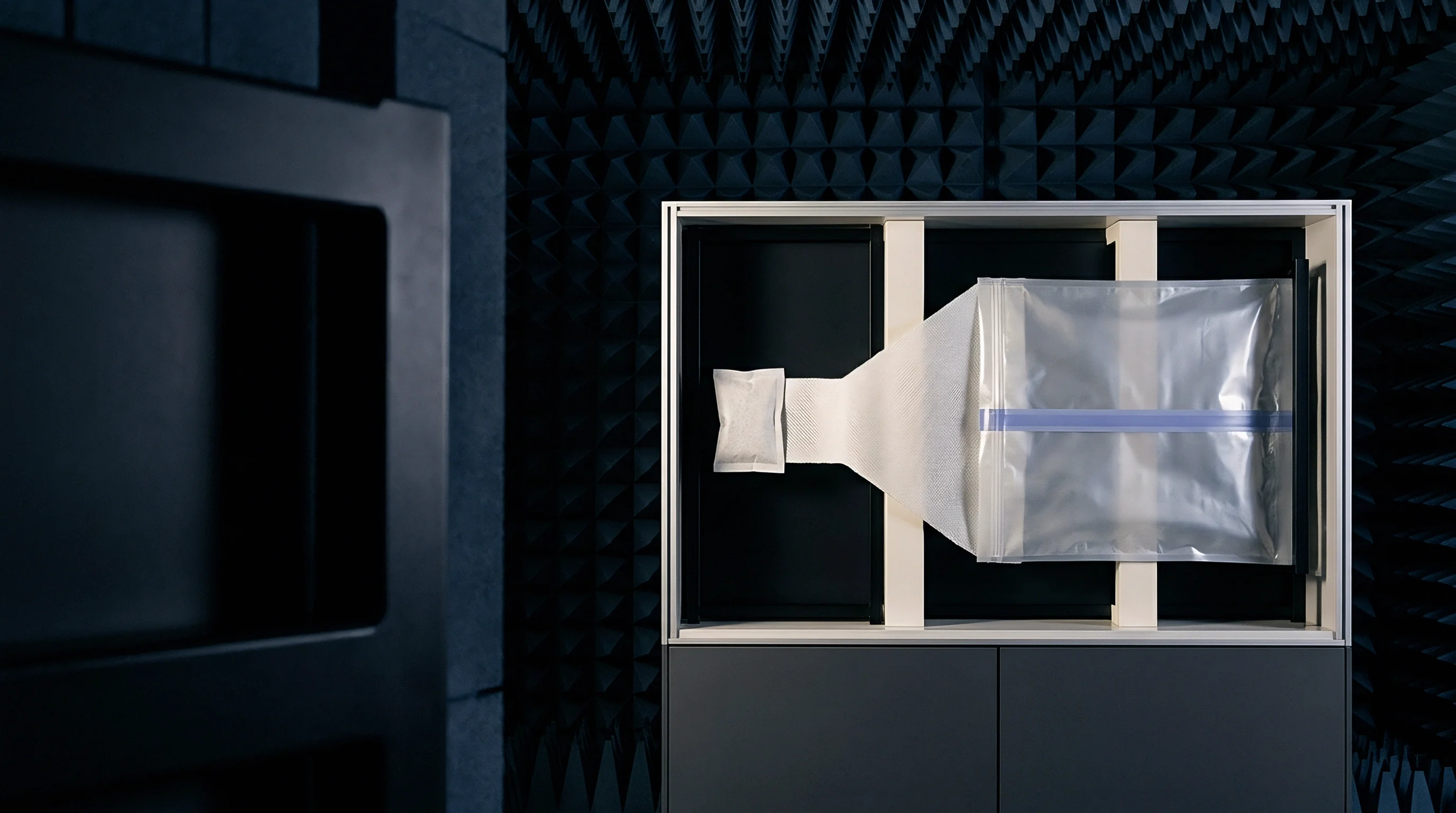
Chamber
Radiated emission evaluation relies on calibrated semi-anechoic facilities equipped with automated antenna masts, motorized turntable drives, and EMI test receivers operating across the 30 MHz to 6 GHz spectrum. Laboratory billing rates range from 180 USD to 350 USD per hour for accredited 3-meter or 10-meter measurement sites. Full regulatory compliance sweeps under CISPR 32 or FCC Part 15 Subpart B absorb 8 to 16 hours of dedicated chamber time per product iteration.
Pre-compliance evaluations using compact Gigahertz Transverse Electromagnetic cells or benchtop near-field magnetic probes reduce preliminary facility expenses. They do not generate legally recognized compliance documentation for regulatory filings. Direct testing costs scale rapidly whenever uncoordinated digital clock harmonics or poorly decoupled switching power supplies cross statutory limits.
Lab rates accumulate quickly. Commercial contracts must explicitly define whether baseline chamber reservations enter the project financial ledger as supplier non-recurring engineering charges or pass through directly as buyer operational expenses.
Accredited Anechoic Facility Operational Overhead
Accredited laboratories charge fixed minimum shift fees alongside hourly operational rates. Booking a standard 8-hour test block commits between 1,440 USD and 2,800 USD regardless of whether the hardware under test passes within the first thirty minutes or fails on the initial frequency sweep. Auxiliary equipment charges for specialized line impedance stabilization networks, directional antennas, and automated turntable control software add secondary line items to the base lab invoice.
- Chamber Time Charges cover the physical facility, automated antenna positioner operational power, and calibrated spectrum analyzer utilization per billable hour.
- Test Technician Support encompasses lead engineer setup time, cable routing calibration, and manual verification of peak emission frequencies.
- Documentation Generation Fees fund the creation of official ISO/IEC 17025 accredited compliance test reports required by national regulatory bodies.
Measurement Distance Standards and Scan Times
Selecting a 3-meter versus a 10-meter semi-anechoic facility directly dictates hourly commercial rates and measurement sensitivity. Class A commercial equipment permits 10-meter distance limits, whereas Class B residential products demand stricter limits often evaluated at 3-meter distances to capture low-level emissions above background thermal noise. Quasi-peak detector scans executed across 30 MHz to 1 GHz consume approximately 90 minutes per antenna polarization and turntable angle combination.
High-frequency sweeps from 1 GHz to 6 GHz utilizing average and peak detectors extend scan cycles by two hours per physical orientation.
An accredited 10-meter semi-anechoic test run across 30 MHz to 6 GHz incurs a baseline expenditure of 2,400 USD per 8-hour shift.
| Facility Type | Frequency Range | Standard Compliance Baseline | Average Hourly Rate Range | Typical Full-Scan Duration |
|---|---|---|---|---|
| 30 MHz to 6 GHz | FCC Part 15 Class B / CISPR 32 | 180 USD to 250 USD | 8 to 12 Hours | |
| 30 MHz to 6 GHz | CISPR 32 Class A / Commercial | 270 USD to 350 USD | 10 to 16 Hours | |
| 30 MHz to 3 GHz | Internal Pre-Compliance Only | 75 USD to 120 USD | 2 to 4 Hours |
Whether laboratory scheduling delays resulting from unexpected turntable calibration failures entitle the buyer to financial credit remains disputed across regional test houses.
Boundaries
Hardware integration architectures fix the legal responsibility division between component vendors, module integrators, and host system engineers. Pre-certified turnkey wireless assemblies carry existing modular grants, transferring primary radio frequency compliance liabilities to the original module manufacturer. Semi-custom hardware modifications and reference design adaptations alter copper stack-up geometries, power plane impedances, and antenna matching structures.
Those alterations invalidate existing modular test evidence, obligating the host system integrator to execute comprehensive radiated emission scans across the entire host enclosure.
Modular grants reduce scope. Uncertified boards stop shipments. Sourcing contracts must trace exact boundaries of ownership across four distinct integration levels to prevent unassigned compliance liabilities during production bring-up.

Turnkey Module Grants versus Host Integration Obligations
Integrating a fully shielded, pre-certified wireless module limits host-level testing to unintentional radiator compliance under FCC Part 15 Subpart B. The module vendor supplies technical construction files, FCC ID registration numbers, and operational integration manuals detailing keep-out zones and trace geometries. Deviating from the vendor-specified antenna trace layout converts the integration boundary from a turnkey model to a semi-custom engineering scope, resetting regulatory assumptions.
- Turnkey Module Scope designates that the vendor delivers fully certified radio hardware and test dossiers while the host buyer assumes financial responsibility strictly for host-level unintentional radiated emissions.
- Semi-Custom Hardware Scope dictates that the vendor modifies reference board dimensions or power management circuitry, triggering mandatory shared re-testing obligations for both intentional and unintentional radiation bands.
- Reference Design Adoption Scope requires the host buyer to build directly from vendor schematics, placing complete financial liability for EMI failures and layout fixes on the internal host engineering team.
- White-Label Assembly Scope transfers full product ownership to the original design manufacturer, who guarantees regulatory compliance as a prerequisite for final product acceptance.

Schematic Alterations and Test Scope Escalation
Modifying passive filtering components or replacing switching regulator controllers on a semi-custom layout alters the fundamental electromagnetic spectrum of the assembly. Substituting an inductor model with higher direct-current resistance increases high-frequency switching spikes across input power leads. Cable routing shifts emissions.
Open leads create antennas. When host-level radiated noise exceeds regulatory limits due to component substitutions made by the supplier, financial liability maps directly back to part-change notification terms established in the master supply contract.
Incorporating an unshielded switching regulator into a reference layout voids existing modular emission test reports and forces complete host system re-certification.
A hardware design transfer package lacking native layout source files forces the buyer to assume full financial liability for subsequent regulatory emission failures.


Mitigation
Hardware redesign efforts triggered by regulatory emission overshoots require clear technical isolation procedures and predefined financial ownership models. High-frequency digital signals propagating along unshielded microstrip lines frequently couple noise into adjacent metal enclosures or external cable harnesses. When a 125 MHz clock harmonic exceeds CISPR 32 Class B thresholds by 6 dB inside the 300 MHz to 1 GHz spectrum, corrective engineering measures must address both the electromagnetic source and the coupling path.
Clock traces radiate energy. Ferrites absorb high frequencies. Board spins cost money.
Engineering teams must isolate layout defects from enclosure mechanical gaps before attributing failure costs to either party.
Who Pays When Pre-Compliance Chamber Scans Fail?
Assigning financial accountability for pre-compliance failures hinges on whether the hardware design met agreed electromagnetic design guidelines prior to chamber entry. When a supplier delivers a semi-custom circuit assembly lacking differential mode filtering on external input-output lines, layout deficiencies rest with the supplier engineering team. If the buyer specifies an unshielded plastic enclosure without conductive internal coatings, structural radiation liabilities shift to the buyer scope.
Consider a semi-custom Internet-of-Things gateway project where pre-compliance testing reveals a 9 dB overshoot at 400 MHz generated by the primary processor memory bus. Resolving this overshoot demands four distinct engineering actions with explicit cost structures:
First, the engineering team adds low-pass resistor-capacitor filtering arrays and ground stitching vias to the memory bus microstrip layout, absorbing 40 engineering hours priced at 125 USD per hour, totaling 5,000 USD in revised engineering design costs. Second, the PCB manufacturing plant executes a prototype board re-spin, charging 2,200 USD for new tooling, photolithography masks, and a 10-panel quick-turn fabrication run. Third, technician labor to desolder prototype components and assemble three fresh test boards consumes 1,200 USD.
Fourth, booking a second 8-hour pre-compliance chamber session adds 1,800 USD in direct facility charges.
Under a turnkey contract, the supplier absorbs the entire 10,200 USD mitigation expenditure. Under a reference-design integration model, the buyer funds the layout modifications, board fabrication re-spin, and re-test shift while the component vendor provides unpaid technical consultation restricted to basic schematic review.
Adding board-level shielding cans during initial PCB layout reduces secondary chamber re-test cycles more effectively than retrofitting external cable ferrites.
Shielding adds BOM cost. Poor grounding destroys margins. Margin buffers prevent failures.
Standard compliance opens markets.
Failing to specify PCB layer stack-up tolerances in the initial manufacturing agreement leaves the buyer paying for both board re-spins and secondary chamber time when trace impedance shifts push radiated harmonics over regulatory thresholds.

Covenant
Procurement agreements must incorporate formal legal covenants governing radiated emission testing limits, pass/fail acceptance definitions, and secondary laboratory fees. Statements of Work that reference regulatory compliance without defining exact decibel margin thresholds expose buyers to dispute when products operate on the absolute edge of statutory limits. Establishing a mandatory 3 dB or 6 dB engineering margin below official CISPR or FCC emission curves protects against unit-to-unit component tolerance variations during mass production runs.
Re-testing delays market launches. Contractual terms must clearly articulate maximum allowable failure iterations before a buyer retains the right to cancel a production contract without financial penalty.

Statement of Work Provisions for Regulatory Testing
A comprehensive Statement of Work defines specific testing conditions, including host operating software modes, peripheral load configurations, and cable harness lengths. Test conditions must mirror actual end-user operational environments to ensure regulatory validities. If a supplier submits hardware for testing under artificially suppressed clock frequencies or disconnected peripheral ports, the resulting test dossier fails to protect the buyer during market surveillance audits conducted by regulatory authorities.

Pass Fail Margin Allocation and Re-Test Caps
Enforcing continuous compliance support within vendor procurement contracts prevents suppliers from abandoning design fixes after initial pre-compliance failures. Supply agreements should mandate that the vendor funds all re-test shifts and layout modifications if initial chamber scans show emissions exceeding statutory limits minus the agreed engineering margin.
| Sourcing Model | Initial Chamber Fee Payer | Engineering Redesign Cost Owner | Re-Test Fee Allocation | Firmware Modification Responsibility |
|---|---|---|---|---|
| Supplier Scope | Supplier Scope | 100 Percent Supplier Funded | Supplier Maintains Stack | |
| Split per SOW Clause | Shared Allocation | Supplier Pays Layout Defect Re-Tests | Joint Development Scope | |
| Buyer Scope | Buyer Scope | 100 Percent Buyer Funded | Buyer Engineering Team | |
| Supplier Scope | Supplier Scope | 100 Percent Supplier Funded | Supplier Owns Firmware |
Suppliers routinely cap non-recurring engineering obligations at a single chamber re-test unless contractual clauses mandate continuous compliance support.
The supplier maintains that unexpected radiated noise stems entirely from buyer-specified peripheral cabling rather than board-level power supply layout defects.

Apportionment
Accounting methodologies for radiated emission expenditures divide financial allocations between upfront non-recurring engineering fees and long-term amortized unit manufacturing costs. Allocating lab expenses into fixed NRE budgets prevents unexpected unit price inflation on high-volume hardware orders. When sourcing custom hardware across multiple manufacturing locations, dual-sourcing programs require duplicate radiated emission scans to verify that secondary production line components and board stack-up tolerances match certified baseline performance.
Landed cost calculations must reflect pre-compliance, full compliance, and potential secondary re-test contingencies within baseline project capitalization spreadsheets.
Non-Recurring Engineering Overhead versus Amortized Unit Expenses
Amortizing a 15,000 USD regulatory testing and engineering redesign expense across a 10,000-unit production run adds 1.50 USD to the landed unit cost of each hardware assembly. If production volumes drop to 2,000 units, that unabsorbed engineering overhead escalates to 7.50 USD per unit, eroding profit margins. Sourcing practices must isolate regulatory compliance NRE as a discrete line item paid against verifiable milestone deliverables rather than embedding testing costs into piece-part pricing schedules.
Landed Cost Modeling for Radiated Emission Compliance
Structured operational sequences ensure systematic compliance verification while minimizing unbudgeted financial exposure during hardware production bring-up:
- Conduct pre-compliance near-field probe mapping on prototype assemblies to identify clock harmonic peaks prior to booking accredited facilities.
- Freeze enclosure mechanical dimensions and board stack-up definitions to prevent mid-test hardware modifications.
- Reserve accredited 3-meter semi-anechoic chamber shifts with target laboratory facilities under pre-negotiated corporate rates.
- Execute full CISPR 32 or FCC Part 15 scans while recording automated turntable azimuths and antenna polarization heights.
- Compile accredited test dossiers and submit technical construction files to Telecommunication Certification Bodies for formal grant issuance.
Incorporating ISO/IEC 17025 accredited lab report submission as a milestone condition in the Master Services Agreement forces the supplier to cover all re-test expenses until formal regulatory grants are secured.