Resolving Jurisdictional Enforcement Barriers during Physical Tooling Repossession and Firmware Escrow Triggering
Cross-border tooling repossession and firmware escrow execution require registered local bailment filings, verified containerized software builds, and host-jurisdiction court validation.


Forum
Cross-border original design manufacturing contracts often run into an impasse when legal jurisdiction sits in one country while tooling assets and firmware repositories reside in another. A contract under English or New York law provides clear ownership guarantees for tooling and intellectual property on paper. But when injection molds, stamping dies, and automated optical inspection jigs sit on a factory floor in Shenzhen, Penang, or Guadalajara, local courts exercise sole jurisdiction over physical enforcement within their administrative borders.
Foreign court orders for asset seizure are not executed automatically without a local validation process under domestic civil procedure laws.
International arbitration clauses offer a path to an enforceable award, but securing an interim court order to freeze physical equipment still requires domestic judicial intervention. Host-country plant operators can tie up asset removal by filing labor liens, tax encumbrances, or supply contract counterclaims while foreign proceedings unfold. Contractual protections remain ineffective if physical assets stay locked behind factory gates during a commercial dispute.

Legal Choice versus Physical Asset Location
Gaps between chosen governing law and local property statutes quickly expose foreign buyers during contract terminations. Foreign ownership rights over production tooling depend on how local property laws classify fixtures attached to real estate. Where a host country views specialized machinery as an integral part of the manufacturing site, removing that equipment requires explicit clearance from regional commercial tribunals.
Court marshals enforce domestic statutory ownership filings and physical possession markers over foreign contract clauses. Foreign buyers who fail to register their ownership of tooling with local trade bureaus often find their assets tied up in local insolvency proceedings when contract manufacturers default. Domestic laws routinely prioritize local vendor debts and unpaid employee wages over foreign ownership claims.
| Jurisdiction | Foreign Court Order Recognition | Average Asset Seizure Timeline | Local Encumbrance Priority | Customs Exit Clearance Requirement |
|---|---|---|---|---|
| China (PRC) | Requires domestic re-litigation or bilateral treaty path | 90 to 180 Days | High priority for domestic unpaid subcontractor claims | Export license and registration title proof mandatory |
| Malaysia | Common law reciprocal enforcement mechanism | 30 to 60 Days | Medium priority for bank debentures and statutory liens | Standard customs export documentation with title proof |
| Mexico | Exequatur proceeding through federal civil courts | 60 to 120 Days | High priority for local severance and tax liabilities | Pedimento export amendment citing equipment serials |
| Romania (EU) | Direct enforcement under European Enforcement Order rules | 14 to 45 Days | Super-priority for court-appointed insolvency administrators | EU intra-community transit document or export filing |
Firmware escrow mechanisms face similar jurisdictional friction. An escrow deposit held by an agent in North America or Western Europe follows local jurisdiction rules for source code release. If the underlying development contract sits under a foreign legal framework, the escrow trustee faces conflicting demands when a buyer triggers code release under default provisions.
The supplier can file an emergency court order in the escrow agent’s home jurisdiction to stay the release of source repositories, build configurations, and hardware security module signing keys.
Choice of foreign governing law in a supply contract does not prevent local court asset protection orders over physical machinery located inside host manufacturing plants.
Enforcing digital and physical rights comes down to synchronizing contract terms, escrow deposit locations, and host-country asset registration filings before entering full production.
A contract clause explicitly stipulating that physical tooling title remains with the buyer while granting local courts non-exclusive jurisdiction for interim injunctive relief alters the enforcement timeline from months to days.


Mold
Physical repossession of specialized tooling assets requires explicit physical identification, documented chain of custody, and verified bailment records. Injection molds, stamping dies, high-pressure die-casting tools, and printed circuit board assembly testing fixtures represent major capital outlays with long fabrication lead times. Contract manufacturers often commingle buyer-owned tools with factory inventory or assert co-ownership based on unpaid non-recurring engineering fees, setup charges, or design updates.
Engineers must trace every physical asset directly to its original bill of materials, purchase order, and landed asset registry. Repossession attempts collapse when field teams cannot match physical tooling on a factory floor to specific contractual line items under high-stress conditions.
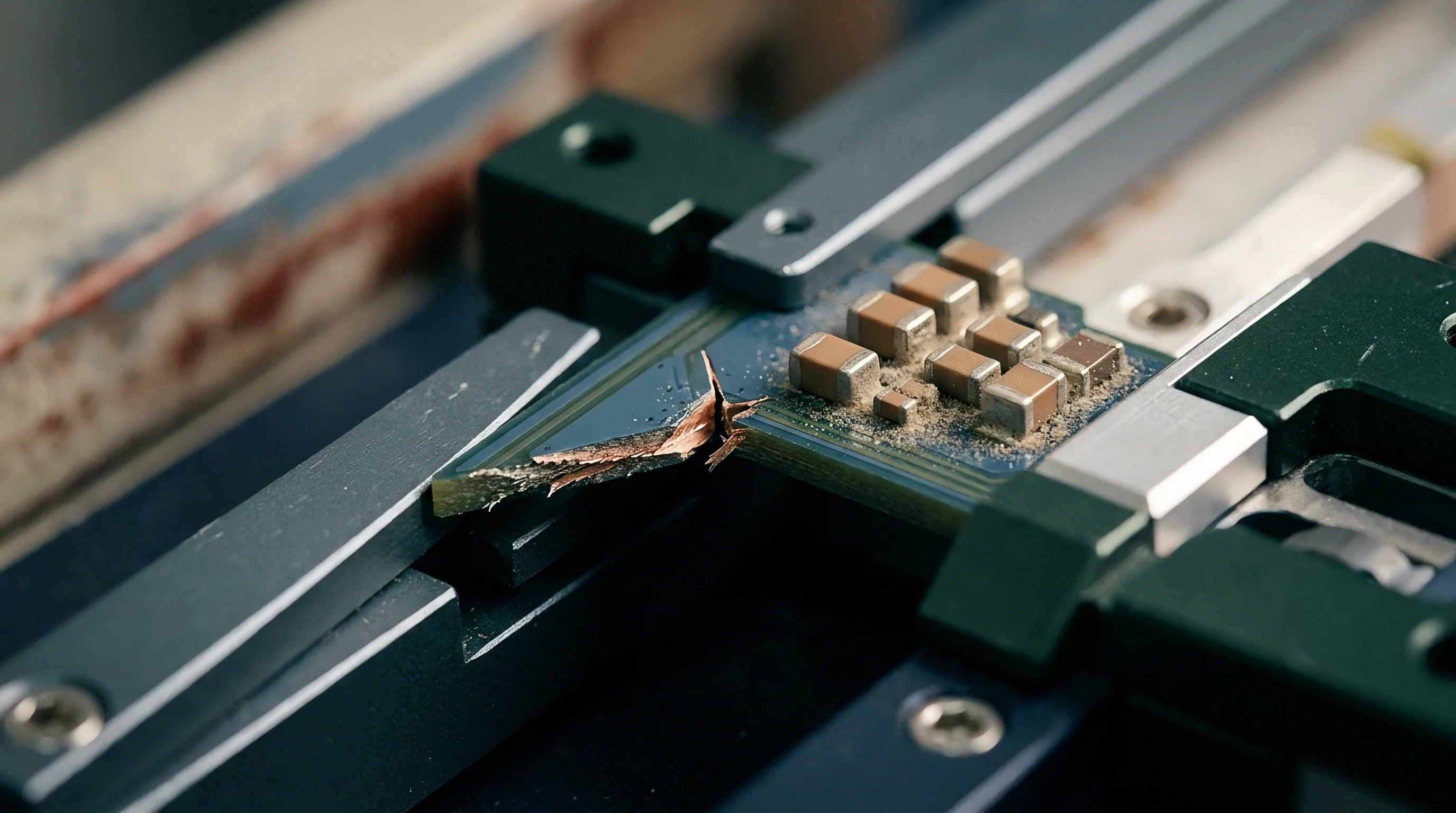
Physical Tooling Identification and Asset Marking
Marking protocols must survive high-temperature production environments, chemical wash cycles, and mechanical wear over years of continuous operation. Deep mechanical engraving directly into the steel mold base plate provides permanent verification of ownership. Steel tags held by blind rivets carry deep-stamped serial numbers matching the master supply agreement asset schedule.
Passive RFID tags embedded inside recessed pockets on the mold frame allow rapid electronic scanning by recovery teams during a court-ordered inventory sweep. Photos showing serial plates, water line ports, ejector pin layouts, and custom mold base dimensions must accompany every asset record entry.
- Asset Marking Audit Verifies deep steel engravings, serial tags, and RFID tags on all mold bases, stamping dies, and custom test jigs against master inventory schedules.
- Bailment Agreement Registration Files formal bailment agreements and title notices with domestic commercial registries in the manufacturing host jurisdiction prior to production line installation.
- Interim Judicial Seizure Petition Submits physical serial registries, stamped purchase receipts, and bailment filings to a local tribunal to obtain an asset preservation order.
- On-Site Marshal Execution Coordinates with court-appointed bailiffs and local logistics teams to inspect, unbolt, pack, and transport physical tooling off the factory floor.
- Post-Repossession Technical Audit Inspects cavity surfaces, cooling channels, electrical heaters, and optical sensors at a receiver facility to assess physical damage or tampering.

Bailment Agreements and Ownership Documentation
Title transfer mechanics require clear documentation defining the contract manufacturer as a temporary bailee holding physical possession without acquiring equitable ownership. The bailment agreement explicitly states that the buyer retains absolute title at all times, independent of payment disputes regarding production piece prices. Non-recurring engineering payments must tie directly to specific physical deliverables, including complete mechanical drawings, computer-aided design files, electrode designs, and tool maintenance logs.
Factory operators frequently challenge bailment agreements by raising unpaid setup fees, raw material storage costs, or line maintenance charges. When a contract manufacturer declares insolvency, local liquidators seize all equipment on the premises unless clear bailment registrations exist in local public asset registries. Foreign buyers without registered bailment filings must pay outstanding third-party factory debts to secure the release of their physical tools.
Tooling recovery actions require seventy-two hours of physical audit validation before court marshals execute an asset seizure warrant.
Skipping permanent physical asset tags on tool bases destroys legal proof of title when local marshals arrive to execute an asset seizure warrant.

Release
Firmware escrow mechanics protect buyers against supplier insolvency, contract breach, or abrupt technical abandonment of custom module projects. A functioning escrow agreement goes far beyond storing static source code files inside a remote repository. Firmware execution requires targeted build environments, specific compiler toolchains, proprietary hardware abstraction layers, linker scripts, configuration scripts, and cryptographic signing keys for modern microcontroller units and secure elements.
Escrow triggers fail when released archives contain incomplete source code, missing board support packages, or uncompiled external dependencies. The deposit verification procedure must prove that the archived files compile into a bit-for-bit identical binary matching the production firmware running on field hardware.

Verification of Escrow Deposit Completeness
Cryptographic checksum validation forms the baseline of deposit verification protocols. SHA-256 hashes generated from compiled binary outputs must match the production firmware image deployed during factory end-of-line tests. Storing source code in isolation without containerized build environments introduces compiler version mismatches, missing build dependencies, and broken toolchain references.
Container images containing the exact operating system build, target toolchains, libraries, linker configurations, and build scripts must accompany every firmware deposit update. Deposit verification procedures must include execution of automated build sequences inside an isolated sandbox environment to confirm successful binary generation.
| Deposit Content Category | Required File Artifacts | Verification Method | Release Failure Risk |
|---|---|---|---|
| Source Repositories | C/C++ sources, assembly, headers, build scripts, linker scripts | Clean-room containerized compile pass | High: Missing private header dependencies |
| Toolchain Environment | Docker image, specific cross-compiler toolchain, SDK version | Automated binary reproduction test | Critical: Compiler version mismatch breaks binary |
| Board Support Package | Register maps, pin multiplexing files, peripheral drivers | Static code analysis and target board flash | High: Undocumented hardware register overrides |
| Cryptographic Keys | HSM root keys, bootloader signing keys, provision scripts | Public key signature verification sweep | Catastrophic: Inability to field-update target hardware |

Deposit Integrity and Build Reproducibility Metrics
Escrow agents must mandate continuous verification protocols where every release tag in the software development lifecycle triggers an automated build check. Static code archives degrade rapidly as underlying libraries update and hardware revisions arrive. Depositing outdated code bases creates extensive re-engineering delays during an emergency supplier transition.
- Incomplete Dependency Archives Missing external open-source or proprietary third-party libraries preventing successful source code compilation inside a clean environment.
- Missing Signing Keys Failure to escrow private cryptographic keys required by secure bootloaders, rendering newly compiled binaries unbootable on target devices.
- Unregistered Hardware Variant Configurations Source code deposits lacking specific preprocessor flags or peripheral initialization files for secondary hardware board revisions.
- Undocumented Custom Build Tools Reliance on internal supplier build scripts or hardware activation utilities that were omitted from the escrow package repository.
- Licensing Restrictions on Vendor Stacks Third-party silicon vendor driver licenses that prohibit transfer or redistribution of source code without explicit vendor consent.
Hardware security module keys, private bootloader signing keys, and secure element initialization secrets require specialized key escrow procedures. Without valid signing keys, newly compiled binary files will be rejected by target microcontroller units equipped with secure boot protection. The escrow deposit must include encrypted key blobs, key generation utility source code, and key injection scripts compatible with standard production line programming hardware.
Source code stored without containerized toolchains and board support packages cannot produce a bit-for-bit identical binary.
An escrow deposit containing only C language files remains incomplete when custom linker scripts and build macros are omitted from the archive.


Lien
Statutory encumbrances and third-party financial claims create severe physical barriers during cross-border tooling repossession efforts. Factory real estate owners, regional tax authorities, utility providers, and raw material suppliers hold broad legal powers under host country laws to seize equipment located within a defaulted manufacturing facility. These super-priority statutory liens frequently take precedence over foreign buyer ownership claims, regardless of contract language or international arbitration clauses.
When a contract manufacturer fails to make payroll or defaults on local bank financing, domestic courts move quickly to seal factory premises and freeze all internal assets. Physical tooling located on the production floor becomes immediate leverage for local creditors seeking debt settlement.
Super-Priority Claims and Labor Encumbrances
Local labor statutes across many manufacturing jurisdictions grant workforce claims top priority over all physical equipment found inside a closed factory. Employees owed severance pay or back wages can obtain immediate asset freeze orders from local labor boards. Foreign buyers attempting to remove physical molds from an encumbered plant face direct opposition from local law enforcement and organized worker groups.
Customs authorities also enforce statutory liens for unpaid import duties, value-added taxes, or inaccurate tariff classifications associated with equipment imported under temporary import regimes. Clearing these customs liabilities requires full payment of back taxes and administrative fines before export clearance documents will be issued.
- Subcontractor Debt Audit Verifies that the primary contract manufacturer has fully paid all third-party toolmakers and raw material vendors involved in tooling fabrication.
- Customs Status Review Audits temporary import permits, pedimentos, or customs entry declarations to confirm equipment import tax compliance.
- Labor Liability Assessment Checks regional labor board filings for outstanding wage claims, severance disputes, or union encumbrances attached to the manufacturing facility.
- Bank Security Check Searches public commercial registries in the host jurisdiction for general floating charges or fixed debentures held by local banks over plant machinery.
Resolving statutory liens requires direct financial negotiation with local creditors and government authorities. Title documentation alone will not override domestic statutory priorities established by local law.
Paying off local subcontractor debts directly yields physical asset release faster than contesting statutory lien priorities through local courts.


Remedy
Legal remedies for recovering physical tooling and triggering firmware escrow releases require a combination of international arbitration, domestic injunctive orders, and automated technical release protocols. International commercial arbitration under UNCITRAL or ICC rules provides a neutral forum for resolving ownership disputes, but obtaining immediate physical control of assets demands provisional judicial relief. Emergency arbitrators can issue interim orders directing the return of tooling and the release of source repositories, yet enforcement relies on domestic courts in the jurisdiction where the assets sit.
The Convention on the Recognition and Enforcement of Foreign Arbitral Awards, known as the New York Convention, enables international enforcement of final arbitral awards across member states. Obtaining a final arbitral award typically takes twelve to twenty-four months, during which time physical tooling may suffer degradation, unauthorized use, or physical removal by the local manufacturer.

How Do International Arbitral Awards Compel Local Firmware Release?
Arbitral decisions ordering firmware escrow release carry strong force when served on escrow trustees located in common-law or arbitration-friendly jurisdictions. Domestic courts in the trustee’s jurisdiction routinely enforce arbitral directives instructing escrow agents to deliver cryptographic keys, source code, and containerized build environments to the buyer. If the escrow agent attempts to withhold deposit materials based on supplier objections, courts issue contempt orders to compel execution.
Physical tooling enforcement presents greater operational difficulty. Local tribunals in manufacturing host states evaluate foreign interim orders against domestic public policy and local property laws. To secure physical repossession, buyers must convert foreign arbitral orders into domestic enforcement writs through local exequatur or recognition proceedings.
Emergency arbitral injunctions carry immediate weight with escrow agents operating in common-law jurisdictions.
Provisional court orders issued in the jurisdiction hosting the escrow repository secure digital assets while physical asset recovery moves through foreign domestic tribunals.
What specific cross-border mechanism effectively prevents a defaulted contract manufacturer from using buyer-owned tooling during the exequatur recognition window?

Reckoning
Evaluating whether to pursue physical tooling repossession and firmware escrow release against re-tooling and clean-room firmware re-engineering requires accurate financial accounting. Legal enforcement actions across foreign jurisdictions generate significant expenditures in legal retainers, court deposits, local bailiff fees, asset storage charges, and customs duties. These legal expenses must be weighed directly against the non-recurring engineering costs, tooling fabrication lead times, and lost market revenue associated with setting up a secondary manufacturing line from scratch.
Dual-sourcing ramp schedules often favor parallel clean-room firmware re-implementation when escrowed source code is incomplete or locked behind lengthy judicial stays. The financial choice depends on the remaining product lifecycle, volume projections, and the exact lead time required to build replacement injection molds and stamping dies.

Landed Cost Arithmetic of Recovery versus Re-Engineering
Consider a custom wireless IoT gateway module program facing contract manufacturer default in a foreign jurisdiction. Assume the primary production line utilizes four custom injection molds valued at $180,000, two stamping dies valued at $70,000, and proprietary firmware containing 120,000 lines of C/C++ code. The buyer must choose between initiating physical asset repossession and escrow litigation versus funding immediate dual-sourcing re-tooling and clean-room firmware reconstruction.
| Cost Component | Option A: Physical Repossession & Escrow Release | Option B: Full Re-Tooling & Clean-Room Re-Build |
|---|---|---|
| Legal Retainers & Local Counsel | $85,000 | $15,000 (Contract Termination Only) |
| Asset Seizure & Bailiff Execution | $25,000 | $0 |
| Local Encumbrance & Lien Settlements | $45,000 | $0 |
| Customs Duties & Repossession Freight | $30,000 | $0 |
| Replacement Tooling Fabrication (NRE) | $0 | $250,000 |
| Clean-Room Firmware Re-Engineering | $0 | $140,000 |
| Escrow Verification & Audit Fees | $12,000 | $0 |
| Product Re-Qualification & Test Jigs | $20,000 | $60,000 |
| Total Financial Outlay | $217,000 | $465,000 |
| Time to First Production Ship | 12 Weeks | 28 Weeks |
Physical repossession yields a total financial saving of $248,000 and reduces line restart time by sixteen weeks compared to full re-tooling. If local courts freeze physical asset movement for more than six months due to statutory labor liens, lost revenue during the extended downtime offsets the initial tooling cost savings.
- Issued formal notice of contract termination citing contractual breach terms and specifying immediate access dates for physical asset recovery.
- Deposited mandatory court security funds with the domestic tribunal to secure an emergency exequatur asset preservation order.
- Transferred settled asset title declarations and bailment registries to the local court marshal to execute physical plant entry.
- Audited physical tooling condition at the receiving secondary manufacturing plant and issued clean-room firmware build instructions to the new integration partner.
Calculating the true cost of contract default requires balancing immediate legal fees and lien settlements against the total revenue lost during extended factory downtime.