Resolving Multi-Jurisdictional Radio Approval Scope Gaps in White-Label Hardware Supply Chains
Closing white-label radio approval gaps requires mandatory host-level radiated testing, unredacted technical files, and local legal agent appointments.


Fault
A spectrum analyzer trace crosses the minus forty-one point three decibel-milliwatts per megahertz limit line at four point eight gigahertz while a handheld scanner rotates at three revolutions per minute inside a three-meter semi-anechoic chamber. The bill of materials lists an off-the-shelf system-on-chip module bearing an active Federal Communications Commission identifier. The supplier promised turnkey compliance across North America and the European single market, yet the receiver spurious emission baseline sits six decibels above the regulatory ceiling.
The module certificate covers a standalone reference board with a trace dipole etched onto flame-retardant fiberglass. Inside the commercial product, that same board sits four millimeters above a lithium-polymer pouch battery and connects to an unshielded ribbon cable servicing a capacitive display.
The gap between a component grant and a finished product declaration creates immediate commercial exposure. Original design manufacturers routinely market white-label wireless assemblies as globally certified, transferring the legal exposure of finished-goods conformity directly to the brand owner whose nameplate sits on the outer housing. An original equipment manufacturer filing under FCC Part 15.247 or Part 15.407 certifies the radio in isolation, governed by specific host integration conditions detailed in the grant notes.
When the white-label buyer re-houses the assembly, alters ground planes, substitutes an external whip antenna for an internal ceramic patch, or bundles a second cellular transceiver into the enclosure, the original approval ceases to shield the end product.
A modular radio approval covers only the specific antenna types, trace geometries, and operating conditions documented in the original certification dossier.
United States regulations under Title 47 of the Code of Federal Regulations distinguish sharply between single-modular transmitters, limited modular transmitters, and complete host devices. A full modular grant requires an onboard shield, buffered modulation inputs, internal power supply regulation, a permanently affixed antenna or unique antenna coupler, standalone testing configurations, and clear radio frequency exposure compliance. White-label suppliers frequently cut unit costs by utilizing limited modular approvals, omitting the physical shield can or relying on host-regulated voltage lines.
This transfer of regulatory burden leaves the host brand owner responsible for full radiated emissions testing, intentional radiator re-evaluation, and updated administrative filings before customs entry.
International regulatory structures compound the technical exposure. The European Union Radio Equipment Directive 2014/53/EU rejects the modular grant concept entirely. Under the Radio Equipment Directive, the legal entity placing the finished apparatus on the market signs the Declaration of Conformity and assumes sole liability for compliance with essential health, safety, electromagnetic compatibility, and radio spectrum efficiency requirements under Article 3.
A supplier test report covering ETSI EN 300 328 for two point four gigahertz wideband data transmission serves as supporting evidence in a technical construction file, yet it does not confer conformity upon the host. The brand importer remains legally accountable for the finished assembly under laboratory verification against harmonized standards.
Worldwide type approval for an integrated module does not exempt a branded enclosure from secondary testing beyond basic electrical safety.

Clamp
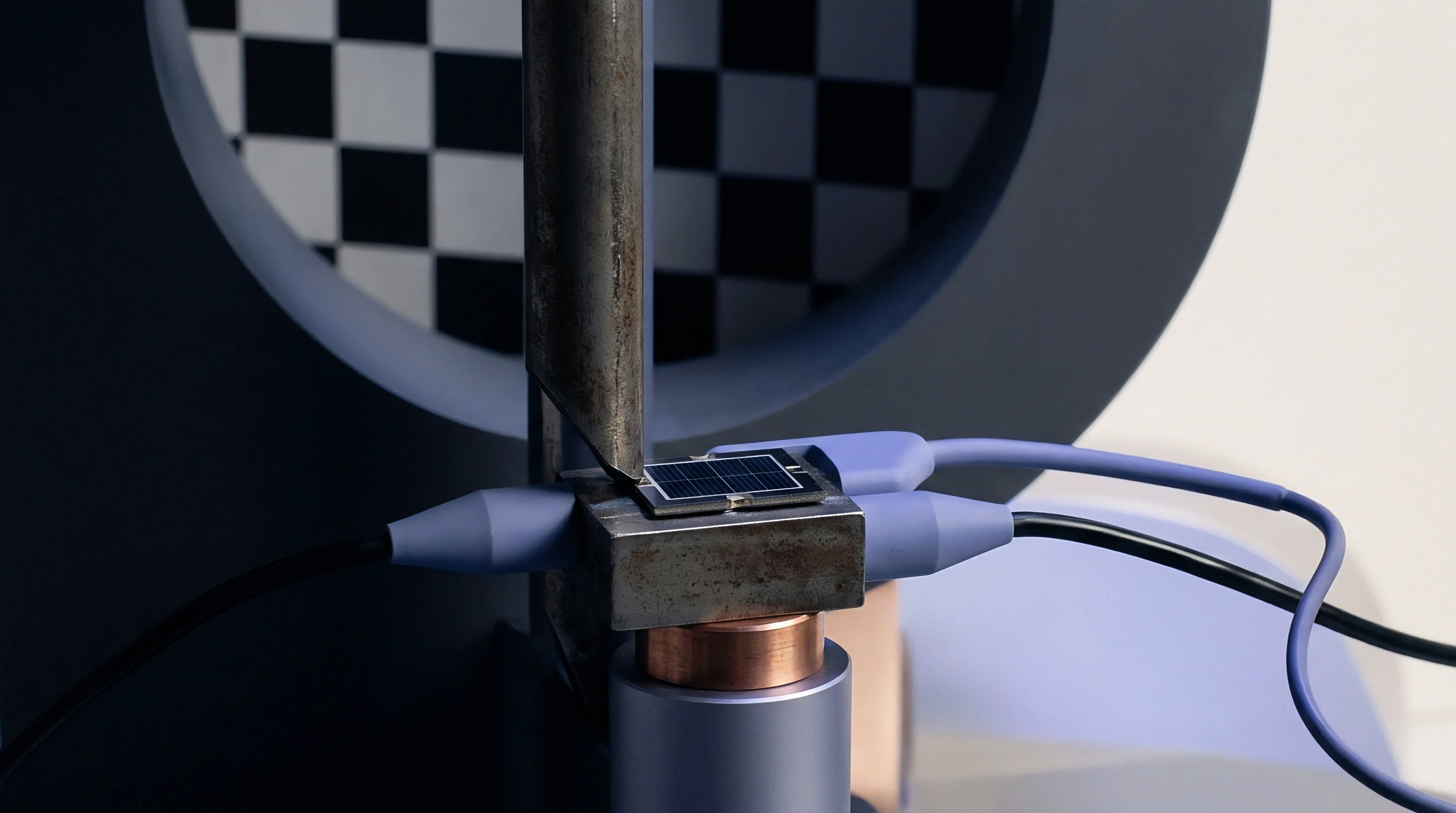
Fastening an enclosure with mechanical fasteners introduces contact resistances that alter radio frequency return paths and harmonic suppression. When metal chassis halves join through painted standoffs, high-frequency currents circulate across seam discontinuities, transforming a certified radio core into an unintentional aperture antenna. Chamber evaluations reveal that harmonic leakage at the second and third carrier multiples correlates with mounting torque and gasket compression.
A torque driver set to zero point four Newton-meters yields fifteen decibels higher radiated leakage at five gigahertz than the same joint compressed at zero point eight Newton-meters with continuous nickel-copper conductive fabric.
Will Modular Approval Void When Enclosure Shifts?
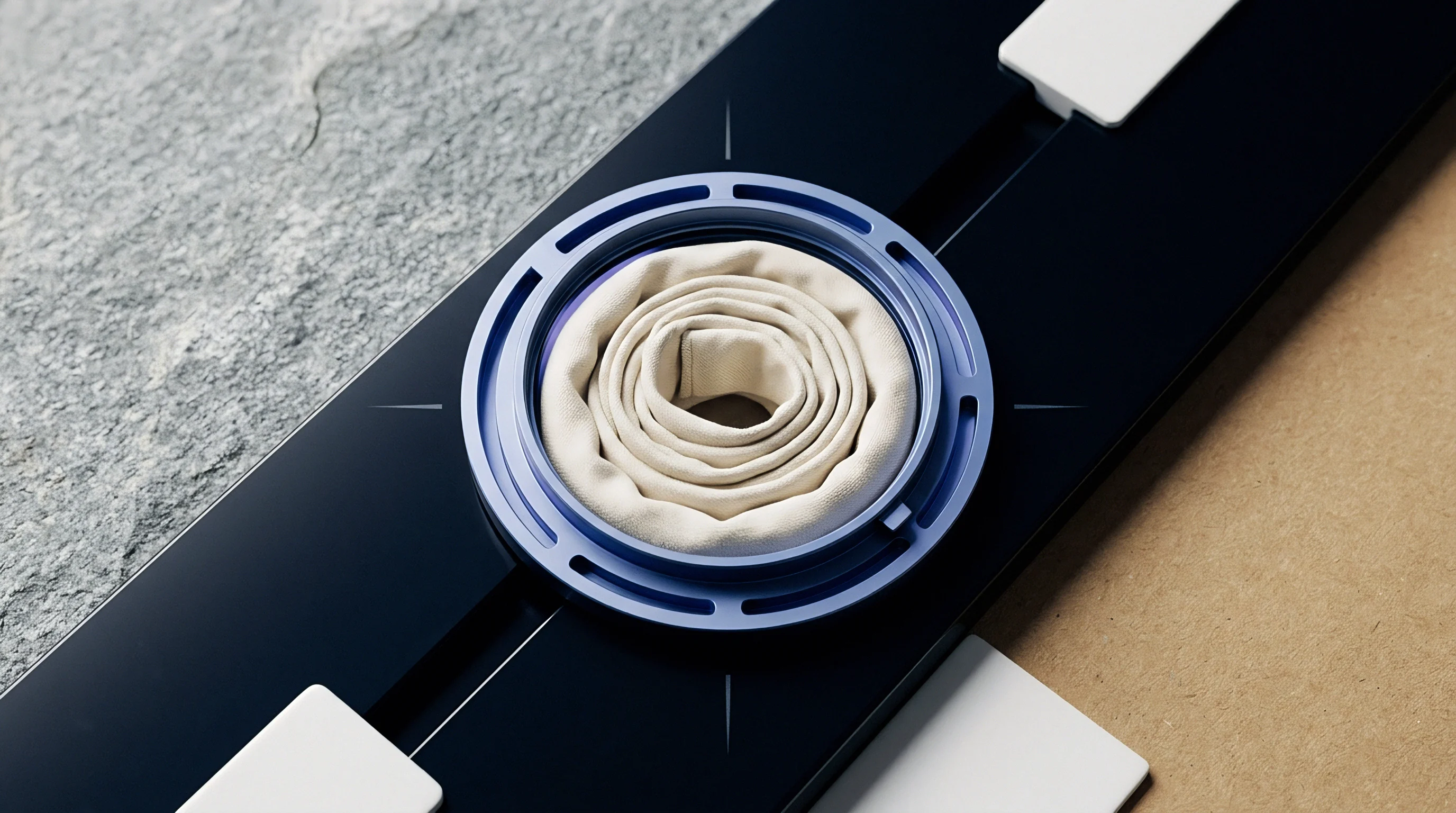
Altering the dielectric properties surrounding an integrated antenna pulls the resonant frequency away from its tuned center. A module certified with a five-millimeter air buffer experiences severe capacitive detuning when potted in polyurethane resin or seated flush against an injection-molded polycarbonate shell with a relative permittivity of three point zero. The return loss degrades from minus eighteen decibels to minus four decibels, pushing reflected energy back into the power amplifier stage.
The amplifier generates intermodulation distortion, raising out-of-band spurious emissions above the limits enforced by Title 47 CFR Part 15.209 and ETSI EN 301 489-17.
Chamber measurement tracks these alterations through three physical dimensions:
- Antenna coupling distance shifts resonant frequencies and distorts omnidirectional radiation patterns when conductive masses enter the reactive near-field zone.
- Cable routing proximity induces common-mode radio frequency currents along battery leads and display harnesses, radiating unintended energy through structural seams.
- Chassis ground impedance develops high-frequency voltage drops across separated circuit commons, defeating the onboard decoupling of the integrated transmitter.
- Secondary emitter shielding leaks digital switching hash from host microprocessors into the radio receiver passband, severely degrading demodulation sensitivity.
Radiated measurements taken inside a three-meter anechoic chamber trace how ground planes alter field shapes during continuous turntable rotation through three hundred sixty degrees, accompanied by antenna mast elevation shifts between one and four meters. When a white-label host changes orientation from horizontal desktop deployment to vertical wall-mount staging, peak field strength shifts angular planes. A horizontal polarization scan may demonstrate a twelve-decibel margin below the quasi-peak threshold, while the vertical scan on the orthogonal axis breaches the regulatory limit by three decibels at two hundred forty megahertz.
The original modular grant contains no data regarding host chassis resonances.
Radiated spurious emissions increase when structural enclosure seams disrupt high-frequency ground return loops.
Thermal dissipation accessories present comparable electromagnetic hazards. Adding an extruded aluminum heatsink over a white-label processing core changes the effective aperture area of the assembly. If the mechanical clip lacks direct electrical bonding to the system ground, the heatsink floats at high radio frequencies, picking up clock harmonics and reradiating them with dipole efficiency.
Eliminating these parasitic radiators requires conductive interface materials and grounding points situated at spatial intervals smaller than one-twentieth of the target harmonic wavelength.
Every mechanical alteration of the casing reconfigures the radiating structure of the finished product.

Variance
Differences among regional radio regulatory limits force engineering trade-offs during hardware qualification. A conducted output power setting configured for twenty decibels in reference to one milliwatt satisfies FCC Part 15.247 for North America but breaches the ten decibels per milliwatt spectral density threshold enforced by Japan Radio Law under MIC Notice No. 88. White-label vendors selling single hardware builds across multiple territories often lock transmitter firmware to the highest allowable output level.
This configuration guarantees failure during laboratory spot checks in jurisdictions maintaining lower equivalent isotropically radiated power ceilings.
Why Do Laboratory Radiated Spurious Limits Diverge?
Measurement methodologies and detector characteristics vary substantially across regional enforcement agencies. United States FCC Part 15 rules mandate peak and average detector scans using a one-megahertz resolution bandwidth above one gigahertz, setting the general field strength limit at fifty-four microvolts per meter at three meters for average evaluations. European testing under ETSI EN 300 328 utilizes spectrum analyzer root-mean-square detectors and specific gating sweeps mapped across active hopping bursts, establishing a minus thirty decibel-milliwatts conducted ceiling across restricted bands.
A radiated harmonic trace acceptable under American average limits can breach European peak envelope requirements during transmit packet transitions.
Because testing houses bill hourly, multi-jurisdictional market entry requires precise calibration of laboratory scopes before booking anechoic chamber sessions. The following matrix illustrates testing divergence across six major economic zones:
| Jurisdiction | Authority | Primary Radio Standard | Conducted Power Limits | Out-of-Band Limit Method | Host Modular Recognition |
|---|---|---|---|---|---|
| United States | FCC | Title 47 CFR Part 15C/E | 30 dBm conducted, 36 dBm EIRP | -20 dBc or Part 15.209 field limits | Yes, full and limited grants |
| European Union | National Authorities | ETSI EN 300 328 / EN 301 893 | 20 dBm EIRP (2.4 GHz), 23 dBm EIRP | -30 dBm to -54 dBm spectrum masks | No modular transfer concept |
| Canada | ISED | RSS-247 Issue 3 | 30 dBm conducted, 36 dBm EIRP | Matches FCC Part 15 boundaries | Yes, via Category I equipment annex |
| Japan | MIC | Radio Law Article 38-24 | 10 mW/MHz or 20 dBm EIRP | Cabinet radiation below 2.5 uW | Yes, Construction Type Certification |
| South Korea | RRA | KS X 3123 / MSIT Notice | 10 mW/MHz or 20 dBm EIRP | Strict spurious masks per band allocation | Limited, local registration required |
| China | SRRC | MIIT Radio Regulation No. 129 | 20 dBm EIRP (2.4 GHz) | -30 dBm to -40 dBm absolute thresholds | Model approval required for host |
China State Radio Regulation Committee enforcement under MIIT Notice 2021 No. 129 illustrates the severity of national divergence. Effective since late 2023, SRRC testing enforces strict limits on out-of-band emissions and carrier frequency tolerance across the two point four gigahertz band, demanding conducted measurements directly at the antenna terminal. If a white-label host integrates a module without an accessible radio frequency test port or lacks specialized engineering firmware exposing specific transmission modes, the national accreditation testing body rejects the sample.
Testing fees in Beijing or Shenzhen remain non-refundable upon sample rejection.
A laboratory report valid under American regulations provides no legal standing before Asian regulatory agencies without specific in-country test execution.
Dynamic Frequency Selection presents an additional operational divide in the five gigahertz spectrum. European testing under ETSI EN 301 893 Article 4.5.2 enforces uniform radar detection thresholds, zero-wait channel availability checks, and off-channel monitoring across five thousand two hundred fifty to five thousand seven hundred twenty-five megahertz. The United States equivalent under FCC Part 15.407 utilizes distinct radar pulse profiles, including Frequency Modulated chirps and variable pulse repetition intervals.
A white-label router or client device carrying a software package certified strictly for FCC radar profiles will fail European radar waveform injection tests, dropping packets and misidentifying legitimate commercial signals as military radar activity.
How do national standards bodies plan to reconcile conflicting radar simulation envelopes as commercial satellite links occupy overlapping allocations?

Clock
Booking testing window slots requires managing laboratory calendars months in advance of production volume ramps. An accredited third-party chamber charges between two thousand and three thousand five hundred dollars per eight-hour shift. Pre-compliance characterization, full intentional radiator qualification, electromagnetic compatibility screening, and electrical safety evaluation under IEC 62368-1 typically consume sixty chamber hours for a complex multi-band transceiver.
When a sample demonstrates spurious failures on day three, troubleshooting stalls the campaign while daily chamber booking charges accrue continuously against the hardware project ledger.
Lead times for international filings diverge based on administrative protocols and domestic agency backlogs. Securing an FCC grant via an accredited Telecommunication Certification Body consumes two to four weeks once clean test reports exist. The Canadian ISED listing proceeds along an identical two-week to four-week timeline under bilateral recognition frameworks.
European CE marking technically operates without agency turnaround queues through internal production control under Annex II of Directive 2014/53/EU. The brand owner compiles the technical construction file and signs the declaration immediately, assuming instant product liability.
Asian market access breaks Western scheduling assumptions as filing windows close against mandatory local testing requirements and administrative delays:
- Sample customs clearance consumes two to four weeks navigating commercial invoicing, tariff classification, and hazardous materials declarations for internal batteries.
- Radio regulatory laboratory testing requires three to six weeks inside domestic accredited facilities, subject to strict sample queue priorities.
- Agency technical dossier review adds two to five weeks of bureaucratic evaluation before certification issuance.
- Local representative appointment takes one to three weeks verifying corporate charter documentation and domestic legal liability acceptances.
- Label approval and database registration absorbs one to two weeks before authorized customs import permits reach active status.
A typical multi-country rollout spanning North America, the European Union, Japan, South Korea, and China requires a sequential critical path of sixteen to twenty-four weeks under optimal execution. Sourcing teams relying on supplier assurances of immediate market readiness face commercial suspension when distributor warehouses fill with uncertifiable inventory. The carrying cost of immobilized finished goods inventory regularly exceeds the initial non-recurring engineering fees expended on custom chamber evaluations.
Staged market access requires twenty-two weeks of sustained regulatory lead time when target jurisdictions mandate domestic chamber testing.
Sample count demands surprise procurement managers unfamiliar with destructive testing procedures. While an FCC filing requires two complete functional units, China SRRC and South Korea National Radio Research Agency filings demand between three and six dedicated units. These samples must feature external coaxial radio frequency pigtails, specialized test firmware providing continuous wave and continuous modulation output, and open chassis shells allowing direct instrument probing.
Damaged samples scrap out during extreme temperature chamber runs, requiring emergency air freighting of replacement hardware that restarts laboratory evaluation queues from zero.
A missed shipping window caused by regulatory hold orders forfeits wholesale retail placement commitments and triggers liquidated shelf-space penalties across downstream distribution contracts.
Paperwork
Documentary dossiers bridge laboratory measurements with customs import authorization. An incomplete technical construction file invalidates a European CE mark faster than a physical chamber failure. National market surveillance authorities in Germany, Sweden, and the Netherlands routinely issue administrative documentation requests to brand importers, demanding delivery of full test reports, component declarations, schematics, and risk assessment files within ten working days.
White-label vendors frequently refuse to release board schematics, bill of materials specifics, and internal firmware source documentation, citing intellectual property protection.
Brand owners circumventing documentary impasses must execute formal confidentiality covenants and escrow structures with original design manufacturers. Without an unredacted circuit schematic, an accredited certification body cannot complete an FCC Class II Permissive Change filing to authorize alternative antenna configurations or secondary enclosure plastics. The Federal Communications Commission requires comprehensive operational descriptions, block diagrams detailing internal clock frequencies, and tuning procedures before issuing certification identifiers.
A defensible multi-jurisdictional compliance dossier requires five specific documentary instruments:
- Signed host risk assessment detailing compatibility evaluations for co-located transceivers, thermal operating margins, and electromagnetic shielding integrity.
- Unredacted laboratory test reports displaying calibrated instrument asset numbers, measurement uncertainty calculations, and environmental atmospheric readings.
- Grantee authorization letters granting permission from the original modular certificate holder to reference existing radio test files.
- Factory quality system certificates validating ongoing production line radio frequency calibration under ISO 9001 or equivalent audits.
- Localized user documentation carrying mandatory statutory consumer warnings, specific absorption rate declarations, and visible regulatory identifiers.
Specific Absorption Rate documentation represents an acute vulnerability for wearable and handheld white-label products. FCC rules mandate localized radio frequency exposure evaluations under Title 47 CFR Part 2.1093 whenever an intentional radiator operates within twenty centimeters of the human body. Modular grants strictly apply to mobile configurations separated by more than twenty centimeters unless backed by dedicated SAR evaluation dossiers.
Integrating a pre-certified Wi-Fi module into a body-worn smart badge strips the module grant of legal validity, necessitating physical phantom fluid chamber scans costing eight thousand to fifteen thousand dollars per device geometry.
Because physical labels carry direct legal liability, electronic labeling provides welcome relief from overcrowded housings under the United States E-LABEL Act and equivalent Japanese MIC provisions. Regulatory marks may sit within a software menu accessible within three administrative navigation steps. Mexico, Brazil, and India reject electronic display schemes for primary radio certification numbers, requiring permanent physical stamping, laser etching, or tamper-evident metallic adhesive nameplates on the external chassis exterior.
The buyer writes into the supply contract that the manufacturer shall maintain active, unredacted technical construction files in an independent escrow vault accessible to international regulatory authorities upon demand.

Crate
At international trade borders, automated import entry clearance systems link customs tariff schedules directly to regulatory agency databases, halting non-compliant freight at the dock. In the United States, modern customs operations query the FCC database automatically upon entry filing. A mismatch between the importer of record, the foreign manufacturer identification code, and the registered FCC Grantee Code triggers instant electronic hold notices.
The shipping container sits on the marine terminal dock, accruing daily demurrage penalties between one hundred fifty and three hundred fifty dollars per twenty-foot equivalent container while logistics brokers scramble for documentation.
The financial mechanics of resolving regulatory scope gaps escalate rapidly when inventory accumulates across customs checkpoints. Consider a standard production run of ten thousand white-label commercial smart home gateways sourced at an ex-works cost of forty-two dollars per unit, carrying an aggregate factory invoice value of four hundred twenty thousand dollars. The supplier integrated an FCC-certified module but altered the antenna trace configuration on the host motherboard, failing to file an FCC Class II Permissive Change or execute European Radio Equipment Directive Article 3.2 spectrum verification tests.
The shipment docks at the Port of Rotterdam and the Port of Los Angeles simultaneously.
Testing houses quote basic gap resolution campaigns with predictable cost profiles:
| Filing and Testing Line Item | Laboratory Hours | Standard Fee Range | Expedited Chamber Premium |
|---|---|---|---|
| FCC Class II Permissive Change | 16 hours | $4,500 – $7,000 | $2,500 |
| RED Article 3.2 Spurious Retesting | 24 hours | $6,000 – $9,500 | $3,000 |
| SAR Phantom Evaluation (Body-Worn) | 32 hours | $8,000 – $14,000 | $4,500 |
| Telecommunications Body Review Fee | Administrative | $1,800 – $3,200 | $1,200 |
| In-Country Local Representation (1 Year) | Administrative | $2,400 – $5,000 | Not applicable |
| Physical Warehouse Re-Labeling (10k units) | Manual Labor | $12,000 – $22,000 | $6,000 |
Assuming the radiated scans identify unsuppressed harmonic spurs, the engineering team must re-spin the host printed circuit board. Tooling new injection molding inserts for revised grounding clip locations absorbs twenty-five thousand dollars and six weeks of factory lead time, with the buyer paying the difference. While goods sit quarantined under customs detention, commercial distributors levy contract non-delivery penalties.
If administrative resolution stalls past ninety days, customs authorities issue mandatory re-exportation orders or destroy the seized cargo at the importer’s direct expense.
Commercial marketplace operators enforce automated listing compliance gates that parallel physical border friction. Algorithmic compliance bots sweep merchant inventories, demanding active FCC IDs, European Declarations of Conformity, and test laboratory accreditation certificates matching the exact commercial brand name displayed on the product packaging. When a white-label reseller lists a product under its proprietary trade brand while uploading a supplier certificate bearing the Chinese contract manufacturer trade name, automated marketplace governance systems delist the catalog page within twenty-four hours.
Reinstatement requires documentary reconciliation that ties the branded entity to the original grant holder through verified contractual agency agreements.
Careful sourcing practices budget compliance validation into initial unit economics rather than treating factory declarations as verified assets. The buyer calculates fully landed regulatory costs, accounting for host testing, local agency fees, documentation audits, and potential chamber rework before signing binding purchase agreements. Field surveillance sweeps by market authorities identify uncertified intentional radiators through automated retail sampling programs, applying strict liability that pierces corporate reseller branding and attaches penalties directly to the commercial directors of the importing entity.