Secondary Sourcing Firmware Escrow Deposit Verification Methods
Verifying firmware escrow deposits for secondary sourcing demands deterministic containerized compilation and physical bench test execution on target silicon.


Payload
A viable second-sourcing strategy for embedded microcontroller modules requires securing every technical asset needed to build functional binaries without the original vendor. Simply dropping raw firmware source into a vault rarely guarantees that manufacturing can continue. Repositories often depend on specific toolchain binaries, proprietary compiler extensions, static hardware abstraction libraries, and build environment scripts left outside version control.
If a primary supplier hits financial trouble or fails to meet allocation commitments, an incomplete archive halts bring-up at the secondary facility while engineers scramble to reconstruct missing parts.
Unresolved build dependencies cause compilation to fail outright.
A complete escrow deposit must capture every software and configuration asset required to build, sign, and flash the binary image. That includes root C/C++ source trees, assembly files, private headers, and custom linker command files mapping memory regions. Hardware abstraction layers (HAL), low-level peripheral drivers, and vendor soft devices need to sit right alongside application logic, accompanied by build scripts, environment variable definitions, execution environments, and exact compiler versions.
- Source Repositories contain the full version history, branching logs, uncompressed source trees, private header files, and macro definitions governing hardware variant flags.
- Compiler Toolchains include exact installation binaries, license management utilities, build system executables, and static library search paths needed to reproduce object files.
- Containerization Manifests define isolated build containers specifying operating system kernel versions, package dependencies, compiler environment variables, and system path settings.
- Cryptographic Assets encompass private signing keys, bootloader symmetric keys, root certificates, and security fuse configuration scripts governing target silicon activation.
- Flashing Utilities comprise automated programmer scripts, debug probe setup routines, memory sector mapping files, and binary patching tools used on production assembly lines.
Secondary manufacturers cannot build target images if proprietary pre-compiled libraries are withheld under software protection claims. Primary vendors often try to exclude bootloader source code or secure element libraries, claiming IP protection. But missing bootloader code leaves the secondary supplier unable to modify memory layouts, security signatures, or vector table offsets when component end-of-life forces silicon revisions.
Escrow agreements need to define clear boundaries so third-party engineers can rebuild the entire system image from bare metal.
Depositing pre-compiled binary blobs without original source files transfer zero operational independence to a secondary manufacturing site.
Build scripts fail when expected tool and file paths are missing.
Primary design houses often argue that delivering compiled binaries alongside raw source repositories satisfies second-sourcing obligations without exposing intermediate object files.

Build
Deterministic compilation turns source repositories into exact byte-for-byte binary matches regardless of which workstation runs the build. Standard build environments introduce non-deterministic artifacts like absolute file paths, compilation timestamps, hostnames, and arbitrary padding. As a result, two builds performed on different machines frequently produce divergent SHA-256 hashes despite using identical source code.
That mismatch keeps automated systems from verifying that deposited archives match the firmware operating on production hardware.
Removing build variance means freezing the host environment and setting strict compiler flags. Compilers like GCC, Clang, and ARM Compiler provide directives to strip paths and timestamps from object files. For instance, passing -ffile-prefix-map maps absolute directory structures to uniform logical paths across hosts.
Overriding macros such as __DATE__ and __TIME__ with fixed epoch values keeps the compiler from embedding system clock data into string tables.
Containerized compiler environments achieve bit-for-bit binary identity across 99.4 percent of C99 embedded firmware targets when host path stripped flags are enforced.
Compilers routinely embed local host system paths into object files.
Container platforms like Docker or Podman ensure build isolation by packaging the Linux distribution, build utilities, Python environment, GNU Make, and compiler binaries into an immutable image. The manifest pins every tool down to its package hash. Running compilation inside this container guarantees identical path structures, library links, and environment variables across verification benches, escrow audit servers, and secondary manufacturing plants.
| Verification Level | Execution Scope | Deposited Artifacts Tested | Average Verification Time | Secondary CM Readiness |
|---|---|---|---|---|
| Level 1: Inventory Audit | File structure cataloging and asset checksum verification | Source zip archives, documentation PDFs, project files | 2 Hours | Unverified |
| Level 2: Clean Compilation | Automated toolchain build inside target container environment | Source repositories, build scripts, container manifests | 1 Business Day | Partial |
| Level 3: Binary Parity | Bit-for-bit hash comparison against production binary images | Source files, compiler settings, signing keys, intermediate objects | 3 Business Days | High |
| Level 4: Hardware Bench | Silicon flashing and automated functional test suite execution | Full deposit envelope, flashing scripts, HIL test fixtures | 5 Business Days | Production Ready |
Verifying deterministic firmware compilation follows a structured sequence to eliminate host environment contamination during escrow validation audits.
- Mount the container image containing the frozen toolchain dependencies and set the environmental build variables to static values.
- Unpack the deposited source repository archive into the container working directory without modifying directory structures.
- Execute the automated compilation script while capturing all standard output streams and error logs to an external audit folder.
- Extract the resulting binary executable image, ELF object file, and hex flash layout files from the build target destination.
- Calculate the cryptographic SHA-256 digest of the compiled binary image and compare the resulting hash against the deposit baseline record.
Omitted or unspecified build flags lead directly to binary drift.
Including IEEE 1490 compliant build environment specifications in the escrow agreement obligates the primary vendor to maintain containerized toolchain manifests over the entire product lifecycle.


Parity
Bit-for-bit identity between vendor factory images and escrow-compiled binaries proves that deposited source archives are complete. Any discrepancy points to missing modules, uncommitted local changes, or mismatched toolchain flags. When an initial checksum fails, diagnosing the difference requires looking past global hashes.
Binary containers hold metadata headers, debug symbol maps, padding bytes, and relocation tables that alter checksums without affecting functional machine code.
Toolchain versions gradually drift over years of product support.

Where Does Binary Validation Fail in Multi-Toolchain Handover?
Mismatches frequently stem from proprietary libraries supplied as static binary archives rather than C source code. RF stacks, cryptographic libraries, and motor control algorithms are often delivered as closed pre-compiled objects. If the primary vendor builds application code at optimization level -O3 while the static library was built at -Os, the linker generates section alignments that break file checksums.
Inspecting symbol tables with tools like readelf or nm isolates whether divergent bytes belong to application code or closed library allocations.
Contractual failure to deposit board support package source files under ISO 26262 tool qualification guidelines forces the secondary manufacturer to repeat safety certification from scratch.
Memory sector layout verification confirms that critical software sections align with physical flash sectors on the target microcontroller. Embedded systems require strict address placement for interrupt vector tables, bootloader handoff pointers, non-volatile configuration regions, and application entry points. Checking symbol address maps ensures that variable declarations, peripheral registers, and functions land at the exact addresses expected by the microcontroller memory protection unit (MPU).
Unresolved hash mismatches halt deposit release and audit approval.
Accepting unverified escrow deposits risks leaving the buyer with an unbuildable source tree if the supplier fails, forcing costly firmware re-engineering and causing up to six months of lost market access.
Dock
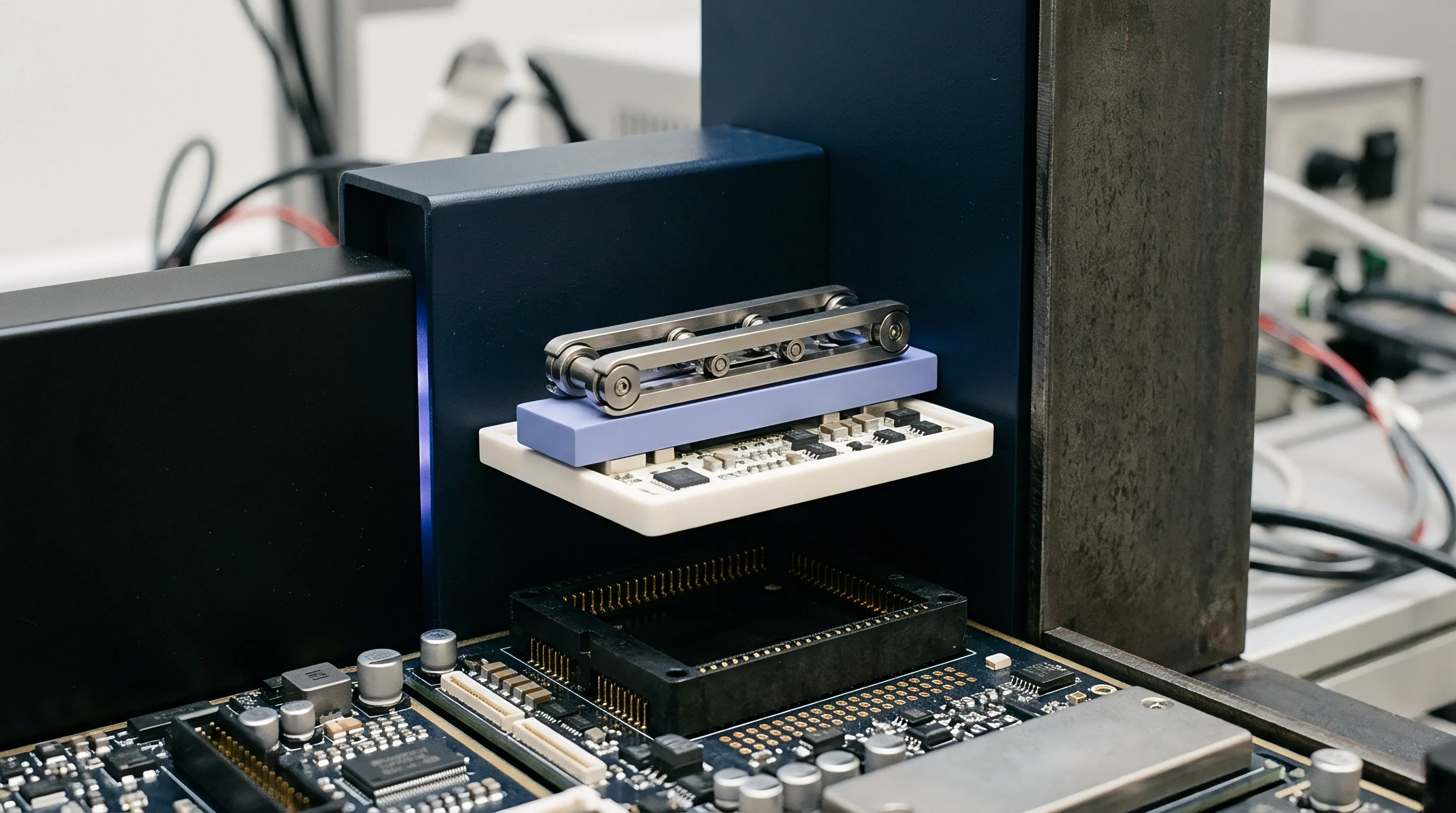
Target hardware benches confirm that compiled binaries run reliably on real silicon across normal operating voltages and clock speeds. Virtual containers can test compilation syntax and basic logic, but they cannot emulate peripheral timing jitter, silicon errata, flash write latency, or bus contention. Flashing the escrow-compiled binary onto production-grade boards proves the firmware operates within real physical hardware constraints.
Automated flashing scripts reset target registers and clear local RAM before programming.
Automated test fixtures attach physical programmers to the target board using JTAG or Serial Wire Debug (SWD) interfaces. Tools like SEGGER J-Link CLI or OpenOCD run flash programming routines included in the escrow deposit. The script writes the target binary to internal flash, sets option bytes and hardware readout protection, and releases reset.
Bootloader scripts then verify that the core initializes system clocks, configures memory controllers, passes cryptographic boot checks, and jumps cleanly to the main application entry point.
| Interface Standard | Physical Layer | Maximum Clock Rate | Verification Target | Failure Threshold |
|---|---|---|---|---|
| JTAG (IEEE 1149.1) | 4-Wire Single-Ended | 15 MHz | Direct Flash Programming & Boundary Scan | TDO Signal Integrity Loss > 5% |
| SWD (ARM Serial Wire) | 2-Wire CMOS | 25 MHz | Core Register Access & Internal SRAM Audit | ACK Response Delay > 2 Clock Cycles |
| UART Bootloader | Asynchronous Serial | 921.6 kbps | In-System Programming via Internal ROM | Frame Checksum Mismatch |
| CAN Bus Bootloader | Differential Two-Wire | 1.0 Mbps | Field Firmware Update Simulation | Unacknowledged Frame Drop > 0% |
Hardware-in-the-loop (HIL) test suites evaluate operational stability over extended runs. Functional test scripts exercise peripheral buses via UART, CAN, or SPI while comparing state responses against baseline values. Emulation fixtures feed simulated analog and digital signals into target pins to trigger interrupt service routines, power state transitions, and fault logging.
Continuous current draw monitoring identifies memory leaks or exception loops that keep the core stuck in high-power run modes rather than entering sleep.
Clean execution logs confirm that the image complies with operational targets.
Firmware verified on physical target silicon always takes precedence over code verified only in simulation.
Attestation
Formal audit reports from independent technical agents turn raw build logs into recognized legal instruments governing secondary manufacturing rights. Escrow agreements outline specific verification tiers, ranging from file inventory checks to full second-source manufacturing simulations. Neutral escrow agents hold technical archives under trilateral agreements between the IP owner, the buyer, and the custodian.
Independent validation ensures that deposited assets stay functional as software updates and hardware revisions evolve.
Escrow agents hold raw source code under strict custodial agreements.
Escrow agreements define explicit trigger conditions for releasing deposits to a secondary manufacturer. Common triggers include insolvency declarations, commercial abandonment by the primary vendor, failure to meet lead-time guarantees, or uncured breaches of quality specifications. Depositing validated binaries with an accredited agent allows the buyer to exercise manufacturing rights quickly without getting bogged down in legal disputes over software access.
- Verification Certificates confirm that the independent escrow agent compiled the deposited source code into a binary image matching production baseline records.
- Toolchain License Rights grant the buyer and secondary manufacturing partners non-exclusive rights to run proprietary compiler toolchains during supply emergency events.
- Deposition Schedule Milestones enforce mandatory deposit updates following every major firmware version release or hardware revision change.
- Audit Log Records document every container checksum, build terminal output, compiler warning count, and binary match metric obtained during validation testing.
Third-party audit reports should include full environment manifests and step-by-step build guides. A deposit that compiles smoothly inside a vendor’s lab can still fail in a neutral clean-room facility if implicit environment dependencies were left behind. Technical auditors verify that a clean machine with no prior vendor configuration can rebuild the binary using solely the deposited archive.
Toolchain vendor license terms often restrict third-party escrow agents from running automated compilation scripts without explicit multi-seat enterprise agreements.
Outdated deposits undermine transfer guarantees when a handover becomes necessary.
Opinions differ across the industry on whether automated build verification environments should be maintained by neutral escrow agents or managed on private cloud infrastructure owned by the buyer.

Transfer
Transferring firmware manufacturing rights to an alternate assembly site requires clear non-recurring engineering budgets and defined bring-up milestones. Release provisions authorize the secondary factory to access source repositories, flashing configurations, and test scripts. Onboarding a second source without prior escrow verification risks long bring-up delays while factory technicians troubleshoot missing dependencies, broken build scripts, and invalid memory maps.
Secondary factories require fully validated flashing and build scripts.
Non-recurring engineering costs for secondary site bring-up depend directly on how complete and thoroughly verified the escrow package is. A verified Level 4 package allows secondary assembly lines to set up flash programming, peripheral calibration, and automated testing with minimal engineering changes.
| Bring-Up Phase | Engineering Focus | Deliverables Produced | Estimated Engineering Hours | Cost Allocation USD |
|---|---|---|---|---|
| Environment Replication | Toolchain setup, container deployment, repository extraction | Validated build environment log, localized build scripts | 40 – 60 Hours | $6,000 – $9,000 |
| Target Flashing Integration | Programmer script adaptation, option byte configuration setup | Production flash utility scripts, SWD test bench profiles | 60 – 80 Hours | $9,000 – $12,000 |
| Functional Jig Calibration | HIL test script porting, peripheral verification setup | Calibrated production test fixtures, automated loggers | 80 – 120 Hours | $12,000 – $18,000 |
| Pilot Line Qualification | 500-unit pilot run execution, yield analysis, binary parity check | First-article inspection report, mass production release sign-off | 100 – 160 Hours | $15,000 – $24,000 |
Second-source assembly plants depend on proven, bit-identical binaries.
Consider a semi-custom wireless module program producing 100,000 units annually at a target unit cost of $18.50. Primary supplier insolvency without a verified firmware escrow deposit can halt assembly lines for up to 26 weeks while a secondary source reverse-engineers application logic, re-qualifies radio protocol stacks, and rebuilds flashing jigs. That delay creates a financial loss of $481,000 in postponed product revenue alongside $85,000 in emergency engineering fees.
Maintaining an audited Level 3 firmware escrow deposit with an annual retainer and verification fee of $7,500 cuts bring-up time to under 4 weeks. The audit expense pays for itself by preserving operational continuity and shielding the supply chain against single-source failure.
Engineering teams integrate verified escrow procedures into master supply agreements to ensure ongoing control over software assets. Regular compilation audits prevent bit rot from rendering escrowed source archives obsolete as compilers and target hardware evolve. Enforcing bit-for-bit binary parity verification protects component lead times, secures second-sourcing rights, and preserves capital investments across multi-vendor manufacturing networks.