Microcontroller Autonomous Memory Patrol Methods for High Ambient Environments
Autonomous memory patrol prevents high-temperature soft errors from compounding into uncorrectable faults by scrubbing memory arrays without CPU overhead.
Flaw

Thermal Retention and Soft Error Scaling
As junction temperatures rise, the primary failure mode in static RAM and embedded flash shifts away from radiation-induced soft errors toward thermal charge leakage. Once operating junction temperatures push past 105 degrees Celsius, sub-threshold leakage climbs, gate oxide breakdown thresholds drop, and dynamic carrier lifetimes shorten. Microcontrollers sealed into unventilated enclosures, automotive under-hood modules, or solar inverter housings routinely sit at junction temperatures between 115 degrees Celsius and 140 degrees Celsius.
Under these sustained thermal conditions, single-event upsets begin compounding with baseline sub-threshold leakage. Arrhenius modeling shows that retention times in charge-storage nodes roughly halve for every 10 degrees Celsius increase. Trap-assisted tunneling currents grow as the silicon oxide degrades, eroding the physical voltage margin between high and low logic states.
Memory arrays become vulnerable to silent data corruption simply because marginal cell charges drain past switching thresholds without any particle strike.
Thermal retention decay at elevated junction temperatures accelerates bit flipping independent of cosmic ray fluxes.
Standard single-error correction and double-error detection schemes comfortably handle isolated bit flips occurring within an access window. Sustained high operating temperatures introduce a slower, more destructive failure pattern: multi-bit spatial degradation over long dwell periods. A single corrected or unnoticed bit error in a rarely accessed memory bank can sit long enough for an adjacent cell in the same word to drift.
Once two bits invert within a single SECDED-protected word, parity logic still catches the discrepancy, but the execution pipeline cannot reconstruct the original data.
Autonomous memory patrol engines counter this by running periodic background reads and scrubbing the space before isolated faults pair up into uncorrectable errors. Protecting SRAM, tightly coupled memory, and embedded non-volatile arrays on predictable intervals requires dedicated hardware logic that can sweep the address space without stalling the main processor core or breaking system power budgets.

Cadence
Scrubbing Schedules across High Temperature Profiles
Determining an effective patrol interval depends on operating temperature, protected memory footprint, and target mean time between failures. Static scrub rates calculated from room-temperature silicon characterization fall short when thermal stress stays elevated for weeks or months. Scrubbing logic must either scale its cadence dynamically using on-die thermal sensors or remain locked to worst-case thermal profiles.
The time needed for an autonomous patrol to complete one pass through a target address block sets the fundamental scrubbing cadence. Safety standards require this complete sweep period to stay safely ahead of the statistical multi-bit accumulation window. A 512-kilobyte SRAM block configured with 32-bit words and 7-bit Hamming check codes illustrates the timing demand.
That block contains 131,072 addressable words. If each scrub cycle requires a 4-clock read-modify-write operation across a 160-megahertz peripheral bus, an unthrottled sweep through the entire footprint takes roughly 3.28 milliseconds. Running that sweep back-to-back without pauses would monopolize interconnect bandwidth and block critical direct memory access traffic.
| Operating Temperature | Leakage Retention Baseline | Target Scrub Interval | Bus Allocation Share | Parity Check Overhead |
|---|---|---|---|---|
| 85 Degrees Celsius | Standard nominal retention | 300 seconds | 0.01 Percent | SECDED 7 bits per word |
| 105 Degrees Celsius | 35 percent decay factor | 60 seconds | 0.05 Percent | SECDED 7 bits per word |
| 125 Degrees Celsius | 78 percent decay factor | 10 seconds | 0.32 Percent | SECDED plus address parity |
| 150 Degrees Celsius | 93 percent decay factor | 1 second | 3.20 Percent | SECDED plus physical interleaving |
Higher temperatures force shorter patrol windows to stay ahead of accelerated leakage. Because constant bus ownership would disrupt real-time control loops, interleaved scrub controllers inspect memory in small slices during scheduled idle gaps or timer capture events, using programmable pacing registers to spread the load.
Bypassing dynamic thermal tracking leaves a design saddled with worst-case bandwidth consumption, bleeding supply current and adding latency to high-priority control routines.
Sweep

Hardware Engines and DMA Interleaved Inspection
Modern microcontrollers lean on autonomous hardware engines, background direct memory access controllers, or auxiliary coprocessors to handle scrubbing without pulling cycles from primary cores. Memory protection units interface directly with the DMA fabric, asserting low-priority master requests only when the execution pipeline leaves the bus quiet. The scrub engine fetches each word along with its parity bits, evaluates the syndrome in local registers, and applies corrections directly.
When the unit flags a single-bit error, it writes the corrected value back to the array and writes the fault details into a diagnostic register. If it catches an uncorrectable multi-bit error, it triggers a non-maskable interrupt directly to the system fault handler. Silicon layouts frequently incorporate physical bit interleaving so adjacent logical bits in a word do not reside in adjacent physical silicon cells.
This physical separation prevents a localized thermal hotspot or physical damage from corrupting two bits in the same logical word.
A scrub writeback to a verified address clears transient latch upsets before neighboring cells fail.
Dedicated scrub controllers rely on a few specific architectural blocks to survey memory without pausing main thread execution:
- Hardware patrol counters step through address ranges sequentially, driving read sequences without software loop overhead.
- Direct memory access channel arbiters confine scrub bursts to idle bus cycles, stepping aside whenever interrupt routines or communications queues demand the bus.
- Parity calculation logic units validate check-bit syndromes inline within hardware, removing parity math from the processor pipeline.
- Writeback buffers retire corrected data cycles in a single clock tick, preventing pipeline stalls across the bus matrix.
Autonomous hardware scrubbing minimizes processor stalls, but poorly tuned bus arbitration can still introduce cycle jitter into high-frequency pulse-width modulation timers.
Interconnect
Crossbar Contention and Latency Budgets
Every autonomous scrubbing operation injects read cycles onto the internal crossbar, competing directly with core instruction fetches and peripheral DMA transfers. Internal bus matrixes balance these requests using round-robin, fixed-priority, or weighted-fair arbitration. Setting scrub priority too low risks bus starvation during sustained burst activity, while setting it too high stretches peripheral response times and ruins real-time determinism.
A multi-layer Advanced Microcontroller Bus Architecture shows how these trade-offs interact. In this setup, a central processing unit, dual DMA streams, and an autonomous scrub engine all share access to an SRAM controller across a 200-megahertz bus, where each cycle takes 5 nanoseconds.
An analog-to-digital converter streaming samples continuously through DMA demands guaranteed throughput. Inserting an unthrottled scrub engine onto that same interconnect immediately degrades transfer latency across concurrent operations:
| Arbitration Mode | Scrub Engine Priority | DMA Transfer Latency | Scrub Execution Penalty | Core Pipeline Stalls |
|---|---|---|---|---|
| Fixed Priority | Background Low | 0 Cycles added | 420 Cycles average delay | 0 Clock cycles |
| Fixed Priority | Foreground High | 18 Cycles added | 0 Cycles average delay | 12 Clock cycles |
| Round Robin | Equal Weight | 4 Cycles added | 6 Cycles average delay | 3 Clock cycles |
| Weighted Fair | Dynamically Metered | 1 Cycle added | 14 Cycles average delay | 1 Clock cycle |
Weighted arbitration schemes maintain reliable real-time execution. Autonomous scrubbing engines must monitor crossbar latency thresholds, deferring scrub cycles when burst workloads push bus utilization over target maximums.
Crossbar contention from background bus masters increases deterministic interrupt latency across peripheral interfaces.
Failing to budget for interconnect contention causes erratic data drops on high-speed serial links during thermal scrub peaks.

Fault

Syndrome Parsing and Retention Drift Isolation
When a patrol engine registers a parity mismatch, the diagnostic controller parses the error syndrome to distinguish between a single-event soft flip and permanent physical wear. Elevated temperatures stress thin gate oxides over time, eventually turning random transient upsets into permanent oxide breakdown or stuck-at cell defects.
To tell them apart, the engine records the syndrome, writes the corrected word back to the array, and reads the address a second time immediately. If the second read matches the expected value, the event is logged as a transient soft flip. If the bit still reads inverted, the controller flags the physical cell as damaged.
Logging the physical addresses of recurring soft errors makes it possible to spot drifting cells before they cause uncorrectable double-bit faults. Memory management systems isolate weakening silicon using several standard steps:
- The hardware patrol engine captures the fault syndrome, isolates the physical bit coordinates, and asserts a low-priority error log vector.
- Firmware diagnostics evaluate address frequency tables to identify recurring soft errors within the same physical sector.
- The operating runtime flags the compromised memory block as degraded, redirecting dynamic stack allocations away from the affected address space.
- Non-volatile system flash coordinates with bank-remapping registers to logically swap deteriorating memory rows with spare physical silicon cells.
Pinpointing degrading memory cells prevents uncorrectable faults, preserving functional reliability across hostile operational environments.
Why Prefer Hardware over Software Scrubbing?
Software-based scrubbing forces the main CPU to execute periodic polling loops: loading addresses into registers, running parity checks in software, and writing corrected words back through standard instructions. This burns register space, invalidates cache lines, and draws unnecessary current. Under high ambient temperatures, that extra CPU activity raises the die temperature further, accelerating the very leakage mechanisms scrubbing is meant to mitigate.
Dedicated hardware scrub units sit directly on the bus fabric, handling the patrol without waking the main execution pipeline. A compact state machine increments through the target addresses, reads data, evaluates check bits, and applies writebacks using hardwired parity logic. The CPU stays in low-power sleep during idle periods, keeping the overall die thermal budget in check.
Software-based checking mechanisms run higher operational power profiles, degrading the very silicon retention windows they are designed to protect.
Autonomous hardware state engines require precise verification under varied thermal conditions to prevent logic state latch-up.
Proof

Qualification Profiles and Environmental Stress Testing
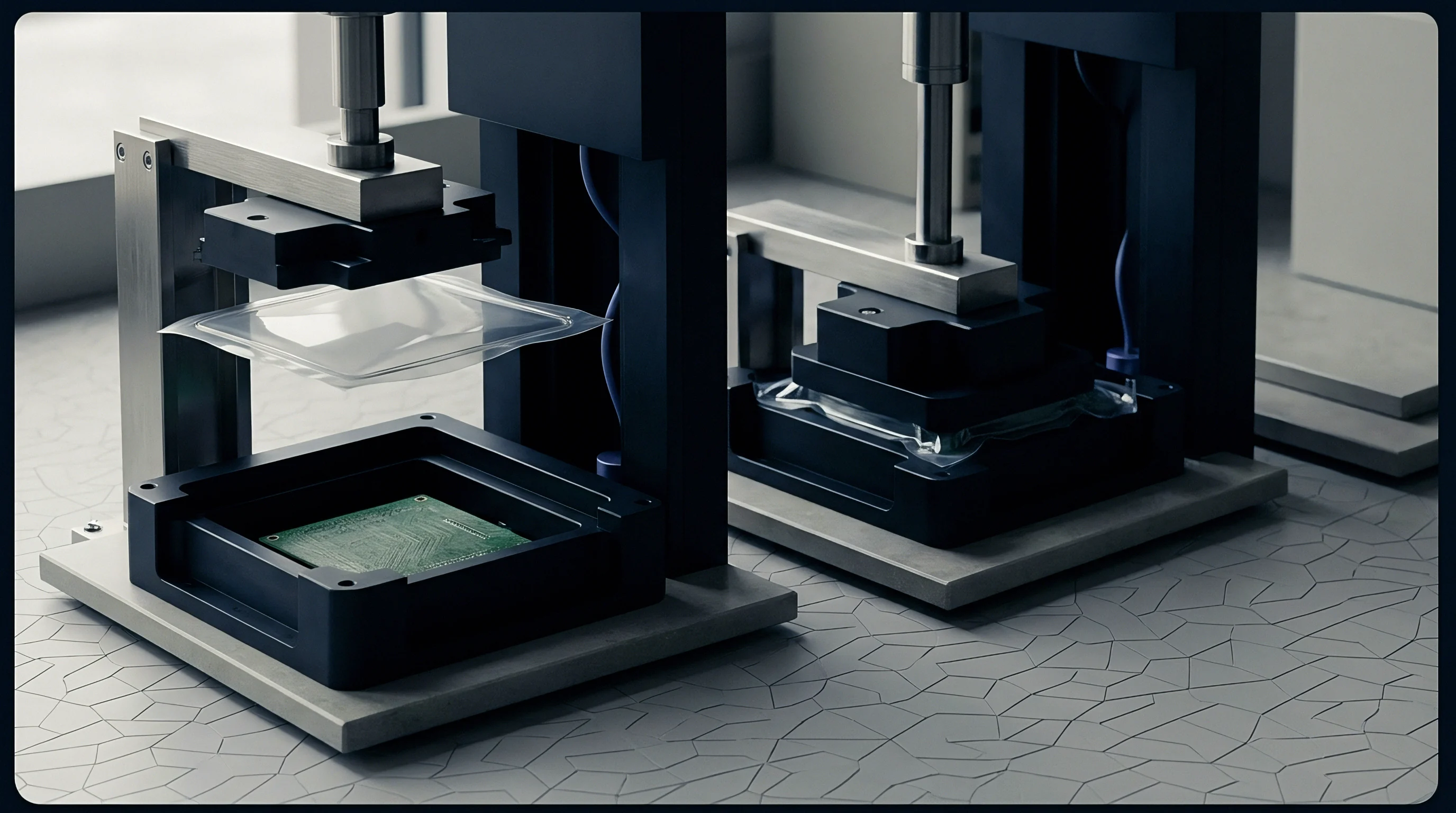
Validating autonomous memory patrol systems for severe environments requires testing across realistic temperature profiles, supply rails, and operating frequencies. Silicon characterization relies on high-temperature operating life tests, pairing elevated ambient chambers with voltage margin sweeps. Full qualification couples long-duration thermal soaking with continuous read-modify-write cycling.
Engineers evaluate scrub logic by deliberately injecting bit upsets into SRAM and non-volatile arrays using localized laser pulses, low-dose gamma sources, and supply voltage transients. These runs verify whether the patrol engine reliably finds, reports, and corrects faults across the operating range without corrupting neighboring cells or missing damaged words under bus pressure.
A patrol verification matrix must account for bus starvation under simultaneous maximum peripheral loads.
Validating memory patrol reliability requires gathering real metrics across accelerated operational lifecycles:
- Detection rate accuracy measures the percentage of injected single-bit errors identified within a single scrub cycle.
- Scrub latency bounds verify that autonomous read-modify-write sequences complete within budgeted clock cycles without interrupting direct memory access queues.
- Thermal scaling performance quantifies how effectively autonomous timers shorten scrub intervals as ambient temperatures rise from 85 degrees Celsius to 150 degrees Celsius.
- Bus interference margin ensures core pipeline stall durations remain below maximum real-time latency limits during active memory scrubbing.
Validating scrub intervals against the Arrhenius acceleration factor, which assumes an activation energy between 0.6 and 0.7 electron-volts for dielectric breakdown and trap charge leakage, confirms whether the patrol logic can prevent multi-bit errors before physical faults emerge.
Memory patrol routines operating at fixed nominal intervals without thermal compensation eventually miss compounded soft errors once silicon junction temperatures climb past standard commercial limits.

Balance
Power Dissipation Budgets and Scrubbing Intervals
Every scrub cycle consumes measurable power by charging bus traces, firing sense amplifiers, and toggling memory bit cells. In power-sensitive or thermally isolated assemblies, running the patrol engine too aggressively raises junction temperatures, speeding up the thermal leakage it was designed to combat. The sweep frequency must balance the local soft error rate against the package thermal budget.
Finding the right scrub rate means balancing soft error protection against total thermal dissipation. Take a 1-megabyte embedded SRAM block running at 1.2 volts with a 100-megahertz scrub clock. Fetching a single 32-bit word takes roughly 1.8 nanojoules of dynamic switching energy, meaning a full sweep across the entire 1-megabyte array requires about 472 microjoules.
Sweeping that block continuously without pauses draws approximately 144 milliwatts of average power. Placed inside a sealed IP67 housing with a package thermal resistance of 45 degrees Celsius per watt, that continuous patrol alone adds 6.48 degrees Celsius to the silicon die. That self-generated heat raises sub-threshold leakage across every cell on the die.
Balancing patrol frequency, crossbar bus allocation, and silicon power constraints preserves data integrity without shortening device operating life.