Characterizing Porous Cathode Clogging Kinetics under Variable Repetition Subterranean Cellular Upload Bursts
Subterranean cellular upload bursts trigger localized overpotentials that clog porous cathode pore mouths, requiring buffered capacitors and rest intervals.
Overpotential
Subterranean telemetry systems operating in mining shafts, deep utility vaults, and boreholes face severe path attenuation, forcing cellular transceivers into maximum coupling loss procedures. Under 3GPP standards, radio access designs rely on coverage enhancement techniques like narrow-band physical uplink shared channel repetitions. These operating regimes generate sustained bursts where the power amplifier runs at maximum radio frequency output ~ typically 23 dBm.
When a primary lithium battery powers an isolated subterranean monitoring unit, high burst current demands induce electro-chemo-mechanical stress that directly degrades the cathode structure.
Lithium thionyl chloride cells rely on a porous carbon cathode where sulfur dioxide and solid lithium chloride precipitate during discharge. A steady discharge coats the cathode in a continuous layer of lithium chloride, gradually passivating the active reaction area. Pulsed loads change how this material settles.
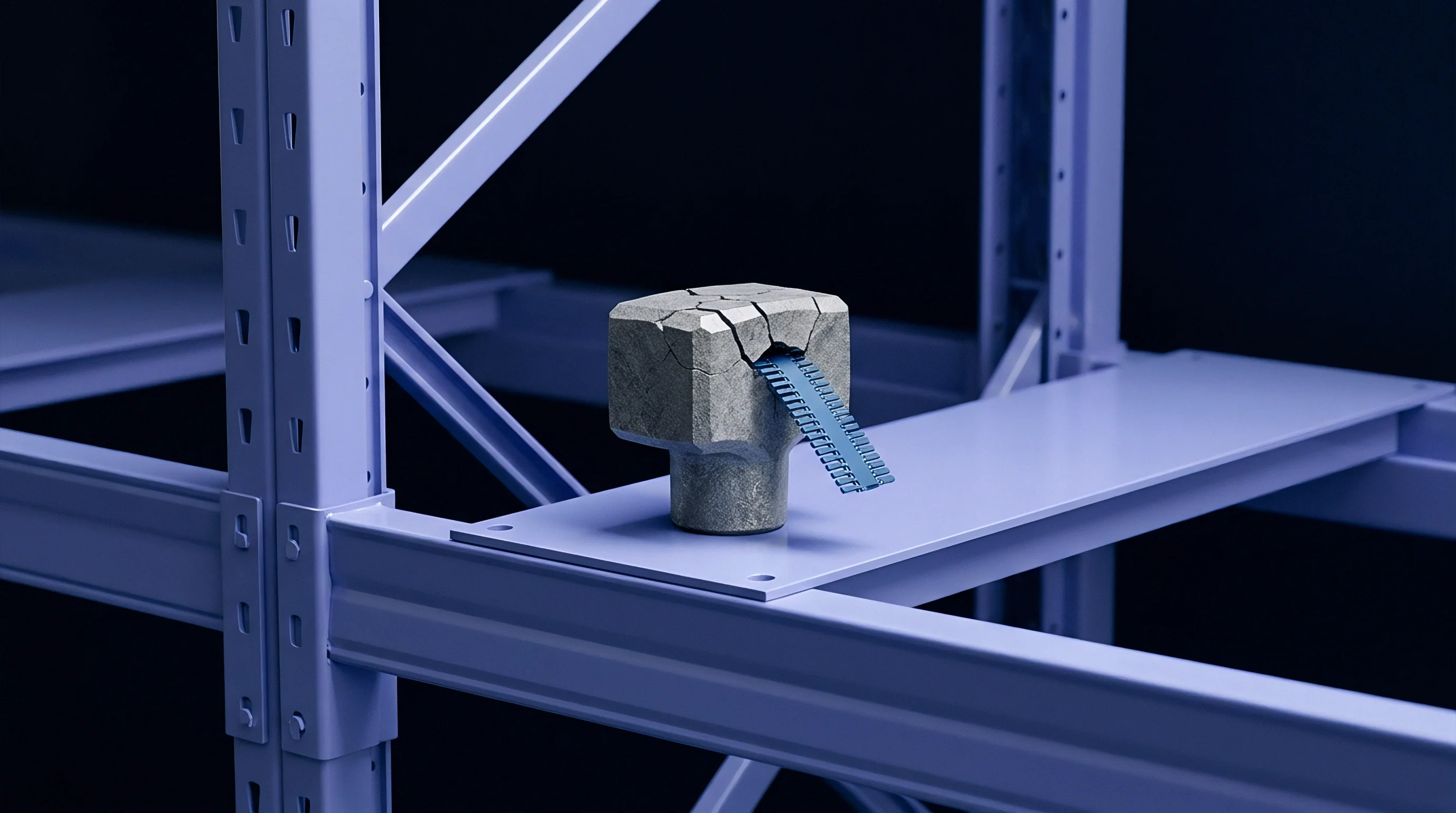
High-amplitude upload bursts generate steep local overpotentials across the outer edge of the carbon matrix, causing rapid supersaturation of insoluble species. Instead of forming a uniform film, fast crystal nucleation chokes carbon pore mouths within the first tens of micrometers facing the separator, leaving inner pore volume unused while the outer face clogs.
A transmission burst sustained for several seconds produces localized interfacial overpotentials exceeding 400 millivolts that restrict pore access.
The operational consequence shows up immediately on the circuit board. Subterranean RF paths routinely show path loss exceeding 154 dB, leading a radio attempting link acquisition to run 32, 64, or 128 repetitions per uplink transport block. At these settings, the cellular modem draws instantaneous currents between 250 mA and 480 mA from the power source for bursts lasting over three seconds.
If clogged pore throats restrict the cathode surface, the sudden polarization step drops terminal cell voltage below the shutoff threshold of the power management integrated circuit. The modem reboots mid-frame and drops the transmission without acknowledgement, cutting off field reporting while the battery still holds eighty percent of its chemical capacity.
Pore
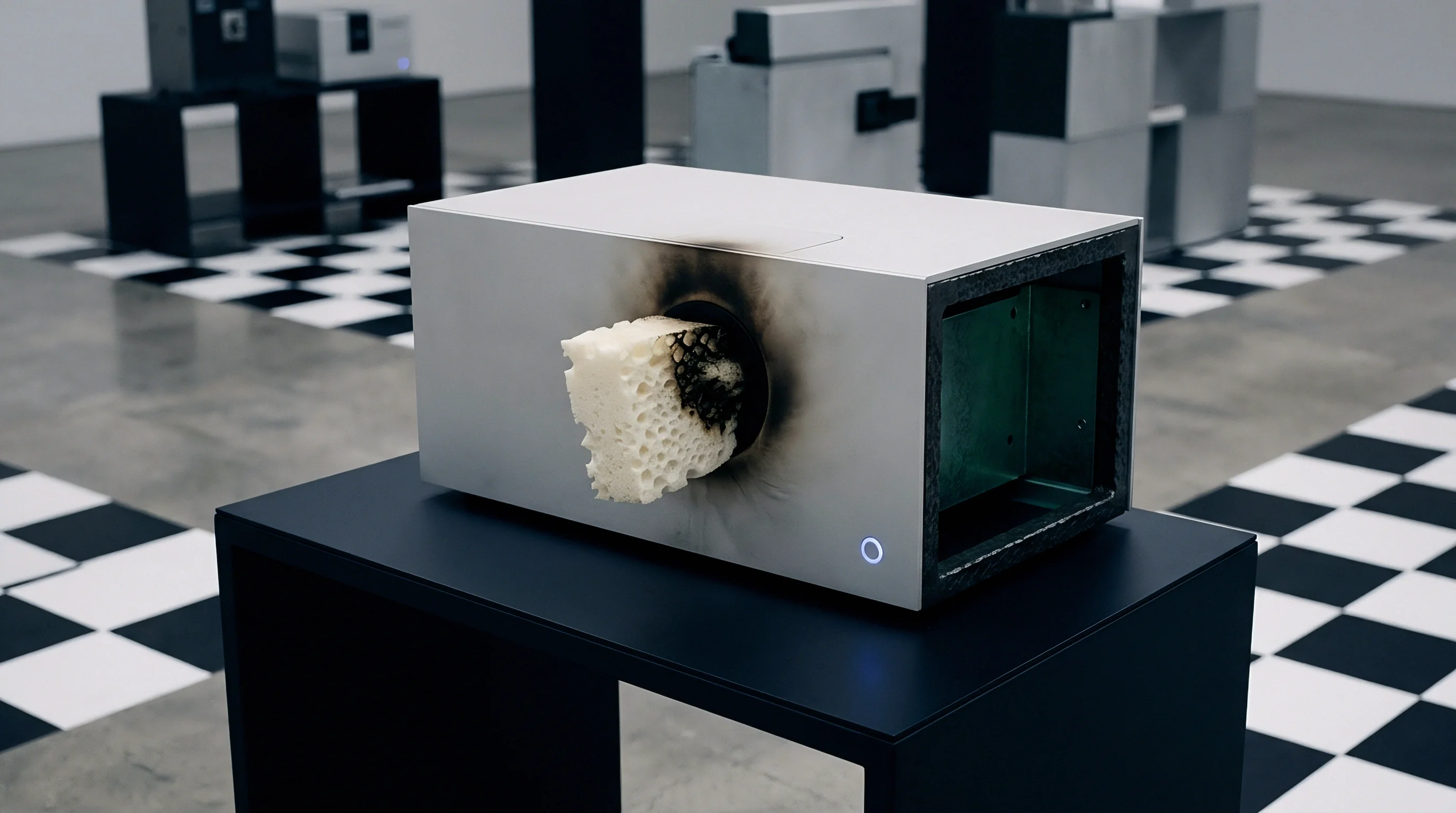
Clogging inside a porous carbon collector follows coupled mass-transport and precipitation dynamics. The porous carbon matrix acts as a high surface area conductor offering sites for reducing the liquid depolarizer, but its geometric surface area is misleading ~ microscopic pores between 2 nanometers and 50 nanometers contain most of the active electrochemical sites. During an upload burst, local current density at the separator boundary scales inversely with pore diameter.
Rapid ion transport depletes thionyl chloride in the narrowest channels while concentrating chloride ions next to lithium ions migrating across the separator.
Precipitation of dielectric solid-phase material proceeds along two competing pathways: heterogeneous surface nucleation on the pore walls and homogeneous crystal growth inside the electrolyte-filled void. Low discharge rates favor slow homogeneous growth, producing coarse crystals that let liquid diffuse through interstitial voids. High-amplitude repetitions shift kinetics toward surface nucleation, forming a continuous crystalline film over the pore necks.
Porosimetry tests on heavily pulsed carbon cathodes confirm a sharp drop in accessible surface area well before any mechanical expansion of the carbon black matrix takes place.
Precipitation depth depends heavily on how long the cellular uplink frame lasts. A short 20-millisecond transmission draws reactants strictly from the electric double layer and adjacent boundary layers, leaving bulk pore channels open. When uplink repetitions extend beyond 1000 milliseconds, local liquid reactants run dry entirely, creating a mass-transport-limited regime where solid lithium chloride crystallizes right at the entrance plane of the cathode.
This physical blockage chokes ionic conduction deeper into the electrode. Local tortuosity climbs exponentially as outer pore mouths seal, driving ionic resistance through electrolyte in the clogged zone up by two orders of magnitude in just several dozen reporting bursts. The rest of the porous cathode structure ends up electrochemically isolated behind a non-conductive crystalline barrier.
Battery specifications frequently omit this interaction between pulse duration and pore throat constriction.
Repetition
Subterranean radio conditions dictate repetition counts through physical layer link budget mechanics. When monitoring units transmit from beneath cast-iron manhole covers or wet rock faces, signal attenuation eliminates higher modulation and coding schemes. The cellular base station then forces the node into maximum repetition coverage extension modes.
Under NB-IoT release 14 operation, physical uplink shared channel allocations scale up to 128 repetitions, while LTE Cat-M1 repetition schedules can stretch to 32 subframes under deep coverage conditions.
The electrical load placed on the primary battery is a train of sustained pulse blocks rather than a single isolated burst. Under maximum repetition parameters, an uplink attempt involves transmission trains lasting several seconds, receiver listen windows, and immediate retransmission sequences if the cyclic redundancy check fails at the eNodeB. The base station commands these repetition levels based on received signal-to-noise ratios, adjusting parameters dynamically with no visibility into the remote transmitter’s chemical state.

Transmission Regimes and Uplink Burst Durations
Standard coverage classes create distinct pulse current patterns across the battery terminals. Table 1 maps typical subterranean path conditions against cellular transmission schedules and the resulting current loads placed on the porous carbon cathode.
| Coverage Profile | Coupling Loss (dB) | Repetition Count | RF Power (dBm) | Burst Duration (ms) | Peak Current (mA) |
|---|---|---|---|---|---|
| Normal Subterranean | 140 to 144 | 1 to 4 | +14 | 20 to 80 | 110 to 150 |
| Vault Under Metal Cover | 145 to 154 | 8 to 32 | +20 | 160 to 640 | 180 to 260 |
| Deep Mine Borehole | 155 to 164 | 64 to 128 | +23 | 1280 to 5120 | 310 to 480 |
Repeated load pulses compound this pore blockage. When bursts hit in short succession, ionic species lack time to diffuse back to concentration equilibrium, leaving the local supersaturation index elevated between pulses. Successive repetitions deposit fresh solid phase directly onto nucleation sites formed by the previous pulse.
This cumulative choking accelerates cathode degradation, cutting pack operating life well short of its calculated ampere-hour budget.
Paired with hybrid layer capacitors, lithium thionyl chloride cells tolerate pulse currents up to two amperes without damage.

Relaxation
Between upload bursts, mass transport mechanisms attempt to re-establish chemical equilibrium across the porous carbon matrix. The concentration gradient of lithium ions and sulfur dioxide drives molecular diffusion from the bulk liquid electrolyte reservoir toward depleted reaction interfaces. Meanwhile, solid lithium chloride on the active outer face undergoes minor dissolution and structural reorganization ~ Ostwald ripening ~ where fine crystal deposits slowly dissolve while larger, more stable structures grow.
This process clears a fraction of blocked pore throats, restoring limited ionic conductivity.
The time constant of this mass-transport relaxation determines whether a battery recovers its pulse-load capability. Liquid-phase diffusion coefficients in non-aqueous battery electrolytes run around 10 to the power of negative six square centimeters per second, meaning complete concentration equalization across a one-millimeter-thick carbon cathode requires rest periods between 300 and 1800 seconds. Spacing subterranean reports several minutes apart allows pore throats to reopen partially, reducing cumulative passivating polarization.
A minimum rest period of six hundred seconds between maximum-repetition bursts allows electrolyte concentration gradients across the porous cathode to settle within twelve percent of open-circuit equilibrium.
Real-world subterranean installations frequently violate these relaxation windows. An asset detecting an anomalous fluid rise or gas leak enters an alarm cadence, firing uplink packets every fifteen to thirty seconds. Under this schedule, the porous cathode faces continuous high-overpotential conditions with no time for diffusion recovery.
Crystalline clogging outpaces dissolution by several orders of magnitude, shrinking usable pore volume with every burst until cell internal resistance climbs high enough to collapse terminal voltage under load.

Kinetics
Cathode passivation kinetics can be quantified by coupling Butler-Volmer electrochemical rate equations with pore occlusion parameters. The reaction rate along pore walls depends on local overpotential, while accessible pore area shrinks as the reaction proceeds. The mathematical model tracks the effective active surface area per unit volume, a, scaling it with the instantaneous volume fraction of deposited solid lithium chloride.
As precipitation occupies space inside the pores, the effective pore radius contracts along spatial coordinate x across the electrode thickness.
Consider an electrode with an initial specific surface area of 450 square meters per gram and a total cathode thickness of 0.8 millimeters. The reaction rate current density j across the pore interface satisfies the relation:
j = j0
In this expression, j0 represents the exchange current density, alpha_a and alpha_c denote transfer coefficients, F is the Faraday constant, R is the gas constant, T is the absolute temperature, and eta represents the local overpotential. When an upload burst forces a cell current of 350 mA, the local overpotential eta at the separator plane exceeds 380 mV. Under this high driving force, the precipitation rate of solid lithium chloride per unit area accelerates rapidly:
d(m_LiCl)/dt = (M_LiCl / (2 F)) j
Where M_LiCl is the molar mass of the precipitate. The accumulation of solid mass translates into a decrease in pore radius, r(t), governed by the molar volume V_m of lithium chloride and the surface coverage geometry:
dr/dt = – V_m (j / (2 F))
As radius r drops below 5 nanometers, capillary forces and viscous drag severely restrict liquid diffusion, reflected in a power-law decline of the effective diffusion coefficient D_eff under the Bruggeman relation (where porosity epsilon is raised to the 1.5 power). The inner regions of the electrode run out of reactant within 200 milliseconds of burst initiation, concentrating ninety percent of ongoing charge transfer within the first 25 micrometers of the cathode facing the separator.
This rapid narrowing of the active reaction zone drives local current density to extreme values, forming dense crystallites across outer pore mouths that seal off the interior volume. Operational consequences vary distinctly depending on the repetition regime.
- Interfacial Current Crowding restricts productive electron transfer to the forward face of the cathode, collapsing the effective reaction zone thickness to less than five percent of the nominal electrode depth.
- Pore Throat Occlusion occurs within sixty milliseconds of continuous transmission at maximum power amplifier output, elevating high-frequency ohmic drop across the separator interface.
- Concentration Polarization Spikes depress the instantaneous closed-circuit cell voltage by up to 800 millivolts, triggering low-battery resets in subterranean modems.
- Permanent Porosity Loss isolates unreacted carbon surfaces inside the core of the cathode, reducing delivered battery capacity to thirty percent of the manufacturer rating.
The acceleration factor for cathode clogging scales nonlinearly with repetition count. Running a modem at 128 repetitions generates an internal impedance spike eight times higher than running the same modem across four sequential bursts of 32 repetitions spaced ten minutes apart.

Mitigation
Preventing primary lithium cell degradation in subterranean monitoring requires balancing radio layer configuration against hardware power architecture. Sourcing teams specifying hardware for deep vault deployments evaluate battery chemistry variants, capacitive buffer elements, and modem transmission rules as an interconnected system. Relying on standard lithium thionyl chloride spool cells without buffer storage leads directly to field failures under coverage extension modes.

Buffer Storage and Chemistry Selection
Connecting hybrid pulse capacitors in parallel with the primary battery alters the current profile drawn through the porous cathode. The capacitor’s low equivalent series resistance supplies transient peak currents needed by the cellular power amplifier during transmission bursts, leaving the primary cell to supply a lower, steady current to recharge the capacitor over longer intervals. Table 2 details performance tradeoffs between direct cell powering and buffered energy storage architectures.
| Architecture Approach | Peak Battery Current | Cell Polarization | Cathode Clogging Rate | Estimated Field Life |
|---|---|---|---|---|
| Direct Spool Cell | 350 to 480 mA | Extreme (>600 mV) | Accelerated (Critical) | 0.8 to 1.5 Years |
| Spiral Wound Cell | 350 to 480 mA | Moderate (200 mV) | Moderate (Uniform) | 2.5 to 3.5 Years |
| Spool Cell with Supercapacitor | 15 to 35 mA | Low (<60 mV) | Minimal | 8.0 to 10.0 Years |
Cathode construction dictates baseline pulse capability. Spool-type cells maximize energy density by packing a thick carbon cathode against the outer casing, providing high capacity for continuous microamp loads. However, these thick cathodes exhibit poor pulse dynamics because of long diffusion paths and limited outer surface area.
Spiral-wound cells use thin cathode strips wound over a large surface area, dropping interfacial current density during bursts by an order of magnitude, though higher annual self-discharge rates trade off long-term shelf life for pulse resilience.

Firmware Layer Duty Cycle Management
Modem firmware controls offer a direct way to limit cathode clogging without hardware redesigns. The embedded controller can intercept cellular coverage extension parameters and restrict upload behavior through explicit execution rules.
- The baseband firmware queries the cellular modem for the assigned coverage enhancement level before initiating a physical uplink transmission block.
- If the link budget dictates a repetition count above 16, the system fragments payload delivery into multiple narrow-bandwidth packets, preventing extended continuous airtime.
- The controller imposes a mandatory sleep timer between transmissions, forbidding consecutive burst sequences until the local cathode concentration gradients undergo diffusive relaxation.
- During periods of extreme path loss where the network requests maximum repetitions, the device defers non-emergency transmissions, buffering data locally until radio propagation conditions improve.
Failing to implement these power delivery and firmware controls leaves installations vulnerable to premature shutdown ~ where the primary cell suffers voltage collapse while still holding most of its nominal chemical capacity.
Governance
Procurement specifications for subterranean industrial tracking and telemetry modules demand explicit mechanical and electrical validation standards. Commercial datasheets quoting multi-ampere pulse ratings frequently conceal assumptions about cell temperature, background load, and duty cycle. A battery qualified only against continuous discharge tests will fail when subjected to long subterranean upload repetitions.
Under Which Test Regimes Can Clogging Kinetics Be Isolated?
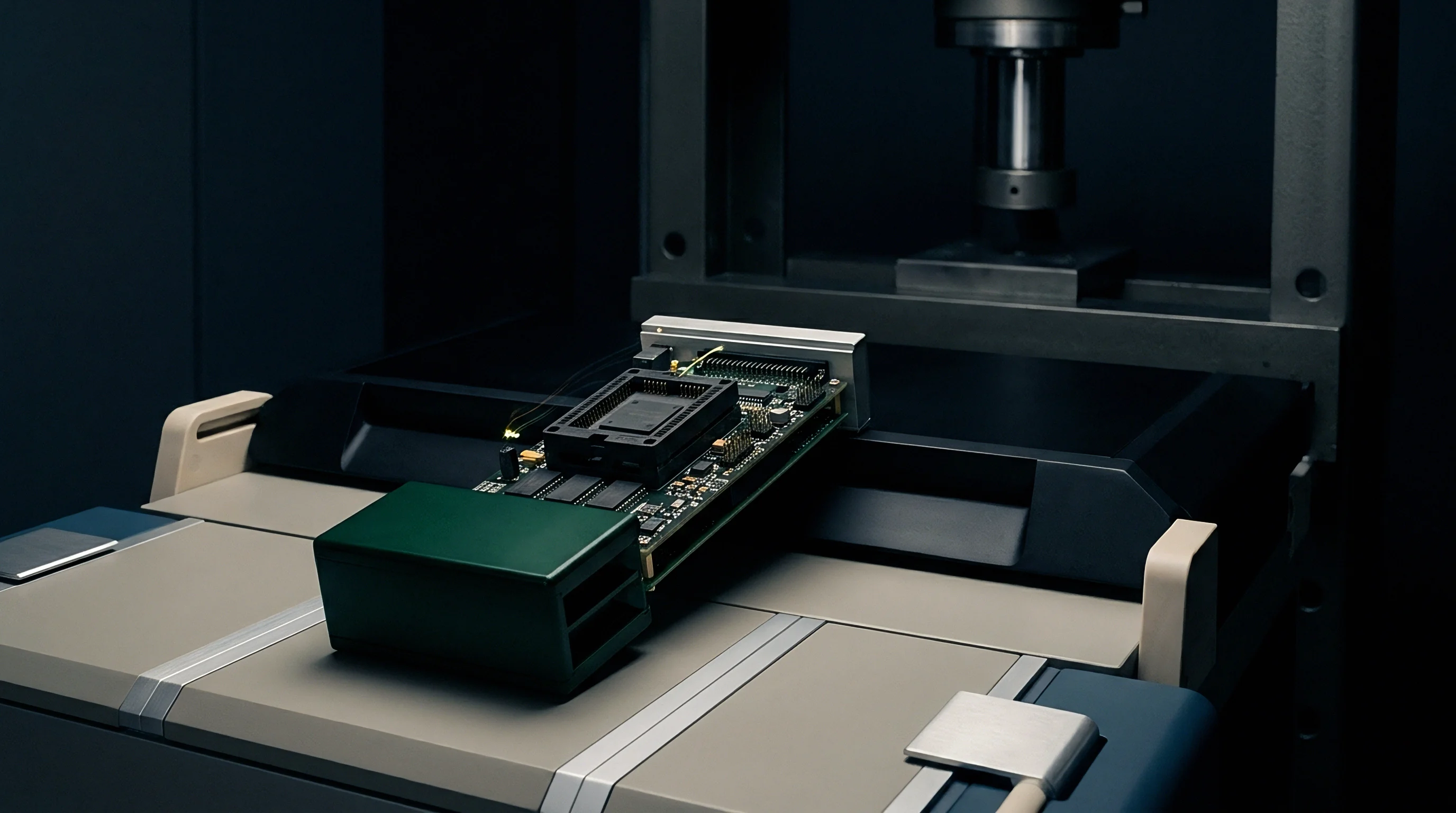
Standard laboratory testing fails to replicate the chemical stresses of subterranean cellular operation. A traditional accelerated discharge test subjects a cell to a constant resistive load at room temperature over days or weeks. This steady-state drain forms a uniform distribution of lithium chloride crystals throughout the porous cathode matrix, masking the localized pore mouth clogging caused by pulsed loads.
To capture true pulse-induced cathode degradation, qualification protocols must apply dynamic current waveforms that emulate 3GPP cellular transmission profiles. A proper bench setup applies a baseline sleep load of 15 microamps, interrupted periodically by high-current burst blocks representing physical uplink repetitions. Electrochemical impedance spectroscopy run between burst sequences measures the growth of interfacial charge transfer resistance and Warburg diffusion impedance, revealing pore throat constriction well before the cell suffers macroscopic voltage collapse.
Procurement Contract Provisions
Specifications written for municipal utilities, mining operations, and pipeline monitoring projects include explicit electrochemical acceptance limits. Sourcing requirements mandate pulse profile verification across the full operating temperature envelope, specifically targeting the sub-zero conditions common in unheated underground vaults.
- Dynamic Repetition Testing mandates that battery lots withstand simulated cellular burst profiles consisting of 400 mA pulses lasting three seconds, repeated at one-minute intervals, without closed-circuit voltage falling below 2.85 volts.
- Cathode Surface Metrics establish minimum active carbon surface area retention figures following twenty percent depth-of-discharge under high-repetition pulsing, verified via nitrogen adsorption porosimetry.
- Electrochemical Impedance Thresholds define the maximum acceptable increase in high-frequency cell impedance measured at 1 kHz, capping interfacial growth at twenty percent over baseline initial values.
- Passivation Layer Controls require supplier documentation detailing electrolyte chemical additives utilized to promote porous, low-density lithium chloride growth regimes during heavy pulse discharge.
Whether modern additive-doped electrolytes can permanently suppress outer-boundary pore throat clogging under extended 128-repetition transmission schedules remains an open question in subterranean telemetry engineering.