Dynamic Electrochemical Model Validation for Lithium Primary Cell Passivation Recovery during Non-Periodic Pulsing
Dynamic electrochemical modeling predicts lithium cell voltage delay during non-periodic radio pulses, securing battery life and preventing module resets.


Film
Primary lithium thionyl chloride cells operating inside remote telemetry hardware build an insulating crystal layer directly on the metallic lithium anode during idle sleep states. This solid electrolyte boundary layer prevents self-discharge, allowing shelf life exceeding ten years, but creates severe internal resistance when the endpoint wakes to transmit radio packets. When an LPWAN module transitions from a two-microamp sleep state to a 350-milliamp transmit pulse, the cell terminal potential drops instantly.
Lithium primary chemistries exhibit severe voltage lag. If this initial potential drop dips below the minimum operating threshold of the wireless microcontroller, the system suffers a reset before transmitting a single byte of data.
The chemical composition of this interface consists primarily of lithium chloride, formed by reaction between liquid thionyl chloride and the metallic lithium substrate. Lithium chloride growth throttles ion flow. The thickness and density of this crystalline barrier correlate directly with storage temperature and continuous un-pulsed duration.
Warm environments accelerate film growth. Cold operational environments lower electrolyte conductivity, compounding the total voltage drop when high current draw begins.

Anode Solid Electrolyte Interphase Mechanisms
Microstructural examination reveals that passive surface layers grow via ionic diffusion through grain boundaries within the crystalline lattice. During long sleep periods, lithium ions diffuse outward to react with sulfur dioxide and chlorine species, thickening the inorganic layer. This layer acts as a solid electrolyte with low room-temperature ionic conductivity, forcing high overpotentials during sudden current demands.
Voltage drops sharply under high pulse current.
Applying a high pulse current generates intense localized electric fields across the interface, mechanically fracturing the crystal structure and stripping away high-resistance regions. This physical rupture process, termed depassivation, restores lower internal resistance. Passive layers rebuild during long sleep windows.
The recovery rate depends on the charge passed during the pulse and the local thermal dissipation around the active lithium area.
Primary lithium thionyl chloride cells form a protective crystalline barrier that increases internal resistance during extended idle periods.

Lithium Chloride Crystal Growth and Ionic Impedance
Morphological transition from thin passivation to thick crystalline insulation governs the instantaneous impedance of the cell. In the early stages of cell life, small nucleated crystals cover the anode face, offering negligible resistance to milliamperage pulses. Storage duration influences film layer thickness.
Over months of static exposure, small crystals dissolve and re-precipitate into large, dense columnar structures with high interfacial impedance.
Calculating the ionic impedance across this layer requires treating the interface as a non-uniform ionic conductor with variable thickness. The internal resistance profile comprises the bulk electrolyte resistance, the charge transfer resistance at the metal interface, and the film resistance across the crystal layer. High film resistance dominates the initial millisecond of any current pulse step.
- Voltage Delay Spike Peak power draw immediately following a sleep period drops the terminal potential below the microcontroller reset threshold.
- Lithium Salt Thickening Prolonged storage at elevated temperatures accelerates passive layer growth and elevates total cell impedance.
- Electrolyte Micro-Pitting High pulse currents break down localized areas of the film while leaving dense surrounding crystals intact.
- Thermal Contraction Droop Sub-zero operating environments slow ion diffusion and magnify passivation potential drop during transmission bursts.
Cell vendors frequently claim that initial voltage delay disappears after a brief conditioning pulse prior to deployment.
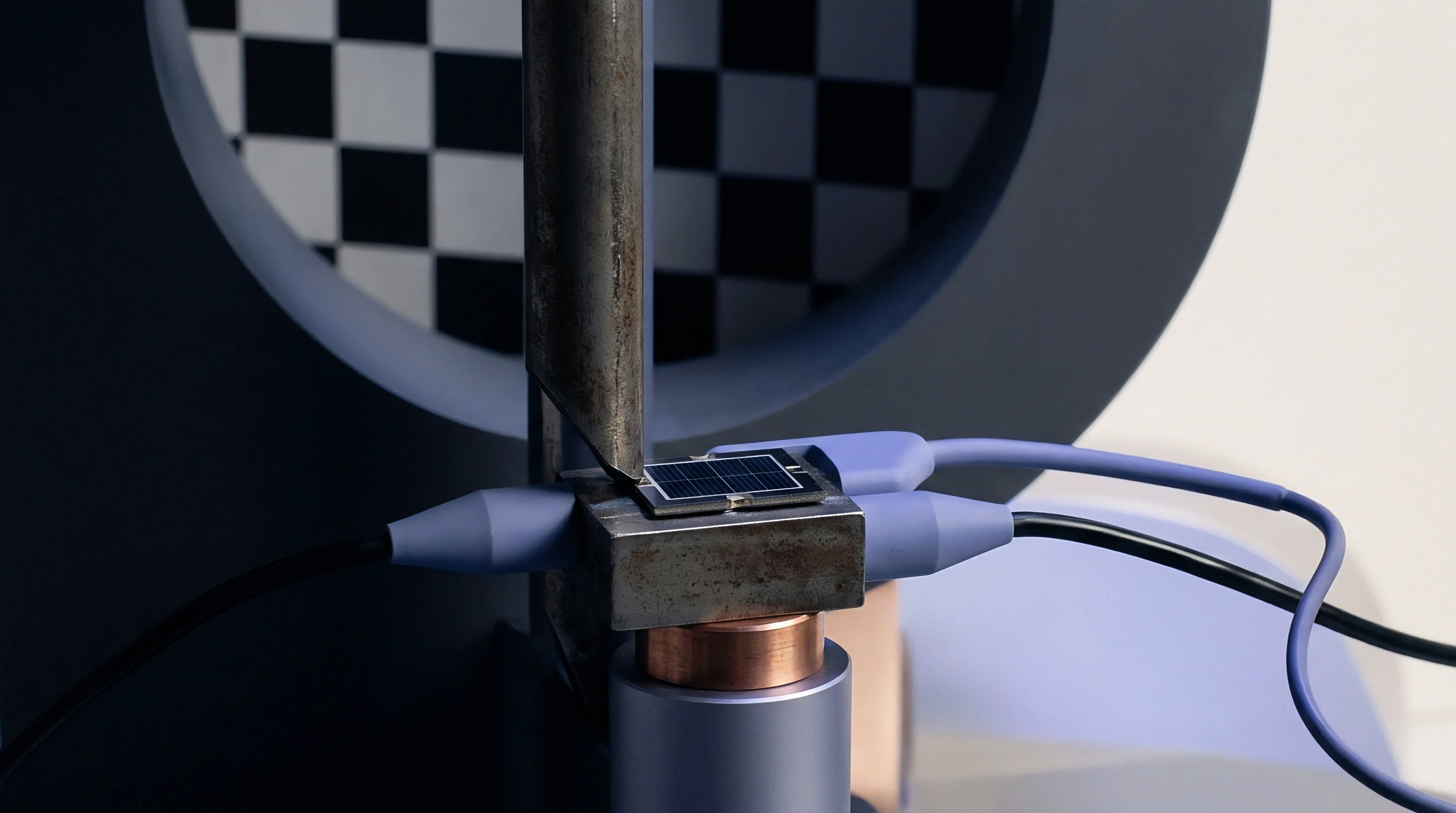

Dynamics
Predicting cell terminal potential under non-periodic current loads requires dynamic electrochemical models that track both chemical breakdown and self-healing kinetics of the passivation layer in real time. Standard equivalent circuit models utilizing static resistors and capacitors fail under irregular radio pulse profiles. When an LTE-M or NB-IoT radio initiates a transmission sequence, power consumption jumps across distinct operational states: baseband wakeup, phase-locked loop tuning, power amplifier ramps, and receiver listen windows.
Peak power draw drops cell potential.
Dynamic models capture this non-linear behaviour by introducing state variables for film resistance and interfacial capacitance. Film resistance decreases during high-current pulses as the electric field disrupts the insulating crystal lattice. During subsequent sleep intervals, film resistance increases as lithium chloride re-crystallizes across exposed anode sites.
Dynamic modeling maps these competing kinetics to protect system stability.

Transient Voltage Response under Pulse Loads
Step changes in current draw produce immediate ohmic voltage drops followed by exponential transient decay curves. The initial ohmic drop stems from bulk electrolyte resistivity and pristine film impedance. The subsequent transient drop reflects charge transfer kinetics and concentration polarization within the porous cathode matrix.
Radio modules draw transient current spikes.
Simulating these voltage transients involves solving differential equations governing double-layer capacitance charging alongside mass transport limitations. Temperature shifts cell internal resistance rapidly. At minus 20 degrees Celsius, mass transport slows significantly, extending the transient recovery phase from milliseconds to several seconds following a single transmission burst.
A 500 milliamp pulse applied at minus 20 degrees Celsius produces an initial voltage drop to 2.1 volts within 15 milliseconds on unconditioned cells.
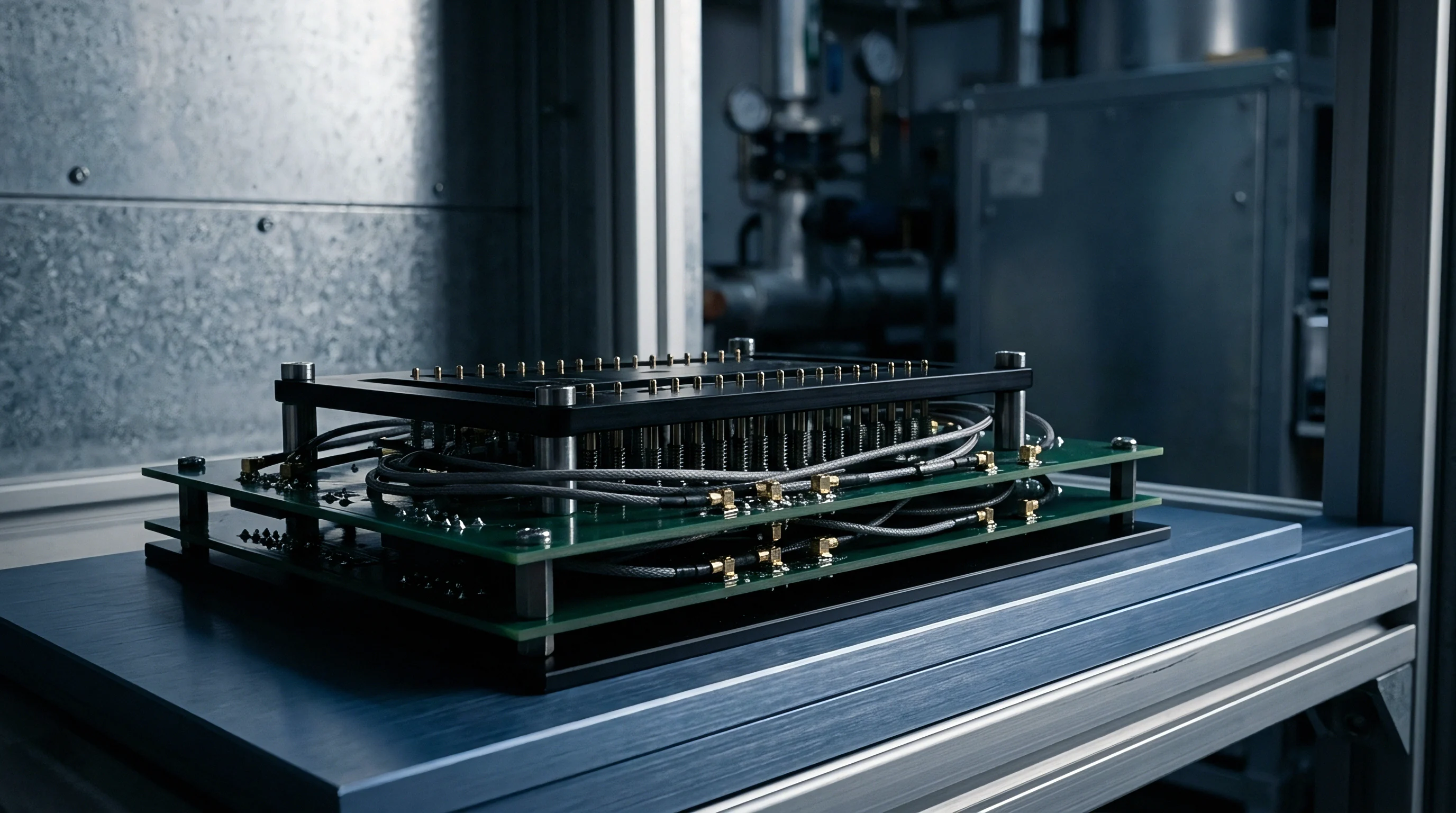
Butler Volmer Kinetic Modifications for Surface Depassivation
Standard Butler-Volmer equations model charge transfer reactions at smooth electrode surfaces under equilibrium conditions. Modeling passivated primary cells demands modifying the exchange current density term to include a dynamic area fraction parameter. This parameter represents the ratio of active, film-free lithium surface to total geometric surface area.
When high pulse currents flow, the active area fraction increases proportionally to electric field intensity and total charge throughput. Once current drops back to sleep levels, active area fraction decays exponentially back to its passivated baseline value. Incorporating dynamic surface area scaling into the Butler-Volmer formulation aligns simulated potential curves with bench oscilloscope traces across varying pulse durations.
| Chemistry Type | Nominal Voltage | Passivation Severity | Peak Pulse Capacity | Recovery Rate |
|---|---|---|---|---|
| LiSOCl2 (Spirally Wound) | 3.6 V | Moderate | Up to 1500 mA | Fast (Seconds) |
| LiSOCl2 (Bobbin Construction) | 3.6 V | Severe | 50 mA to 100 mA | Slow (Minutes) |
| LiMnO2 (Lithium Manganese) | 3.0 V | Negligible | Up to 2000 mA | Instantaneous |
| LiSOF2 (Lithium Thionyl Chloride Hybrid) | 3.6 V | Low | Up to 2000 mA | Fast (Seconds) |
When designing battery-powered wireless endpoints, sizing the parallel storage capacitor to absorb peak transmit current protects the system against early shutdown.


Pulsing
Non-periodic duty cycles represent the most taxing operational environment for lithium thionyl chloride primary batteries. Smart gas meters, environmental sensors, and asset trackers transmit data based on event-driven triggers rather than strict calendar schedules. Long periods of inactivity spanning weeks or months permit deep passivation growth.
Sudden alarms then trigger dense clusters of radio transmissions, demanding immediate high-current recovery. Standard testing ignores non-periodic interval decay.
Interval duration between successive transmissions determines whether the cell operates in a fully depassivated, partially depassivated, or fully repassivated state. If a secondary transmit pulse occurs while the film remains fractured from a previous burst, the cell exhibits lower internal resistance and higher minimum potential. Continuous pulsing prevents full film repair.
Conversely, extended sleep intervals allow complete film healing, forcing the cell to undergo severe voltage delay during the next transmission.
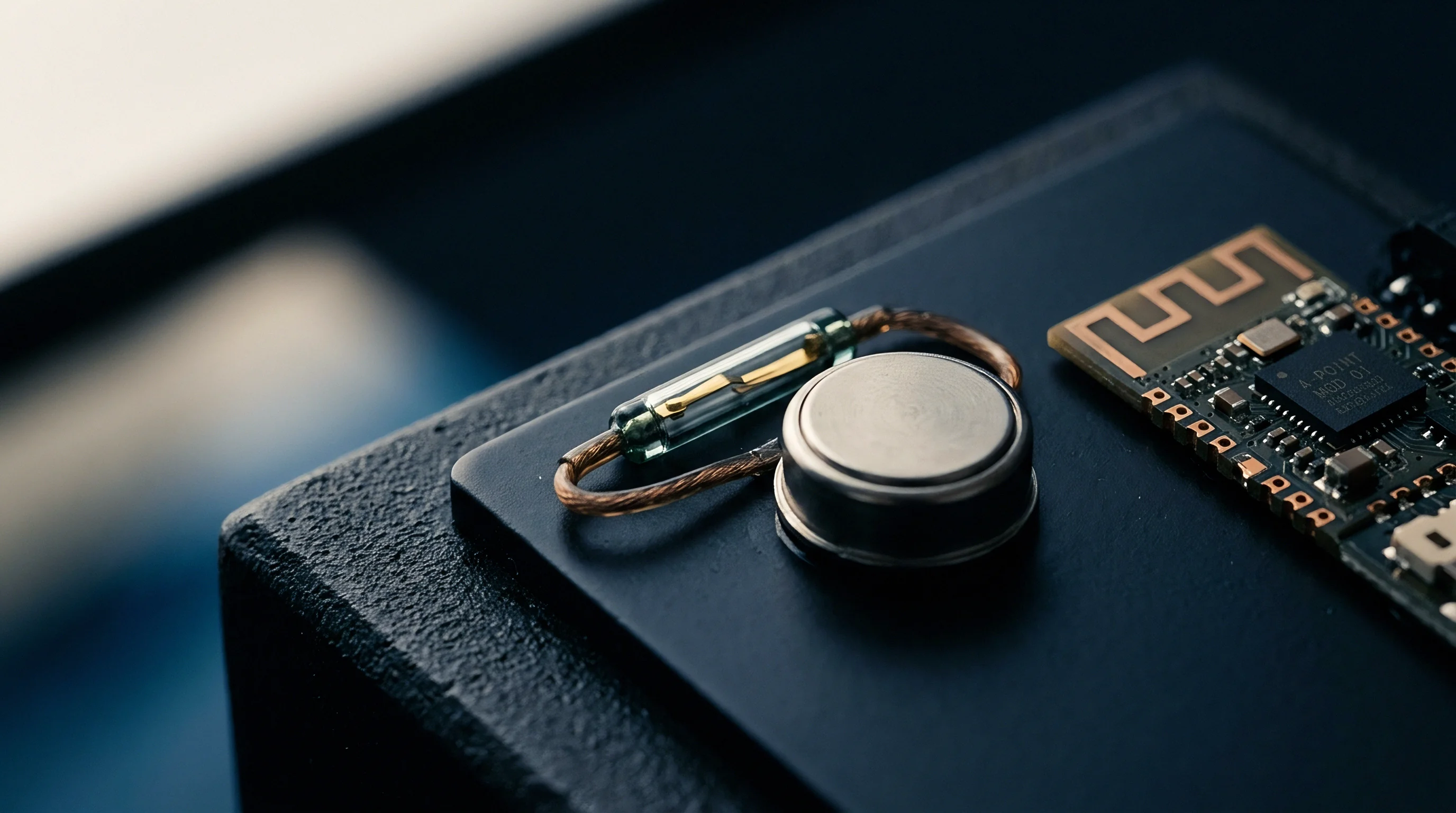
Non Periodic Duty Cycles in Cellular and Sub Gigahertz Modules
Cellular LPWAN protocols present complex power profiles featuring short, intense current spikes during handshake procedures and coverage enhancement modes. An NB-IoT module operating under maximum coupling loss conditions increases transmit power to plus 23 dBm, drawing peak currents up to 500 milliamps for repeated retransmission blocks. Metering hardware demands ten year field life.
Sub-GHz protocols like LoRaWAN use lower peak power levels around 100 milliamps, but hold transmit states for longer airtimes depending on spreading factor settings. Spreading factor 12 transmissions extend packet duration to over one second, subjecting the cell to prolonged high-current drain that accelerates depassivation but risks deep polarization drops if the cell is cold. Unmodeled sleep periods trigger sudden reset conditions.
Random sleep intervals shorter than the passivation film reformation time prevent the cell internal resistance from returning to its fully passivated baseline.

Interval Dependent Resistance Recovery Equations
Mathematical modeling of passivation recovery utilizes exponential recovery terms conditioned on sleep duration. Dynamic film resistance is modeled as an empirical balance between pulse-driven destruction and continuous chemical growth. The differential state equation takes the following structural form:
d(R_film)/dt = K_growth (R_max – R_film) – K_breakdown I_pulse R_film
Where R_film represents instantaneous film resistance, R_max is the upper resistance limit of a fully passivated cell, K_growth is the thermal film formation rate constant, K_breakdown is the electric-field destruction constant, and I_pulse is the instantaneous load current.
- Connect the lithium primary cell to a high-speed current pulse load generator capable of microsecond rise times.
- Apply a baseline non-periodic pulse sequence matching the target radio transmission profile at 25 degrees Celsius.
- Record terminal voltage recovery curves across idle intervals ranging from ten seconds to seventy-two hours.
- Repeat the sequence at minus 40 degrees Celsius to evaluate temperature-dependent film growth rates.
- Extract dynamic resistance and charge transfer capacitance values to update equivalent circuit model parameters.
Ignoring sleep interval variation during battery model validation causes unexpected field brownouts and premature battery exhaustion across remote wireless endpoints.


Accuracy
Validating dynamic electrochemical models requires high-resolution bench measurements capable of capturing sub-millisecond voltage transients simultaneously with nano-ampere to milliampere current swings. Standard battery cyclers lack the bandwidth and dynamic current measurement range needed to monitor LPWAN transmission events. Custom instrumentation combining high-speed digital storage oscilloscopes with precision current probe amplifiers provides the baseline truth data.
Model fitting accuracy relies on parameter extraction techniques that separate double-layer capacitance effects from passivation film breakdown. Electrochemical Impedance Spectroscopy (EIS) performed before and after controlled pulse loads isolates individual circuit element values across frequency spectrums from 10 micro-Hertz to 100 kilo-Hertz. Combining EIS data with time-domain transient fitting produces validated models with low root-mean-square errors across diverse operational temperature envelopes.

Bench Experimental Setup for Model Fitting
Constructing a high-fidelity bench test environment demands strict elimination of parasitic lead inductance and thermal gradients. Test fixtures use four-wire Kelvin connections attached directly to cell terminals inside climate-controlled chambers. Cold temperatures worsen initial voltage delay.
Standard micro-ampere sleep currents are verified with precision electrometers before applying arbitrary pulse patterns generated by fast programmable loads.
Pulse sequences simulate realistic deployment schedules, including random event transmissions, periodic keep-alive pings, and firmware-over-the-air update blocks. Continuous data acquisition logs terminal voltage, load current, and cell surface temperature at microsecond sampling intervals. Parallel capacitors buffer transmit power surges.
Compliance with IEC 60086-4 dynamic load parameters requires pulse discharge testing across the full operating thermal envelope prior to module sign-off.

Parameter Estimation across Temperature and State of Charge
Extracted model parameters scale dynamically as functions of temperature and depth of discharge. Arrhenius activation energy equations govern the thermal scaling of film growth constants and electrolyte conductivity. Model parameters scale with temperature shifts.
As depth of discharge increases, active anode surface area diminishes, while internal cell pressure and reaction byproduct concentrations alter baseline resistance.
| Test Temperature | Pulse Pattern Type | State of Charge | Voltage Prediction Error | Recovery Time Error |
|---|---|---|---|---|
| +25 °C | Periodic LoRaWAN SF7 | 100% | 1.2% | 2.1% |
| +25 °C | Non-Periodic NB-IoT ECL2 | 100% | 2.8% | 3.5% |
| -20 °C | Periodic LoRaWAN SF7 | 100% | 4.5% | 5.8% |
| -20 °C | Non-Periodic NB-IoT ECL2 | 100% | 6.9% | 8.4% |
| -20 °C | Non-Periodic NB-IoT ECL2 | 20% | 9.1% | 11.2% |
- Polarization Resistance Fit Dynamic equivalent circuit parameters capture non-linear potential recovery within five percent of bench oscilloscope traces.
- Temperature Coefficient Validation Experimental validation across the minus 40 to plus 85 degrees Celsius range confirms Arrhenius kinetic scaling.
- Charge Transfer Capacitance Extraction Frequency response data isolates double-layer capacitance from film breakdown mechanics during high current steps.
- Pulse Duration Limits Model limits define maximum continuous transmit burst times before cell terminal potential breaches the 2.5 volt cutoff.
How the long-term crystalline reorganization of passivation layers under multi-year random sleep windows alters micro-ampere baseline leakage remains an open question in primary battery degradation modeling.


Procurement
Translating validated electrochemical models into commercial procurement requirements requires establishing contractual battery specification standards based on transient dynamic response rather than static milliamp-hour ratings. Standard datasheets quote nominal capacity under low, continuous resistive discharge currents. These figures mislead hardware buyers designing endpoints for high-current radio pulses.
Primary lithium chemistries exhibit severe voltage lag.
Sourcing clauses written by engineering procurement desks explicitly define minimum transient voltage floors under specific pulse loads, temperatures, and state-of-charge limits. Specifications require suppliers to guarantee maximum initial voltage delay times when cells are subjected to standard test pulse profiles after six months of high-temperature storage. Defining these dynamic metrics in vendor contracts prevents field brownouts and shifts technical compliance responsibility back to the cell manufacturer.

Battery Specification Clauses for Pulsed Radio Load Profiles
Formal purchase orders state maximum allowed internal resistance values following defined storage profiles. Contracts specify test protocols where cells are conditioned at 60 degrees Celsius for 28 days to simulate two years of natural aging before undergoing minus 20 degrees Celsius pulse validation. Batches failing to maintain terminal potential above 2.8 volts during a 500-milliamp, 100-millisecond test pulse are rejected at incoming quality inspection.
Hardware designs often incorporate hybrid layer capacitors (HLC) or supercapacitors connected in parallel with bobbin-type LiSOCl2 cells to absorb pulse currents. Procurement documentation explicitly assigns life-expectancy and self-discharge liabilities to the combined battery-capacitor assembly. This guarantees that total standby leakage does not exhaust cell capacity prematurely across ten-year operational windows.

Acceptance Qualification Frameworks for Long Life Modules
Incoming lot acceptance frameworks require statistical sampling based on ANSI/ASQ Z1.4 inspection levels. Sample cells undergo automated pulse testing matching the exact current profile of the target radio module, including baseband wakeup, transmit bursts, and receive windows. Test systems record continuous voltage traces to verify model parameter boundaries across incoming shipments.
Commercial contracts link component pricing tiers to verified passivation resistance thresholds. Suppliers providing cells manufactured with proprietary electrolyte additives that suppress passivation growth command unit price premiums, offset by eliminated field replacement costs. Enforcing dynamic electrochemical compliance at procurement ensures high reliability for remote IoT deployments.
Standard procurement contracts adding EN 60086-4 compliance clauses for maximum voltage dip under peak pulse load shift liability to the battery vendor when field devices reset during cold weather transmissions.