Cellular IoT Battery Passivation Recovery and Capacity Thermal Derating Analysis
Dynamic voltage delay from passivation and cold thermal capacity collapse require hybrid pulse capacitors to prevent baseband brownout in cellular IoT.
Foil
If a primary lithium thionyl chloride cell develops a thick interface film during storage, a cellular transceiver pulling 400 milliamperes during an LTE Cat-M1 handshake will trip a baseband brownout reset. Fresh bobbin cells show negligible internal impedance at an open-circuit potential of 3.65 volts, but three months in a warehouse at 25 degrees Celsius covers the lithium surface with dense crystalline lithium chloride. While this passivation film protects against self-discharge and stretches shelf life to a decade, it throttles ion transfer when the power amplifier jumps from a 2.5-microampere sleep state to a 23-dBm radio frequency burst within 15 milliseconds.
Terminal potential drops straight past the 2.8-volt hardware cutoff common in modern 3GPP cellular modems.
That initial drop happens in two distinct phases: ohmic polarization cuts the voltage within the first 50 microseconds, followed by 5 to 500 milliseconds of activation polarization while the electric field breaks down the passivation barrier. In an unbuffered lithium thionyl chloride cell, this transient sag ~ the voltage delay ~ regularly dips below the reset threshold of baseband silicon. How deep that trough goes depends on shelf duration, storage warmth, and how cold the cell is when the radio first connects.
Under an instantaneous 350-milliampere pulse at minus 20 degrees Celsius, an unconditioned bobbin cell drops to 2.15 volts within 80 microseconds.
Cell construction directly shapes how passivation behaves under pulsed loads.
- Bobbin construction cells pack maximum energy density into a large cathode volume with minimal lithium surface area, leaving them prone to sharp voltage delay whenever transmission pulses exceed 50 milliamperes.
- Spiral wound cells use wound electrode sheets to increase surface area and lower current density per square centimeter, supplying high peak currents at the cost of higher annual self-discharge.
- Lithium manganese dioxide chemistries sit at a lower 3.0-volt nominal potential and develop a softer passivation layer, avoiding severe transient voltage dips when the radio turns on.
Modem firmware cannot tell a discharged battery from a passivated interface. When the microcontroller reads 2.4 volts on the rail during baseband load, it logs an undervoltage fault, writes a shutdown sequence to non-volatile memory, and locks the unit out on its first boot.
Frost
Electrolyte freezing and sluggish ion movement sap usable amp-hours much faster than standard shelf-discharge estimates suggest. At 20 degrees Celsius, a standard inorganic lithium thionyl chloride electrolyte has an ionic conductivity near 1.5 times 10 to the negative second power Siemens per centimeter. Chilling it to minus 40 degrees Celsius thickens the fluid and cuts conductivity by more than 80 percent.
Slower transport of solvated lithium ions through the porous carbon cathode drives up concentration polarization, ending the discharge well before nominal cut-off.
Nominal capacity ratings assume an easy 2-milliampere continuous drain down to 2.0 volts at room temperature. An NB-IoT transmitter instead pulls pulses between 180 and 350 milliamperes, depending on power class and uplink modulation. At freezing temperatures, Peukert losses compound the resistance to ion movement, reducing realized capacity to a fraction of the printed milliampere-hour rating.
| Operating Temperature | Continuous Base Load | Peak RF Burst | Usable Energy Retention | Closed Circuit Minimum |
|---|---|---|---|---|
| 25 degrees Celsius | 15 microamperes | 250 milliamperes | 92 percent | 3.32 volts |
| 0 degrees Celsius | 15 microamperes | 250 milliamperes | 78 percent | 3.15 volts |
| minus 20 degrees Celsius | 15 microamperes | 250 milliamperes | 51 percent | 2.88 volts |
| minus 30 degrees Celsius | 15 microamperes | 350 milliamperes | 34 percent | 2.62 volts |
| minus 40 degrees Celsius | 15 microamperes | 350 milliamperes | 18 percent | 2.21 volts |
Thermal derating is nonlinear, steepening noticeably between minus 20 and minus 30 degrees Celsius. Across that bracket, charge transfer resistance at the anode interface overtakes bulk electrolyte resistance as the main driver of voltage drop. Effective internal resistance in a D-size bobbin cell jumps from roughly 0.5 ohms at room temperature to over 35 ohms at minus 30 degrees Celsius.
A remote sensor built around an LTE-M baseband might budget 19,000 milliampere-hours for a ten-year design life using 25-degree benchmark data. Installed in a northern distribution hub at sustained winter temperatures of minus 25 degrees Celsius, usable capacity drops to around 8,500 milliampere-hours, exhausting the cell just four years in.
Diminishing thermal headroom contracts available chemical capacity faster than ambient self-discharge expands it.
Deployments outside temperate regions require substantially wider operating margins.

Bleed
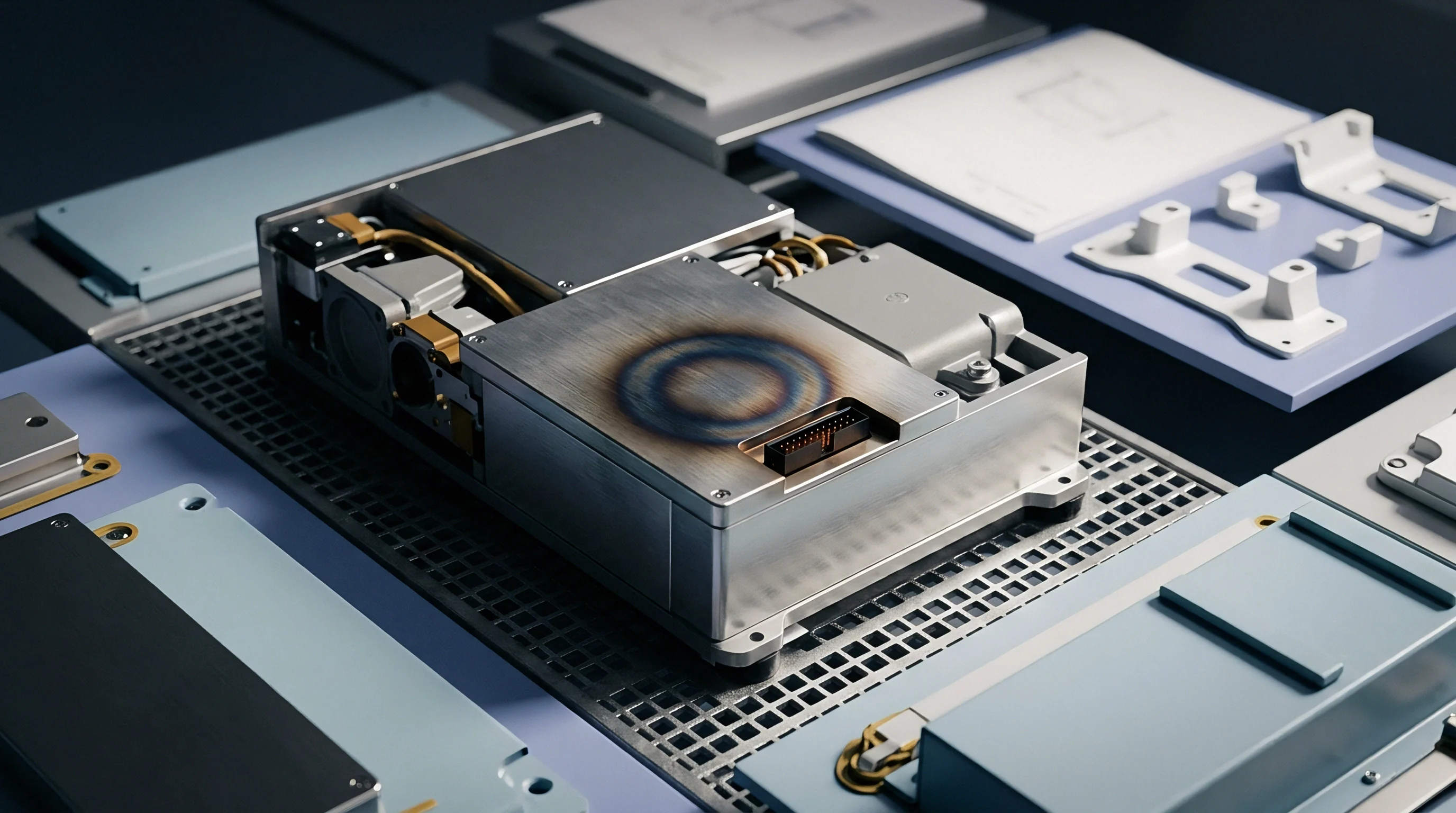
Controlled depassivation burns off the resistive lithium chloride crust before the baseband turns on. Instead of hitting the cell with an immediate 300-milliampere transmission pulse, the microcontroller routes current through an auxiliary resistor to erode the layer gradually. Stepping the load strips the dielectric film while holding terminal voltage above the supervisor reset threshold.
Can Controlled Preheating Mitigate Interface Resistance?
Bleeding current sheds energy as heat across internal cell impedance and external shunt resistors. Holding a 30-milliampere bleed for 45 seconds consumes about 0.375 milliampere-hours ~ the equivalent of twelve full NB-IoT uplinks in good radio conditions. Routine, unmetered depassivation drains capacity fast.
- Low current interrogation reads baseline battery potential on a high-impedance analog input while pulling 2 milliamperes for 5 milliseconds.
- Threshold evaluation flags significant interface impedance if the measured potential falls below 3.10 volts.
- Ramped pulse bleeding steps a switched load through 10, 25, and 60 milliamperes for 500 milliseconds each, separated by brief recovery intervals.
- Voltage stabilization check confirms terminal voltage stays clear of 3.20 volts under a steady 40-milliampere load before clearing the modem to attach.
Cold slows this stripping process down. At minus 20 degrees Celsius, lithium chloride dissolves far more slowly into the thionyl chloride solvent; a routine that takes two seconds at room temperature can stretch past ninety seconds in the cold. Cut the sequence too short and terminal voltage drops during boot; draw it out too long and conditioning burns more energy than payload transmission.
Passivation regrowth complicates firmware timing just as much. Once stripped, bare lithium reacts with the electrolyte to rebuild the surface barrier within hours. Nodes on a 24-hour reporting cadence encounter fresh passivation film on every wake cycle, and running daily conditioning cycles eats substantial capacity over several years in the field.
Finding the crossover point where the energy spent conditioning outweighs the capacity lost to raw voltage delay remains the central trade-off over a ten-year deployment.

Capacitance
Hybrid architectures bypass pulse limitations by isolating peak radio currents from the primary chemistry. Putting a high-capacitance, low-ESR part in parallel with the cell lets the battery supply a steady trickle to the buffer, while the capacitor absorbs the sharp dynamic spikes demanded by the transceiver.
Two main technologies handle this role: electric double-layer supercapacitors and lithium-based hybrid layer capacitors. Standard EDLCs provide very low equivalent series resistance ~ often under 100 milliohms ~ but suffer parasitic leakage that climbs steeply with temperature. A 1-farad supercapacitor at 60 degrees Celsius can leak more than 15 microamperes, draining a bobbin cell purely on idle loss.
Hybrid layer capacitors, built with a lithium intercalation electrode, keep leakage below 2 microamperes at room temperature while tolerating heavy pulse currents.
| Buffer Technology | Operating Cell Voltage | Initial Pulse ESR | Typical Leakage at 25C | Performance at -40C |
|---|---|---|---|---|
| Hybrid Layer Capacitor | 3.6 to 3.95 volts | 100 to 500 milliohms | 1 to 3 microamperes | Stable to minus 40C |
| Aqueous EDLC Supercap | 2.5 to 2.7 volts | 30 to 120 milliohms | 5 to 20 microamperes | Electrolyte freezes |
| Tantalum Polymer Bank | 3.3 to 6.3 volts | 200 to 800 milliohms | 0.5 to 2 microamperes | Moderate ESR rise |
| None, Pure Bobbin LiSOCl2 | 3.65 volts nominal | 10 to 50 ohms | Zero auxiliary drain | Severe voltage delay |
Sizing the buffer requires matching capacitance to maximum burst durations. Under extreme coverage extension with coupling loss over 150 dB, NB-IoT uses repetition modes that hold the power amplifier on for seconds at a stretch. A 5-farad supercapacitor exhausts its charge within the first 200 milliseconds, shunting the rest of the burst onto the primary cell and pulling down the rail as current shifts to the higher-impedance source.
A pulse capacitor buffering an LTE burst masks battery passivation right until the stored charge depletes mid-packet.
Hybrid layer capacitors are rated for zero aging degradation across a fifteen-year operating life, attributing observed voltage drops entirely to unconditioned primary chemistry rather than dielectric wear.
Margin
Procurement specifications for cellular power subsystems must define brownout floors, pulse profiles, and temperature limits explicitly. Datasheets typically quote capacity under continuous resistive loads that bear little resemblance to dynamic 3GPP traffic. Sizing a design to nominal ratings without accounting for cold-temperature derating and passivated impedance invites widespread field failures.
Bills of materials balance component costs against field liability. Standalone bobbin cells are cheaper up front, but require software conditioning and risk sudden brownouts in cold weather. Adding a hybrid layer capacitor increases unit cost by two to four dollars while establishing reliable brownout margin across operating environments.
- Minimum operational voltage floors set absolute cutoff levels, accounting for transceiver PMIC tolerances, trace resistance, and decoupling ESR under peak radio load.
- Temperature-scaled discharge envelopes limit continuous and peak currents across sub-zero bands to prevent localized electrolyte starvation.
- Mandatory depassivation timing budgets hold off the baseband boot sequence until rail voltages stabilize, preventing the RF front end from turning on prematurely.
- Batch qualification sampling protocols pulse-test incoming battery lots after accelerated thermal aging to catch poor seals and heavy passivation before cells hit the assembly line.
Procurement contracts that incorporate ETSI TS 102 218 environmental test limits reject nominal vendor capacity figures unless verified under realistic pulsed loading across the full operational temperature range.