Predicting Long Term Encapsulant Thermal Degradation and Complex Permittivity Drift in Harsh Industrial Deployments
Thermal degradation elevates encapsulant permittivity, detuning integrated antennas and requiring wideband matching or stable silicones to preserve link margin.

Heat
Polymer Oxidation and Chain Scission Mechanics
Encapsulants deployed in harsh industrial environments face continuous thermal stress that degrades their structural and electromagnetic characteristics. High ambient temperatures accelerate chemical reactions within polymeric thermosets and elastomers, including epoxies, polyurethanes, and silicones. Thermal aging triggers cross-linking density changes, residual solvent evaporation, and thermo-oxidative chain scission.
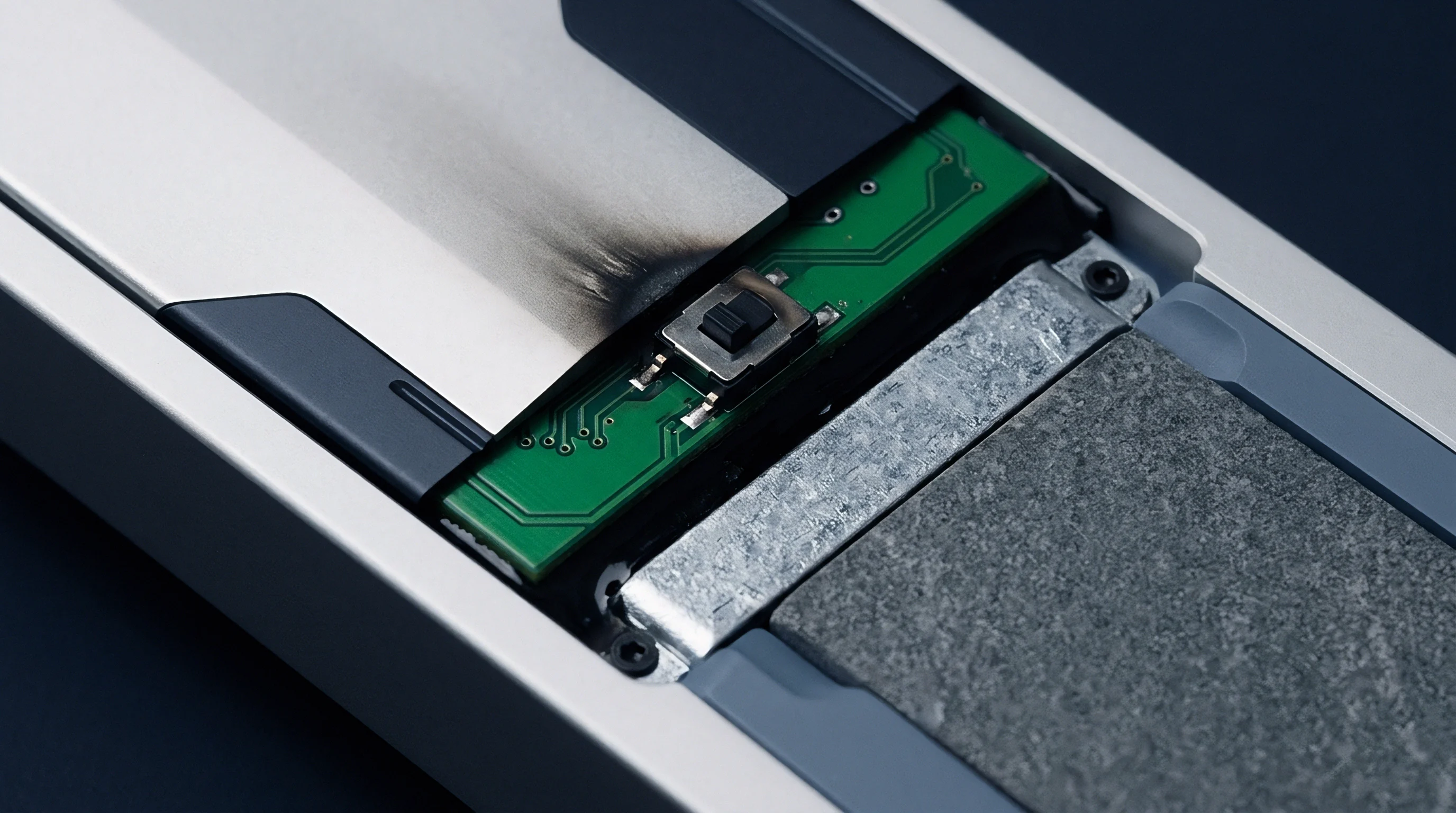
Heat alters polymer structures. These chemical transformations directly modify the free volume within the molecular lattice, altering polarizability and moisture absorption capacity over multi-year service lives.
Industrial enclosures mounted near heavy machinery, turbines, or process boilers regularly operate at ambient temperatures between 85°C and 145°C. At elevated temperatures, oxidation introduces carbonyl and hydroxyl functional groups into the polymer backbone. Polar groups increase the baseline electrical dipoles per unit volume. Consequently, the material exhibits a progressive increase in real permittivity alongside an elevated dielectric loss tangent over extended exposure periods.
| Encapsulant Compound | Initial Permittivity (900 MHz) | Aged Permittivity Shift (10 yr at 125°C) | Initial Loss Tangent (2.4 GHz) | Aged Loss Tangent Multiplier |
|---|---|---|---|---|
| Aromatic Polyurethane | 3.45 | +14.2% | 0.0210 | 2.85x |
| Cycloaliphatic Epoxy | 3.15 | +6.8% | 0.0085 | 1.90x |
| Two-Part Addition Silicone | 2.72 | +1.4% | 0.0012 | 1.15x |
| Cross-Linked Polyolefin | 2.32 | +2.1% | 0.0004 | 1.25x |
Rigid potting compounds like aromatic polyurethanes demonstrate severe aging kinetics due to high concentration of hydrolyzable linkages. Silicone materials preserve structural flexibility, yielding minimal permittivity drift under identical thermal exposures. RF energy converts to heat inside lossy encapsulants.
When designing industrial radio modules, failure to account for these kinetic transitions compromises antenna tuning and link reliability over the planned product deployment window.
Polymer chain scission under high thermal exposure permanently elevates complex permittivity across all microwave bands.
Chemical Mechanisms of Permittivity Evolution
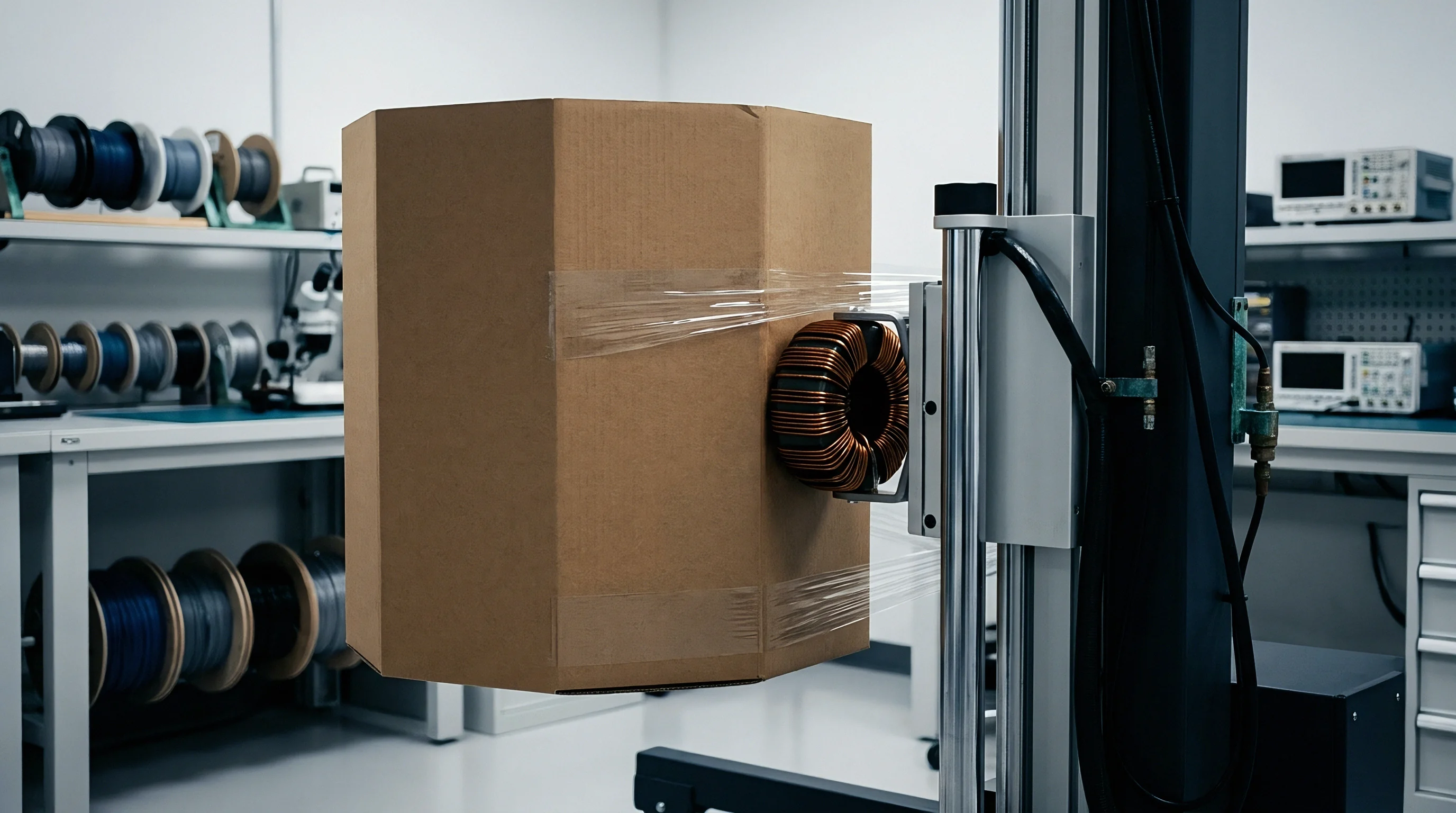
The total complex permittivity of an encapsulant consists of a real component representing energy storage capacity and an imaginary component representing dielectric dissipation. The dielectric loss factor reflects microscopic conductivity and dipoles oscillating under an applied radio frequency field. As thermal degradation progresses, scission breaks long polymer chains into shorter fragments, increasing dipole mobility at low microwave frequencies.
- Thermo-oxidative scission creates volatile fragments that escape the matrix while forming polar hydroxyl groups that raise real permittivity across sub-gigahertz bands.
- Post-curing cross-linking continues at elevated operating temperatures, shrinking material volume by up to three percent and increasing local dipole concentration.
- Plasticizer migration leaves microscopic voids within polyurethanes, allowing ambient humidity to ingress into internal cavities and dramatically elevating loss tangents.
- Thermal depolymerization breaks down side chains in low-grade silicones, forming cyclic siloxanes that drift toward the module surface and alter surface impedance.
Moisture ingress compounds thermal degradation. Water exhibits a real permittivity near 78 at sub-gigahertz frequencies. Microscopic cracks generated by differential thermal expansion permit atmospheric water vapor to accumulate inside the encapsulant mass.
Molecules expand under continuous stress. Moisture accumulation raises the effective dielectric constant of degraded potting compounds, shifting embedded antenna resonance far below designed carrier bands. Estimating thermal aging kinetics based on short-term room-temperature datasheets results in early field link failures and unrecoverable warranty liabilities across industrial sensor deployments.
Impedance
Dielectric Drift and Reactive Detuning
Antennas integrated directly onto radio printed circuit boards rely on surrounding medium permittivity to establish resonant electrical length. Modern compact modules utilize ceramic chip antennas, inverted-F traces, or patch structures buried completely beneath protective encapsulant layers. The phase velocity of an electromagnetic wave travelling through a dielectric medium decreases inversely with the square root of real permittivity.
An increase in encapsulant dielectric constant increases effective electrical length, shifting the antenna center frequency downward.
Consider an industrial transceiver module operating in the 915 MHz ISM band embedded inside a cycloaliphatic epoxy compound. Initial calibration sets the dielectric constant at 3.15, matching the quarter-wave trace to 50 ohms input impedance with a return loss better than -18 dB. Over ten years of thermal exposure at 125°C, real permittivity rises by 6.8 percent to 3.36.
This dielectric shift lowers antenna center frequency to 885 MHz. At the original 915 MHz operational channel, the input return loss degrades to -4.2 dB, causing over 38 percent of transmitter RF power to reflect directly back into the power amplifier stage.
| Radio Protocol | Center Frequency | Initial Return Loss | Aged Return Loss (10 yr) | Radiated Power Loss | Effective Range Reduction |
|---|---|---|---|---|---|
| LoRaWAN (US915) | 915 MHz | -20.5 dB | -4.8 dB | -3.5 dB | -33% |
| Bluetooth Low Energy | 2440 MHz | -18.2 dB | -3.1 dB | -5.2 dB | -45% |
| LTE-M (Band 20) | 800 MHz | -19.0 dB | -5.5 dB | -2.9 dB | -28% |
| Industrial Zigbee | 2405 MHz | -17.5 dB | -3.4 dB | -4.8 dB | -42% |
Antennas detune rapidly under drift. High-frequency bands suffer greater performance penalties because fixed physical dimensional changes translate to larger fractional electrical length shifts at higher frequencies. Bluetooth Low Energy and 2.4 GHz Industrial Zigbee modules experience severe mismatch loss when encapsulants undergo even minor dielectric drift.
Return loss worsens at elevated temperatures. Mismatch destroys link margin.
Antenna resonance shifts down by three percent for every six percent increase in potting real permittivity.

Impedance Matching Network Compensation Strategies
Mitigating long-term impedance mismatch requires incorporating thermal drift margins into original circuit layouts prior to production tooling. RF engineers choose between fixed passive matching networks tuned off-center or low-Q wideband radiator topologies that tolerate frequency drift at the cost of lower baseline peak gain.
- Low-Q radiator selection trades initial antenna peak gain for broader operational bandwidth, maintaining acceptable return loss across expected encapsulant permittivity shifts.
- Pre-shifted center tuning sets initial unencapsulated antenna resonance slightly above target channel frequencies to center the band as aging occurs over time.
- T-network matching topology incorporates high-frequency inductor and capacitor values selected to bound reflection coefficients within a defined circle on the Smith chart.
- Thick conformal barrier coats apply low-permittivity fluoropolymer layers directly over trace radiators before potting, isolating near-field electromagnetic energy from unstable encapsulant compounds.
Suppliers frequently state that standard potting materials maintain stable RF characteristics across normal operating ranges. This claim omits thermo-oxidative drift effects under continuous thermal stress. Material test reports based exclusively on unaged room-temperature samples obscure multi-year impedance shifts, leaving procurement engineers unprotected against long-term field degradation.


Propagation
What Modulates Dielectric Path Loss over Ten Years?
Electromagnetic fields extending from an encapsulated antenna pass through the potting compound before entering free space or industrial surroundings. The complex permittivity imaginary component dictates wave attenuation within the potting medium itself. As high temperatures drive thermal degradation, loss tangent values expand significantly.
Attenuation constant alpha scales linearly with frequency and loss tangent, converting radiated RF energy into heat within the near field.
Sub-GHz signals penetrate dense structures. However, higher operating frequencies experience severe internal absorption when potting compound loss tangents rise. For a module transmitting at 2.4 GHz inside a degraded aromatic polyurethane compound, local field attenuation inside a 5 mm encapsulant wall increases by up to 2.1 dB.
This near-field absorption reduces total isotropic radiated power (EIRP) independently of impedance mismatch effects.
IPC-CC-830B qualification standards mandate dielectric property retention limits after thermal shock and continuous aging exposure.
Evaluating total link degradation requires calculating combined losses from antenna detuning and internal dielectric absorption across target deployment environments.
- Measure baseline unencapsulated module radiation pattern and input impedance across operational channels using an echoic chamber.
- Cast target encapsulant material over the module assembly at specified manufacturing wall thickness tolerances.
- Expose encapsulated assemblies to accelerated thermal aging cycles at 135°C for 1000 hours per standard test specifications.
- Re-measure radiation efficiency, input impedance, and return loss in five-hundred-hour increments to chart attenuation trajectories.
- Calculate final link margin reduction by inserting aged antenna parameters into link budget equations for target cell ranges.
Sub-GHz protocols like LoRaWAN operating at 868 MHz or 915 MHz maintain link connectivity longer under dielectric degradation than 2.4 GHz systems due to lower baseline attenuation constants. Cellular IoT protocols including LTE-M and NB-IoT handle impedance detuning through adaptive output power adjustments, though this increases module battery consumption significantly. A broad link margin reserve provides the only effective protection against unmodeled dielectric degradation in harsh industrial environments.

Audit

Dynamic Dielectric Spectrometry and Thermal Chamber Protocol
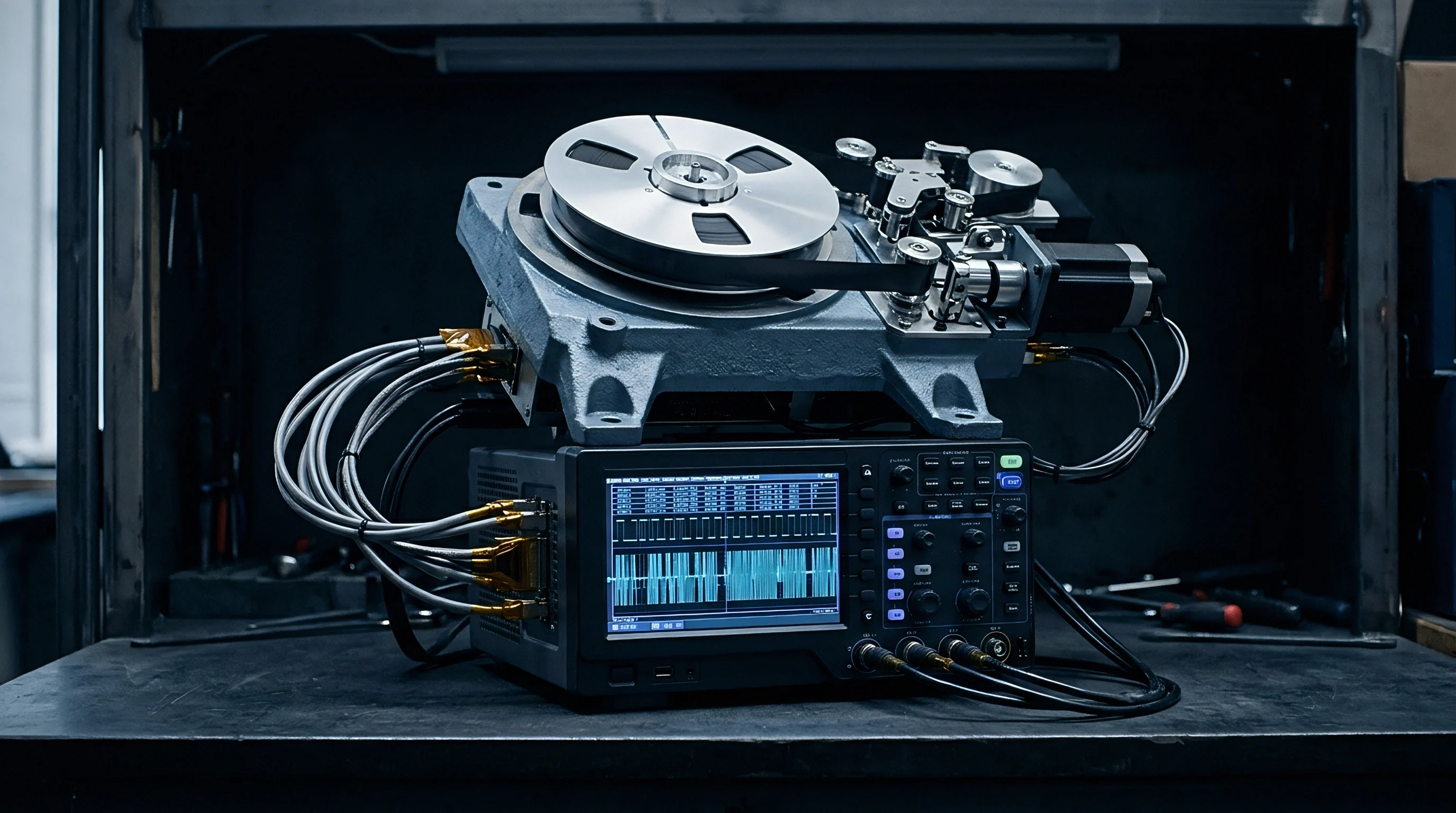
Accurate long-term encapsulant qualification demands physical dielectric measurement rather than reliance on vendor material datasheets. Dynamic dielectric spectrometry tracks complex permittivity variations continuously across broad frequency spectrums and temperature gradients. Bench testing validates thermal lifetime.
Engineers utilize split-post dielectric resonators (SPDR) and open-ended coaxial probes connected to vector network analyzers to characterize material samples subject to thermal stress profiles.
| Test Standard | Primary Measurement Focus | Applied Stress Condition | Acceptable Permittivity Drift |
|---|---|---|---|
| ASTM D150 | AC Loss Characteristics & Permittivity | 24 hr to 1000 hr at 125°C | Delta eps < 5.0% |
| IEC 60068-2-2 | Dry Heat Environmental Exposure | 1000 hr continuously at 150°C | Delta eps < 7.5% |
| IEEE 287 | Precision Microwave Dielectric Measurement | Frequency sweeps 100 MHz – 10 GHz | Tan delta < 0.005 shift |
| IPC-CC-830B | Conformal Coating Qualification | Thermal shock -65°C to 125°C | No cracking, loss delta < 10% |
Resonators track real dielectric shifts. Testing shows that inexpensive epoxies undergo substantial permittivity degradation within 500 hours of thermal exposure at 125°C. Silicone compounds display high stability under identical conditions, maintaining constant dielectric properties over 2000 test hours. Silicones resist high thermal stress.
Procuring modules without verified material spectrometry files risks field deployment failures across high-temperature industrial sites.
Bench dielectric measurement over 1000 thermal aging hours reveals material degradation invisible to short-term room-temperature testing.

Procurement Audit Dossier Requirements
Establishing long-term hardware reliability requires integrating explicit dielectric performance clauses into contract documentation. Module suppliers must provide complete material audit packages before final specification approval.
- Spectroscopic permittivity curves detailing real permittivity and loss tangent sweeps from 400 MHz to 6 GHz across expected operational temperatures.
- Accelerated thermal aging reports documenting property retention after minimum 1000-hour exposure at maximum rated operating temperature.
- Outgassing analysis data confirming low volatile condensable material concentrations per ASTM E595 testing standards.
- Batch traceability certifications linking raw chemical compound lots to specific finished module serial number ranges.
Under standard supply contract addendums, material substitutions made by module encapsulators without prior spectrometry verification invalidate product warranties and trigger full supplier financial liability for field replacement costs.
Valuation

Module Selection and Lifecycle Cost Accounting
Selecting encapsulants involves trade-offs between initial Bill of Materials (BOM) cost and total cost of ownership across industrial module deployment lifetimes. Standard polyurethane potting compounds cost approximately $1.50 per unit, whereas high-grade two-part addition silicones cost $6.00 per unit. On a volume build of 50,000 industrial wireless nodes, choosing polyurethane saves $225,000 in upfront material procurement.
However, thermal degradation of polyurethane compound dielectrics reduces radio range over five years, requiring network operators to deploy additional gateway infrastructure or replace degraded nodes prematurely. Field replacement drives landed costs. Servicing a failed industrial sensor node in hazardous chemical plants or remote pipeline sites carries an average field labor cost of $850 per unit.
If ten percent of polyurethane-potted nodes suffer link loss due to dielectric drift over ten years, field service expenditures reach $4,250,000. Margin reserves buffer permittivity drift.
Higher initial expenditure on silicone or fluoropolymer encapsulation materials eliminates systemic dielectric detuning risks. Sub-GHz radio protocols lower overall gateway density requirements, mitigating initial capital outlay while ensuring high link margins despite material degradation over twenty-year equipment lifetimes.
How much margin reserve must procurement teams specify to balance initial encapsulant expenditure against total long-term maintenance liabilities?