Meaning
Material responsiveness to an applied electromagnetic field characterizes the physical property known as complex permittivity. This parameter quantifies how a medium stores and loses electrical energy when subjected to time varying fields. The value consists of two components where the real part indicates the ability of a material to store energy through polarization while the imaginary part represents the conversion of electromagnetic energy into heat.
Energy loss within the structure occurs during molecular rotation or conduction processes. Validity of this measurement holds across frequencies up to the range where atomic effects become dominant. The description defines the constitutive relationship between the electric displacement field and the internal electric field intensity within any linear isotropic medium.
Dielectric Loss
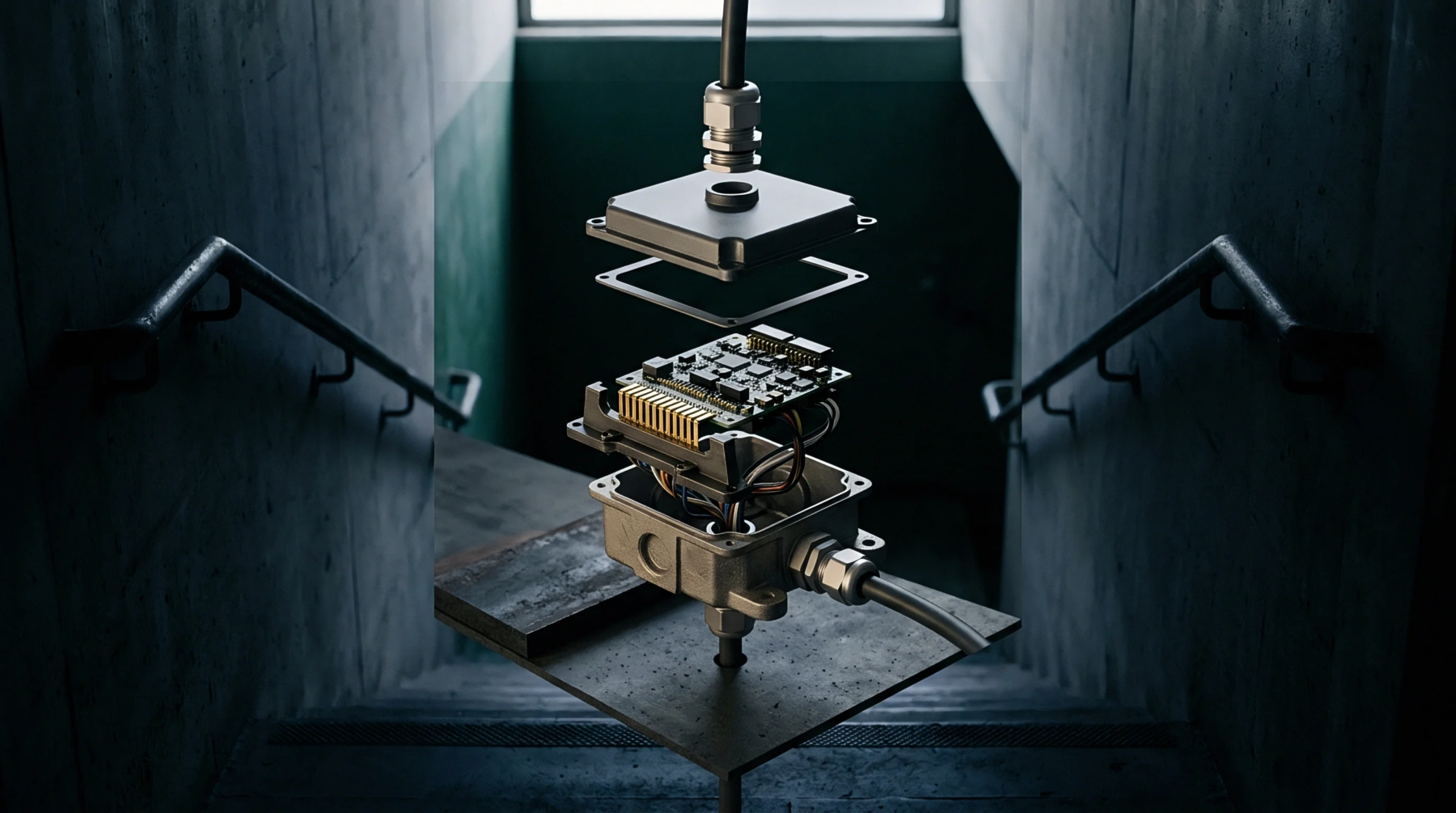
High frequency energy transfer through an antenna array depends upon the dissipation factor derived from complex permittivity. System engineers evaluate the imaginary component to determine how much signal attenuation occurs inside a dielectric substrate or a printed circuit board. Higher dissipation levels decrease the efficiency of the transmission path because energy converts into thermal loads rather than propagating as waves.
Thermal management requirements shift when the material exhibits large imaginary components because the heat generated inside the substrate necessitates specific dissipation paths through the copper planes or heat sinks. Designers select materials based on the product specification for insertion loss across the bandwidth. The magnitude of this loss remains constant only under specific temperature conditions.
Changes in the ambient thermal environment alter the dipolar relaxation times.
Polarization Mechanism
Molecular dipoles align with the electric field vector in a manner governed by the real part of complex permittivity. Dipoles struggle to follow rapid oscillations at high frequencies, which creates a phase lag between the applied voltage and the internal displacement current. This phase lag produces the imaginary component through internal molecular friction.
Crystalline structures or polymer chains respond differently depending on their internal symmetry and mobility. Dipole density determines the static limit of the real part while resonant frequencies dictate the dispersion behavior at the upper end of the operating spectrum. Materials with low permittivity allow for tighter field confinement and higher propagation velocities in microwave transmission lines.
Substrate manufacturers provide technical data sheets specifying these values under standardized test conditions to verify electrical performance compliance.
Component Qualification
Procurement teams use the dielectric constant provided in vendor data sheets to model the impedance of high speed serial lanes. Discrepancies between the modeled permittivity and the actual part performance cause signal reflections that degrade the eye diagram during high data rate transmission. Buyer teams verify the material consistency through resonant cavity perturbation tests or vector network analyzer measurements on test coupons.
Validation of these measurements ensures that the finished printed circuit board assembly meets the insertion loss targets required for communication hardware compliance. The manufacturer controls the manufacturing tolerance of the resin mixture to keep the permittivity stable across large production batches. This material stability remains the physical limit of the total system bandwidth.