Meaning
Physical tensor quantity quantifies the degree of magnetization that a material acquires in direct response to an applied external magnetic field, expressed as the ratio of magnetic flux density to magnetic field strength. Within wireless hardware and power-delivery subcircuits, magnetic permeability dictates the performance of surface-mount inductors, ferrite beads, wireless charging coils, and near-field shielding barriers. The parameter governs spatial flux confinement, reactive impedance, and energy storage across magnetic core materials up to their high-frequency cutoff points.
It loses practical relevance when driving fields exceed magnetic saturation thresholds, causing material response to revert toward the permeability of free space.
Frequency Dispersion
Complex permeability splits into a real component governing inductive energy storage and an imaginary component governing dissipative loss across alternating-frequency domains. Material engineers analyze magnetic permeability spectra to establish the exact frequency boundary where ferrite components transition from low-loss energy storage media into dissipative noise filters. Snoek limit boundaries dictate that materials with higher initial real permeability exhibit lower operational cutoff frequencies due to natural ferromagnetic resonance.
Ferrite formulations intended for multi-gigahertz suppression utilize specialized hexagonal crystal alignments to push usable imaginary loss peaks above standard cellular operating bands.
Component Selection
Inductor selection for switch-mode power supplies requires tight balancing between effective permeability and direct-current bias current capabilities. Powdered iron and composite alloy cores maintain stable magnetic permeability under elevated current levels, preventing catastrophic inductance drop during peak microprocessor load spikes. Ferrite beads selected for radio frequency isolation rely on elevated imaginary permeability to convert conducted high-frequency noise into minor heat without introducing excessive direct-current resistance onto sensitive power delivery rails.
Component datasheets specify permeability versus temperature curves to ensure values remain stable across industrial operational limits.
System Decoupling
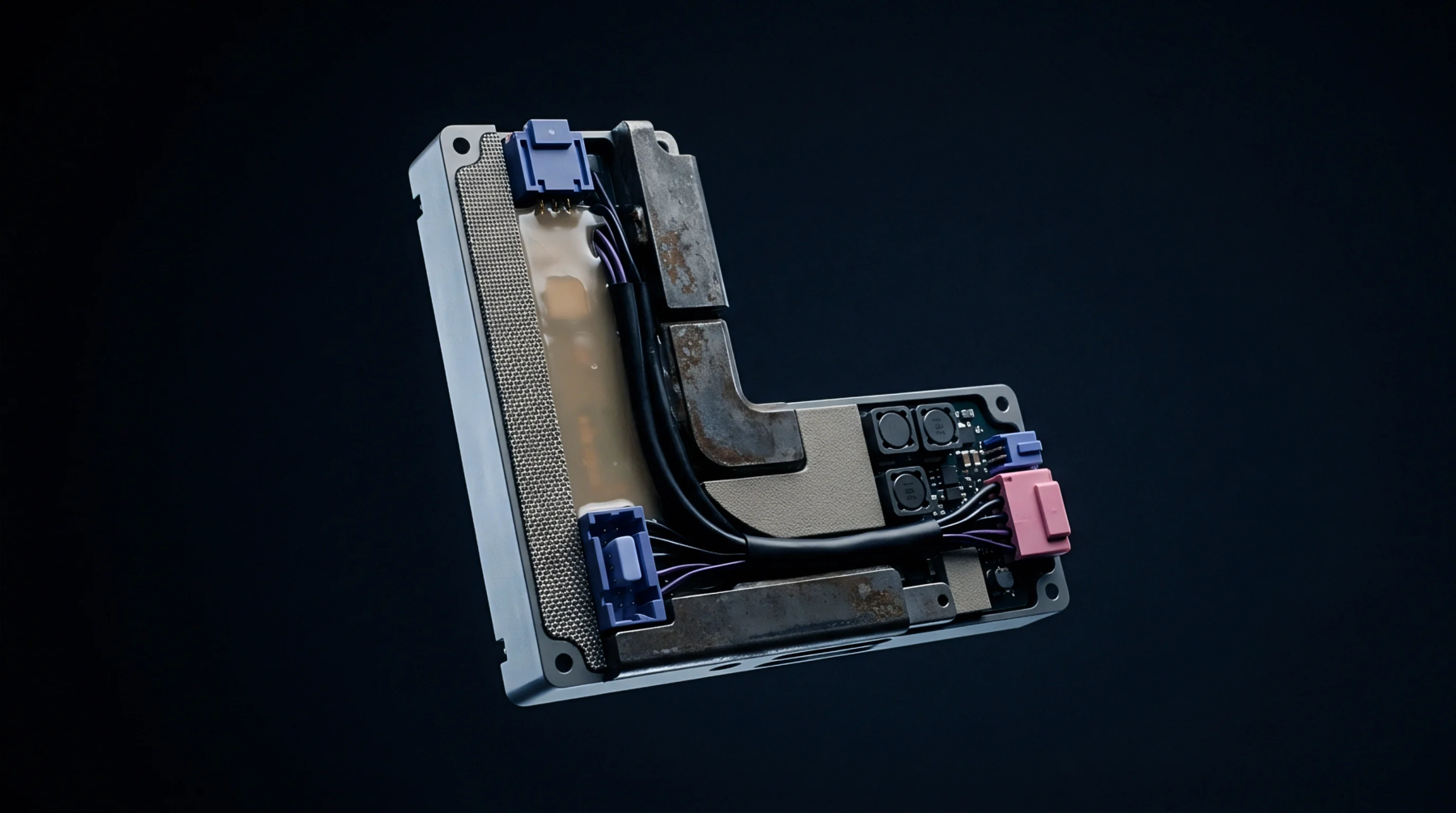
Wireless charging modules incorporate high-permeability magnetic ferrite sheets directly behind receiver coils to concentrate coupling flux and shield underlying battery cells from eddy-current heating. The measured value of magnetic permeability must remain constant throughout mechanical flex testing to prevent detuning of the resonant tank circuit. Production quality teams audit incoming core materials with impedance analyzers and test fixtures to ensure lot-to-lot permeability consistency across antenna integration programs.
Correctly controlled permeability parameters prevent magnetic flux leakage from interfering with sensitive magnetometer components integrated into mobile positioning systems.