Meaning
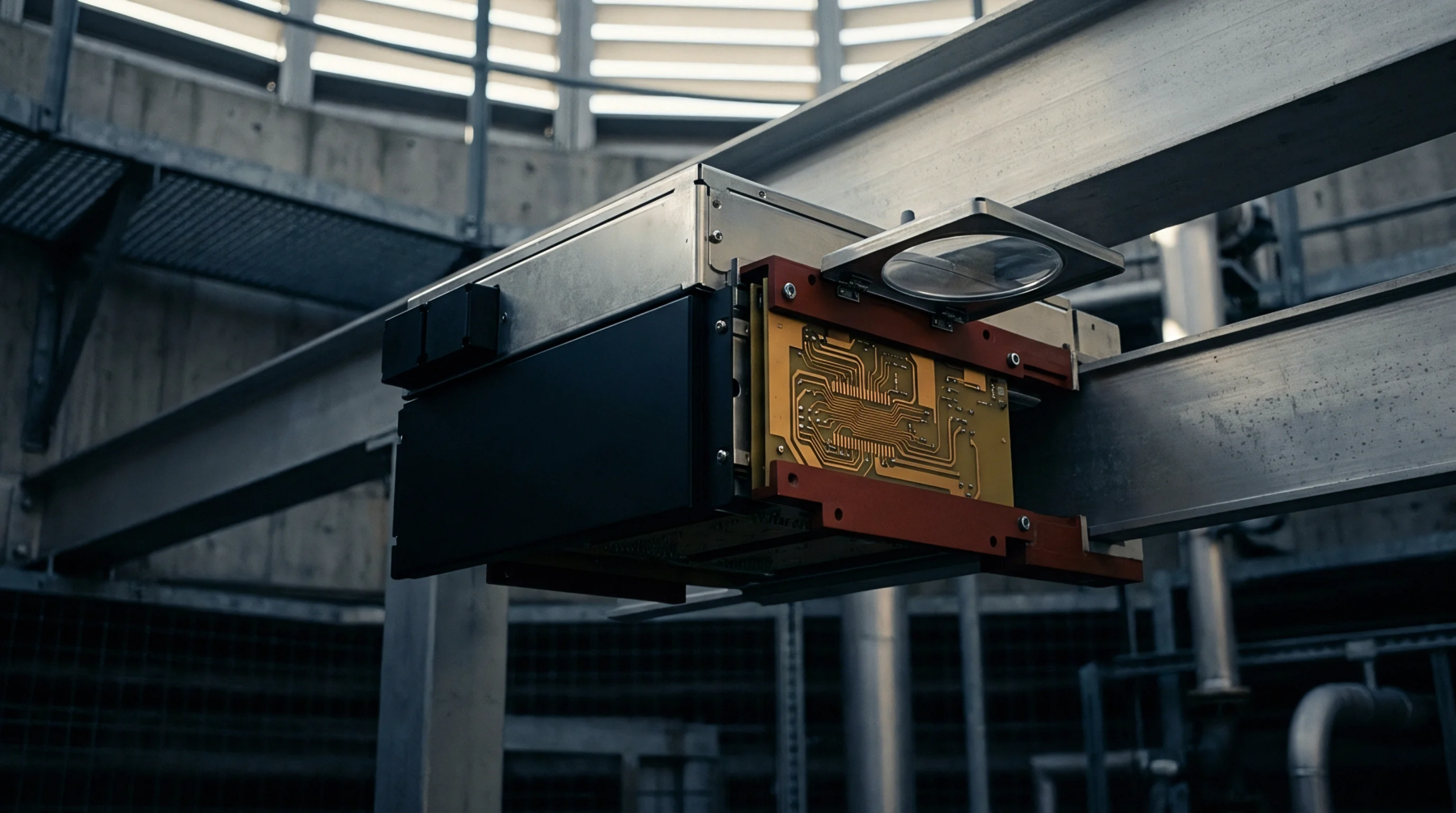
Fluoropolymer refractive devices shape the radiating electromagnetic wave from a feed source into a highly directional parallel beam. A PTFE collimating lens utilizes a precisely machined profile to reduce the divergence angle of high-frequency millimeter-wave signals. This component is essential for radar sensors where a narrow beam width is required to achieve accurate spatial resolution.
Design engineers integrate this lens directly into the antenna assembly to maximize boresight gain and sensing range.
Optical Focusing
Curvature on the lens face controls the refraction of the spherical wave fronts emanating from the feed antenna. In a PTFE collimating lens, the hyperbolic or spherical surface profile ensures that all rays exit the lens parallel to each other. This collimation concentrates the radiated power along the primary axis, increasing the effective range of the sensor.
Correct positioning of the feed antenna at the focal point of the lens is required to maintain beam symmetry and prevent beam squint.
Dielectric Optimization
Low dissipation factor and stable permittivity are necessary to minimize heat generation and signal loss at high frequencies. Utilizing a PTFE collimating lens provides a constant dielectric constant across a wide temperature range, preventing focal shift under varying weather conditions. The ultra-low loss tangent of polytetrafluoroethylene ensures that almost all of the input energy is transmitted rather than absorbed.
This thermal and electrical stability allows the lens to operate reliably in automotive and industrial environments.
Mechanical Integration
Secure physical mounting within the radar enclosure must account for the high thermal expansion coefficient of fluoropolymers. When a PTFE collimating lens is integrated into a sensor housing, the mount must allow for slight expansion without introducing tilt or axial displacement. Correct alignment ensures that the mechanical axis matches the electrical axis of the antenna.
During qualification, assembly prototypes undergo temperature cycling tests to verify that the lens remains seated and that the focal distance does not shift under thermal stress. Any mechanical misalignment of the lens during final assembly results in asymmetrical side lobes and reduced targeting accuracy in tracking systems. Quality control teams use automated optical inspection to verify the lens alignment before the unit is sealed and shipped.