
Radiated Emission Spot Checking for Embedded Modular Radios
Radiated spot checking verifies that host chassis interactions and multi-radio mixing do not violate baseline modular grant emission limits.
Radiated spot checking verifies that host chassis interactions and multi-radio mixing do not violate baseline modular grant emission limits.

Managing modular compliance requires maintaining strict reference trace layouts, securing firmware power tables, and contracting vendor liability for permissive changes.

Multi-vendor radio module substitutions qualify for Class II Permissive Changes only when pin alignment, output power, and radiated emissions match baseline testing.

Resolve multi-band simultaneous SAR by calculating exposure ratios and SPLSR to avoid volumetric testing or implement firmware power back-off controls.

Portable transmitter SAR evaluation exemptions depend on frequency, separation distance, and tune-up power to bypass costly physical chamber testing.

Substituted host antennas qualify for Class II Permissive Changes only when peak gain stays below certified limits and radiative physical structure remains identical.

Modular host integration triggers a Class II Permissive Change whenever trace redesigns, antenna swaps, or co-location alter SAR or radiated emissions profile.

Host integrators assume full regulatory liability for non-compliant RF exposure and spurious emissions whenever physical host enclosure coupling, antenna substitutions, or co-located radios deviate from original modular grant conditions.

Intermediate host integration requires Class II Permissive Changes when antenna gain, trace layout, or RF exposure separation distances change from original grant conditions.
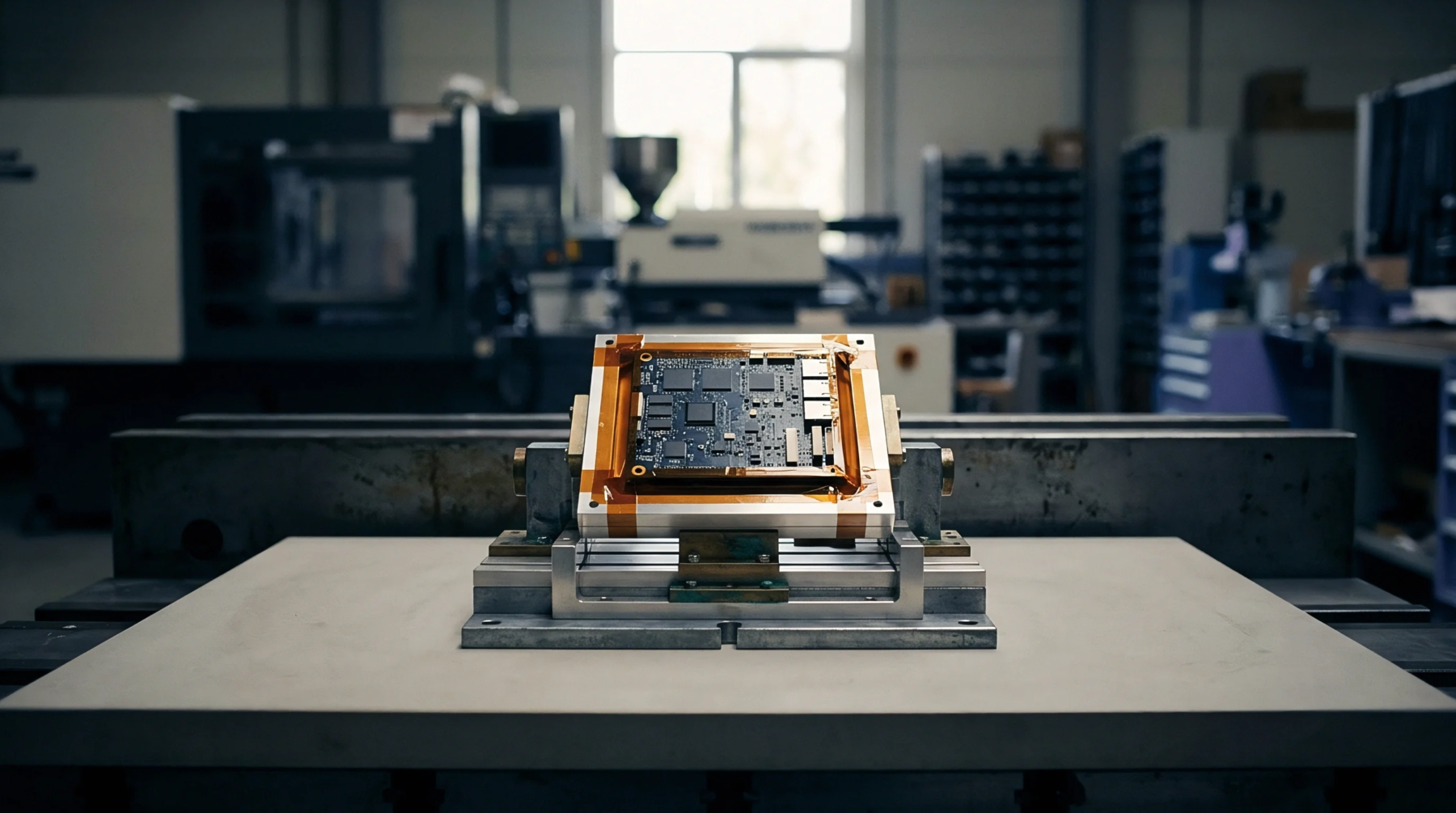
Host enclosure and trace modifications alter modular transmitter emissions, making radiated evaluation and permissive change filings mandatory for market entry.

Electronic labeling harmonizes global hardware SKUs but mandates strict 3-click offline menu access and mandatory physical outer packaging fallback labels to pass border inspections.
Expertise is a utility, not a secret. sentiention™ publishes its working knowledge as open reference: intelligence layer covering the materials it sources, the markets it enters, and the reference that serves both.