Automated Build Verification Matrix for Vendor Independent Driver Abstraction Layers in Turnkey Microcontroller Assemblies
Automated build matrices validate vendor-independent driver abstraction layers, eliminating silicon lock-in and securing hardware design transfer custody.

Substrate
Turnkey microcontroller procurement breaks down when proprietary software development kits dictate production firmware architecture. Buyers selecting pre-packaged assemblies frequently discover that vendor-supplied peripheral drivers bind application code directly to proprietary register definitions. A factory change in chip availability forces a complete firmware rewrite.
Decoupling board fabrication from semiconductor intellectual property requires an isolated hardware abstraction layer backed by continuous integration pipelines.
Unannounced silicon revisions frequently alter peripheral timing and break tightly coupled code.
Vendor software development kits bundle peripheral access code with non-redistributable binary libraries and restrictive click-through licenses that prohibit recompilation for alternative targets. When integrators build assemblies around these proprietary libraries, the buyer purchases a locked design. Production transfers to a secondary assembly facility stall because the underlying firmware cannot compile without toolchains tied to specific vendor development environments.
True vendor independence requires hardware abstraction layers defined by formal functional contracts, exposing uniform application interfaces across distinct microcontroller families.
The physical delivery of assembly hardware without auditable toolchain source files guarantees recurring non-recurring engineering charges during component obsolescence events.
Isolated, clean build steps ensure that compilation errors point directly to API contract breaches rather than environmental clutter.

Vendor Driver Lock in Realities
Semiconductor manufacturers distribute driver software designed to maximize consumption of their specific peripheral blocks and memory architectures. Their application programming interfaces mirror specific register layouts rather than generic communication patterns. When an engineering house delivers a turnkey assembly based on these native software kits, application routines call vendor functions directly, weaving peripheral configuration straight into business logic.
The resulting firmware repository presents severe barriers to dual-sourcing.
Replacing a primary microcontroller with a secondary pin-compatible alternative demands extensive software remediation as internal register mappings vary across chips.
- Hardware abstraction interfaces define standardized functional signatures for peripherals such as serial peripheral interfaces, inter-integrated circuit channels, and universal asynchronous receiver-transmitters.
- Platform adaptation modules translate universal driver calls into register-level operations targeting specific silicon peripheral blocks.
- Hardware independent configurations isolate pin muxing tables and clock divider settings from application state machines.
- Toolchain agnostic wrappers permit builds across GNU Compiler Collection, LLVM Clang, and certified automotive compiler variants.
Relying on supplier-specific libraries erodes margins whenever component swaps become necessary.

Hardware Abstraction Layer Boundaries
System architecture cleanly separates the hardware abstraction interface, the platform adaptation layer, and physical device registers. The top abstraction level exposes generic function calls to the application layer. The intermediate platform adaptation level implements these calls using target-specific register writes.
The bottom level contains raw register definitions derived from silicon vendor header files. Direct calls from application code to the bottom layer break this architectural boundary.
Application logic relies exclusively on abstraction contracts, though hardware abstractions inevitably introduce overhead that inflates flash memory consumption.
Microcontroller abstractions that ignore memory footprints and interrupt execution latencies introduce fatal production failures. High-speed communication buses demand deterministic interrupt servicing that thin abstraction layers can compromise if implemented with excessive pointer indirection. A well-designed hardware abstraction layer limits runtime overhead by employing inline static functions, macro expansion, and compile-time resolution of peripheral addresses.
Abstraction layers that hide silicon errata create untraceable field bugs.


Matrix
Systematic verification requires cross-compiling every abstraction implementation across all target microcontroller architectures under strict automated oversight. The build matrix defines an exhaustive combinatorial grid of microcontroller hardware architectures, toolchain versions, operating modes, and driver configurations. Each push to the firmware repository triggers parallel build jobs across this matrix.
Build failures indicate contract violations, compiler incompatibilities, or unauthorized direct register access.
Strict compiler flags prevent subtle toolchain discrepancies from reaching production.
The verification grid acts as the gatekeeper for design transfers between engineering houses and production assembly facilities. Every supported microcontroller core executes a designated compilation pass configured with aggressive warning flags. Code warnings convert to hard build terminations.
This discipline eliminates hidden type conversions and undefined behaviors that vary across compiler toolchains.
A multi-target verification matrix executing across five microcontroller architectures consumes 42 minutes of continuous integration runner time per pull request under standard compiler optimization settings.
Automated static checks identify architectural drift before binaries reach hardware testing.

Automated Pipeline Configuration Rules
Containerized build environments eliminate configuration drift across developer workstations and manufacturing test servers. Each container image encapsulates fixed compiler versions, standard C runtime libraries, static analysis engines, and build orchestration tools. Build configurations define precise target variables including central processing unit architecture, floating-point hardware support, memory boundaries, and peripheral clock frequencies.
Build automation verifies that driver interfaces maintain binary layout stability across distinct silicon targets, avoiding latencies introduced by toolchain variations.
| Target Architecture | Silicon Core | Flash Footprint | SRAM Allocation | Build Execution Window | Static MISRA Pass Rate |
|---|---|---|---|---|---|
| STMicroelectronics STM32G4 | ARM Cortex-M4 | 28.4 kB | 6.2 kB | 142 s | 99.4% |
| NXP LPC55S69 | ARM Cortex-M33 | 31.2 kB | 7.1 kB | 168 s | 99.1% |
| Microchip SAM E54 | ARM Cortex-M4F | 29.8 kB | 6.8 kB | 154 s | 98.7% |
| Texas Instruments MSPM0G | ARM Cortex-M0+ | 19.6 kB | 3.4 kB | 98 s | 99.6% |
| Espressif ESP32-S3 | Xtensa LX7 Dual-Core | 44.2 kB | 12.8 kB | 210 s | 97.8% |
The matrix tracks flash memory and static random-access memory consumption across compilation cycles. Growth beyond allocated budget limits triggers build failure alerts. Assembly buyers leverage this metric to prevent feature bloat from eliminating spare memory needed for field updates.
Strict memory tracking leaves headroom for feature additions and patches over a product’s operational lifespan.

How Do Driver Abstractions Survive Peripheral Silicon Revisions?
Chip manufacturers update silicon masks to fix errata or shrink dies, altering register timing and peripheral state machines without changing part numbers. Automated build pipelines flag compatibility problems before physical boards reach production lines. Hardware abstraction layers incorporate versioned hardware configuration tables that map specific silicon stepping identifiers to compensating register sequences.
Layout changes forced by alternate chip pinouts ripple through manufacturing and integration budgets.
- Peripheral register offset discrepancies occur when silicon revisions alter internal address offsets between peripheral control registers.
- Direct memory access channel reassignments break hardcoded peripheral transfers when updated chips remap peripheral event routing.
- Interrupt priority inversion bugs appear when revised silicon introduces additional interrupt vectors that alter existing interrupt service priorities.
- Clock tree prescaler deviations cause communication baud rate mismatches when revised internal oscillators alter peripheral bus clock frequencies.
While revised silicon may remain nominally compatible with vendor reference libraries, custom driver integration costs fall entirely on the customer landed ledger.


Clamp
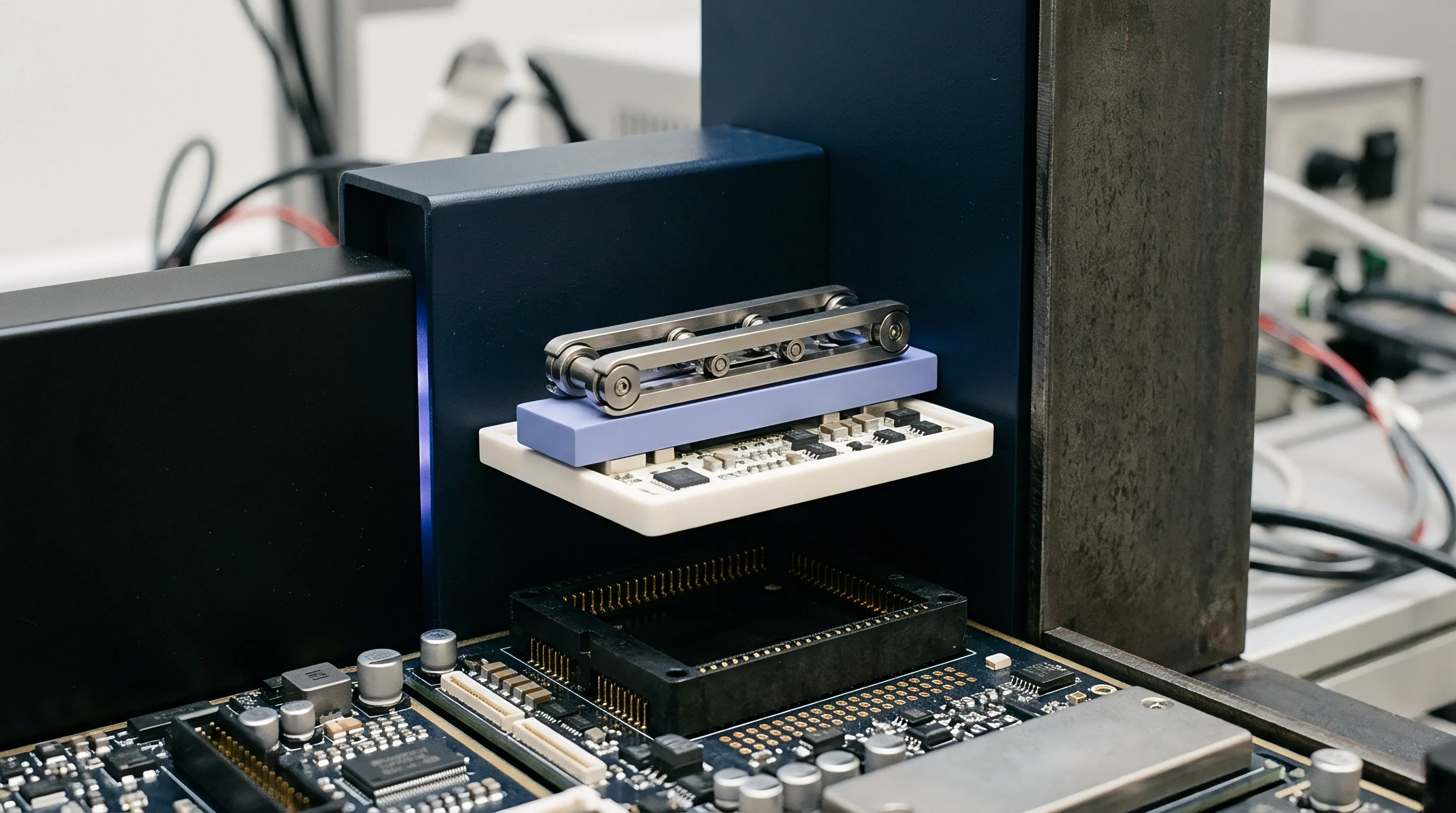
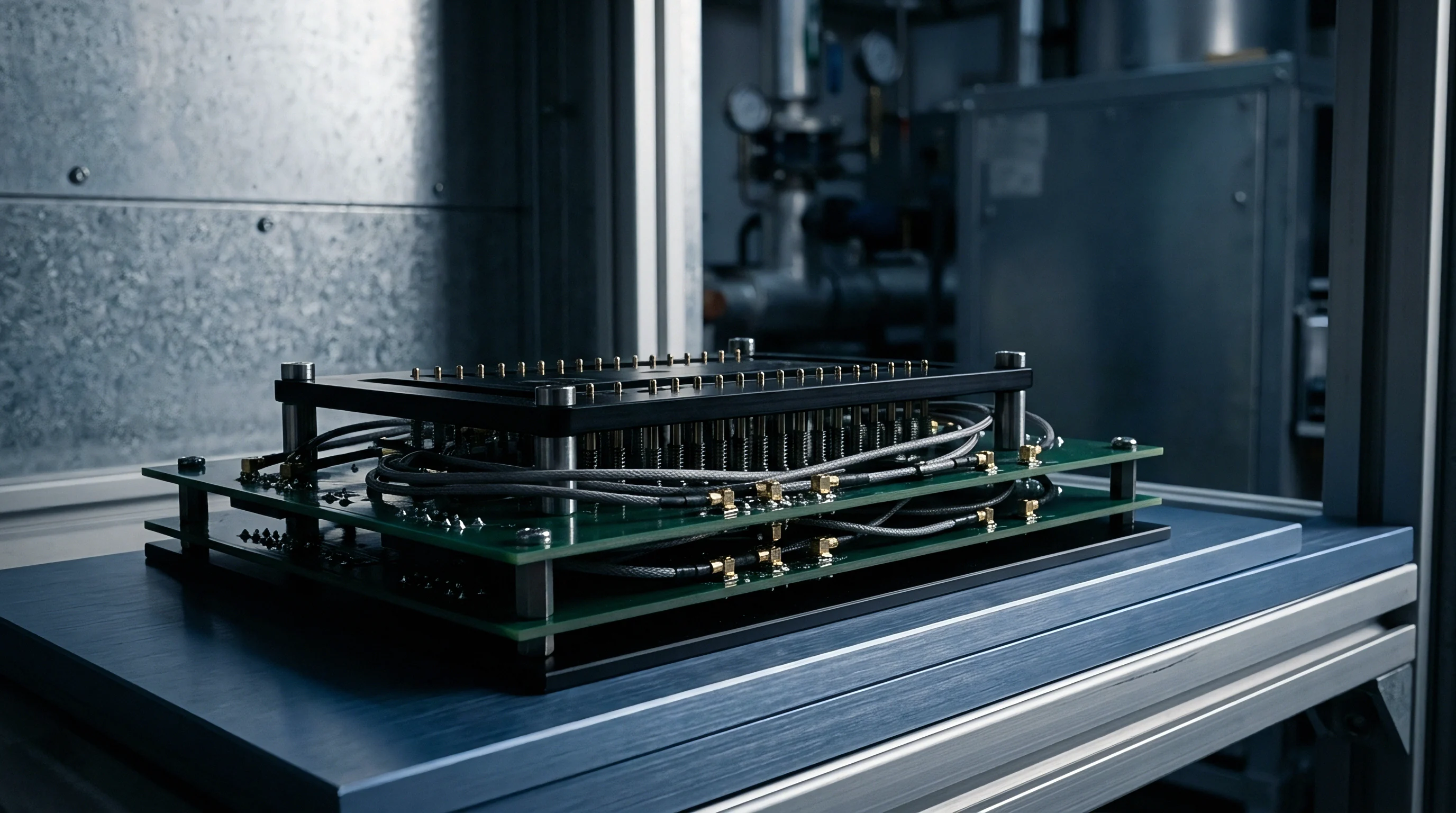
Physical validation closes the gap between software simulation and physical silicon execution on turnkey circuit card assemblies. Software in the loop testing verifies algorithmic logic inside synthetic containers, but physical microcontrollers experience parasitic capacitances, power rail sags, and clock jitter. Hardware in the loop test fixtures secure physical circuit boards against pogo pin interfaces to validate abstraction layer drivers under stressed physical conditions.
Physical test fixtures stall immediately when software interfaces fail on actual hardware.
Automated test racks manipulate supply voltages, inject electrical noise into communication lines, and measure digital signal timing using high-speed logic analyzer instrumentation. Driver abstraction layers must demonstrate compliant physical signaling across all supported silicon variants when installed into identical electrical assemblies.
IPC-A-610 Class 3 acceptance criteria govern solder integrity and physical mounting, yet automated functional test fixtures provide the sole definitive proof of firmware execution parity across alternate microcontroller assemblies.
Rigorous test suites require identical functional execution regardless of the target MCU.
Physical Harness and Debug Interface Qualification
Test fixture beds interface with assemblies via dedicated test points routed on the bottom circuit layer. Debug interfaces including Serial Wire Debug and Joint Test Action Group channels connect directly to automated programmer units. The test fixture applies target firmware binaries compiled by the continuous integration matrix, initializes the board, and monitors peripheral bus transactions.
Physical harnesses route high-bandwidth oscilloscope probes to monitor signal integrity on critical communication buses to ensure interrupt latencies satisfy timing contracts.
- Target assemblies seat against the test bed using pneumatic hold-down clamps to seat probe pins.
- Automated power supplies energize target rails through calibrated current shunt resistors.
- Automated programming modules flash candidate firmware images built by the automated verification matrix.
- External microcontroller emulators generate asynchronous bus traffic across external peripheral connections.
- Digital signal analyzers sample pin transitions to calculate interrupt servicing latency and driver execution duration.
Hardware unit costs decline over volume, but unabstracted software debt negates those savings.

Will Register Emulation Expose Latency Regressions?
Software emulation cannot replicate the nanosecond-level physical behavior of internal microcontroller peripheral state machines. When a hardware abstraction layer introduces multiple layers of pointer indirection or function call wrappers, interrupt latency increases. Hardware in the loop instrumentation detects driver latency regressions by measuring the elapsed time between physical pin assertions and subsequent bus responses.
Consider peripheral response timing in high-reliability industrial controls. The physical world respects precise mechanical timing. In maritime freight logistics, cargo crane interlocks monitor absolute shaft encoder positions via serial communications where a five-millisecond delay introduces mechanical deflection risks.
Microcontroller driver abstraction layers operating industrial interlocks must respect deterministic latency ceilings regardless of which underlying chip executes the code.
Section 7.3 of the IEEE 802.3 standard specifies interface timing margins that driver abstraction layers violate when software wrappers inject unpredictable clock cycle delays into register access routines.

Tally
Quantifying engineering scope requires evaluating the financial and operational trade-offs between proprietary turnkey module procurement and vendor-independent driver abstraction development. Turnkey supplier quotations often minimize initial development fees by relying entirely on chipmaker reference code. This shortcut inflates long-term product costs when semiconductor lead times stretch or components become obsolete.
Investing in modular, vendor-independent driver abstraction layers requires higher upfront non-recurring engineering expenditure, but protects manufacturing autonomy.
Spreading initial toolchain expenses across production volumes often masks underlying software lock-in.
A rigorous automated verification matrix demands dedicated software engineering hours for pipeline construction, test harness development, and multi-architecture driver maintenance. The buyer must weigh upfront software architecture fees against the perpetual risk of single-source silicon dependency.
A four-target hardware abstraction layer suite with automated hardware in the loop regression verification demands 380 hours of non-recurring engineering to reach production readiness.
Securing transferable firmware builds protects capital investments during supplier transitions.
Non Recurring Engineering Amortisation Models
Upfront engineering fees vary according to integration depth and testing automation sophistication. Turnkey modules incorporating vendor reference drivers cost significantly less initially, but each silicon respin incurs recurring integration fees. Conversely, developing a validated vendor-independent abstraction layer amortizes across the product lifecycle by enabling rapid second-source microcontroller component substitutions.
The financial math shifts dramatically when component markets destabilize and long lead times compress margins.
| Integration Scope Level | Initial Software NRE | CI/HIL Harness Cost | Unit Firmware Royalty | Second Source Migration Time | Migration Redesign Expense |
|---|---|---|---|---|---|
| Vendor Proprietary Turnkey | $18,000 | $4,500 | $0.45 | 32 weeks | $64,000 |
| Semi-Custom Reference Design | $34,000 | $12,000 | $0.20 | 20 weeks | $42,000 |
| Vendor-Independent Abstraction | $78,000 | $28,000 | $0.00 | 4 weeks | $8,500 |
| Full In-House Abstraction | $115,000 | $45,000 | $0.00 | 2 weeks | $3,200 |
The upfront NRE figure of $78,000 for vendor-independent abstraction rests on an assumed four-target matrix implemented by experienced embedded engineers billing at $160 per hour across a 16-week delivery schedule. This figure drops if target microcontrollers share common ARM Cortex core peripheral topologies, but escalates if safety-critical coding standards mandate formal mathematical verification.
Clear engineering scope definitions protect capital by preventing creeping re-engineering costs.

Firmware Maintenance Retainers across Sourcing Tiers
Contract manufacturing facilities often charge recurring retainers to maintain production toolchains and software test environments. A complete build verification matrix eliminates dependency on supplier maintenance contracts by encapsulating the entire build and test harness inside transferable container scripts. The buyer maintains full custody of the build environment.
Buyers operating under unhedged uncertainty must budget contingency capital for sudden redesign cycles when market shortages eliminate single-source silicon supplies. Although industry estimates suggest forty percent of single-source turnkey assemblies undergo unbudgeted redesigns within thirty months, prudent buyers treat this risk as a direct balance-sheet liability.
When buyers fail to negotiate transfer of complete automated test scripts, production assembly transfers grind to a halt, leaving the purchasing organization with unusable bill of materials files and stranded factory inventories.

Passage
Transferring production between manufacturing facilities demands rigorous handovers of software assets, build pipelines, and functional test environments. An assembly transfer package must contain raw source code, container configurations, continuous integration definitions, and physical test fixture schematics. Withholding automated build matrices during a factory transition breaks production continuity.
The buyer must enforce comprehensive deliverable requirements in the original statement of work.
Complete deliverable packages dictate whether a company can successfully move production between facilities.
A complete design transfer package allows an unassociated manufacturing plant to pull source repositories, execute containerized builds across the verification matrix, flash target circuit boards, and run automated functional verification tests without consulting the original design house. Custody of the verification matrix constitutes ownership of the manufacturing process.

Design Transfer Source Repository Structure
Repositories must structure software components cleanly to enable modular extraction and independent validation. Directory layouts separate vendor register header definitions, platform abstraction source files, functional validation test suites, and automation runner configurations into distinct revision-controlled trees.
Clear directory hierarchies prevent unauthorized file leakage across intellectual property boundaries, ensuring asset transfers remain fully compliant with licensing terms.
The deliverable dossier includes software documentation specifying exact compiler version strings, linker memory layout maps, and static analysis suppression rules. Without these artifacts, manufacturing engineers cannot replicate certified binary outputs from transferred source files. Build reproducibility remains the baseline acceptance metric for professional manufacturing transfer packages.
Deterministic build outputs verify that a transfer package contains every asset required for production.
Licensing Boundaries and Factory Test Jigs
Contract agreements must clearly demarcate intellectual property ownership across all delivered software modules. The buyer retains full ownership of the application layer, the hardware abstraction interfaces, and the automated build verification matrix configurations. Vendor-provided runtime libraries remain subject to original silicon vendor click-through licenses, while third-party real-time operating system kernels require documented royalty-free commercial licenses.
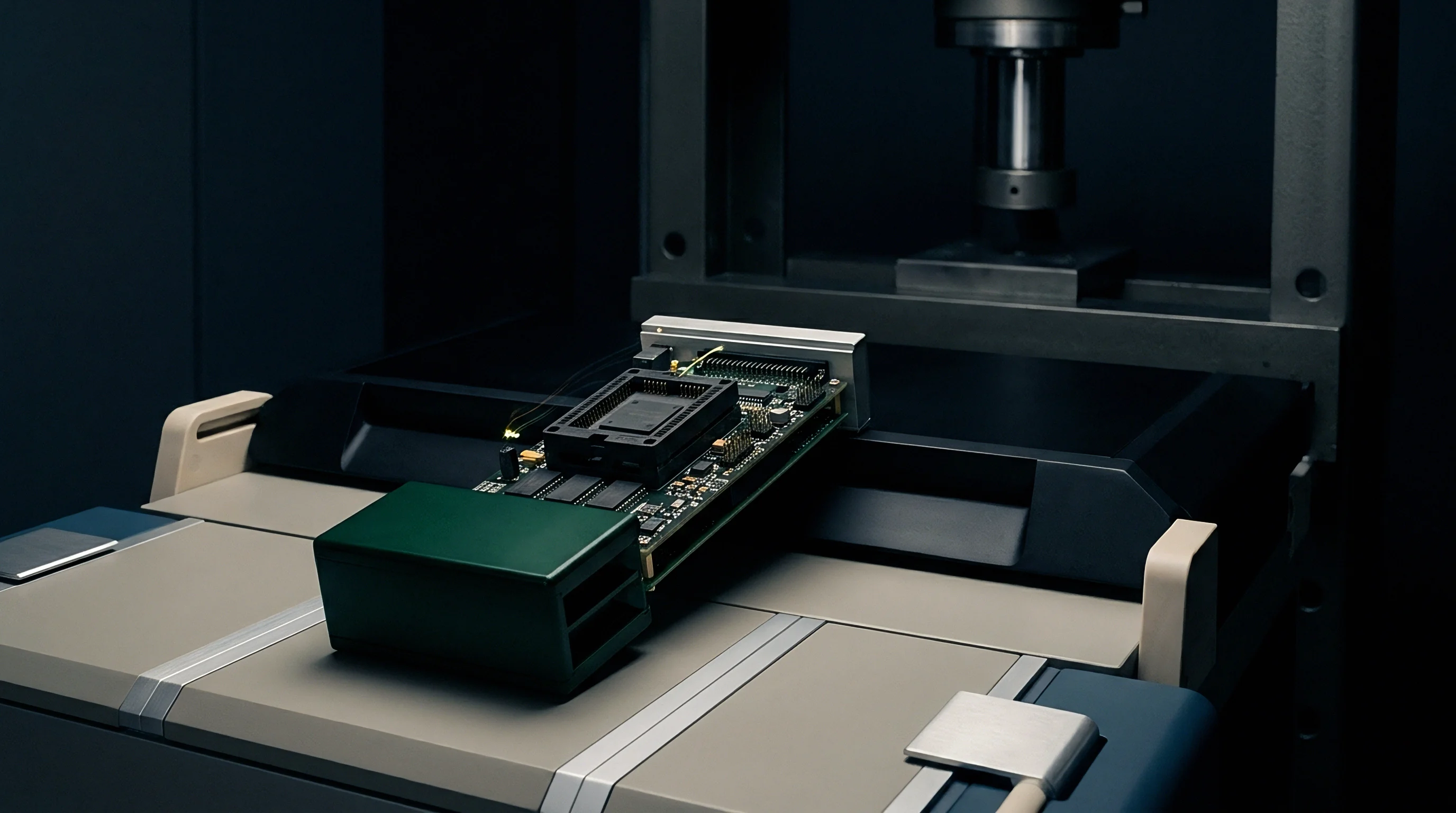
Physical test jigs must transfer alongside software assets. The handover dossier includes Gerber fabrication files for the test bed interface board, mechanical computer-aided design files for the pogo pin clamp assembly, and wiring harness netlists connecting automated instrumentation. Without these physical assets, an incoming factory cannot execute the hardware in the loop automated test suites that validate abstraction driver compliance.
Whether future automated build environments can eliminate physical test fixtures entirely by deploying high-fidelity digital silicon twins that capture true analog bus behaviors remains an unresolved engineering frontier.