Late Component Change Notifications Handling in Turnkey Sourcing
Lock bills of materials contractually and require automated feeder verification to eliminate unannounced component substitutions in turnkey electronics sourcing.


Custody
A bare bill of materials in a turnkey contract creates an immediate jurisdictional hazard. When an original design manufacturer sells a completed assembly under a single top-level part number, the boundary between buyer specification and factory procurement blurs. The supplier purchases active silicon, passives, connectors, and printed circuit board laminates under its own commercial arrangements.
Production runs smoothly until an unannounced silicon stepping hits the surface-mount line or the factory issues a Product Change Notification fifteen days before shipping five thousand assembled units. The buyer opens the crate, powers up the board, and hits peripheral initialization timing failures caused by a revised microcontroller revision. Sourcing teams encounter this friction because turnkey contracts so often define the deliverable as a functional black box rather than a locked engineering topology.
Hardware teams often assume turnkey sourcing shifts component obsolescence risk entirely to the manufacturer. While the factory absorbs the administrative work of line balancing, technical risk in the field stays with the brand owner whose logo is on the box. When an integrated circuit vendor issues a formal notification under standard JESD46 workflows, the chip maker gives ninety days’ notice and up to one hundred eighty days for last shipment.
That notice lands on the turnkey vendor’s procurement desk, where enterprise resource planning software handles it as a purchasing schedule instead of an engineering risk. It then sits in a queue while the factory runs through remaining reel inventory.
Engineering change notices move across boundaries through distinct custody tiers. In a pure build-to-print agreement, the customer owns the full design package, including native schematics, layout databases, Gerber archives, firmware source code, and exact manufacturer part numbers. In a pure turnkey arrangement, the supplier holds the native design files and exposes only interface drawings, pinouts, and high-level behavioral descriptions.
Semi-custom manufacturing, the middle ground, splits these deliverables unevenly between customer and factory.
Contractual clarity establishes where change authority actually sits. Without explicit bill-of-materials locking clauses, the factory retains the right to swap equivalent components to protect its margins. A purchasing manager reviews a five-cent difference between two low-dropout regulators, checks for matching pinouts on a drawing, and approves the change without running power supply rejection ratio tests across temperature extremes.
The board passes functional testing at twenty-five degrees Celsius. Three months later, hardware in cold environments suffers radio frequency receiver desensitization because the substitute regulator dumps excessive switching ripple onto the phase-locked loop voltage rail.
A turnkey contract lacking explicit component brand and revision schedules cedes engineering authority directly to the factory procurement desk.
Traceability starts with the design transfer dossier. Sourcing teams retain technical control by structuring agreements around three configuration baselines:
- Locked Manufacturer Part Schedules specify exact, unalterable part numbers, packaging suffixes, and approved silicon revisions for the bill of materials, stopping silent substitutions by line managers looking for spot-market cost savings.
- Design Database Custody Records identify specific repository commits, Gerber layers, and schematic sheets owned by the customer, establishing clear legal possession before tooling investment begins.
- Delta Qualification Matrices outline mandatory bench tests, environmental sweeps, and electromagnetic compatibility scans required whenever a component attribute strays from the agreed baseline.
Procurement teams avoid late change surprises by binding suppliers to formal configuration freezes during the request for quotation phase. When the factory signs an agreement with baseline locking provisions, the engineering scope explicitly covers secondary sourcing approvals. Factory sales engineers routinely assert that full turnkey service eliminates customer engineering overhead.
High-reliability manufacturing proves the opposite: delegated component management demands tighter oversight than direct consignment sourcing. The buyer still has to verify purchases, review delta test data, and audit component reels on active pick-and-place feeders.

Contractual Architecture for Engineering Change Control
Standard commercial purchase orders fail to protect hardware buyers against sudden obsolescence and supplier-driven revisions. A standard purchase order covers price, delivery dates, and basic visual acceptance under IPC-A-610 standards, but it says nothing about whether an operational amplifier can be swapped for a pin-compatible alternative from another vendor. Sourcing teams resolve this by attaching a dedicated Manufacturing Services Agreement with technical governance schedules.
The technical governance schedule defines major versus minor changes. Sourcing contracts rely on standardized industry classifications to prevent subjective arguments when disputes arise:
| Change Class | Technical Description | Mandated Advance Notice | Customer Approval Requirement |
|---|---|---|---|
| Class 1 (Major) | Silicon die revision, package redesign, alternate fab location, critical passive dielectric swap | 90 Calendar Days | Formal written engineering approval prior to lot assembly |
| Class 2 (Moderate) | Second-source passive substitution on non-RF rails, connector housing resin change, minor layout adjustment | 60 Calendar Days | Engineering change order review and bench validation report sign-off |
| Class 3 (Minor) | Packaging tape reel pitch adjustment, factory internal labeling, non-functional solder mask shade variation | 30 Calendar Days | Informational notification with standard batch production records |
Contractual leverage sits primarily in the commercial remedies for unnotified changes. If a factory introduces an unapproved revision that causes production scrap, field returns, or recertification expenses, the contract must place full financial liability on the manufacturer. Without explicit liability clauses, turnkey vendors cap their exposure at replacing the sub-dollar component itself rather than paying for stranded inventory, rework labor, and regulatory lab testing.
Change approvals rely on a structured engineering change request loop. The factory submits a change request form along with technical documentation from the component manufacturer ~ including comparative spec analyses, pin-to-pin functional mappings, thermal characteristics, and bench bring-up measurements. Customer engineering then has thirty calendar days to review the packet, request further data, or run in-house qualification testing.
Assembly with the modified bill of materials remains blocked until the customer issues a signed engineering change order.
Managing custody also means auditing incoming inspection at the factory. Tier-one contract manufacturers maintain verification labs equipped with X-ray fluorescence analyzers, decapsulation stations, and automated optical inspection equipment. Tier-two and tier-three plants often rely on quick visual checks of box labels.
When a chip vendor announces an end-of-life event, secondary brokers flood the spot market with reclaimed, relabeled, or substandard silicon. A solid turnkey agreement requires sourcing all bill-of-materials components directly from authorized franchise distributors, blocking open-market brokers unless the customer explicitly approves the purchase in writing alongside third-party test reports.
What remains unresolved across international supply chains is how small-to-midsize hardware brands can realistically enforce thirty-day notice periods against dominant overseas contract manufacturers who prioritize enterprise accounts during global silicon crunches.


Friction
Unannounced component changes show up as sudden manufacturing and field failures. When a contract manufacturer alters a passive component or installs a revised microcontroller stepping without engineering review, performance shifts along margins standard factory tests never catch. Automated test equipment on the floor typically runs a quick go/no-go test at room temperature: checking primary voltage rails, flashing firmware, verifying current draw, and reading a serial register.
The screen takes under forty seconds per unit. It completely misses analog drift, high-frequency phase noise degradation, temperature-dependent reset thresholds, and memory timing violations.
The interface between embedded firmware and physical silicon is the most fragile point in turnkey hardware integration. Microcontroller and system-on-chip vendors regularly introduce minor die revisions to boost yield, reduce die size, or fix errata, assigning a new revision code like stepping A to stepping B. While the package and pinouts stay identical, internal propagation delays, register initialization timing, or flash write algorithms often shift. In a turnkey arrangement where the buyer wrote the application firmware but the factory buys the silicon, a late stepping change breaks production without triggering an alarm on the assembly floor.
Passive component swaps carry similar risks. Turnkey assemblers often treat multilayer ceramic capacitors as interchangeable commodities. A purchasing agent matches nominal capacitance, rated voltage, and package footprint, replacing a specified Murata high-Q capacitor with a lower-tier alternative to trim costs.
The alternative part reads ten microfarads at zero volts DC bias. Under a three-point-three-volt operating bias, the substitute dielectric drops sixty percent in effective capacitance from ferroelectric voltage coefficient degradation. Power distribution network impedance spikes, the wireless transceiver sags during transmission bursts, and units drop packets in the field.
Analog front-end circuits are even more sensitive. Swapping an operational amplifier for one with an identical gain-bandwidth product can destabilize a precision sensor interface if the substitute carries higher input bias current or a slower slew rate. Solder joint reliability also drops when a factory changes lead finishes without adjusting the reflow thermal profile.
Moving from matte-tin to nickel-palladium-gold alters wetting balance, leading to voiding, tombstoning, or micro-cracking during shock testing.
Engineers usually discover these shifts only after hundreds of units lock up in the field. Tracking down an unnotified change consumes weeks. Teams naturally suspect recent software updates first, spending hundreds of developer hours tracing memory pointers and task schedulers.
Only after hooking up high-bandwidth oscilloscopes, logic analyzers, and thermal chambers does the root cause trace back to a silicon revision the factory made two production runs ago.
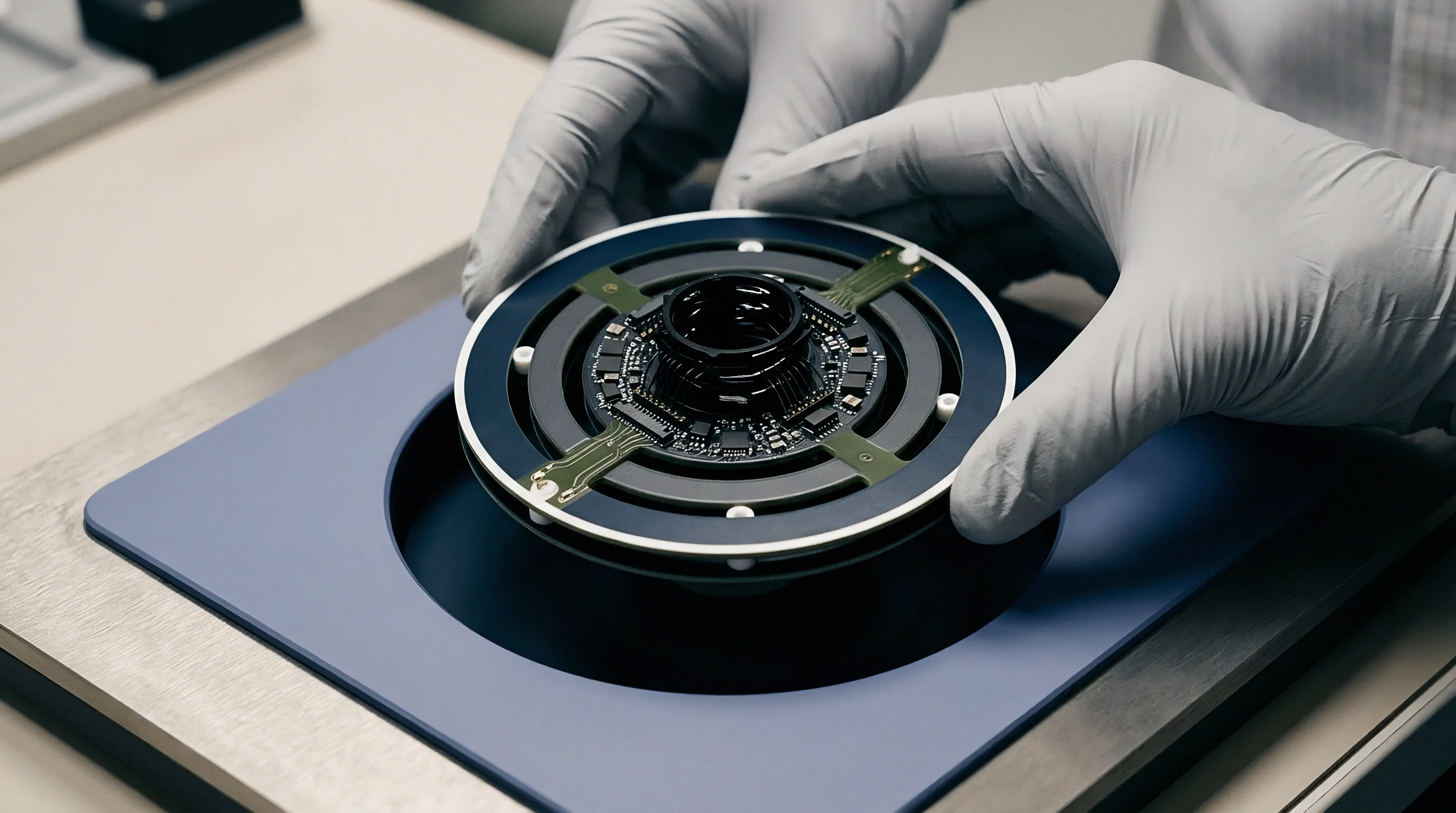
Why Do Factory Functional Testers Miss Late Component Alterations?
Factory production testing is built for throughput, not parametric characterization. A line running two thousand units per shift spends minimal time on each board. A bed-of-nails fixture checks static resistance on power rails, powers the board, reads a serial string, and shuts down.
The fixture is electrically quiet, runs off a clean power supply, and tests at exactly twenty-two degrees Celsius. Real operating conditions expose the device to electrical fast transients, supply fluctuations, temperature swings from minus twenty to plus sixty degrees Celsius, and sustained vibration.
The parameters altered by component swaps fall outside what standard factory test fixtures measure:
- Microcontroller Errata Interactions occur when firmware relies on undocumented peripheral timing quirks that change between silicon mask revisions, causing buses to freeze intermittently under heavy direct memory access transfers.
- Clock Jitter and Phase Noise Escalation happens when a factory replaces a low-ESR crystal resonator with a generic part with mismatched load capacitance, degrading digital modulation accuracy and shrinking radio range.
- Thermal Drift of Voltage References causes analog-to-digital converter readings to drift across temperature extremes, distorting battery measurements and triggering premature low-voltage shutdowns.
- Transient Load Step Instabilities develop when substitute decoupling capacitors fail to hold sufficient charge during sleep-to-wake transitions, resetting the internal core voltage monitor.
Silicon vendor software development kits compound the problem. Vendors bundle peripheral drivers, hardware abstraction layers, and operating system ports together. When they modify the underlying silicon, they issue updated driver libraries.
If the turnkey assembler runs a new silicon stepping on the line while the customer keeps flashing older compiled firmware, the binary executes mismatched register configurations. Hardware timers overflow unexpectedly, interrupt flags fail to clear, and flash sectors corrupt during over-the-air updates.
When unexpected field failures surface in recent production lots, engineering must halt incoming shipments, correlate component date codes with board serial numbers, and perform comparative cross-sectional decapsulation to check physical die structures against original qualification units.


Quarantine
Halting a compromised production line requires fast containment. The moment an unannounced component variation is suspected, sourcing and quality teams initiate protocols to keep inventory from spreading through fulfillment channels. Outgoing shipments freeze at the factory, warehouse stock is locked at distribution centers, and raw component reels are pulled from feeder stations.
Every hour of delay lets non-conforming assemblies blend into supply networks, driving up remediation costs.
Engineering containment starts with serial number and lot code correlation. A proper turnkey contract requires the manufacturer to maintain full traceability, linking board serial numbers to component reel lot numbers, surface-mount line identifiers, and optical inspection logs. If the manufacturer lacks component-level traceability, engineering has to treat every board built since the last audited qualification run as suspect.
Traceability gaps turn a single-day batch issue into a multi-month recall.
Physical isolation of suspect hardware happens alongside technical triage. Engineering sets up comparative testing, putting five known-good baseline units and five suspect units into an environmental stress screening chamber. Differential high-impedance probes monitor power rails, communication buses, and clock signals connected to multi-channel data acquisition systems.
Testing subjects both groups to identical stress profiles ~ thermal extremes, voltage limits, and heavy communication loads ~ to isolate behavioral differences.
A component substitution is considered unverified until electrical characterization proves identical parametric margins across full environmental operating limits.
The triage workflow systematically evaluates physical, electrical, and software differences:
- Visual and Radiographic Verification checks packaging differences using high-resolution optical inspection, X-ray imaging, and decapsulation microscopy to compare lead frame geometry, bond wire metallurgy, and die markings against baseline specs.
- Electrical Parametric Profiling measures static and dynamic operating characteristics, including DC current draw across processor sleep states, switching ripple on power converters, analog input impedance, and propagation delay on high-speed lines.
- Firmware Interface Auditing checks hardware abstraction layer interactions by running boundary-scan routines, peripheral stress scripts, and register-level tests to ensure modified silicon responds to firmware commands without timing errors.
- Environmental and Mechanical Stress Screening tests stability through temperature sweeps from minus forty to plus eighty-five degrees Celsius, humidity exposure, and sinusoidal vibration to uncover margin degradation.
Engineering documents observed variances in a Delta Qualification Dossier, which serves as the technical basis for rejecting the run or defining corrective action. If the substitution causes unrecoverable electrical issues, sourcing issues a rejection notice, forcing the factory to scrap or rework affected boards at its own expense. If the change can be salvaged through firmware, engineering must weigh the commercial cost of maintaining separate software baselines.

Firmware Remediation and Divergent Codebases
Software adaptation is the most common way factories try to salvage hardware after late component swaps. When a factory installs an alternate flash memory chip with a different page size or a substitute sensor with modified register maps, existing firmware won’t boot. The factory asks for an emergency patch to keep the line moving.
Engineering and sourcing leaders should approach this with extreme caution.
Maintaining separate firmware branches for hardware variants creates lasting operational headaches. If engineering forks code to support a substitute component used on five thousand boards, every future software update, security patch, and feature release must be built and validated across both hardware baselines. Support teams struggle in the field if they cannot tell which hardware revision a customer holds.
Over a five-year product lifecycle, maintaining a divergent software branch almost always costs more than scrapping the bad build up front.
If firmware adaptation is unavoidable, engineering should implement dynamic hardware identification instead of static codebase branching. Using hardware ID resistors, an electronic revision EEPROM, or unique microcontroller silicon signatures lets a single unified binary identify the hardware configuration at boot. The binary loads appropriate drivers and register settings dynamically, removing the risk of flashing the wrong build in the field.
Delta qualification must also account for regulatory compliance. Changing a critical component often invalidates existing electromagnetic compatibility, radio frequency, or safety certifications. Shipping products with unapproved hardware changes violates FCC, CE, and equivalent standards:
| Modified Component Type | Affected Regulatory Domain | Mandatory Delta Testing Requirement | Laboratory Re-certification Scope |
|---|---|---|---|
| Primary Microcontroller / Clock Source | FCC Part 15B / CISPR 32 (EMC) | Radiated and conducted emissions bench sweeps | Formal lab scan if emissions margins degrade by more than 3 dB |
| RF Transceiver / Front-End Module | FCC Part 15C / RED (Radio Performance) | Output power, spurious emissions, occupied bandwidth | Permissive Change filing or full radio re-certification |
| Switch-Mode Power Supply Controller | IEC/EN 62368-1 / Conducted Emissions | Thermal rise testing, conducted line noise scans | Safety report update and conducted emissions verification |
| Lithium Battery Protection Circuit | UN 38.3 / IEC 62133 (Battery Safety) | Overcharge, short-circuit, and thermal abuse tests | Full battery pack re-testing and formal certificate re-issue |
Regulatory testing takes time and money. A standard electromagnetic compatibility test suite at an accredited lab costs five thousand to fifteen thousand dollars and takes two to three weeks to schedule. Permissive change filings for wireless products often exceed twenty-five thousand dollars.
Contracts must state explicitly that the manufacturing partner covers lab fees, sample preparation, and expediting costs stemming from unnotified modifications.
Reworking assembled printed circuit boards introduces secondary reliability risks. If a factory offers to desolder incorrect parts and hand-solder replacement components across thousands of boards, engineering must inspect and approve the rework process. Hand soldering introduces localized thermal stress, adjacent component damage, solder splatter, and trace delamination.
Every reworked board requires optical inspection, X-ray checks on bottom-terminated components, and full functional re-testing before packaging.
Calculating the true cost of unannounced changes means adding up scrap expenses, engineering triage hours, lab testing fees, storage charges, and delayed launch penalties. Presented with the unvarnished total, factory executives quickly realize that cutting corners on change notifications destroys manufacturing margins.
A structured containment protocol protects reliability, but it cannot undo market damage when unnotified swaps slip past factory inspection and trigger widespread failures in the field.

Spool
Component reels and surface-mount tape spools are the physical front line of change control. Automated pick-and-place machines pull parts from eight, twelve, and sixteen-millimeter carrier tape at rates over forty thousand placements an hour. A single machine holds more than one hundred feeder spools.
When an operator splices a new reel onto an active feeder, any mismatch between the reel label and the bill of materials populates thousands of defective boards before anyone notices. Sourcing agreements must mandate automated barcode verification on every spool splice at the feeder level.
Modern EMS facilities use intelligent feeder systems to eliminate loading errors. These feeders link the physical spool barcode directly to the machine placement program. When loading a tape spool, the operator scans the reel barcode, the feeder slot identifier, and their badge.
Machine software verifies that the part number matches the authorized bill of materials entry for that coordinate. If the barcode does not match, the feeder locks mechanically, preventing the machine from picking components from the spool.
Intelligent feeders are only as good as their software rules. Operators routinely encounter reels with minor part number suffix differences indicating packaging, temperature rating, or pin-finish variations ~ like commercial versus industrial temperature ranges. If software permits supervisor overrides, line workers under pressure to maintain utilization targets routinely bypass the interlock.
Sourcing audits should inspect feeder override logs to catch unauthorized substitutions.
A component reel barcode mismatch must mechanically lock the placement feeder until an authorized quality engineer signs the verification log.
Storage and handling conditions on the floor directly affect solder joint integrity. Moisture-sensitive surface-mount devices absorb ambient humidity. When passed through a convection reflow oven at two hundred sixty degrees Celsius, trapped moisture turns to high-pressure steam, delaminating the silicon die from the lead frame ~ a failure known as popcorning.
Engineering must audit compliance with JEDEC J-STD-033 standards governing handling, packaging, and baking of moisture-sensitive components.
Managing inventory buffers provides protection against sudden obsolescence. When an integrated circuit vendor issues an end-of-life notice or announces a major die revision, the buyer must decide whether to execute a Last Time Buy. Doing so requires estimating total product demand across the remaining lifecycle, buying component spools up front, and storing them in climate-controlled warehousing.
This ties up working capital and introduces component aging risks.
Sourcing professionals evaluate four primary obsolescence mitigation strategies:
- Last Time Buy Execution involves purchasing a multi-year reserve of component reels directly from authorized distributors, locking in unit pricing while absorbing holding costs and shelf-life risks.
- Drop-In Second Sourcing qualifies alternative, pin-compatible component part numbers across primary and secondary schematic positions during initial design, letting the factory switch vendors without modifying board layouts.
- Targeted Board Spin Redesign re-engineers a subsystem to accommodate new silicon generations, absorbing non-recurring engineering fees and recertification costs to modernize the architecture.
- Strategic Buffer Stock Agreements contractually require the turnkey manufacturing partner or a distributor to maintain a rolling ninety-day buffer of critical long-lead components, absorbing supply shocks.
Long-term component storage demands strict environmental controls. Solderability degrades over time through atmospheric oxidation and intermetallic compound growth. Reels stored in standard warehouses for more than twelve months frequently exhibit poor solder wetting during reflow.
Strategic reserves belong in nitrogen-purged dry storage cabinets keeping relative humidity below five percent at controlled ambient temperatures. Solderability testing under J-STD-002 must be run on aged samples before releasing stored reels to the production line.
Factory representatives routinely offer easy reassurances when confronted with component lead-time spikes. Factory sales teams frequently explain that long-standing component broker networks can secure discontinued silicon from secondary markets without disrupting delivery schedules or impacting product reliability.

Toll
The financial ledger of a hardware program reflects every engineering breakdown, unnotified substitution, and late change order. The unit price quoted on a commercial proposal is only one piece of total landed cost. True landed cost includes non-recurring engineering, tooling amortization, delta qualification, scrap allocations, and warranty reserves.
Evaluating turnkey proposals purely on initial unit price inevitably leads to heavy downstream costs when unnotified changes disrupt production and trigger field failures.
Calculating the true cost of an unannounced component modification requires aggregating direct and indirect financial losses across departments. Direct costs cover scrapped board assemblies, expedited freight for replacements, third-party lab testing, and factory rework labor. Indirect costs cover lost revenue from stockouts, engineering hours diverted from new development, support escalations, and brand damage.
In high-reliability applications, a single unnotified change can easily generate damages exceeding the total value of the original manufacturing contract.
Consider the complete cost breakdown of a mid-volume hardware program experiencing an unnotified silicon substitution:
| Expense Category | Operational Remediation Activity | Direct Cost Exposure (USD) | Responsible Entity Under Contract |
|---|---|---|---|
| Hardware Scrap | Scrapping 2,500 non-functional assembled circuit boards | $87,500 | Turnkey Contract Manufacturer |
| Factory Board Rework | Desoldering and replacing QFN microcontrollers on 7,500 units | $33,750 | Turnkey Contract Manufacturer |
| Engineering Triage | 160 internal engineering hours dedicated to root-cause failure analysis | $24,000 | Original Equipment Manufacturer (Buyer) |
| Regulatory Lab Scans | Delta radiated emissions and radio frequency compliance testing | $12,500 | Contract Manufacturer / Shared Escrow |
| Air Freight Expediting | Expedited international air shipping for replacement component reels | $8,200 | Turnkey Contract Manufacturer |
| Total Direct Impact | Comprehensive financial exposure resulting from unnotified change | $165,950 | Exceeds initial program margin buffer |
Financial recovery begins with indemnification and warranty provisions in the master manufacturing agreement. Standard contracts typically cap manufacturer warranty liability at repairing or replacing defective units within twelve months of shipment. That standard clause is completely inadequate for protecting hardware buyers against unnotified component substitutions.
If an unauthorized change triggers a product recall or regulatory sanction, replacing the bare circuit board represents only a fraction of the total loss.
Experienced procurement teams write specific liquidated damages and indemnification clauses targeted directly at unauthorized engineering and component changes. The contract must explicitly state that the manufacturing partner indemnifies the buyer against all direct and consequential damages resulting from any unapproved deviation from the signed bill of materials. The agreement should also establish an escrow account or a contractual right of set-off, allowing the buyer to withhold pending payments to cover triage, compliance testing, and warranty claims while formal liability is settled.
Long-term success in turnkey sourcing depends on a transparent engineering relationship with the manufacturing partner. Contractual penalties and legal remedies are necessary backstops, but they cannot replace proactive oversight, locked bills of materials, and regular factory auditing. Organizations that treat turnkey manufacturing as a technical partnership rather than a transactional purchase achieve higher product quality, lower warranty failure rates, and stronger lifecycle margins.
The definitive protection against unauthorized component modifications resides within Section 8.4 of the standard IPC-1752A configuration management agreement, which establishes that any unapproved deviation from the signed bill of materials constitutes a material breach of contract that immediately voids factory acceptance sign-offs and transfers full financial liability for batch remediation directly to the manufacturer.