Calculating Cellular Power Saving Mode Bitfields for Extended Sleep Operations
Calculate cellular PSM bitfields by packing a three-bit unit multiplier and five-bit value into 3GPP octets, verifying carrier grants against clamping.


Timer
On remote battery installations, cellular modems cut baseline draw by shutting down their baseband transceivers between telemetry bursts. These dormant stretches depend on two timers negotiated with the network during registration. The first, designated T3412 extended in 3GPP standards, sets the periodic tracking area update interval ~ the longest duration the terminal can stay in deep sleep before waking to reassert its presence with the tower.
The second, T3324, sets the active time: the window where the terminal continues listening for paging requests once a data exchange wraps up.
Entering Power Saving Mode takes the transceiver off the radio paging channels without detaching the subscriber identity from the serving exchange. Throughout that dormant window, the base station holds onto subscriber context and security keys. Any paging requests that arrive while the terminal sleeps are buffered at the serving gateway or dropped according to subscription terms.
The terminal wakes on its own whenever an internal sensor threshold trips an alert or T3412 runs out.
Setting an active timer longer than the paging window wastes cell charge without improving downlink responsiveness.

Paging Intervals across Periodic Cycles
Downlink delivery hinges on how long the receiver stays awake after sending an uplink packet. While T3324 runs, the radio cycles through discontinuous reception paging frames while the base station buffers inbound packets. The radio pulls full receive current during this window ~ typically twelve to thirty milliamperes depending on the band and low-noise amplifier gain.
Extending T3324 gives the application server a broader window to push configuration updates or firmware commands.
Shortening T3324 forces inbound traffic to queue until the next scheduled uplink. For battery-powered water meters and agricultural probes, continuous server reachability offers little benefit anyway. Endpoints like these report once every twelve or twenty-four hours, catch immediate downlink acknowledgments within two seconds, and drop back into deep sleep.
Leaving an active timer running for two minutes on an hourly cycle burns more than ninety percent of total system energy simply monitoring clear paging channels.

Tracking Area Update Mechanics
Cellular towers purge registration entries whenever an endpoint remains silent past the negotiated expiration threshold, which is why periodic tracking updates exist. Transmitting a tracking area update requires RF synchronization, key confirmation, and radio resource control release. That exchange draws between fifteen and sixty millijoules on an LTE-M link, depending on link margin, before the base station drops the context if the handshake fails.
Choosing an extended T3412 duration trades battery longevity against reachability. An interval of three days cuts transceiver maintenance routines to roughly ten events a month. Dropping that timer to thirty minutes multiplies maintenance energy forty-eight times over that same month without transmitting a single byte of telemetry.
When those parameters are mismatched, the lithium cell gives out years early, forcing unscheduled truck rolls out to remote sites.


Wire
Measurements taken across a precision shunt resistor show three clear current plateaus during a reporting cycle. The first covers transceiver boot and network synchronization, peaking above two hundred milliamperes during physical random access channel preambles. The second spans active transmission and the T3324 listening window that follows.
In the third, baseband circuitry powers down, internal clocks drop to sub-microampere modes, and overall current settles below five microamps.
Direct measurement confirms whether firmware is genuinely forcing the cellular module into Power Saving Mode. Putting an ammeter on the main battery rail catches configuration oversights that leave rails energized. Peripheral pull-up resistors or level translators frequently leak current into unpowered modem interface pins; a modem that pulls three microamperes on its own can easily drain fifty microamperes if an external UART line holds a high logic level against an unpowered baseband input.
A lithium thionyl chloride pack running at four microamps baseline current retains eighty-eight percent nominal capacity across ten years at twenty-five degrees Celsius.

Current Drain during Quiescent States
In deep sleep, an LTE-M transceiver draws roughly three microamps while maintaining memory retention rails at three volts. Sub-GHz front ends and internal regulators add parasitic losses tied directly to operating temperatures. Taking the board up to sixty degrees Celsius doubles silicon leakage on modern baseband processors, raising overall energy demand with every network attach.
Battery chemistry complicates these low quiescent targets. On primary lithium thionyl chloride cells, prolonged storage at negligible current allows an insulating passivation layer to grow across the lithium anode. When the modem jumps from four microamperes to three hundred milliamperes for an uplink pulse, terminal voltage drops sharply.
Placing supercapacitors or hybrid layer capacitors across the supply rails cushions that transient dip while the chemical passivation layer burns off under load.

Why Do Serving Timers Clamp Extended Requests?
Base station controllers cap long sleep requests so subscriber tables do not fill up with unresponsive endpoints. Most public land mobile operators enforce ceilings on periodic tracking area update intervals; a terminal asking for four hundred days in its non-access stratum signaling often receives an assigned value clamped to fifty-four hours, just as a module requesting twelve hours may be granted only four.
SIM profiles determine which ceiling values the serving gateway actually applies. Standard consumer profiles often have Power Saving Mode disabled entirely. Dedicated machine-type communication profiles allow extended timers, but still enforce upper bounds driven by local network congestion.
If the base station clamps T3412 to a lower value, the modem wakes far more often than the power budget assumed, compounding the reduced capacity that cold batteries already deliver.
The operational progression from initial boot through verified deep sleep follows five stages:
- Configuration Delivery passes target bitfield strings from host controller to modem baseband across the local serial interface using standard AT syntax.
- Signaling Transmission bundles requested active and periodic tracking intervals into the initial radio resource control attach message or tracking area update request.
- Gateway Assessment checks the requested bitfields against home subscriber server rules and congestion thresholds on the local serving node.
- Accept Reception reads the granted timer octets out of the signaling accept frame and writes those approved values into modem registers.
- Current Verification uses an external digitizer to confirm system draw drops down to quiescent baseline levels the moment the active countdown finishes.
Premature cell exhaustion typically traces to firmware defaulting into deactivated sleep states rather than poor antenna matching.

Bitfield
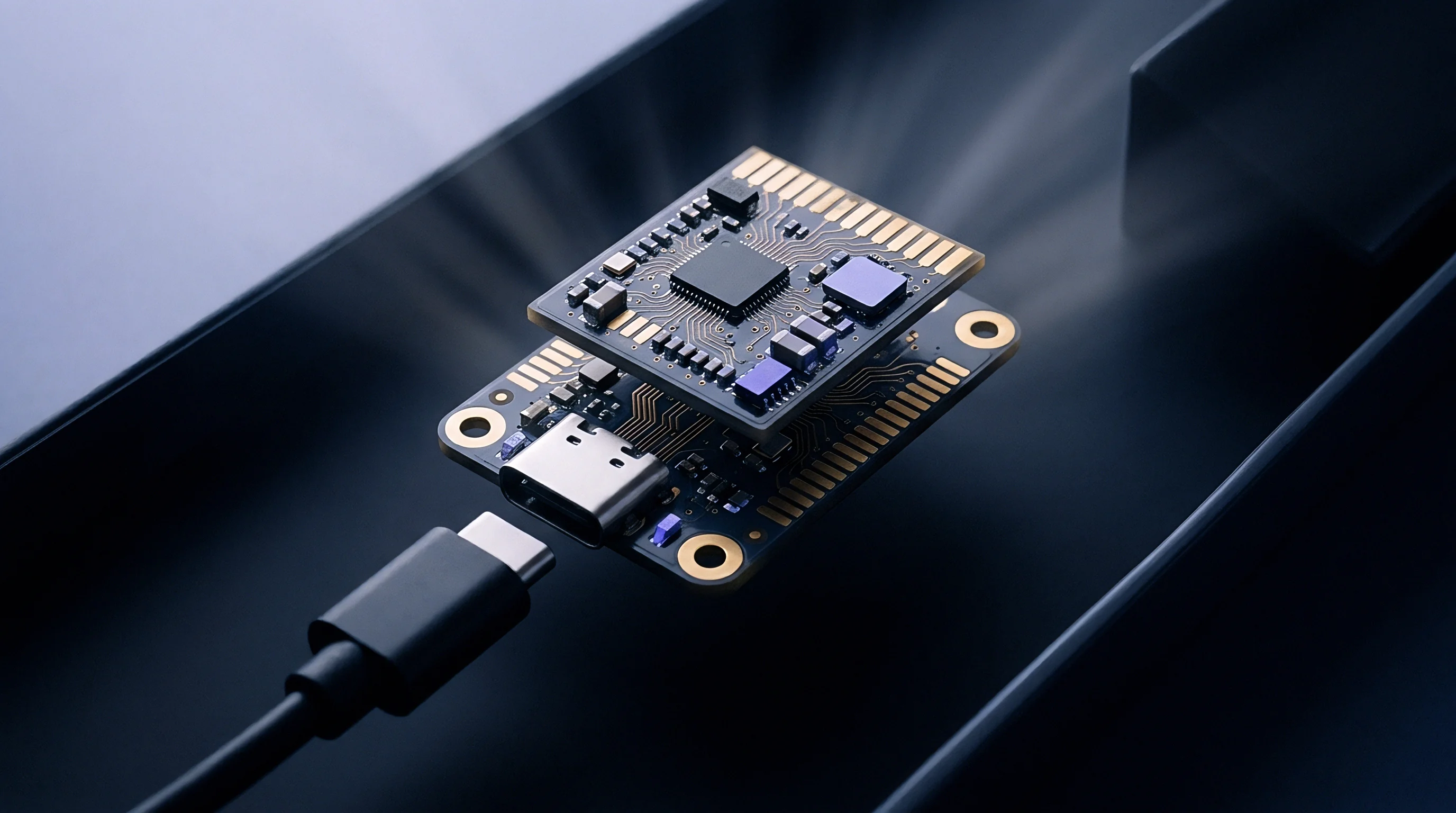
Standard 3GPP specifications express duration values as eight-character binary octets inside non-access stratum signaling strings. Technical standard 24.008 defines the bit arrangements for GPRS Timer 2 under section 10.5.172 and GPRS Timer 3 under section 10.5.163a. The layout splits the eight-bit register into two components ~ a three-bit unit multiplier and a five-bit integer value ~ with bit eight transmitted first.
Parsing these octets requires care with bit ordering. Bits eight, seven, and six establish the time multiplier, while bits five through one supply an integer between zero and thirty-one. The resulting duration is the decoded multiplier multiplied by that integer value, down to a two-second floor.
| Binary Bits 8-7-6 | Unit Multiplier | Minimum Increment (Value 00001) | Maximum Span (Value 11111) |
|---|---|---|---|
| 000 | 10 minutes | 10 minutes | 310 minutes (5.16 hours) |
| 001 | 1 hour | 1 hour | 31 hours |
| 010 | 10 hours | 10 hours | 310 hours (12.91 days) |
| 011 | 2 seconds | 2 seconds | 62 seconds |
| 100 | 30 seconds | 30 seconds | 930 seconds (15.5 minutes) |
| 101 | 1 minute | 1 minute | 31 minutes |
| 110 | 320 hours | 320 hours | 9,920 hours (413.33 days) |
| 111 | Deactivated | Timer deactivated | Timer deactivated |
Active times specified for T3324 rely on an entirely separate set of unit multipliers defined in Table 10.5.172 of the standard. Calculating T3324 requires referencing those dedicated GPRS Timer 2 definitions directly to avoid severe timing errors.
| Binary Bits 8-7-6 | Unit Multiplier | Minimum Increment (Value 00001) | Maximum Span (Value 11111) |
|---|---|---|---|
| 000 | 2 seconds | 2 seconds | 62 seconds |
| 001 | 1 minute | 1 minute | 31 minutes |
| 010 | 1 decihour (6 minutes) | 6 minutes | 186 minutes (3.1 hours) |
| 111 | Deactivated | Timer deactivated | Timer deactivated |
| Values calculated per 3GPP TS 24.008 Release 13 Table 10.5.172 bit assignments. | |||
Under 3GPP TS 24.008 Table 10.5.163a, setting bits eight through six to binary one-one-zero applies a three-hundred-and-twenty-hour multiplier to the five-bit mantissa.

Binary Unit Multipliers in Specification Tables
The first three bits of the octet set the time base for the remaining five. To encode a periodic tracking interval of twenty-four hours, the one-hour multiplier uses bit sequence 001. Setting the integer portion to twenty-four produces binary 11000.
Joining the unit and integer values yields the full octet 00111000.
Alternatively, the ten-hour multiplier uses sequence 010. Because twenty-four does not divide cleanly by ten, the one-hour base is mandatory for an exact twenty-four-hour target. If twenty hours suffices, pairing unit 010 with integer 00010 (two) yields 01000010.
Using the largest viable multiplier preserves resolution across multi-week intervals.
Will Serving Gateways Reject Subscribed Multipliers?
Operator policy engines often reject the 320-hour multiplier on non-metering accounts. For an eight-day reporting interval on a pipeline cathodic protection monitor, target sleep sits at one hundred and ninety-two hours. Evaluating two candidate encodings highlights the hazard: Candidate A pairs the ten-hour multiplier 010 with integer nineteen (10011) to yield 01010011 (one hundred and ninety hours), whereas Candidate B applies the 320-hour multiplier 110 to integer one (00001), giving 11000001 (three hundred and twenty hours).
Candidate A lands close to the desired window and stays within the ten-hour step accepted by nearly all cellular carriers. Candidate B overshoots by five days and fails on networks capping GPRS Timer 3 at three hundred and ten hours. On those networks, Candidate B triggers a fallback to a default fifty-four hours, tripling annual battery consumption.
| Target Sleep | Encoded Bitfield (T3412_ext) | Active Bitfield (T3324) | Granted Sleep | Average Current | 10-Year Capacity Used |
|---|---|---|---|---|---|
| 1 hour | 00100001 (1h x 1) | 00000010 (2s x 2) | 1 hour | 38.2 microamps | 3.35 Ah |
| 6 hours | 00100110 (1h x 6) | 00000010 (2s x 2) | 6 hours | 9.8 microamps | 0.86 Ah |
| 24 hours | 00111000 (1h x 24) | 00000001 (2s x 1) | 24 hours | 4.9 microamps | 0.43 Ah |
| 7 days | 01010001 (10h x 17) | 00000001 (2s x 1) | 170 hours | 3.8 microamps | 0.33 Ah |
| 30 days | 11000010 (320h x 2) | 00000001 (2s x 1) | 54 hours (Clamped) | 5.2 microamps | 0.46 Ah |
Misconfigured timer octets lead to several standard hardware failure modes:
- Bit Order Inversion flips the positions of the unit multiplier and integer mantissa, causing a twelve-hour sleep request to execute as a two-second loop.
- Deactivation Flag Confusion writes binary ones across bits eight through six, disabling Power Saving Mode entirely and forcing continuous idle paging reception.
- Multiplier Resolution Mismatch selects coarse time bases for short intervals, introducing rounding errors that disrupt synchronized reporting schedules.
- Clamping Floor Violations requests intervals below the serving node minimum threshold, forcing an immediate fallback to high-frequency legacy tracking cycles.
Under 3GPP TS 24.008 section 10.5.5.37, an omitted timer octet forces the transceiver to revert to legacy idle paging cycles.


Negotiation
Modem firmware passes requested sleep parameters during the initial attach or subsequent tracking updates. Technical standard 27.007 defines this interface through the +CPSMS AT command, which the host microcontroller writes across the serial bus during hardware initialization. Syntax parameters cover operating mode, periodic routing area updates, ready timers, periodic tracking area updates, and active time.
Issuing the command does not guarantee the serving node will grant the requested values. The modem transmits its proposed timers inside non-access stratum signaling messages over the air, where the serving mobility management entity screens them against subscriber database rules and cell conditions before returning the granted values in an attach or update accept frame.
Carrier equipment overrides requested sleep intervals when local roaming agreements enforce shorter tracking cycles.
Modem Configuration Strings in Production Firmware
Host processors configure sleep parameters over the serial interface before bringing up sockets. A standard command string takes the form AT+CPSMS=1, “00111000”,”00000010″. The leading digit turns on Power Saving Mode, while the empty intermediate parameters omit legacy 2G and 3G timer fields.
The third argument requests a twenty-four-hour extended T3412 using the one-hour multiplier, and the final argument sets a four-second active window for T3324 before the modem returns its response.
Firmware has to verify the assigned parameters once registration finishes. Running AT+CPSMS? returns only operational status and requested values; reading what the network actually granted requires querying registration status with AT+CEREG?. Selecting parameter four configures the modem to output the granted T3412 and T3324 bitfields from the accept frame.
Comparing requested octets directly against granted octets confirms whether the network accepted or overrode the settings before power consumption surges during an unexpected resynchronization.

Carrier Rejection Modes and Clamping Responses
When local subscription rules impose tighter caps, network infrastructure returns clamped octets in the accept message. If an operator caps T3412 at twenty-four hours, requesting seventy-two hours returns an accept frame holding 00111000. The modem baseband accepts that assigned value immediately without alerting the host processor unless firmware polls for it.
Regional compatibility requires confirming carrier provisioning rules before committing to hardware procurement:
- Home Location Registers dictate whether the assigned SIM profile permits Power Saving Mode on target regional networks.
- Serving Gateway Policies set the maximum period a dormant subscriber entry can persist before session keys are dropped.
- Active Time Floors enforce minimum listening intervals so carrier diagnostics can finish paging verification routines.
- Roaming Partner Treaties supersede domestic timer permissions whenever devices cross borders onto secondary networks.
Whether roaming aggregators will standardize fallback timer profiles across multi-carrier international SIMs remains an open commercial dispute.


Settlement
Power budgets tie directly to data plans on remote deployments. A device waking repeatedly burns through airtime purely on signaling overhead, even if sensor payloads never exceed fifty bytes. Every tracking area update eats into the monthly allowance.
Clamped to a two-hour interval, a terminal generates seven hundred and twenty signaling exchanges a month, running up hundreds of kilobytes in billable traffic just maintaining its registration with the tower.
Service contracts often penalize subscriptions that generate erratic reconnect traffic. If an unverified bitfield drops a module out of Power Saving Mode, the transceiver repeatedly reconnects to the network. Serving nodes flag rapid attach cycling as signaling channel abuse, leading to automated throttling, SIM suspension, or base stations outright ignoring subsequent requests.

Cellular Subscription Tariffs and Battery Depletion
Monthly connectivity fees sit alongside the physical expense of field maintenance. Swapping out a dead battery pack on an industrial flow meter inside an underground vault runs hundreds of dollars in technician labor alone. Designing for an extended sleep interval that delivers ten-year cell life protects the capital investment; cutting that down to three years because of unnoticed timer clamping destroys the deployment’s operating margin.
True cost per telemetry message requires amortizing battery replacement against cellular fees. An asset tracker sending one reading a day across ten years transmits 3,650 messages. If early cell exhaustion forces a battery swap at year four, field labor dominates the unit cost of every packet delivered.
In that respect, Power Saving Mode configuration determines whether low-margin sensor deployments remain economically viable.

Reconnection Costs over Product Lifecycles
Frequent detaches drain power reserves by forcing full cell searches and authentication handshakes. Waking cleanly from Power Saving Mode allows a modem to reuse stored acquisition parameters and acquire the carrier within hundreds of milliseconds. When a timer mismatch causes the network to purge subscriber context, the modem has to run a complete carrier scan, decode system information blocks, and re-authenticate.
That recovery draw exceeds two hundred milliamperes for ten to thirty seconds. Preserving battery life over years in the field ultimately depends on aligning with the sleep windows the network actually grants rather than repeatedly paying the penalty of a cold reconnect.