Edge Computing Vibration Telemetry Cellular Offloading Mechanisms
Edge vibration telemetry requires local DSP feature extraction to reduce raw sampling data by 99% before cellular offloading over low-power LTE-M or NB-IoT networks.
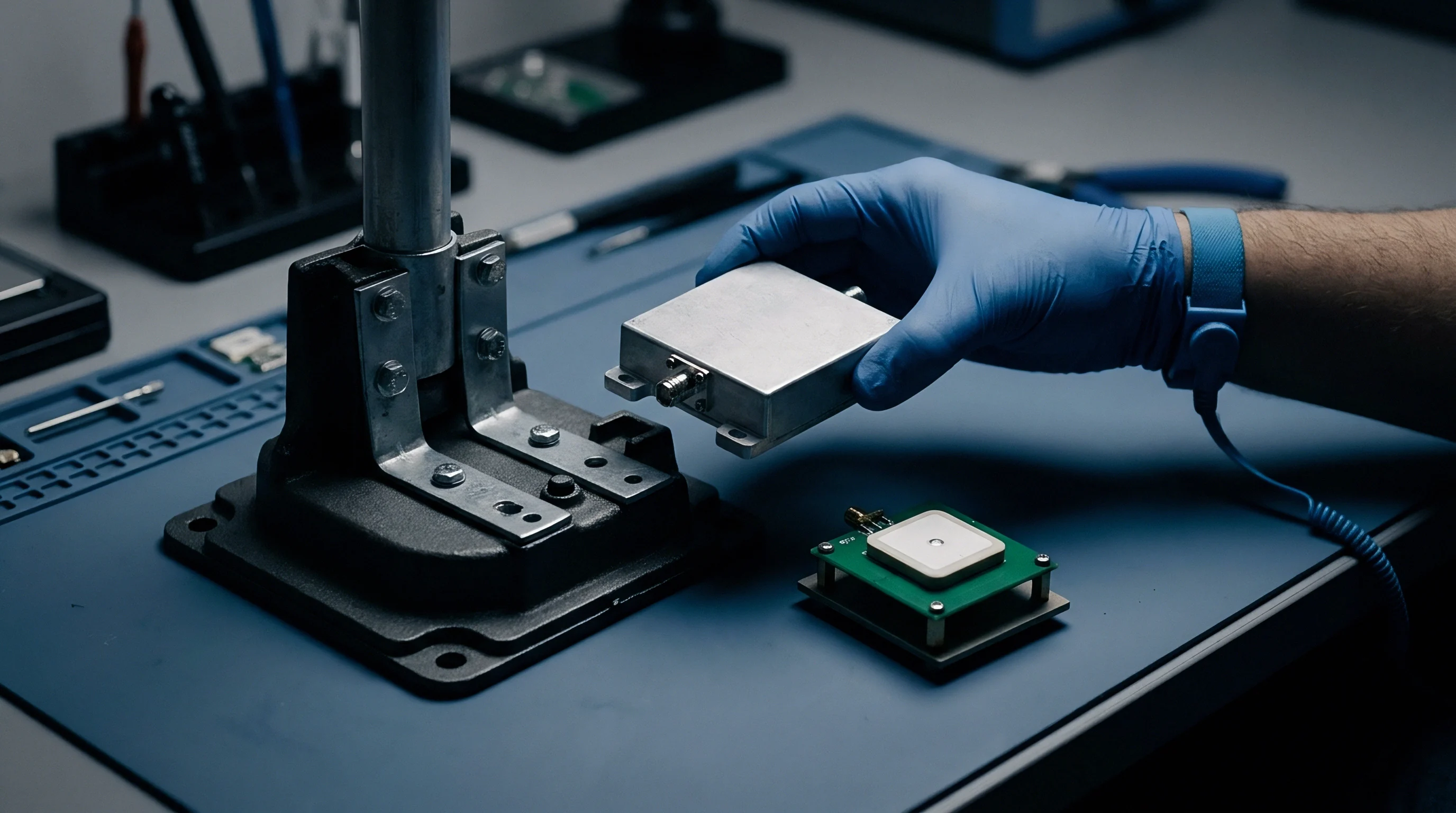

Kinematics
Industrial accelerometers mounted on rotating machinery continuously collect time-series acceleration samples to detect bearing flaking, gear mesh faults, and structural unbalance. A high-performance piezo-electric or micro-electro-mechanical sensor sampling three axes at 25.6 kilohertz with 16-bit resolution delivers raw telemetry at a rate that rapidly exhausts local storage and bandwidth.
Directly streaming raw time-domain waveforms over narrowband cellular networks rapidly drains batteries and generates steep data plan costs. Physical channel limits on Long Term Evolution for Machines (LTE-M) and Narrowband Internet of Things (NB-IoT) cap throughput to burst payloads of tens to hundreds of kilobits per second even under ideal RF propagation. Running the radio continuously to push megabits of uncompressed data draws hundreds of milliamps at the power amplifier, cutting battery life from years down to days.
A three-axis accelerometer sampling at 25.6 kilohertz generates 1.228 megabits per second of raw telemetry, requiring local edge compression to prevent cellular modem saturation.
Edge processors reduce raw acceleration streams into condensed statistical features and frequency spectra before triggering a radio wake event. Microcontrollers with floating-point units or dedicated Digital Signal Processing (DSP) extensions process thousands of raw time-domain samples into compact operational descriptors. Fast Fourier Transform (FFT) algorithms translate acceleration sequences into spectral amplitude bins, isolating harmonic peaks linked to specific rotational frequencies.
Time-domain statistics summarize thousands of acceleration points into single scalar values. Root Mean Square (RMS) acceleration measures overall vibration energy, while peak acceleration and crest factor highlight transient mechanical shocks. Kurtosis quantifies signal spikiness to flag localized bearing race defects early.
Spectral energy binning then aggregates power across defined frequency bands, compressing a 4,096-point time-domain buffer into a sequence of 32 or 64 discrete byte values.
| Vibration Feature Profile | Raw Sampling Parameter | Raw Bitrate | Edge Extracted Metrics | Offload Payload Size |
|---|---|---|---|---|
| Unbalance and Misalignment | 1-axis, 1.0 kHz, 16-bit | 16.0 kbps | 1x-4x Harmonics RMS, Overall Peak | 12 bytes per minute |
| Gearbox Mesh Degraded | 3-axis, 10.0 kHz, 16-bit | 480.0 kbps | Spectral Energy Bins (32), Kurtosis, Crest | 128 bytes per hour |
| High-Speed Bearing Defect | 3-axis, 25.6 kHz, 16-bit | 1228.8 kbps | 64-Bin FFT Peak Array, Envelope RMS | 256 bytes per hour |
| Transient Shock Monitoring | 3-axis, 5.0 kHz, 16-bit | 240.0 kbps | Peak Acceleration, Event Duration, Timestamp | 16 bytes per event |
Sensor power management remains secondary compared to the computational energy of running real-time FFTs on large data arrays. High-performance microcontrollers executing complex windowing functions like Hanning or Blackman-Harris draw between 8 and 25 milliamperes during active processing windows. Duty-cycling this execution lets the processor stay in ultra-low-power sleep for ninety-nine percent of its cycle, waking only to fill the Direct Memory Access (DMA) buffer and calculate summary metrics.
Skipping edge spectral extraction causes cellular data bills to inflate by four orders of magnitude within the first billing cycle.


Buffer
How memory is managed at the edge dictates whether telemetry survives cellular outages. Static Random Access Memory (SRAM) inside edge microcontrollers handles active window processing, but non-volatile flash or Ferroelectric RAM (FRAM) holds queued payloads through extended network dropouts. Partitioning memory into distinct functional zones keeps the system stable when cell towers are unreachable.
Edge devices implement ring buffers in non-volatile memory to manage intermittent connectivity without losing diagnostic data. The memory controller divides storage into low-priority routine summary areas and high-priority anomaly burst regions. Routine spectral summaries write continuously to the ring buffer, overwriting the oldest records once full.
Anomaly bursts ~ triggered when acceleration metrics cross pre-set ISO 10816 velocity limits or spectral envelope masks ~ write to protected memory sectors that resist overwrite cycles until the cloud gateway confirms receipt.
Buffer allocations maintain a three-to-one ratio between peak transient ring memory and maximum burst offload size to survive cellular network registration delays.
Writing payload blocks to internal flash memory introduces microsecond-level current spikes, while writing to external SPI NOR or NAND flash extends active microcontroller bus states. Power budgets must account for these memory maintenance operations alongside baseline sensor current. Firmware minimizes flash wear and energy draw by aggregating feature vectors into unified pages before committing write cycles.
Offloading telemetry from the buffer requires strict coordination with network availability. If poor signal quality prevents the radio from attaching to a cell tower, continuous retry attempts will rapidly drain the primary lithium battery. To prevent this, the edge controller enforces backoff algorithms that adjust retry intervals according to measured Reference Signal Received Power (RSRP) levels.

What Failure Modes Disrupt Industrial Telemetry Memory Arrays?
Edge buffer design faces operational hazards in industrial plant environments:
- Flash Memory Fatigue through unbuffered single-byte write operations that exceed manufacturer endurance ratings of 100,000 erase cycles within months.
- Buffer Overflow Overwrites occurring during extended cellular network outages, causing loss of baseline machine trend records while prioritizing recent values.
- Power Interruption Corruption occurring when battery voltage dips during write cycles, resulting in fragmented payload tables and unparseable flash sectors.
- Threshold False Triggering caused by uncalibrated accelerometer noise floors, filling protected anomaly memory with non-critical machine startup vibrations.
Sizing ring buffers to match maximum network retry intervals prevents data loss during carrier handshakes.

Dispatch
Cellular offloading relies on precise management of modem power states and network registration procedures. Modern cellular modules supporting LTE-M and NB-IoT feature distinct operational modes designed to decouple active data transmission from background power consumption. Understanding these 3GPP standards determines whether an industrial telemetry node achieves a multi-year deployment life.
Industrial telemetry nodes installed on basement pumps or inside thick metal enclosures deal with severe link degradation. NB-IoT addresses low-coverage environments by supporting Maximum Coupling Loss (MCL) up to 164 decibels, using coverage enhancement modes that repeat transmissions to penetrate low signal-to-noise environments. LTE-M provides lower MCL coverage around 156 decibels, but delivers higher throughput and lower latency, minimizing power amplifier active time when operating near cell towers.
Transmitting data over poor cellular links requires substantial energy. When an NB-IoT modem operates in extreme coverage enhancement modes, it repeats payload packets up to 128 times to ensure cell tower decoding. This repetition strategy increases total airtime dramatically, turning a 20-millisecond burst into a multi-second transmission window.
The power amplifier consumes up to 250 milliamperes at 23 dBm output power during these windows, exhausting battery reserves rapidly despite small payload byte counts.
Modern cellular protocols govern power conservation through Power Saving Mode (PSM) and Extended Discontinuous Reception (eDRX). During PSM, the cellular module turns off its internal baseband circuitry and RF transceivers, drawing less than 3 microamps while remaining registered to the network. The device wakes up according to a Periodic Tracking Area Update (TAU) timer or via a local microcontroller interrupt triggered by a vibration anomaly threshold.
| Protocol Standard | Signal Coverage (RSRP) | Tx Power Output | Airtime (128-byte Payload) | Energy Spent per Offload Burst |
|---|---|---|---|---|
| LTE-M (Cat-M1) | Good (-85 dBm) | +10 dBm | 45 milliseconds | 0.012 milliamp-hours |
| LTE-M (Cat-M1) | Poor (-115 dBm) | +23 dBm | 380 milliseconds | 0.145 milliamp-hours |
| NB-IoT (Cat-NB1) | Good (-90 dBm) | +7 dBm | 120 milliseconds | 0.028 milliamp-hours |
| NB-IoT (Cat-NB2) | Extreme (-128 dBm) | +23 dBm (16x repetition) | 2400 milliseconds | 1.250 milliamp-hours |
The transition between connected states and low-power sleep follows strict 3GPP timer sequences. After delivering a packet, the modem remains in RRC Connected state for several seconds, waiting for network response data. It then enters RRC Idle with eDRX, listening to paging channels at pre-set intervals before drifting into deep PSM sleep.
Optimizing these timers prevents the cellular module from spending unnecessary time in idle states, preserving energy for computational workloads.
The long-term impact of aggressive power saving mode wake cycles on lithium-thionyl chloride battery passivating layers under varying ambient temperatures remains unquantified across five-year field cycles.

Transport
Payload transport protocols determine the byte-level overhead added to edge-derived feature packages. Transmitting telemetry encoded as plain text or JSON across cellular networks introduces immense overhead, wasting network bandwidth and battery current on structural formatting characters. Compact binary serializations reduce payload sizes down to exact byte alignment limits.
Hypertext Transfer Protocol (HTTP) over Transmission Control Protocol (TCP) requires multi-packet handshakes, socket setup, and header strings that often dwarf the vibration telemetry payload itself. Replacing HTTP with Lightweight M2M (LwM2M) or Message Queuing Telemetry Transport for Sensor Networks (MQTT-SN) over User Datagram Protocol (UDP) cuts transport layer overhead substantially.
Payload encryption headers often exceed the byte count of the extracted spectral features.
Concise Binary Object Representation (CBOR) or Google Protocol Buffers convert complex vibration structures into packed binary bitstreams. A spectral summary containing 32 frequency bins, four time-domain metrics, and a device status flag occupies over 450 bytes in JSON, but compresses to under 48 bytes when formatted in CBOR binary framing.
| Transport Layer Stack | Security Layer | Header Overhead | Handshake Bytes Required | Total Data per 64-byte Payload |
|---|---|---|---|---|
| HTTP / TCP | TLS 1.2 (RSA) | 540 bytes | 4500 bytes | 5104 bytes |
| MQTT / TCP | TLS 1.3 (ECDSA) | 85 bytes | 1800 bytes | 1949 bytes |
| CoAP / UDP | DTLS 1.2 (PSK) | 28 bytes | 320 bytes | 412 bytes |
| CoAP / UDP (Non-confirmable) | OSCORE | 12 bytes | 0 bytes (Pre-shared session) | 76 bytes |
Security protocols demand rigorous selection for edge systems. Transport Layer Security (TLS) cipher handshakes consume up to several kilobytes of bidirectional transmission, executing heavy cryptographic operations on the microcontroller core. Datagram Transport Layer Security (DTLS) with Connection Identifiers or Object Security for Constrained RESTful Environments (OSCORE) maintains security at the application layer while permitting long sleep intervals without re-keying sessions.
Verification of offload transport energy requires an operational sequence:
- Attach a precision current probe to the cellular module power rail.
- Trigger a controlled vibration anomaly on the edge microcontroller.
- Capture the complete current trace from initial modem wake-up through network attach, handshake, binary offload, and final PSM sleep confirmation.
- Calculate total integrated milliamp-seconds consumed during the transaction window.
- Verify payload delivery on the server endpoint, checking header-to-payload byte ratios.
Security handshakes introduce minimal battery drain in isolation, but re-transmissions caused by industrial packet drops consume substantial energy in practice.
Grid
Deploying edge telemetry hardware requires absolute compliance with regional radio regulations and carrier acceptance programs. Selecting a cellular radio module locks the finished product into specific operational frequency bands and approval regimes. Divergence between global sub-GHz allocations means a hardware platform designed for North American networks cannot enter European industrial facilities without physical module layout modifications.
Industrial machinery mounts frequently surround telemetry enclosures with dense structural steel, casting RF shadows and altering antenna matching networks. Integrated trace or chip antennas suffer severe resonance shifts when placed within millimeters of cast-iron motor frames. External dipole or puck antennas connected via SMA or IPEX interfaces preserve link budget margins in harsh factory environments.
Compliance with 3GPP Release 13 power saving mode limits residual sleep current below 3 microamps at 3.6 volts.
Mobile Network Operators (MNOs) enforce rigorous certification tests through organizations like PTCRB and GCF before allowing hardware to register on commercial cellular networks. These certifications verify that transmitter spurious emissions, total radiated power (TRP), and total isotropic sensitivity (TIS) conform to strict performance standards, protecting network capacity from rogue transmissions.
Network selection dictates commercial SIM and data subscription architecture. Traditional physical SIM cards introduce mechanical failure points under high machinery vibration regimes due to contact surface fretting corrosion. Industrial-grade soldered SIMs (MFF2 form factor) or integrated SIMs (iSIM) embedded directly within the cellular baseband silicon eliminate mechanical connections while offering temperature operational ranges from minus 40 to 105 degrees Celsius.
Cellular deployment management requires explicit regulatory compliance steps:
- Frequency Band Qualification verifying support for regional allocations including Band 20 in Europe, Bands 4 and 12 in North America, and Band 28 across Asia-Pacific networks.
- RF Radiation Certification satisfying FCC Part 15 subpart C directives in North America and Radio Equipment Directive (RED) compliance requirements in the European Union.
- Carrier Acceptance Validation completing PTCRB interoperability testing to prevent automated network disconnects by cellular operators.
- Environmental Ruggedization Auditing confirming MFF2 eSIM solder joint integrity under long-term structural vibration profiles per IEC 60068 standards.
Contractual agreements with connectivity providers must incorporate specific SLA clauses stating that network operator infrastructure updates will maintain backward compatibility with 3GPP Release 13 PSM timer configurations for the full operational lifetime of installed hardware assets.