Receiver Automatic Frequency Control Settling Requirements in Narrowband Sub GHz Radios
Narrowband sub-GHz AFC settling requires matching preamble bit length to total crystal drift, balancing fast discriminator pull-in against phase noise penalties.
Preamble
Connecting a spectrum analyzer to the intermediate frequency output of a 915 MHz receiver shows the immediate consequence of carrier frequency offset. When transmitter and receiver rely on independent crystal references, the center frequency of the incoming FSK transmission rarely lands in the center of the digital channel filter passband. In a 12.5 kHz narrowband channel operating at 2.4 kbps, an offset of 2.5 kHz pushes signal energy straight into the attenuation slope of the receiver finite impulse response filter, driving up bit error rates until packet synchronization fails outright.
Automatic Frequency Control pulls the internal digital down-converter or synthesizer voltage-controlled oscillator back into place, but locking takes a measurable portion of the incoming packet header. If the receiver digital signal processor attempts frame synchronization before the frequency tracking loop settles, severe inter-symbol interference corrupts bit decisions. Radios operating in sub-GHz license-exempt bands demand exact alignment between preamble allocation and lock latency.
Receiver sensitivity drops by 14 dB when carrier frequency offset exceeds 15 percent of the receiver filter bandwidth prior to AFC lock.
Designing the air interface requires sizing the run of alternating bits allocated for receiver lock. A 2-GFSK signal with a modulation index of 1.0 depends on stable discriminator tracking before the sync word arrives; if the loop settles too slowly, phase inversion or timing jitter across early preamble bits degrades the frame detector confidence metric.

Channel Allocation and Discriminator Alignment
Narrowband channels impose strict boundaries on signal deviation. A 12.5 kHz channel width typically runs with a peak frequency deviation of +/- 2.4 kHz or +/- 1.2 kHz. Once total carrier offset nears that deviation limit, the frequency discriminator outputs a continuous direct current voltage offset while digital filtering cuts into the signal sidebands, degrading carrier-to-noise ratio ahead of demodulation.
How long digital tracking logic takes to estimate and correct this offset depends on sampling rate, channel filter bandwidth, and loop filter bandwidth. Because narrow channel filters slow down signal rise times, the tracking algorithm has to process distorted preamble symbols during initial energy detection windows.
| Channel Bandwidth (kHz) | Data Rate (kbps) | Max System Offset (kHz) | Filter Bandwidth (kHz) | AFC Settling Time (Bits) | Minimum Preamble (Bytes) |
|---|---|---|---|---|---|
| 12.5 | 2.4 | +/- 2.5 | 9.6 | 12 to 16 | 4 |
| 25.0 | 4.8 | +/- 5.0 | 19.2 | 8 to 12 | 3 |
| 50.0 | 9.6 | +/- 10.0 | 38.4 | 6 to 8 | 2 |
| 100.0 | 38.4 | +/- 20.0 | 78.0 | 4 to 6 | 2 |
Truncating the preamble to cut packet overhead triggers packet loss near the sensitivity threshold. Conversely, padding preamble length to accommodate sluggish tracking dynamics wastes transmitter energy and raises collision odds in dense sensor networks. Miscalculating the necessary lock window results in unrecoverable payload corruption across temperature extremes.

Tolerance
AT-cut quartz crystals drift predictably over temperature. On a standard sub-GHz module using an uncompensated 30 MHz crystal reference, frequency deviation follows a third-order polynomial curve centered at 25 degrees Celsius. Initial manufacturing tolerance introduces +/- 10 ppm, thermal drift across a -40 to +85 degrees Celsius range contributes another +/- 30 ppm, and physical aging adds +/- 3 ppm annually.
At an operating frequency of 868 MHz, a combined system error of +/- 43 ppm produces an offset of +/- 37.3 kHz between node and gateway. In a 100 kHz channel, that drift sits safely inside the passband; in a 12.5 kHz narrowband allocation, it throws the carrier completely outside the receiver digital channel filter.

Which Oscillator Error Budget Dominates Preamble Length?
Thermal slope accounts for the bulk of operational error in uncompensated field deployments. Rapid thermal shifts ~ such as an outdoor sensor moving from direct sunlight into shade ~ produce drift rates exceeding 0.5 ppm per second. While tracking loops follow steady thermal movement once acquired, initial packet capture time is governed strictly by the static frequency offset already present when the burst arrives.
Compliance with ETSI EN 300 220 category 1 receiver requirements mandates frequency error boundaries below 2.5 kHz for 12.5 kHz channels under operational temperature extremes.
Component frequency budgets involve straightforward tradeoffs:
- Uncompensated Quartz Crystals supply low bill-of-materials cost, but the resulting frequency offsets force wider channel filters and extended receiver wake times.
- Temperature Compensated Oscillators contain internal analog compensation networks, restricting overall frequency error to +/- 1.5 ppm across industrial temperature bands.
- Microcontroller Synthesizer Calibration uses internal temperature sensors to adjust receiver digital synthesizer register trim values prior to packet reception windows.
- Gateway TCXO References fix central gateway drift to sub-ppm levels, placing the burden of frequency uncertainty entirely onto client node hardware.
Uncompensated crystal drift in narrowband channels frequently pushes carrier frequencies beyond loop acquisition limits, even when field packet loss is initially diagnosed as antenna mismatch.

Loop
Discriminators in digital sub-GHz architectures measure phase rotation between successive symbols, averaging those differences across a programmable sample length to calculate frequency error. Setting a wide loop bandwidth yields fast pull-in, capturing offsets up to half the receiver channel filter bandwidth within four symbol intervals.
A high tracking bandwidth increases loop variance, introducing residual frequency jitter that degrades demodulator signal-to-noise ratio once locked. Receiver architectures resolve this tension between settling speed and demodulation stability by using gear-shifting state machines.
Dual-Stage Tracking Algorithms
Modern narrowband receivers split preamble tracking into two distinct phases. Stage one opens a wide loop filter bandwidth to measure initial offset within the first four to eight preamble bits, prompting the digital signal processor to update frequency synthesizer trim registers or shift the digital down-converter numerical oscillator by the calculated error magnitude.
Stage two reduces loop bandwidth by a factor of four, smoothing the residual frequency error estimate and preventing phase noise from corrupting bit decisions during synchronization word detection and payload decoding.
| Loop State | Filter Bandwidth (Hz) | Acquisition Range (kHz) | Lock Duration (Symbols) | Residual RMS Jitter (Hz) |
|---|---|---|---|---|
| Acquisition (Stage 1) | 4800 | +/- 4.0 | 4 | 380 |
| Tracking (Stage 2) | 1200 | +/- 1.0 | 8 | 95 |
| Payload Frozen | 0 (Locked) | 0.0 | Infinite | 0 |
The receiver design requires frequency tracking to freeze or collapse to an ultra-narrow bandwidth once frame synchronization confirms valid packet reception, preventing payload bit transitions from steering the local oscillator off center.

Consumption
Battery capacity limits govern deployed field lifetimes for remote sensing nodes. Sub-GHz sensor endpoints spend significant energy listening for incoming preambles in periodic receiver polling modes. Every millisecond added to the receiver preamble detection window directly reduces total operating years on primary lithium chemistry cells.
A battery-powered gas meter receiver operating at 915 MHz with 2.4 kbps 2-GFSK modulation in a 12.5 kHz channel draws 10.5 mA active current at 3.0 volts and 1.2 microamps in sleep mode, waking every 500 milliseconds to perform channel activity detection.
Energy Budget Comparison for Preamble Lock Regimes
When using a standard quartz reference, total system offset reaches +/- 20 ppm (+/- 18.3 kHz). To catch this offset, the receiver opens a wide 40 kHz channel filter, samples 32 preamble bits for AFC tracking, and shifts its local oscillator before narrowing filter bandwidth down to 9.6 kHz. Receiver wake duration totals 18.5 milliseconds per check cycle.
Upgrading the receiver to a +/- 1.5 ppm TCXO reduces initial offset to +/- 1.37 kHz. The receiver opens directly with a narrow 9.6 kHz filter and locks AFC using an 8-bit sample window. Wake duration drops to 4.2 milliseconds per check cycle.
Transmitter preamble duration must accommodate maximum receiver clock drift and digital filter settling delay combined.
Establishing an energy-minimized receiver acquisition profile requires strict bench validation steps:
- Measure maximum crystal drift across target deployment temperatures using a spectrum analyzer.
- Set receiver digital channel filter bandwidth to the minimum width that encompasses signal spectrum plus residual TCXO error.
- Program acquisition loop gain to achieve offset pull-in within six preamble bits at minimum link budget sensitivity.
- Configure frame detector to trigger lock verification immediately following the secondary gear-shift settling delay.
- Disable continuous frequency tracking across payload reception to prevent modulation distortion from corrupting data bytes.
Fast loop acquisition keeps receiver active periods short enough to preserve long field deployments.

Probe
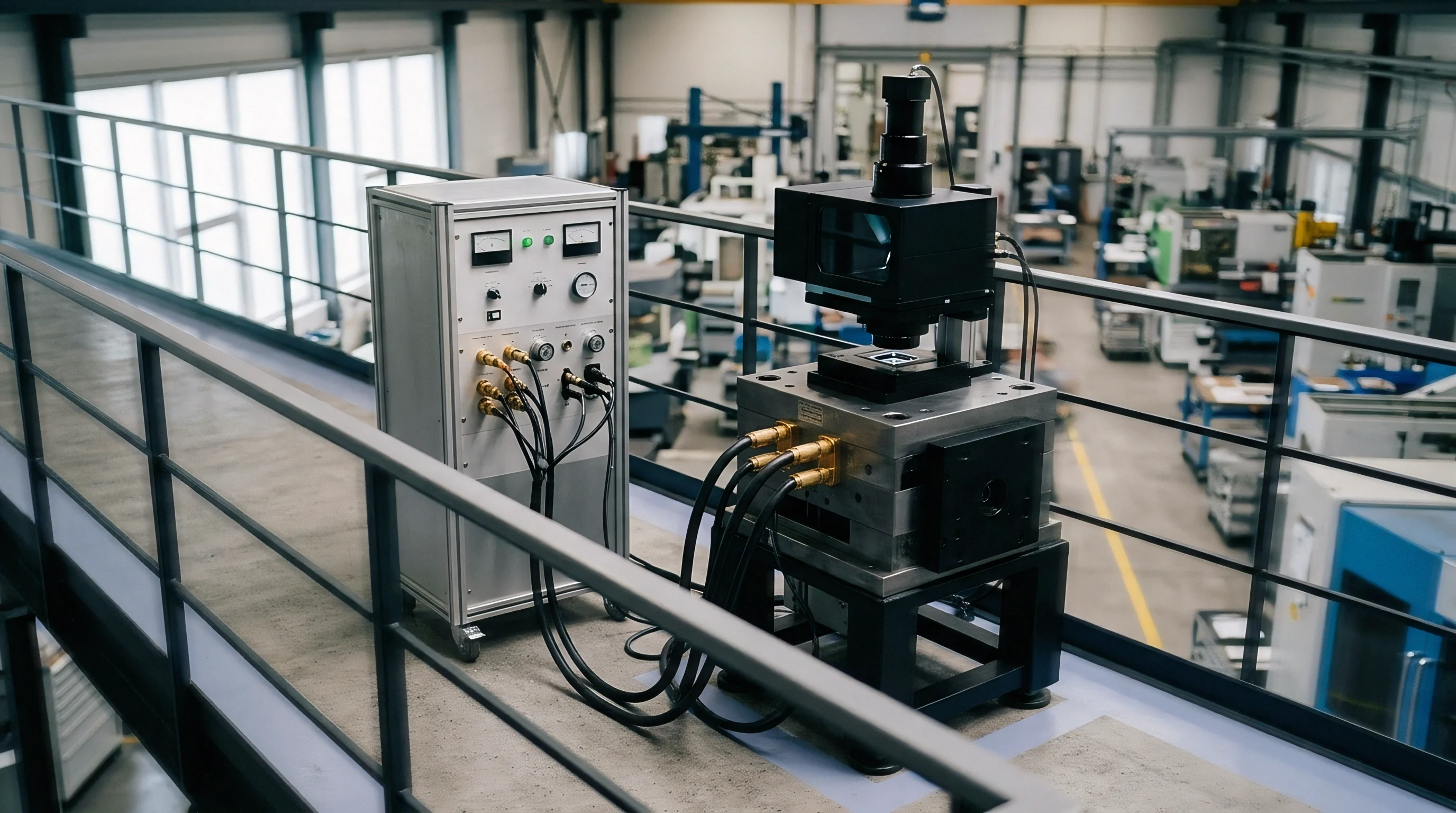
Quantifying receiver sensitivity under frequency offset demands a calibrated bench setup. Two vector signal generators feed a precision RF combiner connected to the module antenna port through a calibrated coaxial cable assembly. Generator one delivers the target packet stream with programmable carrier offset steps.
Generator two introduces modulated adjacent-channel interference per ETSI EN 300 220 verification standards.
Automated test scripts sweep carrier offset in 500 Hz increments across +/- 15 kHz while recording Packet Error Rate (PER) across 1,000 transmitted frames per step. Plotting PER against input power yields the operational sensitivity bucket for the receiver under AFC lock conditions.
Discriminator Step Response Verification
A digital storage oscilloscope monitoring the baseband analog test points or digital RSSI/AFC tracking registers displays loop pull-in behavior in real time. Applying a step change in carrier frequency exposes loop response character: underdamped loops exhibit frequency overshoot that delays packet synchronization, while overdamped loops fail to converge before the preamble sequence terminates.
- Frequency Offset Pull-In Range defines the absolute frequency boundary where receiver sensitivity degrades by less than 1 dB relative to zero offset.
- Preamble Truncation Floor isolates the precise preamble bit count where packet completion rate drops below 99 percent at a signal level of -110 dBm.
- Adjacent Channel AFC Drift verifies that high-power signals in adjacent channels do not pull the receiver tracking loop away from a weak desired carrier.
- Doppler Tracking Bandwidth measures receiver capacity to hold lock during physical terminal movement in mobile metering scenarios.
A viable front-end balances phase noise against settling speed so the loop tracks within sub-kilohertz channels without inducing false frame sync triggers at maximum operational range.
Selection
Specifying oscillator hardware requires balancing module bill of materials against battery longevity. Module vendors sell pin-compatible RF front-ends featuring either discrete crystal references or integrated TCXOs. A price differential of $0.45 per unit in 10,000 unit volumes appears significant on an initial procurement sheet, but evaluating battery lifetime numbers reverses the economic decision.
| Oscillator Architecture | Unit Cost Delta (USD) | System Stability (ppm) | Required Preamble (Bits) | CR2032 Life (Years) |
|---|---|---|---|---|
| Discrete XTAL (30 MHz) | Baseline ($0.00) | +/- 35.0 | 32 to 64 | 2.1 |
| Factory Trimmed XTAL | +$0.12 | +/- 15.0 | 24 to 32 | 3.8 |
| Integrated TCXO | +$0.48 | +/- 1.5 | 8 to 16 | 7.4 |
| Ultra-Low Noise TCXO | +$0.85 | +/- 0.5 | 8 | 8.1 |
Selecting TCXO architecture eliminates extended preamble transmission. Transmitting 16 bits instead of 64 bits at 1.2 kbps saves 40 milliseconds of transmitter power per message packet. In regional band plans where duty cycles cap total airtime at 1.0 percent (such as the European 868.0 to 868.6 MHz allocation), shorter preambles allow four times as many transmission events per hour without breaking compliance rules.
Lowering preamble bit count reduces channel occupancy and directly expands maximum message throughput under strict regulatory duty cycle ceilings.
Bill of materials costs directly reflect system energy requirements. Paying for tight frequency tolerance inside the module package reduces field maintenance calls caused by dead primary batteries or lost network synchronization. Narrowband radios live and die by frequency accuracy: locking the carrier offset early in the preamble sequence secures both link margin and energy independence.