Essential Character Determination for Dual Function Host PCB Assemblies
Dual function host PCB assemblies require essential character evaluation under tariff rules and composite transmitter testing to fix market access timelines.


Origin
Dual-function host printed circuit board assemblies integrate wireless communication circuitry alongside primary processing logic, creating exposure at both international borders and regulatory test benches. Hardware buyers frequently purchase these subassemblies assuming an integrated wireless module sets the compliance profile for the whole board. In practice, customs authorities and telecommunications regulators rely on distinct legal frameworks that evaluate the physical and commercial reality of the hardware independently.
When an assembly carries both an intentional radiator and a host microcontroller for machine control, telemetry, or power conversion, establishing its primary character dictates both the tariff line and the certification scope. Customs officers look at value contribution, functional necessity, and component counts. Radio approval bodies instead evaluate electromagnetic coupling, shielding boundaries, and transmitter control circuitry.

Customs Classification Mechanics under Harmonized System Rules
General Rules for the Interpretation of the Harmonized System govern multi-function hardware crossing international borders. For composite goods and assemblies made up of distinct components, General Interpretative Rule 3(b) assigns tariff classification according to whichever component or sub-circuit gives the unit its essential character. Customs auditors inspect bill of materials costs to help make that determination.
Establishing this character requires weighing telecommunication functions under Heading 8517 against host computing functions under Headings 8537, 8542, or 8543. If a board still executes its core industrial or control routines with the radio powered down or desoldered, customs valuation officers routinely reject entries filed under low-duty wireless headings.
- Unshielded RF section layouts lead customs inspectors to treat the full board as a specialized radio assembly rather than a general system controller.
- Dominant host processor expenditure shifts internal cost accounting without persuading valuation officers to alter the assigned tariff heading.
- Missing modular authorization notes prompt port authorities to hold cargo until testing agencies confirm the host assembly’s compliance status.
- Inconsistent product line declarations expose discrepancies between duty filings and the underlying technical construction files.
Regulatory Intentional Radiator Boundaries
Telecommunications regulators treat embedded RF transceivers as intentional radiators regardless of whatever computing hardware surrounds them. An active transmitter pulls the entire assembly under intentional radiator rules, even if ninety percent of the board area belongs to digital logic gates. Under Federal Communications Commission rules in North America and the Radio Equipment Directive in Europe, boards with integrated radio capability cannot claim exemption as standard digital apparatus.
High-speed host processing blocks emit broadband noise that readily couples into the radio front-end. That interaction turns a straightforward modular integration into a composite system requiring full radiated emissions testing. Furthermore, altering an antenna trace or feeding the radio from an unregulated shared bus immediately voids modular grant protections.
Customs authorities reclassify dual-function host subassemblies based on the component density and cost share of non-wireless processing circuits.
The line between an approved module and a dual-function host assembly is drawn during schematic layout. Placing discrete RF components directly on the main host PCB without a shielded module boundary makes the entire board an intentional radiator. That layout choice shifts approval from a straightforward host verification to a full equipment authorization filing, adding six to ten weeks to the schedule.
Failing to establish essential character before shipping across borders leads directly to customs holds, retroactive duty adjustments, and audits covering historical entries.

Stack
Multi-layer board design directly governs radiated field strength and electromagnetic noise in dual-purpose hardware. Routing high-speed memory buses alongside unshielded power conversion inductors on the same substrate as an RF transceiver creates coupling paths that inject harmonic noise into the RF front end. The physical arrangement of copper, dielectrics, and reference planes ultimately determines whether the host processing system degrades radio sensitivity or causes failures during spurious emission sweeps.
Layer stackups are planned to isolate noisy digital switching returns from sensitive RF transmission lines. In a four-layer or six-layer board, continuous ground planes directly beneath RF microstrips keep radiation losses low and contain near-field coupling. Splitting or perforating ground copper under these traces disrupts characteristic impedance, introducing return-loss penalties and spurious emissions that fail regulatory limits.
Ground Plane Coupling and Transceiver Isolation
High-frequency switching power supplies located close to microstrip trace antennas corrupt transmitter spectral purity, while shifts in power rail impedance degrade transmitter efficiency. Host microcontrollers running at high clock rates also emit narrowband harmonics that travel across the DC distribution network. If these harmonics fall within radio channels or restricted band edges, receiver sensitivity degrades and spurious emission limits are breached.
Effective isolation demands deliberate layout partitioning and ground plane stitching. RF sections need via fencing spaced tighter than one-tenth of the operating wavelength. Without adequate stitching, high-frequency currents route around copper voids and board slots, turning PCB edges into unintentional slot antennas that broadcast clock harmonics straight into the test receiver.
Shielding Effectiveness for Integrated Processing Circuits
Conducted noise from host microcontrollers enters RF output stages through shared power distribution networks. Surface-mount shield cans attenuate direct radiated fields across the transceiver, but do nothing to stop conducted ripple propagating along trace runs. Designers rely on ferrite beads, pi-filters, and dedicated low-dropout regulators to isolate radio rails from the switching transients produced by host processors and power stages.
The table below details radiated spurious margins across operational states for a dual-function industrial gateway host board evaluated inside a three-meter semi-anechoic chamber.
| Frequency Band (MHz) | Host Mode | Radio Mode | Measured Peak (dBµV/m) | Regulatory Limit (dBµV/m) | Pass Margin (dB) |
|---|---|---|---|---|---|
| 30 to 230 | Processing Load High | RF Standby | 36.2 | 40.0 | 3.8 |
| 230 to 1000 | Processing Load High | RF Standby | 41.8 | 47.0 | 5.2 |
| 1000 to 2400 | Processing Idle | 2.4 GHz TX Active | 48.5 | 54.0 | 5.5 |
| 2400 to 2483.5 | Processing Load High | 2.4 GHz TX Active | 52.1 | 54.0 | 1.9 |
| 4800 to 4960 | Processing Load High | 2.4 GHz TX Harmonic | 49.3 | 54.0 | 4.7 |
A radiated spurious sweep exceeding -36 dBm in the 30 MHz to 1000 MHz range triggers mandatory secondary filtering at the host interface.
Insufficient dielectric spacing between inner layers accelerates coupling between high-speed digital buses and onboard trace antennas. If differential lines feeding display panels or Ethernet PHYs encounter impedance mismatches, common-mode currents spread across the ground plane. These currents drive attached cable harnesses like dipole elements, creating radiation spikes that degrade receiver sensitivity and invalidate modular grant assumptions.
Unexpected harmonic peaks frequently stem from customer firmware execution profiles rather than board layout deficiencies.


Verification
Regulatory bodies apply strict testing criteria whenever wireless transmitters share real estate with digital processing circuits. Integrating a pre-certified radio module onto a host PCB does not grant automatic market access for the finished device, as modular certificates lapse when layout changes alter RF paths. Testing protocols established in Federal Communications Commission publication KDB 996369 D04 and European Telecommunications Standards Institute guidance EG 203 367 define how host compliance must be validated.
Compliance testing addresses two distinct issues: the transmitter disrupting host digital operations, and host digital switching causing the radio to violate authorized power or spurious emission limits. Consequently, dual-function hardware requires evaluation against both intentional radiator standards and unintentional digital device rules.
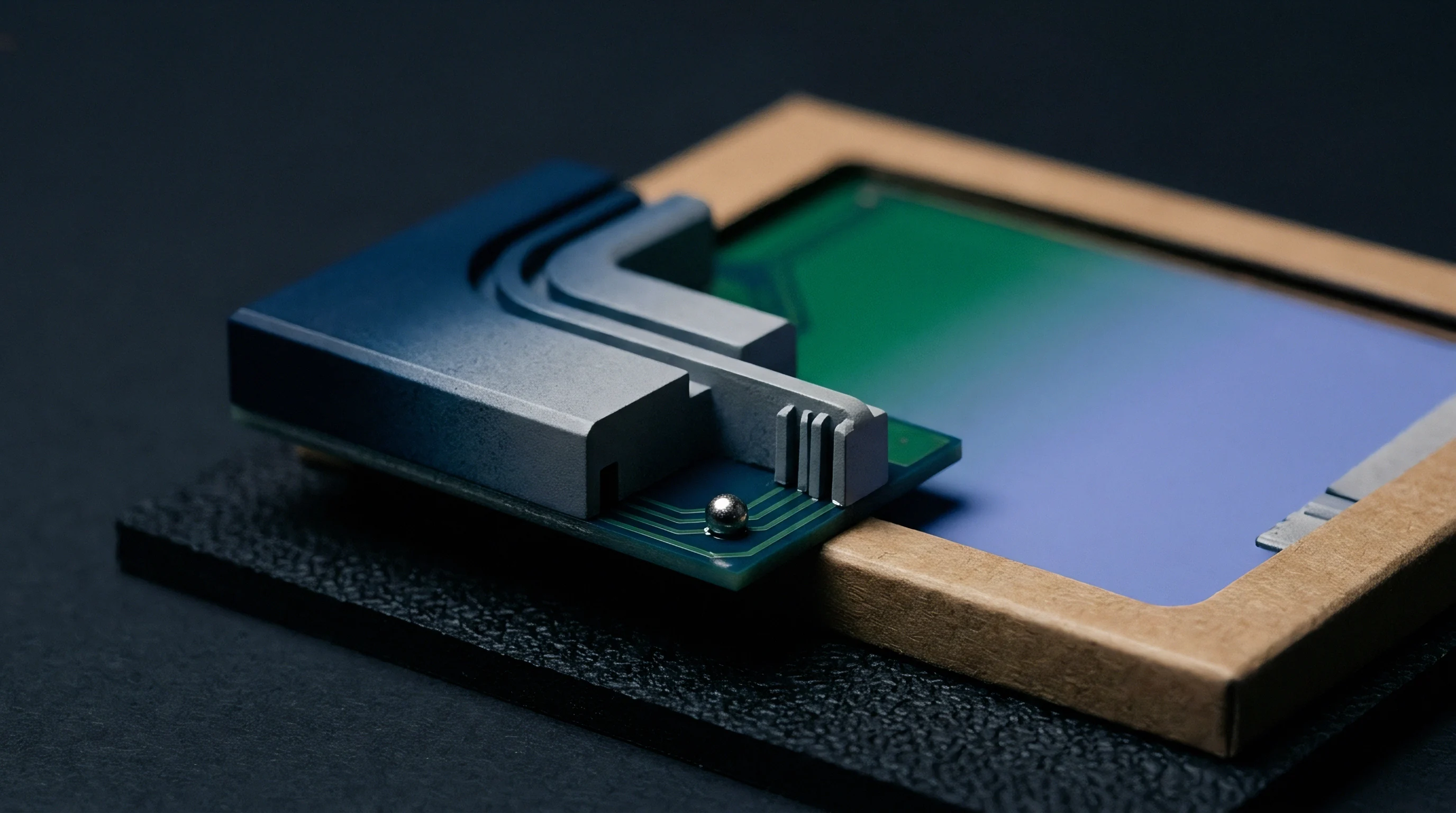
Which Transmitter Attributes Shift Regulatory Filing Requirements?
Modular approvals simplify testing only when the host integration follows every condition listed in the original grant. Modifying trace geometry between a module pin and an onboard chip antenna voids modular coverage. Similarly, substituting a higher-gain directional antenna raises equivalent isotropically radiated power above approved levels, triggering a Class II Permissive Change or requiring an entirely new equipment authorization.
Co-located transceivers generate intermodulation products during simultaneous operation. When a single board combines a 2.4 GHz Wi-Fi link with a sub-GHz telemetry radio, concurrent transmission creates non-linear mixing products across active front-end devices. Accredited test labs scan these mixing frequencies to ensure emissions remain beneath regulatory limit lines.
The procedure below outlines the testing and filing sequence required for a dual-function host board integrating co-located wireless transmitters.
- Assess existing modular transmitter grants to confirm output power limits and antenna gain maximums match host board designs.
- Conduct preliminary anechoic chamber sweeps with host processing blocks running maximum throughput software scripts.
- Document radiated spurious emissions across co-located transmission bands under simultaneous transmit configurations.
- Assemble technical construction files containing circuit schematics, bill of materials, layout gerbers, and test reports.
- Submit certification updates or local declarations of conformity prior to commercial distribution.

Permissive Change Triggers for Composite System Boards
Altering antenna trace routing or enclosure materials directly reshapes radiated fields. For instance, mounting a metal heatsink above a microcontroller near a chip antenna shifts the antenna’s input impedance and detunes its resonance. That localized loading can pull the operating frequency or push harmonic output beyond legal thresholds.
A dual-function smart metering host board running an ARM Cortex core at 800 MHz while transmitting on the 915 MHz ISM band at +24 dBm conducted power illustrates the mechanism. With an antenna gain of +2.1 dBi and a switching power supply harmonic at 912 MHz, internal mixing produces a 3 MHz intermodulation product. Chamber measurements show a radiated field strength of 51.2 dBµV/m at 3 meters, which remains compliant with the 54.0 dBµV/m limit under FCC Part 15.205 restricted band rules.
Chamber fees for composite system evaluations run between 8,500 USD and 14,000 USD per campaign, depending on transmitter counts and test bay availability. These figures reflect 2024 rate cards from accredited facilities under standard three-day turntable bookings. Adding dynamic frequency selection testing or secondary sub-GHz radios extends chamber duration by forty percent and adds roughly 5,000 USD in test lab billings.
Omission of host-level RED Article 3.2 risk assessments in the technical dossier invalidates the EU declaration of conformity during market surveillance audits.
When multi-transmitter interactions are unpredictable, engineering teams run pre-compliance scans across three orthogonal axes to map harmonic peaks. Isolating coupled noise early allows layout revisions, extra ground vias, or firmware drive-strength adjustments before committing to formal certification testing and finalizing the compliance labeling required for import clearance.
Referencing ETSI EG 203 367 Clause 5.2 in procurement contracts legally binds subassembly manufacturers to repeat radiated spurious checks whenever bill-of-materials changes alter power distribution traces.

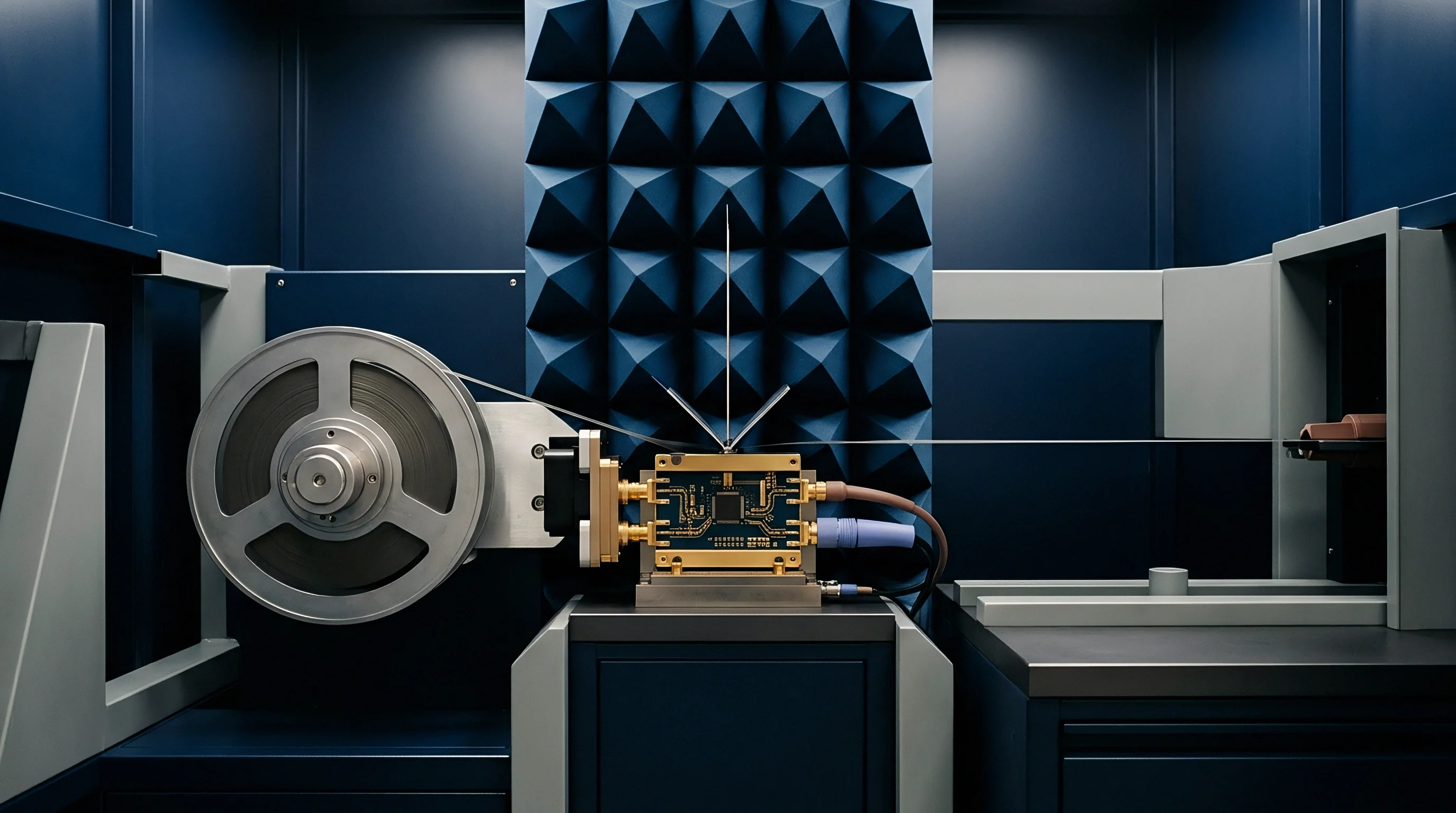
Levy
Import duties and clearance costs depend entirely on how customs auditors define the principal function of a multi-purpose circuit board. Entering a dual-function host assembly under an incorrect Harmonized System code triggers serious commercial exposure, including retroactive duty demands, penalty interest, and freight holds at entry terminals.
Customs administrations in North America, Europe, and Asia apply the World Customs Organization General Rules for the Interpretation of the Harmonized System. Where an assembly integrates data transmission hardware alongside digital controller logic, import officers apply Rule 3(b) to decide whether the radio link or the processing subsystem gives the board its essential character.

General Rules of Interpretation for Combined Hardware
Under Rule 3(b), composite goods take their tariff classification from the component that imparts their essential character. To determine this, inspectors analyze physical layout distribution, the relative cost share of each circuit block, and overall functional autonomy. When wireless capability serves merely as an auxiliary communications link on a programmable logic controller, the board falls under Heading 8537.
If the host board lacks independent processing capability and exists solely to format data for the radio transceiver, the assembly belongs under Heading 8517 as a data transmission apparatus. The resulting tariff disparity between these headings often changes total landed cost by three to eight percent.

Financial Consequences of Tariff Code Reclassification
Reclassifying an assembly from telecommunications equipment under Heading 8517 to industrial control hardware under Heading 8537 fundamentally alters duty exposure. Filings under 8517.62 frequently qualify for duty-free entry under Information Technology Agreement rules. A shift to 8537.10 imposes duties between 2.7 percent and 5.0 percent, depending on import destination and applicable preferential trade agreements.
The table below summarizes common Harmonized System classifications applied to dual-function host assemblies, alongside baseline duty rates and typical audit triggers.
| HS Code | Descriptive Scope | Typical Duty Range | Primary Character Criterion | Audit Risk Level |
|---|---|---|---|---|
| 8517.62 | Machines for reception, conversion, transmission of data | 0.0% to 2.0% | RF transmission functions dominate overall system utility | High |
| 8537.10 | Boards, panels, consoles for electric control (voltage ≤ 1000V) | 2.7% to 5.0% | Programmable host logic executes primary apparatus control | Medium |
| 8542.31 | Electronic integrated circuits: processors and controllers | 0.0% | Bare board populated predominantly with host CPU and memory | High |
| 8543.70 | Electrical machines with individual functions not specified elsewhere | 2.6% to 3.7% | Equal functional weight between radio and non-radio sub-circuits | Moderate |
| Duty ranges reflect standard Most Favored Nation rates across US and EU tariffs before trade remedy surcharges. | ||||
Proving essential character requires balancing manufacturing cost data against functional design. Importers compile technical defense dossiers documenting bill-of-materials costs, firmware architecture, and commercial product positioning.
- BOM valuation breakdown establishes whether wireless components represent the majority of hardware manufacturing expenditure.
- Functional processing dominance measures whether the host board operates independently when wireless radio links disconnect.
- Marketing text alignment confirms that commercial datasheets emphasize primary host control functions rather than basic connectivity.
- Physical layout isolation demonstrates the spatial separation between main microcontroller circuits and radio transceivers.
When the radio circuit relies on host power supply regulation to maintain band-edge stability, the entire printed board functions as a single unified radio apparatus.
When a base board design maintains complete digital control functionality without RF components installed, customs examiners typically approve entry under the host assembly’s non-wireless tariff heading.


Paperwork
Documentation alignment dictates how smoothly dual-function assemblies clear customs inspections and type approvals. Commercial invoices, test reports, and equipment grants must present a unified description of the board’s primary function and regulatory standing. Any mismatch between shipping paperwork and laboratory test certificates invites administrative audits that halt freight at ports of entry.
To avoid mounting bonded warehouse fees caused by documentation holds, importers compile a comprehensive Technical Construction File structured to satisfy both customs appraisers and radio spectrum regulators. This technical file must remain active across the product lifecycle, updated whenever component substitutions or factory changes occur.

Technical Construction File Requirements across Global Markets
A complete compliance dossier includes full schematics, operational circuit descriptions, chamber test reports, and formal declarations of conformity. Entry into the European Union under the Radio Equipment Directive demands a documented Article 3.2 spectrum efficiency evaluation alongside Article 3.1(b) electromagnetic compatibility data. Omitting a host-level risk assessment invalidates the Declaration of Conformity and exposes importers to product withdrawal orders.
For United States market access, Federal Communications Commission equipment authorization records require explicit integration guidance. The technical file must verify adherence to all grant conditions, specifying minimum separation distances, power decoupling layouts, and upper limits for antenna gain. Failing to document how the host interacts with the transmitter invalidates modular grant protections for the completed assembly.

Synchronizing Filing Schedules with Production Timelines
Chamber availability and in-country representative sign-offs govern the critical path to product launch. Securing type approvals in target export markets requires coordinating test sample logistics, local agent authorizations, and laboratory slots simultaneously. Slippage at the test bench stalls factory output and locks up working capital in unapproved finished goods.
Air cargo hubs routinely quarantine shipments of electronic assemblies over contradictory line items on commercial invoices. A single discrepant tariff code can trap a fifty-thousand-unit lot in a bonded warehouse while customs officers request formal technical clarifications from compliance teams.
Coordinating global compliance demands strict schedule management and rigid configuration control across test firmware builds and PCB copper revisions. Aligning customs entries directly with accredited laboratory reports eliminates clearance friction and stabilizes landed costs across distribution networks.