Meaning
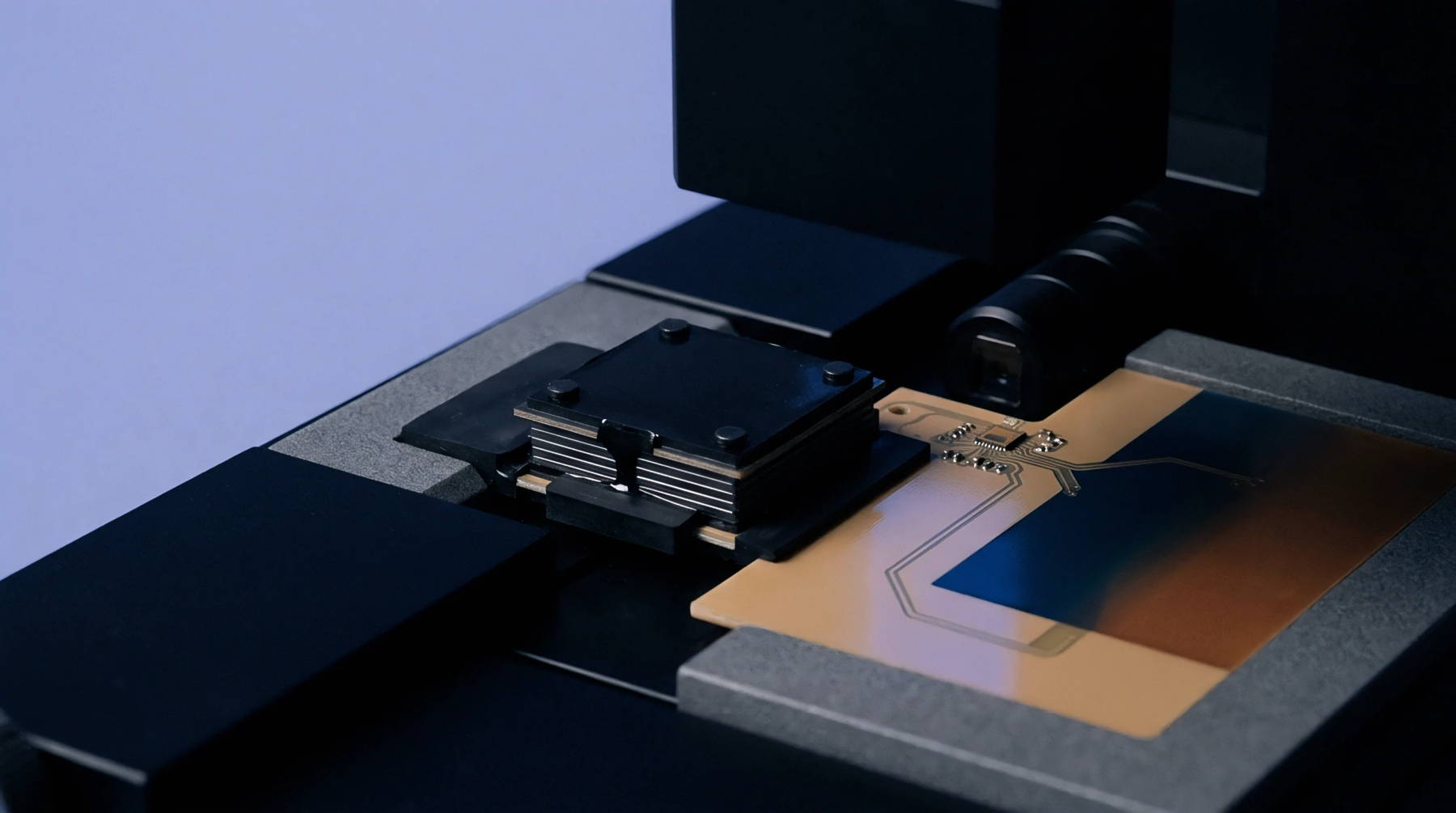
Measurement of the absorption of infrared radiation by a sample produces a unique spectral fingerprint based on molecular vibrations. Utilizing fourier transform infrared spectroscopy allows for the identification of organic materials and some inorganic compounds within a complex assembly. The technique relies on the mathematical conversion of raw interference data into a usable frequency spectrum.
Light passes through a sample and the resulting interferogram is processed to reveal the specific wavelengths where energy is absorbed by chemical bonds.
Spectral Analysis
Detection of specific peaks in the resulting data correlates to the presence of functional groups such as carbonyls or hydroxyls. When fourier transform infrared spectroscopy is applied to a circuit board, it can isolate the specific chemical nature of residues left by flux or cleaning agents. This precision enables the isolation of root causes during failure analysis.
Surface Contamination
Identification of microscopic films or particulates prevents adhesion failures in protective coatings and adhesives. Analytical labs use fourier transform infrared spectroscopy to screen incoming components for unauthorized silicone oils or plasticizers that might migrate during operation. This screening protects the integrity of the bond between a heat sink and a processor.
Compositional Verification
Comparison against known databases confirms that the supplied material matches the engineering specification provided by the vendor. Using fourier transform infrared spectroscopy ensures that no unauthorized substitutions occurred during the manufacturing of the resin or substrate. Reliable results provide the necessary evidence for a quality audit or a supplier disqualification.