Meaning
Thermal loading measurement quantifies the radiant electromagnetic flux striking a unit surface area from a broadcasting antenna array within telecommunications hardware integration. Incident power density governs RF exposure compliance during the mandatory safety verification protocol required before cellular base station commissioning. Engineers evaluate this surface absorption metric against strict regional radiation limits defined by regulatory bodies during final chassis validation tests.
The boundary of application ends at the physical exterior housing boundary where internal circuit losses cease contributing to the outward spatial field.
Thermal Budget
Spatial electromagnetic concentration drives the cooling profile of outdoor small cell enclosures housing high-power multi-channel power amplifiers. Circuit designers calculate maximum thermal dissipation limits based on the continuous heat absorption transferred from the external antenna faceplate directly into the internal aluminum heat sink. Component failure rates rise significantly when the thermal dissipation capacity fails to match the localized electromagnetic absorption rate during peak carrier aggregation traffic loads.
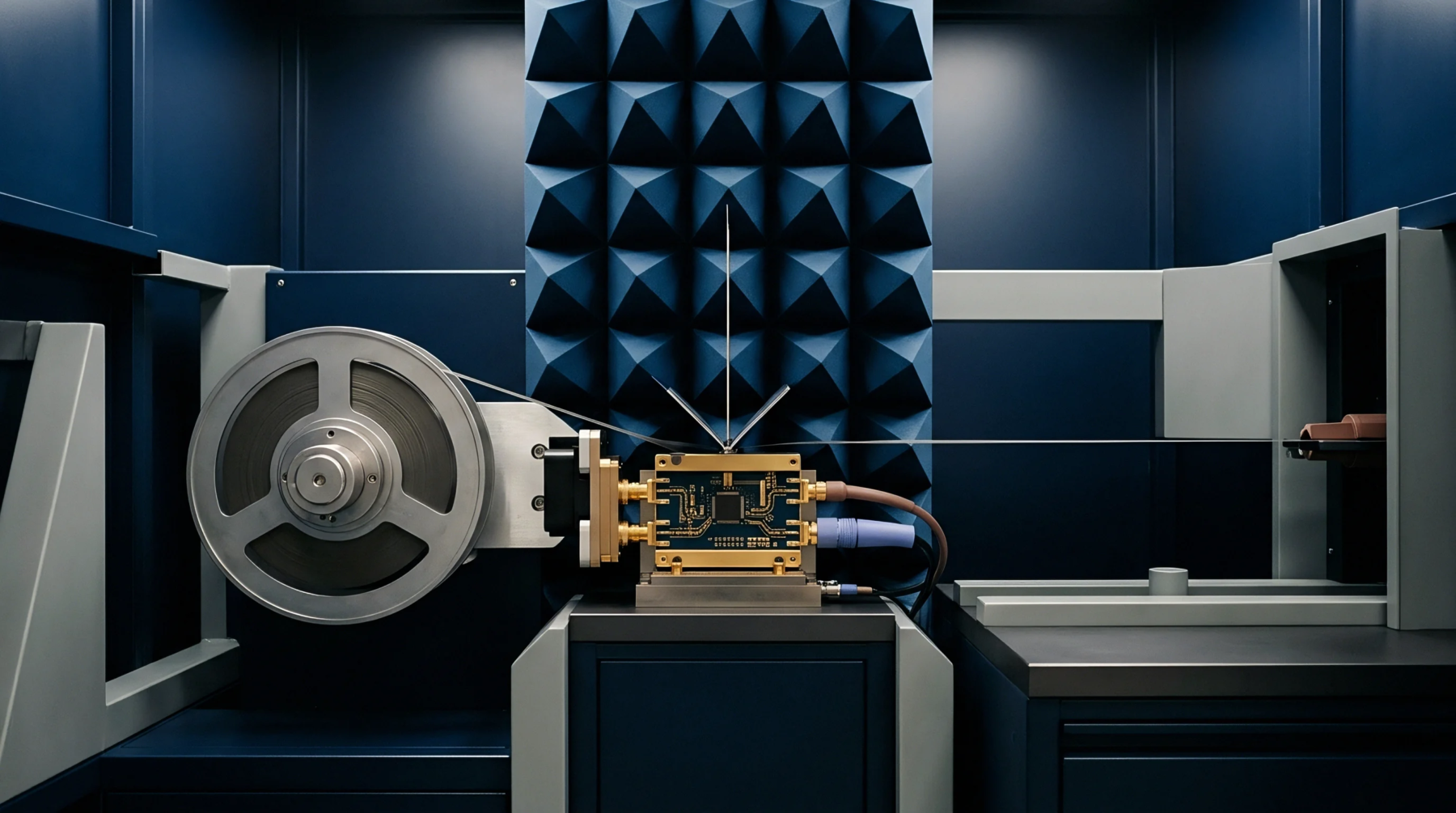
Production teams verify this structural cooling threshold inside an anechoic chamber by exposing the assembled transceiver housing to simulated maximum field strength conditions.
Chassis Shielding
Metallic gasket placement prevents unwanted internal electromagnetic leakage from compromising adjacent low-noise receiver circuits located within densely packed multi-board radio frequency modules. Factory auditors inspect enclosure seam integrity using high-frequency leakage detectors to ensure the structural shielding attenuation meets the type approval specification on the manufacturing floor. Material selection depends on surface conductivity values capable of reflecting high-frequency wave energy without degrading the mechanical mounting torque of the outer cover screws.
Compliance Verification
Laboratory technicians measure field strength parameters during the formal CE mark type testing procedure to certify that commercial wireless devices operate below maximum permissible exposure thresholds. Final regulatory acceptance depends on passing the spatial averaging scan performed at the minimum operational distance specified in the equipment installation manual. Field test results feed directly into the technical construction file submitted to notified bodies prior to commercial distribution in target markets.