Automated Hardware Telemetry Logging Integrity in Supply Chains
Hardware telemetry logging integrity requires physical root-of-trust silicon, bus-level sensor attestation, and immutable cryptographic chaining.
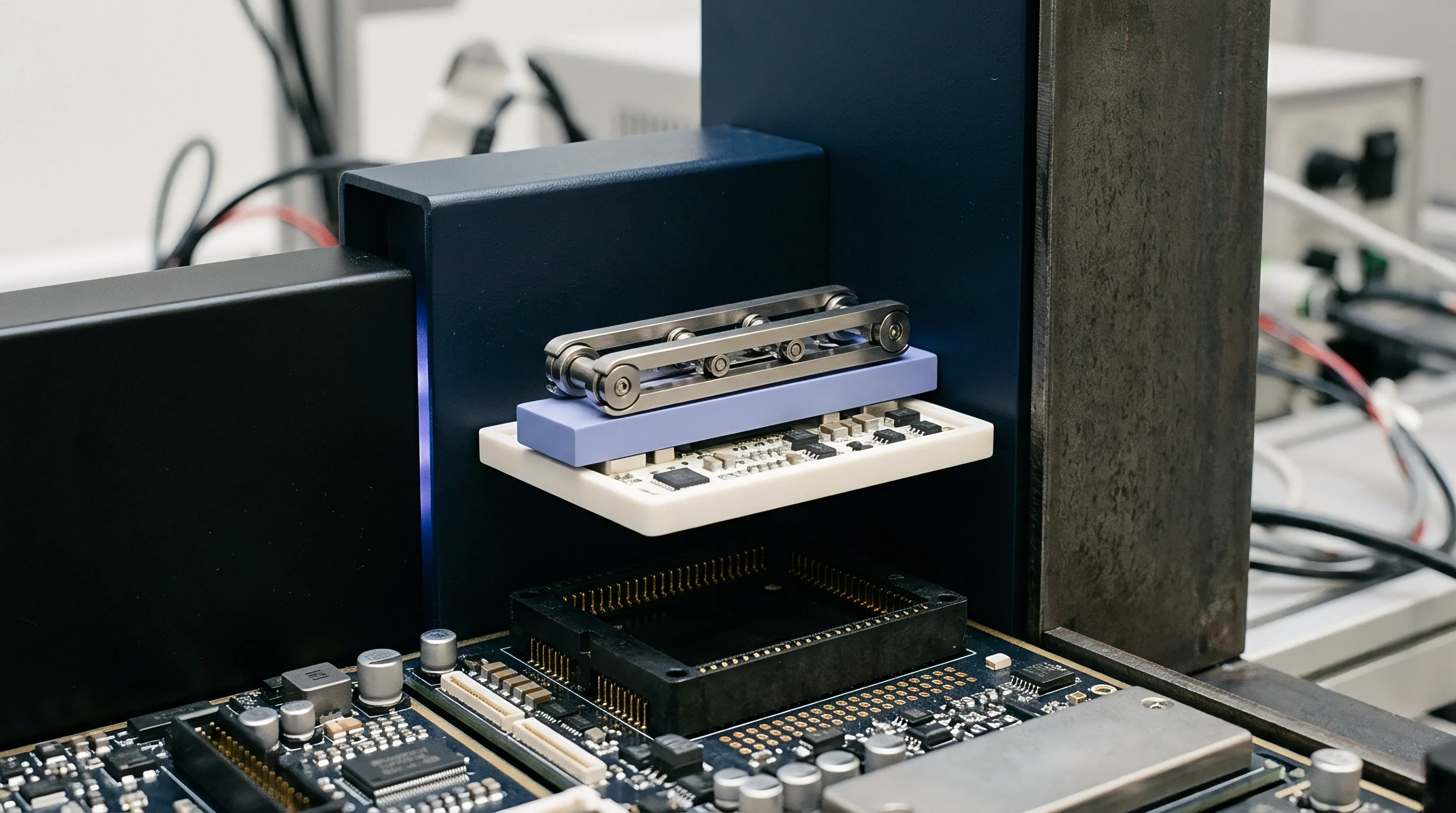

Vault
Physical tamper resistance establishes whether logged supply chain events reflect actual transit conditions or post-facto fabrication. In high-consequence logistics, telemetry hardware monitors shock thresholds, thermal bands, humidity cycles, and geographic dwell times. When an asset arrives with thermal degradation or structural fatigue, financial recovery hinges on whether raw sensor records inside the logger withstand evidentiary scrutiny.
Integrating telemetry capture onto commercial carrier boards requires hardware-isolated root-of-trust execution instead of general-purpose microcontroller memory. Standard internal flash storage leaves data exposed to debugger attachment, voltage fault injection, and bus-level extraction.
Securing the telemetry ingestion boundary starts with dedicated secure elements or embedded hardware security modules communicating over authenticated serial buses. A dedicated cryptoprocessor maintains private keys within a shielded physical perimeter, executing cryptographic signing operations internally without exposing key material to system memory traces. Applying active tamper meshes across the chip package prevents physical decapping and microprobing attacks.
Microcontroller architectures lacking physical attack mitigations allow adversaries to freeze real-time clocks or rewrite historical sensor registers through software exploits.
The ISO 15408 Common Criteria evaluation at level EAL6 requires active physical shielding against sub-micron needle probing before financial custody chains accept autonomous device attestations.
Battery-backed real-time clocks inside the security boundary supply immutable time bases independent of main board power. If an external power supply is disconnected during maritime transit, the independent power domain maintains a monotonically increasing counter. These counters increment sequentially with each logged measurement block, preventing system time rollbacks to overwrite an out-of-spec shock event.
Integrating low-dropout regulators with fast brownout detection clamps write operations when voltage drops below operating margins, preventing flash corruption or write-tearing during battery depletion.
- Package decapping attack removes outer epoxy encapsulation with fuming nitric acid to expose internal bonding wires and flash silicon dice to electron microscopy.
- Voltage glitching technique induces clock or power rail perturbations to force the execution core into skipping instruction checks during secure boot routines.
- Bus interposer attachment taps inter-chip physical traces between sensors and processors to rewrite measurement values during serial bus transactions.
- Electromagnetic analysis fault measures high-frequency power fluctuations across decoupling capacitors to reconstruct private keys during elliptic curve digital signature generation.
Passive data loggers relying on unprotected serial flash memory chips leave supply chain records exposed to direct manipulation. Desoldering an eight-pin SPI NOR flash package allows an operator to read raw log structures, rewrite temperature excursions to fit acceptable shipping bands, recalculate cyclic redundancy checks, and resolder the component onto the target printed circuit board. Defeating this vulnerability requires integrating cryptographic identity, secure boot engines, and monotonic log indexes directly into the silicon packaging of the host controller or an attached secure element paired via bus-level symmetric encryption.
Failing to isolate cryptographic execution within physical boundaries allows handlers to erase excursion records, transferring structural liability and cargo write-offs directly to the receiving buyer.

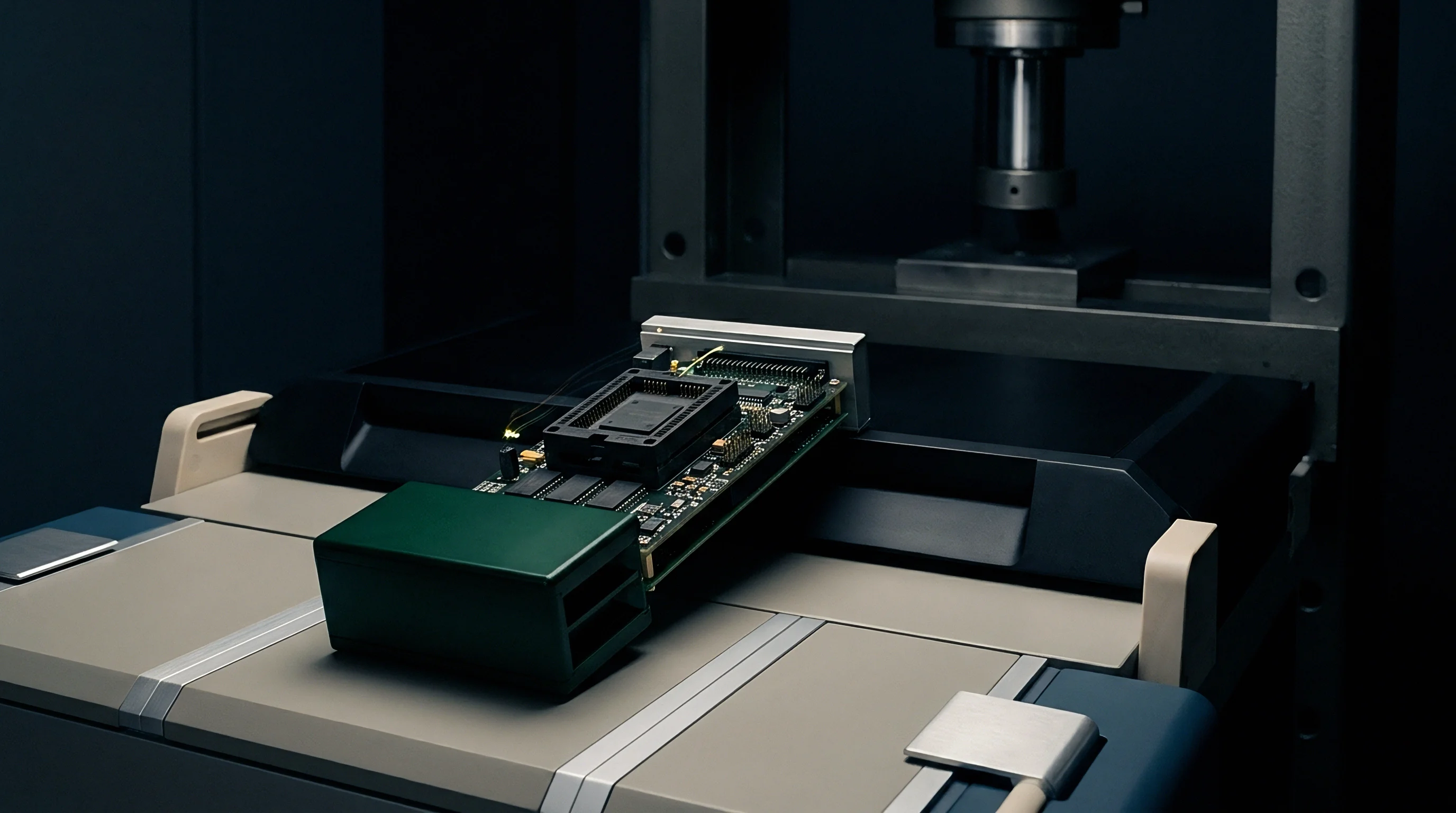
Probe
Sensor interface integrity determines telemetry authenticity before cryptographic signing occurs. A secure microprocessor that signs forged, drifted, or intercepted temperature data merely produces authentic mathematical signatures over invalid physical measurements. In transit monitoring, transducers capture vibration profiles, barometric depressurization in air freight holds, tilt angles, and cryogenic temperatures.
Board-level integration must guard analog front-ends and digital sensor buses against physical interposition, electromagnetic interference, and out-of-range sensor spoofing.
Digital sensor buses using standard I2C or SPI communication lack native transmission authentication. An attacker soldering an interposer board across exposed test points can sniff bus traffic, intercept legitimate sensor response frames, and substitute programmed static values indicating normal shipping temperatures. Addressing this attack surface requires selecting sensors that support point-to-point command hashing or mounting transducers within the physical encapsulation perimeter of the module.
Conformal coating, potted polyurethane enclosures, and epoxy underfill raise the physical barrier against pin probing and acid decapsulation.
A four-wire serial bus trace exceeding forty millimeters without ground shielding picks up enough transient industrial noise to corrupt unauthenticated analog-to-digital measurement words.
Analog front-end stability introduces another measurement failure point under harsh freight handling. Operating across wide thermal environments alters passive component tolerances, drifting analog-to-digital converter reference voltages. When monitoring pharmaceutical shipments at dry-ice temperatures below minus seventy degrees Celsius, thermocouple cold-junction compensation errors distort telemetry readings unless precision local temperature references operate continuously against battery voltage drops in extreme cold.

Can Cryptographic Attestation Defeat Physical Interposer Attacks?
Attestation protocols verify host processor firmware execution state, yet remain blind to hardware line tampering between a bare digital sensor and the receiving microcontroller. When an adversary introduces an in-line microcontroller onto I2C bus traces, query requests from the secure host hit the intermediate device instead of the genuine transducer. The intermediate unit returns within-spec temperature packets that host firmware receives, formats, and signs with legitimate private keys.
Mathematical verification validates the signature, but the underlying sensor telemetry is completely falsified.
Defeating in-line bus interposers requires mutual authentication protocols extended directly to the transducer die. High-security architectures use specialized environmental sensors with factory-provisioned asymmetric keys, executing an ephemeral challenge-response handshake over the serial bus before dispatching data. The sensor signs each sample with its internal cryptographic key prior to transmission across circuit traces.
The central processor packages the sensor signature alongside its own attestation token, letting destination verification systems validate both host processor integrity and sensor node authenticity.
| Interface Topology | Physical Attack Surface | Cryptographic Protection | Bill of Materials Delta | Production Routing Complexity |
|---|---|---|---|---|
| Standard I2C Bus | High via exposed test points | None, cleartext transmission | Baseline reference | Two traces, open drain pullups |
| Point-to-Point SPI with Parity | Moderate via signal sniffing | Cyclic redundancy checksums only | Five percent increase | Four traces with series resistors |
| Authenticated Peripheral Bus | Low, requires silicon decapping | ECDSA signature per sample packet | Forty percent increase | Differential pairs, ground shield |
| Integrated System-in-Package | Extremely low, internal silicon wirebonds | Hardware memory bus isolation | Eighty-five percent increase | Multi-layer internal substrate |
Data flatlines across high-vibration transshipment hubs are typically attributed to sensor drift within normal statistical variance, assuming sealed shipping enclosures prevent external bus interposers from accessing internal traces during transit.

Seal
Cryptographic structuring transforms raw temporal readings into verifiable audit records. Telemetry logs must resist retrospective modification, deletion of intermediate data blocks, and injection of retroactive entries. Achieving this defense requires organizing telemetry samples into an append-only cryptographic log structure anchored by forward-secure digital signatures and local hash chains.
When a record is written, its payload links inextricably to all previous entries, binding time, space, and physical conditions into a unified mathematical structure.
Each recorded entry contains a precise monotonic sequence index, a real-time timestamp, raw sensor data vectors, the hash of the preceding telemetry entry, and an asymmetric signature generated inside the hardware vault. Hashing subsequent blocks over preceding digests constructs an immutable chain equivalent to an embedded Merkle tree. If an adversary attempts to excise a twelve-hour transit window containing shock impact telemetry, the hash chain breaks upon delivery verification.
Log structures maintaining continuous SHA-256 hash chaining reveal single-byte bit flips during transit auditing without requiring external network connectivity.
Public-key cryptography provides non-repudiation across supply chain entities. Devices provisioned during factory assembly receive unique device certificates issued by a trusted root certification authority. Symmetric encryption schemes share secrets between loggers and inspection terminals, creating risks where a single compromised terminal key enables forgery of tracking records across entire fleets.
Asymmetric schemes using elliptic curve digital signature algorithms keep private keys permanently locked inside the secure element, distributing only public keys to verification terminals.
- Host boot validation verifies firmware stage hashes against immutable one-time-programmable memory values before releasing sensor communication peripherals.
- Sample acquisition queries the environmental transducer over shielded internal bus traces using encrypted challenge-response parameters.
- Payload serialization packages monotonic sequence identifiers, temporal markers, and multi-axis sensor values into a canonical binary format.
- Hash digest calculation merges the newly serialized payload block with the cryptographic digest of the prior recorded transaction.
- Asymmetric signing commits the local hardware root-of-trust private key to generate an elliptic curve signature over the combined digest.
- Non-volatile commitment writes the signed telemetry packet into write-once or wear-leveled NAND flash memory blocks.
Flash translation layer algorithms in solid-state loggers introduce subtle data integrity vulnerabilities. Wear-leveling logic dynamically remaps logical sectors across physical memory blocks to prevent premature gate breakdown. If an embedded design fails to manage flash wear-leveling explicitly, the flash controller can duplicate blocks, leave orphan copies of historical entries in unindexed physical blocks, or corrupt write buffers during sudden power interruptions.
Telemetry logging firmware must use crash-safe file systems designed for bare-metal flash, incorporating signed manifests to prevent firmware drift and bypassing unauthenticated operating system abstraction layers.
Under Section 7.4 of standard aerospace supplier quality agreements, any gap in cryptographically chained telemetry records immediately shifts commercial burden for internal turbine component stress directly to the freight forwarding contractor.


Uplink
Telemetry transmission off mobile assets introduces vulnerability points across radio frequency interfaces. While local storage preserves events on physical hardware, real-time supply chain oversight requires transmitting log digests over cellular, sub-gigahertz, or short-range wireless channels. Power budgets on battery-constrained loggers limit cryptographic throughput, forcing engineers to balance payload transmission frequency against operating life on long ocean crossings.
Unprotected wireless uplinks leave devices vulnerable to spoofed base stations that can intercept tracking alerts or suppress critical alarm broadcasts.
Cellular Internet-of-Things modules using LTE Cat-M1 or NB-IoT standards operate under severe link budgets inside metal shipping containers. Signal attenuation through steel hull plates forces transceivers into high-power transmission modes, consuming up to five hundred milliamperes at peak power. A logging unit transmitting full, uncompressed cryptographic logs over high-loss wireless links drains internal lithium-thionyl chloride battery cells within weeks.
Efficient telemetry designs transmit lightweight attestation summaries containing Merkle roots, deferring complete bulk log dumps until physical offloading at inspection docks.

Whose Signature Validates In-Transit Environmental Excursions?
Commercial ambiguity arises when telemetry transmissions pass through third-party logistics base stations and cloud ingest gateways. Telemetry packets signed solely by mobile hardware assert physical measurements, but fail to establish external custody handoffs between shipping carriers. If an alert reaches a cloud gateway via an untrusted cellular access point, the carrier can claim network latency or packet substitution occurred during transmission.
Establishing legal certainty requires dual-attestation schemes where transmission payloads receive concurrent counter-signatures from localized dock infrastructure or authenticated satellite transceivers.
Local interrogation gateways at port container terminals issue cryptographically signed transmission receipts back to the mobile logger. The logger commits this receipt to its internal flash audit log, recording that the logistics carrier acknowledged receipt of the asset state at that specific timestamp. If a carrier claims an asset suffered shock damage after handover, the logger’s internal memory holds the signed receipt confirming normal transit parameters were logged and delivered at dockside check-in.
The unresolved question remains whether international customs agencies will standardize on cross-border public key infrastructures to inspect encrypted hardware logs directly, or whether proprietary commercial attestation platforms will force cargo operators to maintain fragmented regional credentials across global transit corridors.

Settlement
Commercial implementation divides telemetry logging architectures between off-the-shelf reference designs, semi-custom module assemblies, and proprietary ground-up hardware programs. Selecting an integration path dictates up-front non-recurring engineering fees, unit costs for the bill of materials, intellectual property ownership, and time to volume manufacturing. Buyers procuring telemetry solutions must weigh whether rapid market deployment justifies the long-term unit cost premiums and supply lock-in typical of turnkey platforms.
Turnkey data loggers eliminate engineering lead times, providing pre-certified cellular and satellite hardware coupled to vendor-managed cloud software platforms. This model incurs low up-front investment, ranging between five thousand and fifteen thousand dollars for integration testing, but burdens the buyer with high recurring unit costs, typically sixty to one hundred twenty dollars per hardware tracker, plus perpetual monthly data ingest subscription fees. The buyer acquires zero hardware intellectual property, holds no access to low-level cryptographic boot keys, and remains exposed to vendor component discontinuations.
Semi-custom engineering scopes alter these commercial economics. A buyer contracts a design house to adapt an existing reference architecture, modifying the board shape, optimizing sensor suites for specific cargo classes, and hard-coding custom root keys into dedicated secure elements. Non-recurring engineering outlays climb between forty thousand and ninety thousand dollars, purchasing custom PCB layout gerbers, tailored firmware packages, and automated end-of-line manufacturing test fixtures.
Production unit costs drop to twenty-five to forty-five dollars at volumes above ten thousand units. The buyer secures ownership of fabrication files and firmware binaries, retaining the legal right to transition manufacturing between competing electronics manufacturing services.
| Integration Scope Level | Upfront NRE Outlay | Tooling and Test Fixture Costs | BOM Landed Unit Cost at 10k Units | Firmware Ownership and Repository Custody | Time to Production Qualification |
|---|---|---|---|---|---|
| Turnkey COTS Module | 5,000 USD to 15,000 USD | Zero custom tooling | 65 USD to 110 USD | Vendor proprietary, zero buyer access | 2 to 4 weeks |
| Semi-Custom Carrier Board | 45,000 USD to 85,000 USD | 12,000 USD functional test jig | 28 USD to 42 USD | Shared source, compiled hex delivery | 16 to 24 weeks |
| Ground-Up Proprietary Design | 120,000 USD to 250,000 USD | 35,000 USD bed-of-nails fixture | 14 USD to 22 USD | Full ownership of C source and git history | 36 to 52 weeks |
Ground-up hardware development requires substantial capital reserves, demanding over one hundred twenty thousand dollars in design engineering, RF shielding qualifications, carrier certifications, and automated optical inspection test jig production. The economic return manifests at sustained volumes exceeding fifty thousand units per year, driving bill of materials costs below twenty dollars per logger while enabling customized physical anti-tamper layers and custom cryptographic coprocessors. Controlling the complete design transfer package allows buyers to cross-qualify multiple assembly factories, eliminating single-source component vulnerability during global semiconductor supply allocations when vendors resist second-factory bringup.
An engineering team retaining full custody of firmware source repositories, test jig calibration scripts, and silicon root keys can change contract manufacturing facilities when production pricing diverges from initial quotation targets.
Hardware ownership resides where the test scripts and manufacturing binaries execute.