Jurisdictional Execution Variance under New York Convention Specific Performance Tooling Decrees
Foreign arbitral tooling awards face sharp execution variance across borders where local courts frequently convert physical retrieval orders into monetary compensation.


Award
International arbitration tribunals routinely order contract manufacturers to surrender client-owned production assets: high-cavity injection moulds, progressive stamping dies, automated optical inspection programs, and calibrated radio frequency functional test fixtures. When an original equipment manufacturer pays non-recurring engineering charges under a turnkey or semi-custom development contract, title to that physical tooling vests in the buyer upon final article acceptance. If the assembly plant balks at releasing the hardware after termination, an arbitral award is merely the opening procedural move.
Actually prying equipment out of an uncooperative factory comes down to domestic execution rules run by the local courts where the machinery sits.
Cross-border enforcement runs through the 1958 United Nations Convention on the Recognition and Enforcement of Foreign Arbitral Awards. Article III instructs contracting states to recognize awards as binding and enforce them under local rules of procedure, but the treaty does nothing to harmonize how domestic courts handle physical enforcement. An order directing a manufacturer to hand over machinery often runs into friction once translated into local execution writs.
Arbitral panels hold no sovereign police powers. They cannot dispatch bailiffs, cut padlocks, or strip factory lines, leaving the buyer dependent on the territorial courts where the factory stands and the civil procedure codes that govern them.
Under Article V(1)(e) of the New York Convention, an award suspended or set aside at the seat of arbitration gives the executing court explicit authority to deny immediate physical possession of industrial assets.
Domestic procedural codes tackle specific performance through starkly different mechanisms. Common law systems rely on equitable relief backed by contempt sanctions, writs of assistance, and replevin. By contrast, several civil law systems limit direct physical dispossession to identifiable, unencumbered chattels, or convert unperformed physical duties into money damages whenever removing equipment would disrupt an operating plant.
This rift creates immediate operational exposure for any electronics brand trying to recover production lines during a transfer.

New York Convention Recognition Mechanics for Non-Monetary Relief
Petitions filed under Article IV require authenticated copies of the arbitration agreement and the final award. Opposing parties often contest non-monetary relief under Article V(2)(b), arguing that public policy or local economic stability prevents pulling running machinery off a floor. When a foreign tribunal mandates specific performance, the local court must verify that such a remedy exists in its own procedural taxonomy.
If the domestic code lacks an operational equivalent to the tribunal’s order, the local judge can refuse physical execution without technically breaching international obligations.
The gap between arbitral jurisdiction and post-award execution becomes obvious the moment an award is docketed locally. While the tribunal applies the contract’s governing law to resolve ownership and breach, the executing court looks strictly to its own territorial law, the lex fori executionis, for physical enforcement. That court examines whether the equipment is described with sufficient precision, whether third-party property rights interfere, and whether accessing the tooling requires entering private industrial property without authorization.

Contractual Foundations of Tooling Title and Custody
Carefully drafted contract definitions determine whether an enforcement judge can actually identify disputed hardware on an active manufacturing floor. Master service agreements that roll tooling charges into amortized unit pricing blur the exact moment title transfers. Clean, milestone-based invoices tied to formal factory acceptance tests create a much clearer paper trail.
When those invoices cross-reference serial numbers, CAD registers, and dedicated mold tags, local court officers can pinpoint the physical assets without calling in technical experts.
Tooling custody agreements draw the line between a bailment and an operating license. Under a strict bailment model, the manufacturer holds the tool as a temporary bailee, permitted to run it only for the buyer’s purchase orders. Preserving this status blocks the factory from asserting statutory artisan liens or retention rights under local commercial codes when volume disputes arise.
- Invoice reconciliation establishes incontrovertible proof that non-recurring engineering costs were paid in full rather than amortized across unfulfilled production quotas.
- Asset tagging verification binds physical brass plates on the mold base to the schedule of assets submitted during arbitration proceedings.
- Exclusivity declarations verify that the supplier held no contractual right to utilize the tooling for third-party commercial production during the manufacturing engagement.
- Exit handover covenants obligate the vendor to crate, grease, and deliver fabrication fixtures to a designated customs forwarder within seventy-two hours of notice.
A standard custody clause confirming that title vests upon acceptance of fabrication keeps local courts from treating the equipment as general supplier inventory during execution proceedings.


Die
Machined tool steel underpins custom electronics manufacturing. A sixteen-cavity hot-runner injection mould turning out high-precision polycarbonate enclosures works to dimensional tolerances within five microns. Cut from hardened DIN 1.2343 or AISI H13 steel, that tool represents both substantial capital expenditure and four to six months of machine time.
If an offshore partner locks down the asset, commissioning a replacement tool from scratch means absorbing months of idle assembly capacity and lost sales.
Stamping tools for RF shielding cans and phosphor bronze battery terminals pose the same recovery challenges. Progressive dies incorporate carbide punches, ground stripper plates, and sensor arrays tuned to a particular press bed. Stripping, securing, and balancing these assemblies requires toolmakers who know the die’s tolerances.
An arbitral declaration of ownership offers zero protection against rough handling, missing bolster plates, or unreleased CAD data.
A sixteen-cavity tool withheld across twenty-four weeks generates idle capacity penalties that routinely exceed the original eighty-five thousand dollar non-recurring engineering line.

Physical Separation of Moulds and Test Jigs
Tooling packages run well beyond core cavity blocks. Custom automated functional test fixtures with pogo-pin arrays, calibration boards, and microcontroller flashing interfaces are just as critical for line transfers. Without these jigs, an alternate assembly house cannot qualify incoming SMT sub-assemblies or verify compliance with regional radio emission standards.
Factories frequently surrender the heavy injection die while hanging onto the firmware test benches, effectively freezing the secondary production line.
Radio frequency test fixtures require tuned isolation chambers and coaxial harnesses calibrated to exact impedance values. The fabrication files, including Gerber X2 layouts and mechanical step models, have to correspond directly to the physical hardware on the bench. If the vendor withholds the test firmware repository or the board support package source code, the fixture is reduced to scrap metal.
Holding title to the steel produces no working modules until the flashing toolchain runs cleanly at the backup plant.
| Tooling Asset Type | Base Material | Fabrication Window | Extraction Vulnerability | Replacement Cost Range |
|---|---|---|---|---|
| 16-Cavity Hot Runner Injection Mold | AISI H13 / DIN 1.2343 | 16 to 22 Weeks | Cooling channel corrosion, core pin removal | $65,000 to $120,000 |
| Progressive Shielding Stamping Die | Tungsten Carbide / D2 | 12 to 16 Weeks | Stripper plate misalignment, lost shims | $35,000 to $70,000 |
| RF Automated Functional Test Bed | Aluminum 6061 / FR4 | 6 to 10 Weeks | Firmware lock, missing calibration profile | $20,000 to $45,000 |
| Pogo-Pin In-Circuit Test Fixture | G10 Garolite / Acrylic | 4 to 8 Weeks | Wiring harness detachment, pin damage | $15,000 to $30,000 |
| Ultrasonic Enclosure Welding Horn | Titanium Alloy Ti-6Al-4V | 6 to 8 Weeks | Nodal tuning degradation, surface wear | $8,000 to $18,000 |

Co-Mingling Risks inside Contract Manufacturing Facilities
Shared assembly floors complicate property recovery whenever relationships break down. To keep upfront tooling quotes competitive, contract manufacturers often drop proprietary core and cavity inserts into standard, plant-owned mold bases. In that hybrid setup, the customer owns the custom cavities, but the supplier retains title to the heavy bolster plates, guide pins, and hot manifold.
Removing the inserts requires precision benchwork that court bailiffs have neither the technical skill nor the legal mandate to perform.
Tooling also ties directly into plant-owned utilities. Chiller loops, temperature controllers, and hydraulic core-pull cylinders remain plumbed straight into the injection press. When tensions rise, arguments that disconnecting the tool will compromise adjacent factory machinery introduce immediate technical doubts, leading execution courts to stall removals until court-appointed engineers can inspect the line.
- Interlocking bolster plates belong to the host factory, prohibiting the outright extraction of the entire structural mold base during a raid.
- Missing maintenance logs obscure the physical cycle count, rendering baseline quality qualification at the receiving facility impossible.
- Stripped alignment pins cause instant core shift upon re-installation at the alternative manufacturing site, generating non-conforming parts.
- Withheld hot runner controllers prevent immediate thermal balancing of multi-drop gate systems on third-party injection machines.
Reports of catastrophic mechanical failure during the final production run often leave recovery teams facing piles of scrap metal instead of operational tooling.


Forum
Enforcement petitions for non-monetary relief face heavy friction in Asian and Latin American manufacturing hubs. When an arbitral tribunal sitting in Singapore, London, or Geneva orders the immediate return of tooling, the award must be domesticated in the intermediate court holding territorial jurisdiction over the plant. The procedural machinery for specific performance varies sharply between China, Vietnam, Mexico, Germany, and the United States, producing uneven enforcement risk under identical contract language.
Chinese courts proceed under the Civil Procedure Law of the People’s Republic of China, where Intermediate People’s Courts handle recognition and enforcement under Article 283. While monetary debt collection benefits from automated bank freezes, decrees ordering the return of physical chattels face institutional drag. Article 259 governs court-directed acts, allowing enforcement officers to hire third parties at the respondent’s expense or impose coercive fines.
However, if the tooling is missing, damaged, or tangled with plant infrastructure, Chinese courts routinely close physical execution and direct the claimant to pursue a separate civil claim for money damages.
A foreign specific performance decree carries no operational weight until an intermediate execution court issues a domestic notice of assistance to the local public security bureau.
German practice sits at the opposite end of the spectrum. Under Book 8 of the Zivilprozessordnung, German courts execute specific performance orders for movables under Section 883. The court-appointed bailiff holds direct authority to take physical possession of the designated property and hand it over to the creditor.
If the debtor conceals the machinery, Section 883(2) empowers the court to compel a sworn statutory declaration detailing its exact location. The process moves fast enough to prevent factory staff from hiding or stripping the tooling.

Where Does Local Execution Law Block Physical Eviction?
Vietnamese enforcement creates distinct administrative obstacles under the Law on Civil Judgment Enforcement. While Vietnam is party to the New York Convention, domestic enforcement agencies move cautiously on foreign awards requiring the physical removal of production assets. Agencies regularly stay execution if the debtor objects that removing machinery will trigger mass layoffs or breach municipal safety and zoning ordinances.
These administrative stays can linger indefinitely, stranding the brand without legal recourse or manufacturing capability.
In Mexico, enforcement petitions move through federal or state courts under the Commercial Code, which tracks the UNCITRAL Model Law. While Mexican courts recognize foreign awards without unusual friction, respondents can file an amparo complaint, arguing that summary seizure without exhaustive evidentiary hearings violates constitutional property and due process guarantees. The amparo filing automatically halts physical execution for six to eighteen months, giving the supplier ample time to keep running the tool or shift it to an off-site affiliate.
| Enforcement Jurisdiction | Governing Procedural Law | Physical Seizure Mechanism | Average Time to Execution | Primary Risk to Physical Recovery |
|---|---|---|---|---|
| China (PRC) | PRC Civil Procedure Law Art. 259 | Court Bailiff with Public Security assistance | 9 to 18 Months | Judicial conversion to disputed monetary compensation |
| Germany | German ZPO Section 883 | Direct bailiff seizure and transfer | 2 to 4 Months | Subcontractor artisan lien assertions |
| United States | Federal Rules of Civil Procedure 70 | U.S. Marshals Service writ of assistance | 3 to 6 Months | Relocation of property across state lines |
| Mexico | Código de Comercio Art. 1470 | Judicial actuary with municipal police | 12 to 24 Months | Amparo injunctions suspending physical enforcement |
| Vietnam | Civil Judgment Enforcement Law | Civil judgment enforcement officers | 14 to 30 Months | Administrative stays based on local labor protection |

Jurisdictional Variations in Specific Performance Decrees
United States federal courts enforce awards under Chapter 2 of the Federal Arbitration Act. When a foreign panel orders the delivery of unique manufacturing assets, federal district courts rely on Federal Rule of Civil Procedure 70 to compel compliance. The court can issue a writ of assistance, direct the United States Marshals Service to seize the property, or appoint a third party to handle the transfer at the non-compliant supplier’s expense.
Daily civil contempt fines can also be levied against corporate officers to enforce cooperation.
By contrast, major manufacturing centers across Southeast Asia generally lack comparable contempt mechanisms. Fines levied against non-compliant plants remain modest and do little to deter bad faith. When local legal systems treat non-monetary enforcement as an administrative discretion, suppliers readily use procedural delays to force financial settlements.
A mismatch between the arbitral seat and the physical jurisdiction can freeze an entire supply chain, leaving the procurement team holding an unexecutable ruling while production windows close.


Seizure
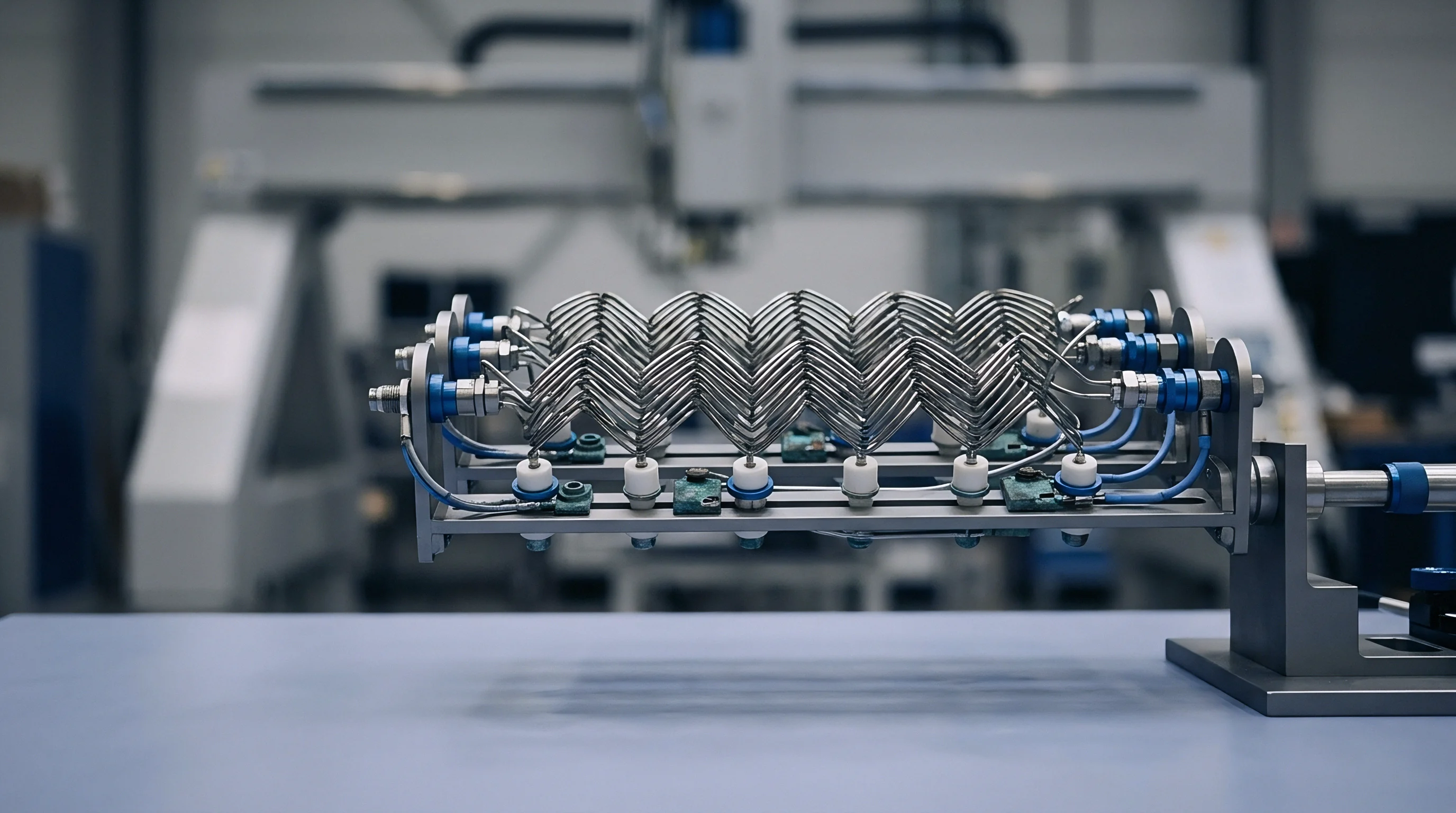
Physical extraction on an offshore factory floor requires detailed logistical planning. Obtaining an execution order is merely the transition from paper litigation to an industrial raid. The recovery effort brings together specialized freight forwarders, heavy-rigging crews, local bailiffs, and police escorts.
Multi-cavity injection moulds weighing over twelve metric tons cannot simply be loaded onto a flatbed without certified mobile cranes and heavy transport dollies.
Plant management rarely resorts to overt confrontation. Instead, resistance takes the form of passive operational delay: security gates remain closed for unscheduled safety audits, factory power is said to be insufficient for crane operation, or key-holders for the toolroom turn out to be on emergency medical leave. Cutting through these tactics requires a judicial writ giving enforcement officers explicit authority to break locks, access electrical infrastructure, and bring in temporary generator sets.
A bailiff intervention fails instantly if the judicial seizure writ omits the explicit legal authority to enter third-party warehouses leased by the primary supplier.
How Do Factory Floor Realities Thwart Court Bailiffs?
Court bailiffs have legal authority, not engineering backgrounds. Faced with rows of near-identical tool steel blocks, an officer has no way to refute assertions that the disputed assets were moved or broken down months ago. If serial tags have been ground off or painted over, the officer will not measure water ports or compare cooling layouts against CAD prints.
The bailiff needs an unambiguous, visual match between the physical tool and the description in the court writ.
The buyer’s tooling engineers must be on the floor during the seizure to handle identification. They need design drawings, mold base dimensions, high-resolution photos of internal manifolds, and ultrasonic thickness gauges. Rapid, defensible identification prevents the factory from claiming the equipment belongs to an unrelated third party.
- Ground serial plates prevent court officers from verifying asset identity, leading to immediate judicial postponement of the recovery.
- Corroded cooling channels result from deliberate acid flushes, destroying cavity surface integrity before the rigging team arrives.
- Missing ejector pins cause incomplete demolding cycles, demanding hundreds of hours of precision toolroom rework at the receiving plant.
- Scattered auxiliary sensors disrupt thermal monitoring loops, forcing total replacement of internal wiring bundles.

Conversion from Physical Delivery to Monetary Substitution
When assets are concealed, damaged, or transferred away, courts turn to financial compensation. In China, once an order for specific performance cannot be executed because the physical subject matter cannot be located, the execution court closes the file. The buyer must then seek a separate ruling quantifying the replacement value of the lost assets.
That transition rarely works in the buyer’s favor, as replacement value calculations ignore the catastrophic commercial damage of missing a retail release.
Calculating the replacement figure triggers immediate disputes. The factory produces accounting ledgers showing the tool steel has depreciated by seventy percent over two years of production. The brand, meanwhile, tallies rush machining surcharges, airfreight fees for raw blocks, lost shelf space, and line-down penalties.
Establishing those indirect and consequential damages in secondary proceedings often consumes eighteen months of litigation.
Under these conditions, the unresolved question remains whether international arbitral frameworks can develop effective interim real-time tracking protocols that prevent suppliers from concealing high-value production tooling during the pendency of the dispute.


Bond
Protecting capital expenditure on custom production tooling requires protective legal and commercial structures established before the first purchase order clears. Relying on cross-border arbitration under the New York Convention leaves a brand vulnerable to local procedural delays and floor-level sabotage. Resilient procurement programs use financial guarantees, duplicate tooling, and independent escrow to ensure continuity without court intervention.
Standby letters of credit and performance bonds provide immediate leverage. In well-drafted supply agreements, the manufacturer posts an irrevocable standby letter of credit payable on demand if it fails to surrender tooling within forty-eight hours of termination. The bond amount must cover full tool replacement plus liquidated damages calculated against three months of lost distribution.
If the factory locks down the dies, drawing down the letter of credit at an international bank secures the immediate funds needed to cut duplicate tooling elsewhere.
| Safeguard Structure | Primary Financial Mechanism | Upfront Overhead Cost | Implementation Velocity | Operational Autonomy |
|---|---|---|---|---|
| Dual Tooling Reserve | Duplicate mold sets at separate geographic sites | 80% to 100% of baseline NRE | Immediate line transfer | Complete supply chain independence |
| Standby Letter of Credit | Bank-backed irrevocable demand guarantee | 1.5% to 3% annual fee | 3 to 7 banking days | Financial recovery without physical possession |
| Independent Tooling Escrow | Neutral bonded warehouse custody | $5,000 to $12,000 annual fee | 24 to 48 hours for release | Direct physical retrieval |
| Post-Dispute Arbitration | ICC / SIAC arbitral specific performance | $150,000 to $400,000 legal costs | 12 to 24 months | Total dependence on local bailiffs |

Pre-Emptive Contractual Structures for Production Recovery
Tooling custody can be detached from the assembly partner entirely through off-site staging agreements. Under this arrangement, injection molds and stamping dies sit in an independent, climate-controlled depot operated by a neutral third-party logistics firm. The manufacturer pulls the tooling strictly for scheduled production runs and returns it as soon as the batch clears.
This setup cuts off factory lien claims at the source and gives the brand’s forwarders clean, continuous access to the equipment.
Contracts must also govern digital manufacturing packages. Master agreements should require raw Gerber X2 outputs, IPC-2581 assembly archives, native CAD files, and test scripts to be held in an active software escrow. Release conditions ensure that if the manufacturing partner enters insolvency, undergoes a change of control, or refuses purchase orders, the buyer automatically receives the technical documentation needed to spin up production at another facility.

Escrow Mechanisms and Dual Sourcing Realities
High-volume electronics programs mitigate single-supplier risk through dual-tooling strategies. Cutting duplicate sets of high-precision injection moulds raises upfront engineering expense, but it eliminates operational hostage-taking. Splitting baseline volume ~ say, seventy percent to an offshore plant and thirty percent to a nearshore partner ~ keeps two qualified production lines warm.
If the primary supplier initiates commercial conflict or refuses to return tooling, the buyer swings production volume to the secondary partner within forty-eight hours.
Physical ownership must translate into immediate manufacturing agility. Holding title to a cold steel die resting in an impounded overseas warehouse produces zero deliverable units. True production resilience couples contractual security with active, qualified production redundancy across distinct legal jurisdictions.
The safest factory relationship is one where the supplier knows that locking the gate transfers the entire production volume to a waiting competitor before the close of business.