Unbundled Engineering Fee Structuring in Custom Hardware Sourcing
Unbundling non-recurring engineering fees isolates hardware design assets, secures native CAD source files, and establishes transparent unit pricing.

Split
Quotations for custom electronic modules often roll design overhead straight into unit prices. When non-recurring engineering fees are embedded directly in piece-part costs, buyers lose sight of true component margins, IP boundaries, and actual volume break-even points. For instance, a supplier quoting $12.50 per unit on a custom wireless system-on-module might be amortizing $180,000 in board layout, antenna tuning, and pre-compliance testing across an assumed run of 50,000 units.
If market demand stalls at 20,000 units, the factory is left with unrecovered labor costs; if demand surges to 150,000 units, the buyer continues paying for engineering work completed years earlier. Unbundling pulls development labor, prototype tooling, test software, and regulatory qualification out into separate, itemized line items distinct from the physical bill of materials.
Separating non-recurring charges from unit manufacturing costs sets a clear baseline for cost reductions as volume grows. In a bundled arrangement, a drop in microcontroller spot pricing rarely triggers a price adjustment because component costs are blended into an undisclosed engineering repayment schedule. Itemizing forces the vendor to detail specific hours for schematic capture, PCB stack-up modeling, firmware driver tweaks, and automated optical inspection programming ~ showing whether a high quote reflects genuine design complexity or simply inflated engineering rates.
| Deliverable Scope | Bundled NRE Structure | Unbundled NRE Structure | Commercial Impact on Buyer |
|---|---|---|---|
| Schematics & Gerber Files | Retained by supplier; proprietary module view | Full native CAD files released upon milestone sign-off | Determines second-source manufacturing capability |
| Test Jigs & Fixtures | Absorbed in unit fee; held at vendor site | Itemized asset purchase; buyer holds title | Enables relocation of test line to third-party EMS |
| Board Support Package | Pre-compiled binary blobs only | Source code, build scripts, toolchain documentation | Controls long-term firmware maintenance cost |
| Regulatory Certificates | Issued in supplier name; non-transferable | Issued in buyer name or co-licensed directly | Prevents regulatory lock-in during vendor disputes |
Itemized engineering fees require precise scope definitions to prevent creep during design revisions. High-density interconnect boards with blind and buried vias require exact stack-up specifications early on. When engineering tasks are grouped into a single lump-sum NRE fee, disagreement quickly follows over whether impedance tuning for a revised PCB stack-up is part of the original scope or requires a separate change order.
A 50,000-unit module order carrying an unbundled $180,000 engineering fee breaks even against bundled unit pricing at exactly 36,000 units shipped.
Tying engineering contracts to discrete phase gates reduces financial risk during early prototyping. Hardware development carries real physical risks; a failed thermal simulation or an unstable power-distribution network can easily require an unexpected board spin. Aligning payments with verified engineering milestones keeps financial control with the procurement team.

Commercial Division of Development Hours
Engineering rate cards vary significantly by region and technical discipline. Analog RF layout work naturally commands higher hourly rates than routine component library creation. Without explicit hour allocations per discipline, contracts leave room for vendors to bill junior technician time at senior RF architect rates.
Without direct access to source files, the buyer loses leverage when unit prices increase.
Failing to establish detailed, unbundled engineering schedules leaves procurement teams open to compound pricing models. In these cases, suppliers collect upfront development fees while continuing to bake amortized engineering surcharges into unit production costs, effectively charging twice for the same engineering work.
- Uncapped Amortization Clauses allow vendors to continue collecting per-unit NRE surcharges long after total actual development costs reach full reimbursement.
- Undefined Ownership Boundaries permit factories to treat custom design outputs as internal intellectual property, restricting buyer access to fabrication layers.
- Implicit Bug Fix Fees force buyers to pay additional hourly development rates for correcting design flaws that fail initial mutually agreed specifications.
- Opaque Tooling Allocations blur the distinction between reusable factory equipment and product-specific test fixtures owned outright by the purchasing entity.
Lumping engineering fees into assembly pricing leaves buyers trapped at the primary facility when capacity bottlenecks make moving to a secondary electronics manufacturing partner necessary.


Jig
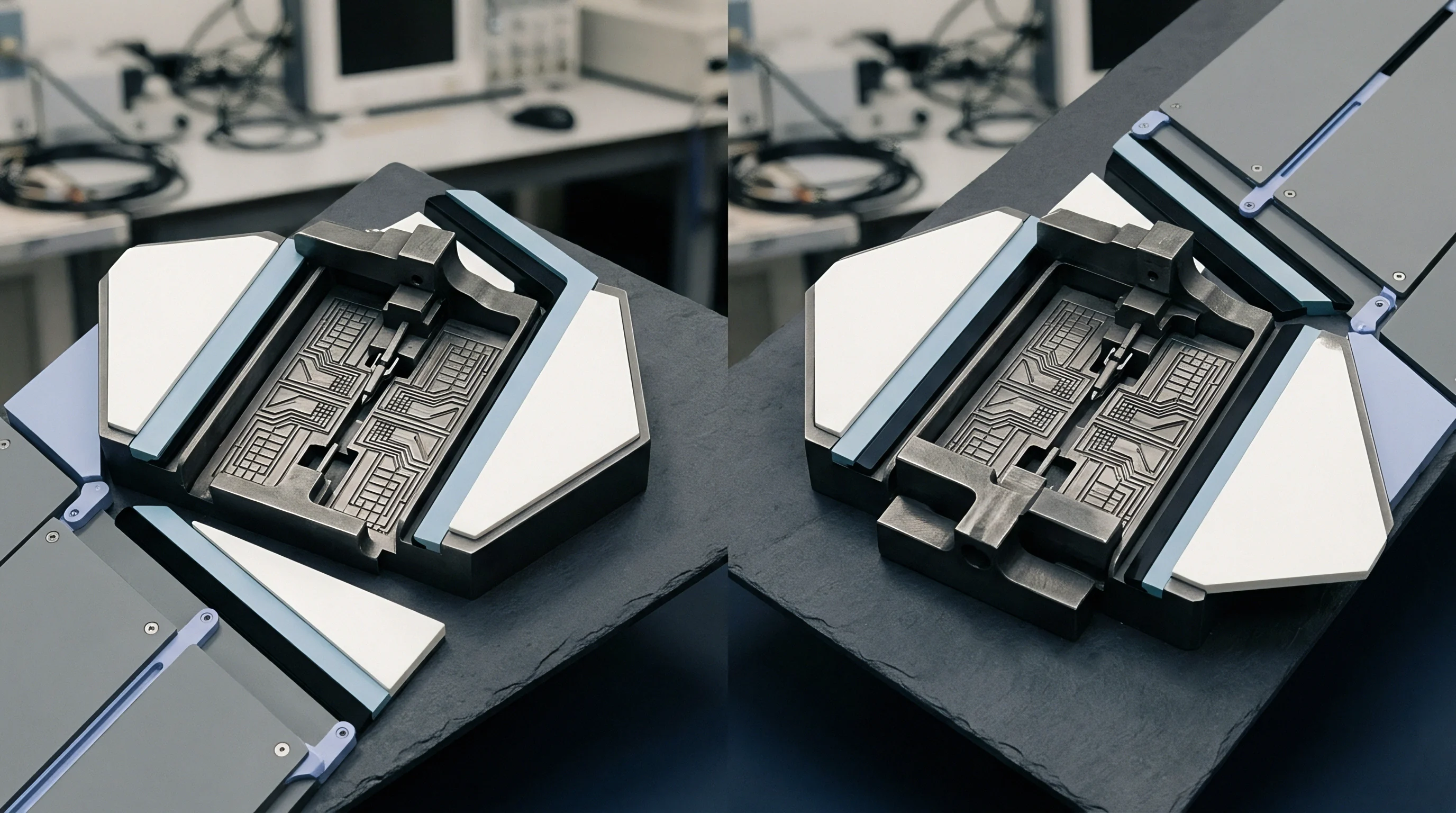
Validating custom hardware relies on specialized test fixtures, bed-of-nails sockets, and automated programming stations. In many PCB assembly proposals, NRE quotes group functional test equipment into a generic line item. Without clear itemization, the factory retains physical ownership of the test hardware even though the buyer paid to build it.
If the business relationship ends, the buyer cannot easily replicate production testing at another plant.
Production test hardware falls into two main categories: product-specific interfaces and universal instrument racks. Product-specific interfaces include custom pogo-pin plates, mechanical clamps, and interposer boards that make direct physical contact with the board under test. Universal equipment covers standard bench tools like power supplies, spectrum analyzers, digital voltmeters, and interface buses mounted in rack enclosures.
Unbundled contracts separate these items, assigning explicit ownership of the custom, product-specific fixtures to the buyer.

Allocation of Hardware Test Fixtures
Building a custom test fixture involves mechanical engineering, CNC machining of acrylic or G10 frames, custom wiring harnesses, and test executive scripts. Depending on pin count and signal frequency, a functional test fixture for an industrial IoT module generally costs between $8,000 and $25,000. Securing ownership requires contract language that explicitly lists fixture schematics, wiring diagrams, and test controller source code as required deliverables under the NRE schedule.
If production moves, work stops when the test fixture remains tied to the original facility.
Factory engineers frequently embed proprietary code into automated test routines. If firmware flashing utilities or analog calibration scripts rely on closed-source plant libraries, the physical test fixture is useless outside the original facility. Contracts must specify that all test scripts, limits files, and calibration software execute on open or standard commercial environments.

What Scope Separates Test Fixture Hardware from Production Tooling?
Distinguishing custom test fixtures from general plant tooling dictates who controls key assets when switching suppliers. High-volume custom module programs often require plastic injection molds, stamped metal shield cans, and specialized SMT feeder plates alongside test hardware. When NRE invoices lump everything into a generic tooling charge, disputes inevitably follow over which items can actually be removed from the factory floor.
- Verify that the invoice separates durable steel or aluminum injection tooling from electronics test fixtures and program flasher modules.
- Demand serial-numbered asset tags applied directly to all custom pogo-pin test fixtures funded through unbundled engineering invoices.
- Require complete assembly drawings, bill of materials, and wiring schematics for every functional test fixture prior to issuing final milestone payments.
- Validate that test automation software compiles from source code without requiring proprietary factory software licenses or undisclosed network credentials.
Physical test fixtures funded through unbundled engineering fees belong entirely to the paying entity once acceptance testing confirms fixture operation.
Specialized programming jigs often house proprietary multiplexing circuitry that suppliers resist releasing to protect internal manufacturing IP.


Yield
Scrap losses during early production runs sit right at the boundary between design execution and factory efficiency. Initial yields on custom hardware rarely reach mature targets. First-pass yield on complex multi-layer boards with fine-pitch BGA components might start at 82 percent before process tuning brings yield above 98.5 percent.
Unbundled agreements clarify who pays for wasted components and rework labor during initial bring-up.
Bundled pricing bakes an estimated scrap buffer straight into the unit cost. If the factory optimizes its assembly line faster than expected, it pockets the margin upside. If scrap stays high due to an uncorrected board layout issue, the factory absorbs margin losses and may quietly swap in cheaper passives to offset costs.
Unbundling engineering fees allows both parties to agree on a clear scrap allowance schedule tied directly to bring-up milestones.

Scrap Responsibility and Qualification Fees
Engineering change orders designed to boost yields need clear cost assignments. If layout adjustments are needed to eliminate solder bridging on a fine-pitch IC, updating stencils and re-programming pick-and-place machines counts as design refinement. Explicit contracts attribute design-related yield losses to the engineering budget, while operational mistakes ~ like improper reflow profiles ~ remain strictly the factory’s responsibility.
The table below details how scrap allowances interact with volume runs and unbundled NRE recovery across production stages.
| Production Phase | Target Volume (Units) | Expected First-Pass Yield | Scrap Cost Responsibility | NRE Amortization Exposure |
|---|---|---|---|---|
| Engineering Validation (EVT) | 50 to 200 | 70% to 85% | 100% Buyer (Development NRE) | Fully unbundled upfront fee |
| Design Validation (DVT) | 500 to 1,500 | 85% to 95% | Shared baseline (50/50 split over limit) | Milestone-locked retention fee |
| Production Validation (PVT) | 2,000 to 5,000 | 95% to 98% | 100% Supplier (above 2% scrap cap) | Final milestone sign-off release |
| Mass Production (MP) | 10,000+ | > 98.5% | 100% Supplier standard scrap model | Zero embedded unit fee allowed |
Unbundled NRE calculations must account for component loss during initial SMT setup. Take an order for 100,000 industrial wireless modules with a raw BOM cost of $14.20 per board. If setup consumes 200 component sets for feeder calibration and thermal profiling, an unbundled contract explicitly lists that $2,840 in setup scrap as a pre-production NRE line item rather than spreading it across unit costs across the full 100,000-unit run.
Amortization Curves across Scrap Allowances
Financial risk shifts as production scales past initial engineering verification. In early pilot runs, elevated defect rates usually trace back to unoptimized stencil designs or poor solder paste printing parameters. Unbundled agreements keep factories from masking operational inefficiencies inside vague engineering contingencies.
When schematic access is restricted, qualifying a second source stalls indefinitely.
Quantifying financial exposure under realistic yield assumptions protects budgets from sudden overruns. High-density designs using 0201 passives or 0.4mm pitch wafer-level chip-scale packages naturally see higher scrap during feeder setup. Establishing contractual caps on buyer-funded setup scrap prevents endless pass-through charges during extended factory bring-up.
IPC-A-610 Class 3 assembly standards govern final product acceptance unless explicit contractual waivers downgrade specific inspection criteria to Class 2.
Initial yield thresholds mark the clear transition between engineering bring-up and commercial production.


Escrow
Transferring a custom hardware design to a new manufacturing partner requires complete, uncompiled source files. Receiving only Gerber files and binary firmware blobs is not enough for third-party production. True design autonomy requires native CAD schematics, layout databases, bills of materials with validated manufacturer part numbers, stack-up definitions, mechanical STEP files, and fully documented firmware repositories.
Engineering contracts should explicitly tie milestone payments to the delivery and verification of a reproducible build environment. A firmware release is of little value if it cannot compile into a bit-for-bit identical binary using standard, off-the-shelf toolchains. Linking escrow release or final NRE payments to independent build verification ensures the buyer receives functional, working source code rather than incomplete snapshots.
Custody of Design Transfer Repositories
IP escrow arrangements protect project continuity if a partner faces insolvency, acquisition, or legal default. Placing design files in a neutral third-party escrow creates a reliable pathway to recover assets. However, escrow deposits are only useful if updated with every engineering revision pushed to the factory floor.
Without full dependencies, compiling the firmware repository fails.
Software toolchains represent a major risk for long-term hardware maintenance. If module firmware relies on modified compilers, custom linker scripts, or unversioned RTOS libraries, building the code three years later can be nearly impossible without exact environment replication. Unbundled software terms should mandate containerized build environments that lock in compiler versions, dependencies, and build scripts.
Verification of Reproducible Build Environments
Validating an unbundled design package requires thorough verification of all fabrication outputs before approving final engineering payments.
- Native Schematic Files must arrive in editable formats corresponding to standard EDA software suites rather than flat non-editable PDF exports.
- PCB Layout Databases require complete netlists, constraint sets, copper pour definitions, and parametric design rules for immediate board house transfer.
- Fabrication Output Packages must include IPC-2581 or Gerber X2 files accompanied by NC drill files, fabrication drawings, and explicit stack-up specifications.
- Firmware Source Repositories require complete commit histories, revision tags corresponding to production binaries, and containerized compilation scripts.
- Production Test Scripts must include source code for test executive environments, limit configuration tables, and programming interface drivers.
A design transfer package lacking native CAD source files isolates the buyer within the original supplier facility regardless of contract ownership language.
Standard IP transfer clauses specify that upon payment of final unbundled NRE milestones, the supplier irrevocably transfers all title, copyright, and manufacturing rights for custom layout and firmware code to the buyer.


Settlement
Tying payment terms to verifiable engineering outputs protects capital across the development lifecycle. Upfront NRE advances leave buyers vulnerable to schedule delays and unauthorized scope changes. A balanced payment structure divides NRE into defined stage gates, withholding a significant portion until volume production verification finishes without critical defects.
Stage gates should align with measurable physical hardware deliverables rather than calendar dates. Linking payments to dates creates friction when component lead times delay prototype builds. Tying disbursements to tangible outputs ~ like functional EVT board sign-off, DVT thermal test reports, or regulatory certification ~ ensures money moves only when real progress is made.

Milestone Retainage and Acceptance Triggers
Retainage provisions hold back a portion of total NRE fees until production lines hit target throughput and yield benchmarks. Holding 15 to 20 percent of total engineering fees until a successful production validation run ensures the vendor stays committed through the final stages of bring-up and test calibration.
| Milestone Phase | Physical Deliverable Trigger | NRE Payment Release (%) | Retainage Held (%) |
|---|---|---|---|
| Architecture & Schematics | Signed design review, native schematic files | 15% | 85% |
| EVT Hardware Bring-Up | 10 functional prototype units passing basic RF/power checks | 25% | 60% |
| DVT Qualification | Compliance pre-scan reports, thermal chamber validation | 25% | 35% |
| PVT & Tooling Release | Fully validated functional test jigs, native Gerber package | 20% | 15% |
| Final Mass Production Sign-Off | First 2,000-unit mass run achieving >98% first-pass yield | 15% | 0% |
Clear change order governance keeps unbundled NRE contracts from ballooning through feature creep. Proposals should set hourly rate caps and fixed assessment windows for design revisions. If a buyer requests an antenna layout change mid-project, the vendor submits a formal change order detailing layout hours, tooling costs, and schedule impacts before work begins.

Reconciliation of Change Orders
Disputes over final NRE settlements often stem from unclear regulatory re-testing costs. If a module fails FCC or CE emissions tests during DVT, determining who pays for re-engineering labor and lab time depends on whether the failure traces to a buyer-requested schematic change or a vendor layout flaw. Contracts must explicitly assign re-testing costs when designs fail against agreed specifications.
If negotiations break down early, initial deposit funds remain with the supplier.
Transparent financial settlement models simplify future dual-sourcing evaluations. When past engineering fees are cleanly unbundled, calculating the payback period for qualifying a secondary EMS partner is a straightforward comparison of second-source NRE against projected unit cost savings over the product lifecycle.
What contractual terms can effectively compel a turnkey vendor to maintain firmware build compatibility when component obsolescence forces a microcontroller substitution three years after final NRE settlement?