Managing Component Lifecycle Part Change Notifications within Unbundled Dual Sourced Hardware Assemblies
Unbundled dual sourcing demands active OEM ownership of reel-level PCN tracking to prevent mismatched component steppings from breaking alternate SMT layouts.


Trace
A microcontroller stepping shifts from revision B2 to C0 at a wafer fab in Hsinchu. The change notification covers a minor metal mask edit to raise die yields on 300-millimeter wafers, alongside a trim to internal power-on reset rise time from 14 microseconds down to 3.8 microseconds. For a single contract manufacturer populating one enclosed circuit card, that change means running five test boards through automated optical inspection and an in-circuit test fixture.
In an unbundled model ~ where the brand buys active silicon directly from franchised distributors and splits assembly between two independent partners ~ that 10.2-microsecond delta can trigger intermittent, unsynchronized board failures.
Unbundled sourcing decouples component purchasing from assembly labor. The brand owner locks in silicon pricing directly, uses its own credit facility for volume buys, and routes drop-shipments to assembly plants in Penang and Guadalajara. When a component vendor issues a JEDEC JESD46 change notice, it lands with the brand’s procurement team, not the contract manufacturers.
The brand controls the bill of materials, owns the approved vendor list, and signs off on engineering changes. Factory technicians on an unbundled surface-mount line have no contractual reason to check whether revision C0 tolerates the host board’s rail decoupling impedance. SMT lines simply feed off reels.
If a reel arrives with an internal part number matching the active production release, the pick-and-place head runs.
A 10-microsecond shift in reset line slew rate drops microcontroller bring-up when power supply rail sequencing tolerances diverge across two layout implementations.
Dual-sourced hardware rarely relies on identical PCB layouts at both sites. Factory A in Penang builds an eight-layer high-density interconnect board using microvias and custom copper pours. Factory B in Guadalajara uses an equivalent six-layer stackup tuned for wider conveyor tracks and panel economics.
The schematic is identical on paper ~ both designs use the same microcontrollers, clock crystals, and RF transceivers ~ but physical realities like trace inductance, ground return loops, and power plane bypass resonances diverge. The metal mask change alters the reset pin’s input threshold slew rate. The eight-layer board absorbs the faster edge cleanly.
The six-layer board experiences inductive ringing, driving spurious resets during thermal chamber ramps at 55 degrees Celsius.

Silicon Alterations across Distinct Host Layouts
Component vendors group change notices into three risk tiers under JESD46: major, minor, and administrative. Semiconductor vendors categorize wafer fab transfers, lead-frame alloy shifts, and mask edits as major changes, requiring at least ninety days of advance warning before initial shipments. Passive component suppliers issue notices for modified dielectric formulas, revised end-termination plating, or changes in reel packaging.
In a turnkey model, the contract manufacturer handles these notices, checks inventory pipelines, and requalifies the line. In an unbundled model, that entire load falls back on the brand’s engineering team.
Engineering teams are usually busy putting out immediate production fires. Component engineers often review change notices against high-level specs instead of site-specific board layouts. Relying on “qualification by similarity” is a common habit that routinely trips up assembly lines.
An engineer verifies the pinout matches JEDEC footprints, checks thermal numbers, and signs off in the PLM system. That approval flows down to purchasing, where buyers update the PO. The new reels land on the Guadalajara line three weeks before Penang sees them, and Mexican line yields crash overnight.
Brand engineers point to solder paste printing issues; plant managers in Mexico point to the consigned silicon. Inspection shows flawless solder joints. The real culprit is ground bounce from the revised chip working against the six-layer board’s impedance profile.
When unbundled manufacturing separates component change management from actual PCB layout realities, field returns climb while both assembly plants report clean passes on standard SMT test fixtures.

Custody
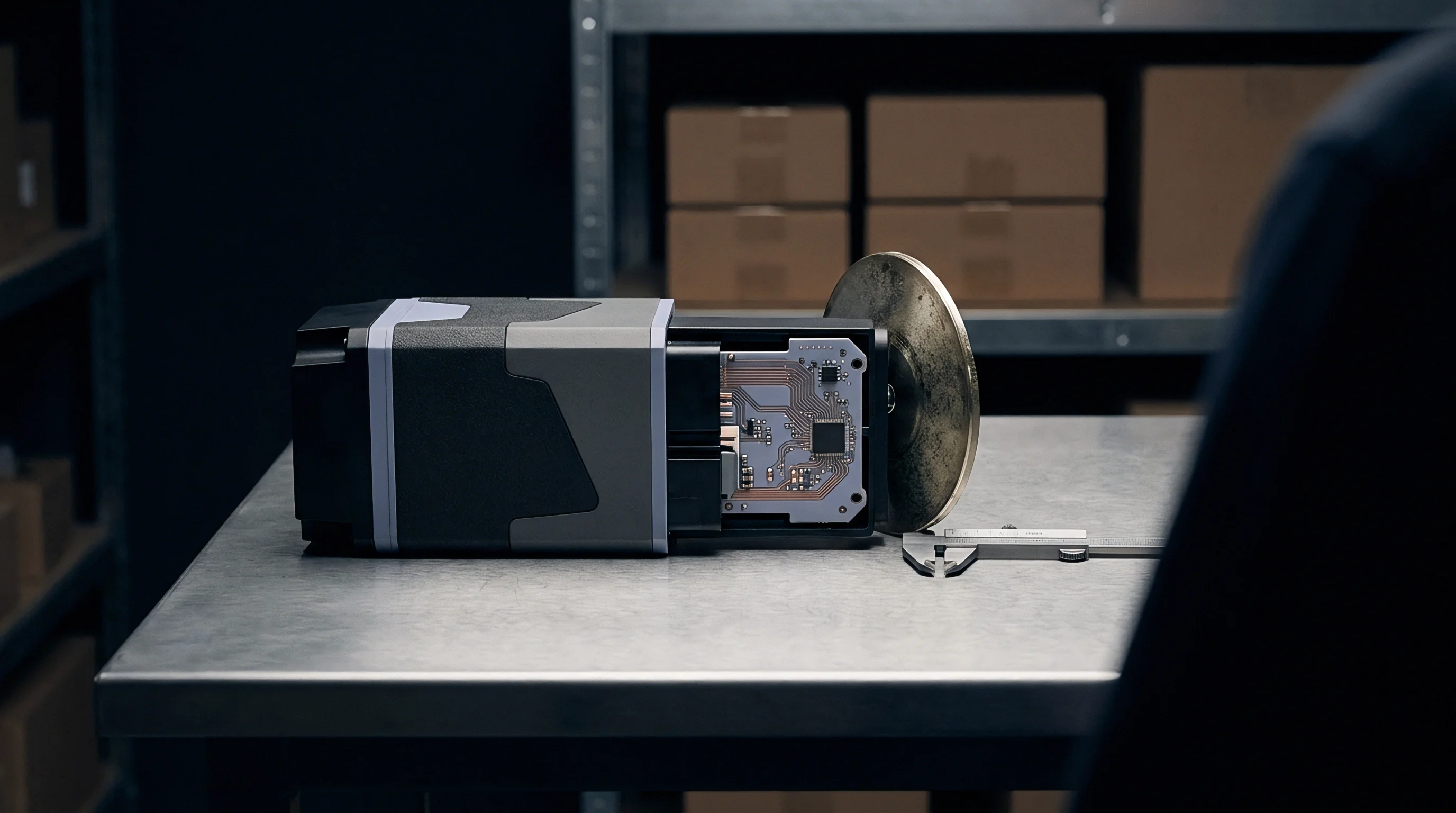
Tracking component changes across split manufacturing sites means maintaining lot visibility all the way from the foundry to the feeder cart. A PCN explains what changed inside the IC package, but it won’t tell you which distributor still has older stock or which plant just loaded mixed date codes. Decoupling purchasing from physical handling creates blind spots where old and new revisions get mixed on active reels.
Distributors rotate stock on a first-in, first-out basis across regional hubs. If an OEM places a split consignment PO for 200,000 units, a distributor might fulfill 120,000 units of older revision B2 silicon from Singapore and source the remaining 80,000 units of revision C0 from Hong Kong. Both shipments move under the exact same purchase order, landing at assembly plants with no outward distinction.
Unless the OEM mandates strict date-code segregation and reel-level scanning, Penang might build entire lots on revision B2 while Guadalajara runs mixed feeders containing B2 and C0 at the same time.
| Control Checkpoint | Physical Artifact Checked | Standard / Regulation | Factory A Obligation | Factory B Obligation |
|---|---|---|---|---|
| Consignment Receiving | Reel Barcode / 2D Data Matrix | JESD46 / ANSI/ESD S20.20 | Scan to ERP lot tracking | Manual dock verification |
| Feeder Splicing | Reel Carrier Tape Tail | IPC-A-610 Class 2/3 | Splice barcode verification | Visual operator check |
| SMT Placement Gate | Component Top-Side Marking | IPC-9850 Surface Mount | Optical vision inspection | Lot traveler logging |
| Solder Reflow Profile | Moisture Indicator Card | J-STD-020E Moisture Limit | Bake out under 125°C | Direct placement entry |
| Firmware Flash Point | Silicon Silicon ID Register | Internal Release Spec | Read electronic signature | Skip hardware ID check |

Handling Physical Tape and Reel Discontinuities
Reel splicing on high-speed SMT lines is where untracked revision changes usually slip in. A line dropping 45,000 components an hour can’t pause every time an 8-millimeter reel runs dry. Operators clip and tape the leading edge of a new reel to the tail of the old one in under thirty seconds.
If the empty reel held pre-PCN silicon and the new one contains post-PCN parts, that revision boundary sits right in the middle of a live production run.
Without machine-readable barcode checks at the feeder carriage, traceability breaks down. In unbundled contracts, the brand pays per panel, not for factory software upgrades. Unless the brand actively funds MES integration at both sites, process controls split sharply.
Factory A scans every reel barcode into an automated system that locks the line if an unexpected date code or part revision appears. Factory B logs reels manually on a paper traveler at the start of a twelve-hour shift, leaving any mid-shift reel splices untracked on paper.
Under J-STD-020E, changing mold compound resin formulation resets component floor life exposure ratings from level three down to level four without shifting functional electrical pin behavior.
Changes to moisture sensitivity levels show how subtle this risk is. A supplier swaps epoxy mold compounds to meet halogen-free standards. Footprint, pinout, and die remain unchanged, so the vendor issues a minor notice.
Yet under J-STD-020E, the package MSL rating drops from Level 3 (allowing 168 hours of floor exposure at 30 degrees Celsius and 60 percent relative humidity) down to Level 4 (allowing just 72 hours). Brand engineering logs the notice as a minor material update. In Mexico, operating under unbundled consignment without automated MES locks, line workers manage the reels using legacy Level 3 rules.
Parts sit on the floor for 96 hours. During 245-degree reflow, trapped moisture turns to steam, creating micro-delamination and die cracks that pass post-reflow functional testing only to fail twelve months later in the field.
Field delamination audits frequently show assembly operators following the standard reel staging intervals set during initial production transfer protocols.


Divergence
Process drift is inevitable when running dual production sites. While dual sourcing hedges geopolitical risk, secures factory capacity, and keeps conversion pricing competitive, hidden liabilities emerge when PCNs interact with site-specific equipment tolerances and localized component sourcing. Procurement groups frequently consign main active silicon centrally while letting regional plants buy low-risk passives locally.
Active silicon relies directly on adjacent passive networks ~ decoupling capacitors, pull-up resistors, crystal oscillators, and protection diodes. Under unbundled purchasing, the brand might consign the primary SoC while letting Factory A buy 0402 100-nanofarad 16-volt X7R decoupling capacitors from a Japanese vendor and permitting Factory B to source nominal equivalents from Taiwan. On paper, both selections match the nominal spec perfectly.
Is Silicon Stepping Equivalence Defensible across Assembly Lines?
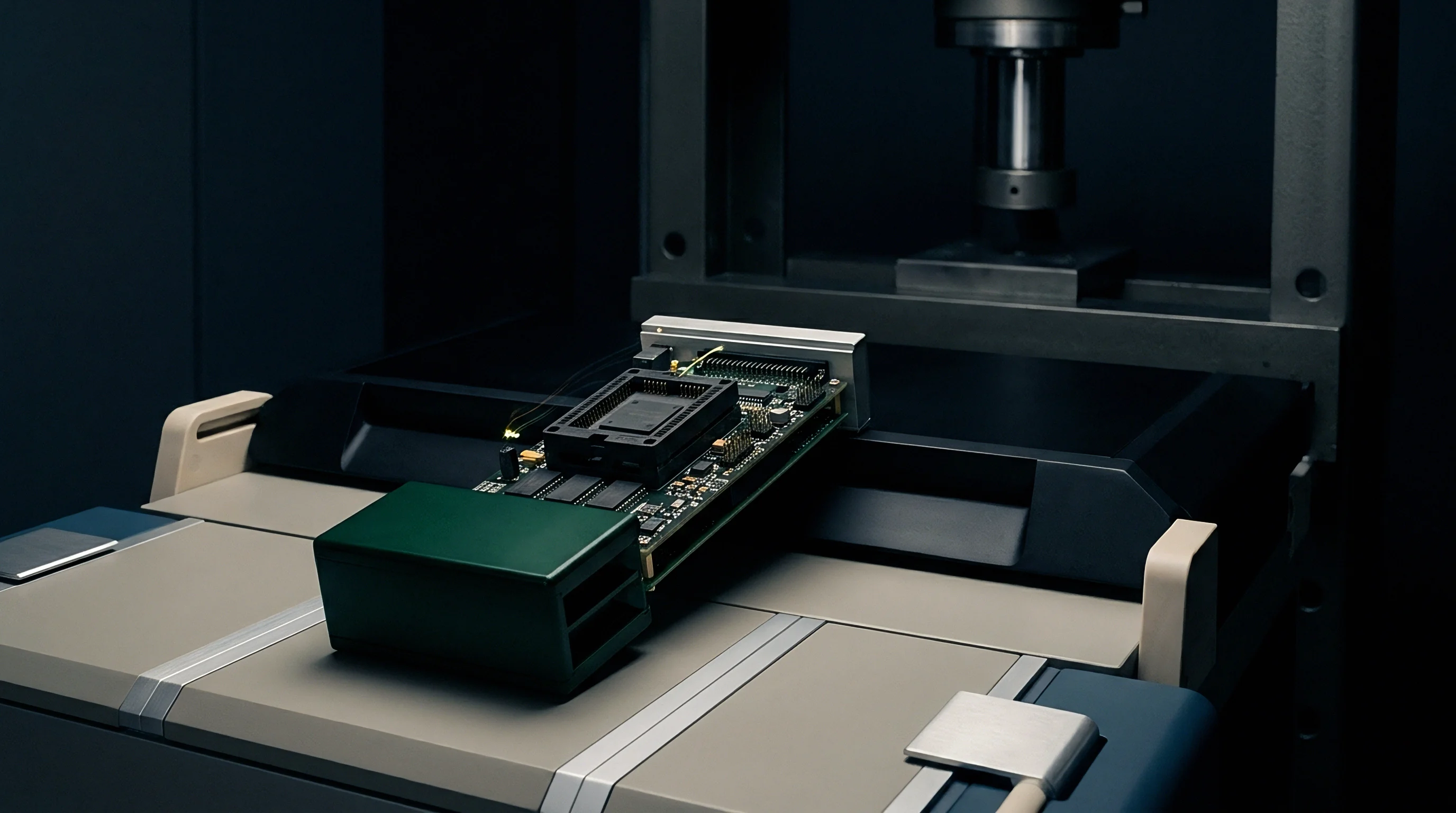
Silicon revisions alter transient performance. A die shrink speeds up internal gate switching, generating higher switching noise across the power network. The capacitor sourced by Factory A exhibits an equivalent series resistance of 15 milliohms at 100 megahertz; Factory B’s alternative shows an ESR of 45 milliohms at the same frequency because of different internal electrode counts.
Legacy revision B2 silicon ran stably on both layouts. Revision C0 brings faster edge rates that trigger high-frequency impedance peaks on Factory B’s board, causing intermittent RF receiver degradation from harmonic noise coupling into nearby traces. Line technicians swap modules and tweak shields without realizing the issue stems from an interaction between the silicon update and local passive selection.
- Consignment Silicon Cleared for production run by central engineering teams without testing dynamic impedance on secondary factory physical stackups.
- Secondary Source Passive selections run within nominal commercial tolerances while diverging sharply in equivalent series resistance across high-frequency bands.
- High Speed Transients from die shrinks induce harmonic ripple across the power plane that exceeds published noise thresholds on alternate board layouts.
- Radio Frequency Desensitization appears during end-of-line radiated sensitivity testing at secondary facilities while primary facilities demonstrate clean passing records.
- Automated Inspection Gates confirm nominal component placement and solder meniscus profiles without exposing transient functional power supply failures.
This divergence extends into firmware tools. When silicon suppliers issue PCNs, they also release updated errata sheets documenting required initialization workarounds. If revision C0 introduces a direct memory access race condition under heavy bus loads, the vendor releases a driver patch.
In an unbundled setup, patch deployment is easily fragmented. The brand controls the main software repository, but contract plants maintain their own flashing tools, boundary scan scripts, and test rigs. Factory A updates its gang programmers with the unified hex image containing the fix.
Factory B, constrained by older programmer hardware memory, delays integration and keeps flashing the old hex file. The result: Factory B ships revision C0 silicon running firmware written for revision B2.
A contract line in unbundled assembly separates the cost of board conversion from the liability of validating compound electrical interactions across multiple manufacturing sites.
Reflow profile variations add another layer of stress. Conveyor speeds, heating zones, and thermocouple profiling vary between plants. If an environmental PCN changes an inductor’s termination plating from matte tin to an electroplated tin-bismuth alloy, the soldering window narrows.
Tin-bismuth prevents tin whiskers but lowers the melting point, shifting liquidus wetting times. Factory A runs a twelve-zone nitrogen-purged reflow oven that holds tight peak temperatures across heavy copper layers. Factory B uses an eight-zone air convection oven.
The modified termination leads to solder voiding beneath inductor pads on Factory B boards, weakening physical joints and increasing operational temperatures under heavy current loads.
Engineering teams that treat change notices as administrative routine often find that minor component shifts compound across dual lines until the physical hardware baselines barely resemble one another past the schematic.


Ledger
Unbundling component procurement moves financial and technical risk straight onto the brand’s balance sheet. Under a turnkey model, the contract manufacturer builds lifecycle risk into conversion margins, handling fees, and carrying costs; if an unauthorized part substitution stops production, the financial responsibility lands on the supplier. Under unbundled sourcing, the brand absorbs direct liability whenever an unhandled notification leads to line downtime, scrapped assemblies, or write-downs.
Handling change notices across dual unbundled sites demands clear NRE allocations, routine lifecycle audits, and explicit tooling agreements. When an active component receives a JESD48 EOL notice detailing Last Time Buy and Last Time Ship dates, the OEM must fund component buys to cover run-out projections. That outlay ties up working capital.
If the OEM misjudges yield differences between Penang and Guadalajara, part allocations drift out of balance.
| Execution Workstream | Turnkey Contract Model | Unbundled Model: Primary SMT | Unbundled Model: Secondary SMT | Allocation of Expense |
|---|---|---|---|---|
| PCN Intake and Triage | Factory Engineering Staff | OEM Component Engineer | OEM Component Engineer | OEM Engineering Hours |
| Layout Requalification | Factory CAD Design Team | Contract NRE ($8,000-$15,000) | Contract NRE ($12,000-$22,000) | Direct Engineering Line Item |
| Stencil and Tooling Rebuild | Absorbed in Overhead | $1,200 per SMT Line | $1,800 per SMT Line | OEM Tooling Invoice |
| Functional Test Script Update | Factory Test Engineering | OEM Software Engineer | OEM Software Engineer | OEM Engineering Overhead |
| Line Profiling and Scrap Run | Absorbed by Assembly Plant | Billed to OEM at Material Cost | Billed to OEM at Material Cost | Consignment Inventory Scrap |
| Safety Re-certification | Turnkey Supplier Filing | Third-Party Lab ($15,000) | Duplicate Lab Run ($8,000) | Regulatory Compliance Ledger |

Do Unbundled Consignment Models Shield against Line Halts?
Consignment models do not shield OEMs from conversion losses during component transitions. SMT plants bill for idle line time when delivered parts don’t match setup sheets. If Factory A halts production because revision C0 microcontrollers fail automated feeder checks due to a new vendor part number string, the plant bills idle fees between $350 and $1,200 per hour per line.
The brand owns the supply chain; the factory simply sells machine time and labor. The plant holds no financial responsibility for mismatches between the OEM bill of materials and incoming reel labels.
Expenses scale quickly when a change notice demands board layout edits. If an EOL notice forces replacing an RF amplifier with an alternate footprint, the brand must fund dual re-engineering pipelines. Factory A needs updated Gerbers, modified stencil apertures, and new feeder setup files.
Factory B requires a distinct set of build files tailored to its panel array geometry, fiducial registration, and pick-and-place maps. Stencils must be laser-cut and electro-polished separately for each plant.
Under IPC-1752A material declarations, altering internal terminal bonding alloys from gold to copper requires requalifying component solder joint thermal fatigue limits across different printed board base laminates.
Take a typical unbundled program building 500,000 units annually, split 60/40 between Penang and Guadalajara. A Wi-Fi/Bluetooth combo chip receives a PCN for a silicon stepping update and a substrate mold compound change. The vendor claims full form, fit, and function drop-in compatibility.
However, the substrate edit shifts thermal transfer through the bottom ground pad. Factory A uses vacuum-assisted reflow that keeps solder voiding under large thermal pads below 8 percent. Factory B uses standard atmospheric convection, where voiding averages 18 to 22 percent.
On Factory A boards, the revised chip runs well within thermal limits. On Factory B boards, elevated voiding restricts heat dissipation, causing the chip to thermal-throttle transmit power during FCC band-edge compliance testing.
That triggers unplanned re-certification costs. FCC and CE regulations allow Class II permissive changes only if RF layout, geometry, and emissions remain strictly within certified margins. Because Factory B’s assemblies throttle power irregularly under thermal stress, radiated emissions drift past baseline limits.
The brand is forced to run independent lab tests, adjust local attenuation networks on Guadalajara’s board layout, pay $23,000 in lab fees, and absorb six weeks of delayed production at the secondary plant.
Under Section 8.4 of standard IPC-D-325 contracts, the manufacturing service provider carries zero liability for layout performance when builds use customer-furnished design data packages.

Shelf
Handling component notifications in an unbundled model requires strict engineering change governance. Managing dual factory footprints demands a central, single-source component database tied to mandatory incoming inspection controls at both plants. An OEM cannot treat unbundled partners like job-shop machinists; the brand is acting as its own tier-one systems integrator and must take complete technical ownership of every physical design detail.
Engineering teams need clear part-number demarcation rules. When a vendor modifies electrical characteristics, package tolerances, or handling rules, the brand must assign a new internal part number rather than relying on generic JEDEC cross-references. If the semiconductor maker retains the base part number and only changes a trailing suffix on the reel label, the OEM must still create distinct internal numbers for pre- and post-PCN stock.
Updating the internal part number on the bill of materials forces purchasing systems to issue distinct POs, stopping distributors from mixing revisions in a single shipment.
- Internal Part Number Suffixing assigns dedicated numeric codes to distinct physical component steppings, stripping distributor discretion from bulk reel picking operations.
- Electronic Signature Verification reads internal silicon device identification registers during automated boundary scan tests before writing operational application firmware.
- Incoming Lot Sample Screening subjects five parts per consignment reel to X-ray fluorescence analysis to verify package lead metallurgy before release to production floors.
- Dual Stackup Solder Optimization establishes distinct laser-cut stencil aperture modifications tailored directly to the reflow ovens and solder alloys utilized at each independent factory.
Procurement teams must enforce strict receiving inspection gates at both manufacturing sites. Unbundled contract plants rarely unpack or test consigned silicon without a specific paid mandate; they typically scan carton barcodes, match packing slips to bills of lading, and rack the reels. A reliable change framework requires contractually mandating reel inspection protocols.
Receiving teams must check manufacturer lot codes, inspect moisture bag indicators, cross-reference date codes against the active PCN register, and log 2D data matrix codes into an MES database shared live with brand engineering.
Change control boards should include hardware, firmware, manufacturing, component engineering, and logistics reps. When a PCN arrives, the board evaluates its impact across both production lines at once. If a silicon change requires firmware workarounds, the software release is linked directly to the new internal part number inside the factory MES.
SMT placement systems then verify that the firmware image flashed at functional test matches the physical component loaded on the feeder, preventing new silicon from running old code or legacy silicon from running revised code.
Long-term reliability depends on managing where physical parts meet assembly line realities. Unbundled procurement brings supply flexibility, margin protection, and buying transparency, but those advantages vanish if change discipline breaks down. When an OEM separates purchasing from manufacturing, it takes on full responsibility for technical integration.
Managing component notices across dual factory footprints requires rigorous material verification, clear visibility into plant-specific process limits, and tight configuration control over every board revision.
Whether secondary manufacturing facilities possess the software discipline and tooling to maintain real-time lot synchronization remains an ongoing question across hardware supply chains.