Standardizing Harmonized Cross Border Retesting Protocols for System in Package Encapsulated Subsystem Modifications across Regulators
Encapsulated subsystem modifications require targeted radiated spurious scans and permissive change filings when die shrink or mold material alters parasitic RF paths.

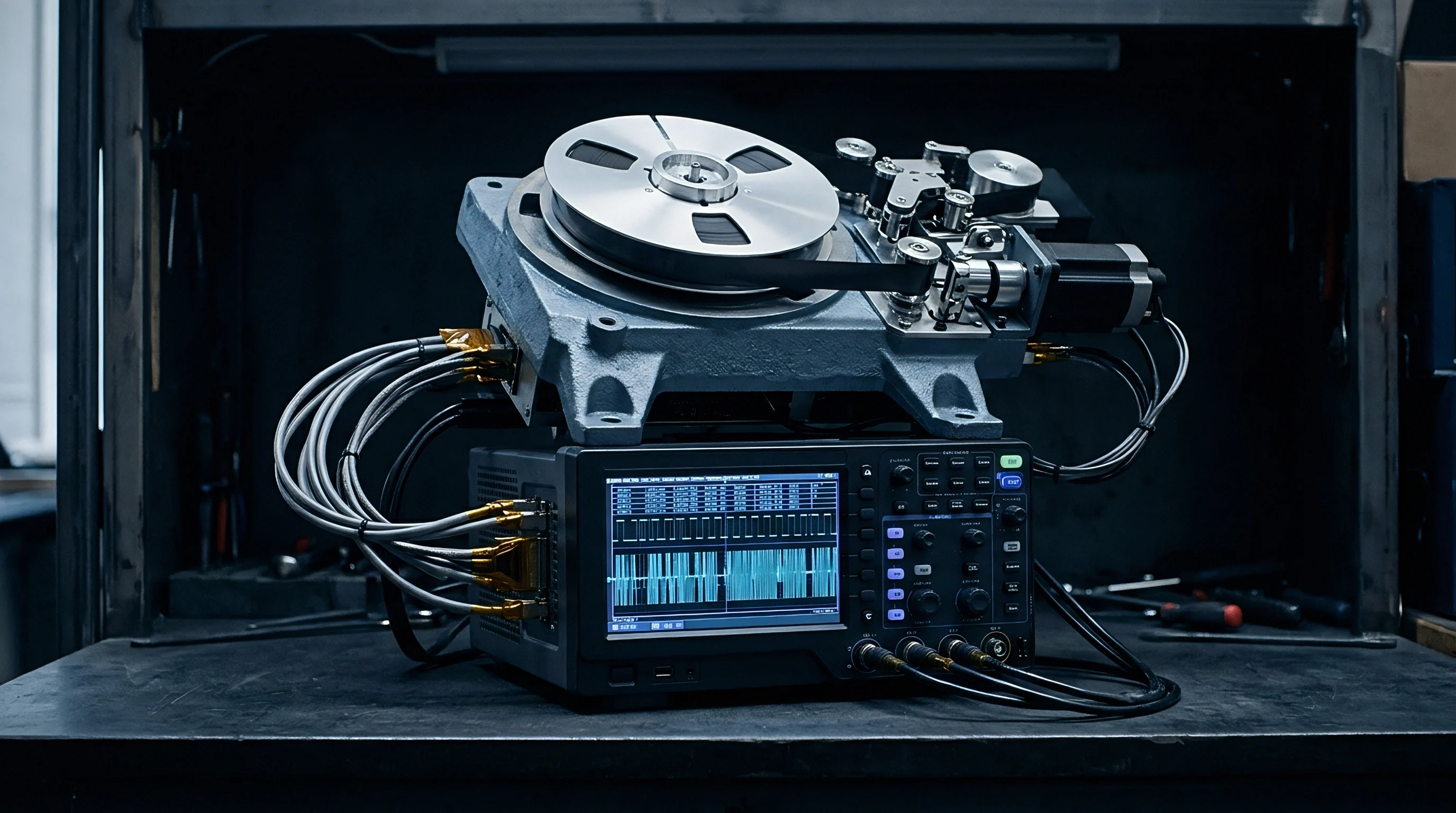
Silicon
Modification of physical dies within a sealed System in Package module changes the high-frequency parasitic profile before any outward physical footprint reflects the adjustment. Semiconductor foundries routinely execute lithographic node shrinks, die swaps for power management integrated circuits, or passive component repositioning to improve manufacturing yield. While these internal modifications leave pin configurations and primary clock rates untouched, altered trace geometries and transistor density variations shift harmonic emission structures.
Radio frequency performance inside an encapsulated environment depends on trace inductance, substrate capacitance, and near-field coupling between adjacent dies.

Integrated Circuit Shrinks inside Sealed Packages
Die shrink transitions from larger nodes down to advanced planar or FinFET processes alter semiconductor switching speeds and rise times. Harmonic peaks exceed threshold limits. Faster edge rates inject high-frequency noise into internal substrate distribution paths, elevating radiated emissions at unwanted harmonic frequencies.
When an internal radio front-end die shrinks, the reduced surface area concentrates electric field lines, shifting matching network parameters calibrated during initial market qualification. Test reports generated for the original silicon die fail to predict spurious radiation profiles produced by the smaller, faster die revision.
Subsystem isolation prevents unintended coupling. Shifts in internal routing paths to accommodate a smaller die change coupling between radio transmitters and adjacent power management circuitry. Inter-die cross-talk creates intermodulation products that fall directly into licensed spectrum bands.
Regulators evaluate transmitter approvals based on occupied bandwidth, unwanted emission masks, and out-of-band spurious emissions. A change inside the package that pushes spurious radiation past regulatory limits invalidates compliance certifications across multiple international jurisdictions.

Parasitic Shift Dynamics in Multi Chip Packaging
Substrate design within encapsulated modules relies on precise trace widths, ground plane clearances, and bond wire length configurations. Replacing an internal active component or altering bond wire loop heights introduces inductive variations that shift harmonic resonance peaks. A two-millimeter reduction in bond wire length alters inductance by approximately two nanohenries, shifting coupling frequencies into critical regulatory monitoring windows.
Antenna matching networks residing within the module die encapsulation experience impedance mismatches, lowering transmitter efficiency and driving unexpected radiated thermal dissipation.
Engineers evaluate these internal variations through low-power conducted measurements and near-field probe mapping before committing to full compliance chamber sweeps. Field testing isolates the drift. Initial laboratory sweeps identify whether internal modifications create broad spectral noise or discrete harmonic spurs.
Identifying these internal shifts early prevents costly rejections during formal cross-border regulatory submissions.
- Initial Risk Categorization Component engineering teams catalog silicon die changes against baseline regulatory filings to identify shifts in active RF circuitry or internal power distribution paths.
- Bench Level Radiated Pre Scanning Laboratory technicians execute near-field magnetic probe scans over the modified package module to map localized emission spikes before formal chamber entry.
- Permissive Change Determination Compliance officers evaluate observed spectral shifts against regional regulatory threshold tables to select between administrative updates and full retesting campaigns.
- Cross Border Documentation Submission Regulatory agents submit synchronized filing packages containing verified laboratory test data to target national approval authorities simultaneously.
Unplanned silicon changes that breach harmonic limits force immediate production halts while test laboratories re-evaluate the modified module under full compliance protocols.


Mold
Epoxy packaging compounds surrounding semiconductor dies act as dielectric media that directly influence high-frequency electromagnetic field propagation. Component manufacturers frequently change encapsulation resin suppliers or adjust transfer molding formulas to reduce moisture absorption and improve thermal dissipation. These material adjustments alter the relative permittivity and loss tangent of the encapsulant.
A shift in dielectric constant shifts the resonant frequency of internal printed antennas and embedded filter structures integrated within the module substrate.

Dielectric Constant Variations across Resin Lots
Formulation adjustments in packaging resins introduce batch-to-batch dielectric permittivity variations between three and eight percent. The dielectric constant shifts. Higher permittivity slows phase velocity along internal microstrip lines, detuning bandpass filters and shifting center frequencies downward.
For high-frequency modules operating in the 5 GHz to 60 GHz bands, small variations in resin density alter impedance matching networks calibrated to fifty ohms. The resulting mismatch increases return loss, forcing the power amplifier to draw additional current and generating thermal gradients across the module enclosure.
Attenuators stabilize the signal. Loss tangent increases in low-cost encapsulation compounds convert radio frequency energy directly into heat, reducing total radiated output power. Lower radiated power might seem beneficial for spurious limits, but it degrades intentional signal strength, causing the module to fail minimum effective isotropically radiated power requirements defined by national spectrum management authorities.
Regulatory test plans mandate verification of fundamental output power alongside spurious emissions whenever packaging materials change.

Thermal Stress and Parasitic Capacitance Shifts
Operating temperature fluctuations expand and contract package encapsulants, altering parasitic capacitive coupling between stacked dies and substrate traces. Capacitance shifts signal phase. Elevated thermal stress changes the physical distance between metal layers within multi-chip packages, shifting parasitic capacitance by fractional picofarads.
At millimeter-wave frequencies, fractional picofarad shifts move spurious resonances directly into restricted satellite navigation and cellular base station bands.
| Material Parameter | Nominal Value Range | Modification Delta | RF Performance Impact | Regulatory Retest Trigger Level |
|---|---|---|---|---|
| Relative Permittivity (Dk) | 3.2 to 4.5 | GreaterThan 0.15 | Shift in antenna resonance frequency and impedance mismatch | Radiated Spurious Emissions and Fundamental Power Scan |
| Dissipation Factor (Df) | 0.002 to 0.015 | GreaterThan 0.003 | Increased RF attenuation and localized thermal dissipation | Conducted Output Power and Band Edge Verification |
| Coefficient of Thermal Expansion | 8 to 18 ppm/deg C | GreaterThan 3.0 ppm/deg C | Parasitic capacitance drift across ambient operating range | Frequency Stability under Extreme Temperature Test |
| Moisture Absorption Rate | 0.10 to 0.35 percent | GreaterThan 0.05 percent | Dielectric loss escalation under humid operating environments | Environmental Conditioning Radiated Scan Sequence |
Laboratory testing confirms that encapsulants with higher moisture absorption rates experience dielectric degradation during environmental conditioning cycles. Moisture ingress increases resin permittivity, detuning internal filtering networks and elevating harmonic radiation during damp heat testing under standard environmental test clauses. Tracking encapsulation parameters across supplier batches maintains compliance margin stability.
ETSI EN 300 328 Clause 4.3.2.9 restricts radiated spurious emissions to -30 dBm over 1 GHz when encapsulation alterations shift fundamental power density.
Packaging vendors frequently state that changing epoxy resin suppliers maintains compliance because total radiated RF output power remains within three decibels of original factory tuning.


Scan
Chamber measurement campaigns form the core evidence required by regulatory bodies to validate modified System in Package radio modules. Anechoic testing evaluates whether internal silicon or package resin changes cause the subsystem to exceed maximum permissible exposure limits or leak energy into restricted frequency bands. Test engineers mount the device under test on a non-conductive turntable inside a semi-anechoic or fully anechoic chamber, positioning calibrated receiving antennas to measure radiated fields across three orthogonal axes.

Turntable Alignment and Harmonic Spurious Sweeps
Rotational measurements evaluate directional radiation intensity as the device turns through three hundred and sixty degrees. Reflections alter the radiation pattern. Receiving antennas scan elevated heights from one to four meters to capture peak field strength across horizontal and vertical polarizations.
Automated spectrum analyzers execute peak, quasi-peak, and average detector sweeps across frequency bands spanning nine kilohertz up to the tenth harmonic of the highest operational frequency. When internal module structures change, spatial distribution of spurious emissions shifts, creating narrow beam lobes that escape single-angle pre-scans.
Chamber calibration demands steady power. Test software forces the module to operate at maximum output power across low, middle, and high operational channels while modulating data streams to simulate worst-case operational duty cycles. Conducted measurements at the module antenna port verify whether spurious signals originate within active transceiver silicon or couple through power trace lines.
Radiated emissions testing isolates secondary radiation emitted directly from the package substrate and connected host trace layouts.
- Mount module on calibrated low-permittivity support structure inside anechoic chamber.
- Establish full-power continuous transmission state via factory test mode control software.
- Execute automated frequency sweep from 30 MHz to 1 GHz using bi-conical and log-periodic antennas.
- Perform high-frequency harmonic scan up to 40 GHz using calibrated horn antennas and low-noise pre-amplifiers.
- Record peak emission levels and calculate compliance margins against target regional limits.

Specific Absorption Rate Boundary Evaluation
Human exposure assessment relies on precise Specific Absorption Rate (SAR) probe sweeps within phantom tissue models when modules operate near the human body. Internal modifications altering RF front-end matching alter near-field reactive energy distribution, changing local thermal energy absorption rates. Automated robot-mounted E-field probes sweep three-dimensional grids inside liquid-filled tissue phantoms to locate localized SAR hotspots.
Uncalibrated probes produce invalid figures.
| Regulatory Authority | Jurisdiction | Permissive Change Class | Mandatory Retest Scope | In-Country Agent Requirement |
|---|---|---|---|---|
| FCC | United States | Class II Permissive Change | Radiated spurious emissions, band-edge compliance, and SAR re-evaluation | US-based Telecommunications Certification Body filing agent |
| EU RED (ETSI) | European Union | Technical Construction File Update | Article 3.2 spectrum efficiency scans and Article 3.1b EMC verification | EU Authorized Representative holding Technical File |
| MIC (Giteki) | Japan | Type Certified Modification | Conducted output power, antenna pattern, and spurious emissions over 1 GHz | Local Japanese license holder of record |
| SRRC | China | Radio Transmitting Modification | In-country laboratory retest of frequency tolerance, spurious, and occupied bandwidth | China-based legal entity applicant |
| KC | South Korea | Change of Certified Equipment | EMC radiated immunity, power conducted emissions, and RF spectrum testing | Korean local representative registration holder |
When SAR evaluations indicate increased localized absorption following a silicon shrink or power amplifier swap, host integration manual rules alter minimum separation distance guidance. Changing separation distance requirements forces physical housing redesigns for portable end-use products.
Laboratory data captured during radiated emission and SAR sweeps enters formal certification reports submitted to qualified certification bodies. Antenna gain tables must match original filing conditions to prevent rejection during regulatory review cycles.


Equivalence
Demonstrating technical similarity between original and modified encapsulated subsystems allows manufacturers to optimize regulatory retesting scope. Standardized engineering rationale documentation links measured physical parameters to historical compliance baselines, defending why specific full-scale test sequences can be omitted. Regulators evaluate equivalence claims against published permissive change criteria, inspecting whether fundamental radio architecture remains identical.

Technical Construction File Risk Assessment Frameworks
European conformity assessments under the Radio Equipment Directive rely on manufacturer-compiled Technical Construction Files (TCF) backed by comprehensive risk assessments. The European market operates on self-declaration backed by mandatory risk analysis, whereas North American rules demand explicit agency grants before commercial distribution. TCF documentation maps internal package modifications to harmonized standards clauses, proving that altered package resins or passive die swaps maintain compliance across all applicable safety and spectrum directives.
Engineers document signal path changes, thermal envelope shifts, and pin-to-pin compatibility metrics within the assessment file. Local agents verify test reports. Detailed risk evaluations state explicitly why certain harmonized standard clauses remain unaffected by internal module revisions.
If internal modification alters RF power output by more than half a decibel, regulatory authorities reject equivalence claims, requiring fresh compliance filings.

When SiP Package Revisions Require Permissive Filings?
United States rules under FCC KDB 996369 govern modular transmitter modifications and host integration requirements. Modifications altering active RF components, internal shielding configurations, or fundamental power settings classify as Class II Permissive Changes, demanding laboratory test reports and formal certification body approval before product shipment. Class I Permissive Changes apply exclusively to minor adjustments that maintain identical electrical characteristics and produce lower emission levels than original certified baselines.
- Conducted Output Power Limits Modifications that increase conducted RF output power beyond original certified tolerances trigger mandatory regulatory filings across all major global markets.
- Antenna Trace Geometry Changes Altering substrate microstrip lines or matching component values inside the encapsulated package invalidates modular transmitter grants.
- Shielding Enclosure Integrity Removing or redesigning internal integrated metal shielding cans alters radiated immunity and harmonic suppression characteristics.
- Pin Layout and Interface Functions Modifying host interface pin definitions or digital control logic triggers re-evaluation under industrial electromagnetic compatibility standards.
Subsystem modifications passing initial risk screening proceed directly to abbreviated retest plans focused solely on affected frequency bands. Documented risk assessments justify reducing chamber time while maintaining complete regulatory compliance records.
Radiated harmonic emissions increase by 4.2 dB at 7.2 GHz when die shrink reduces internal ground plane decoupling distance below 80 micrometers.
ISO/IEC 17025 laboratory accreditation rules demand that engineering equivalence reports state explicit measurement uncertainties and calibration traceability chains for all comparative RF data.

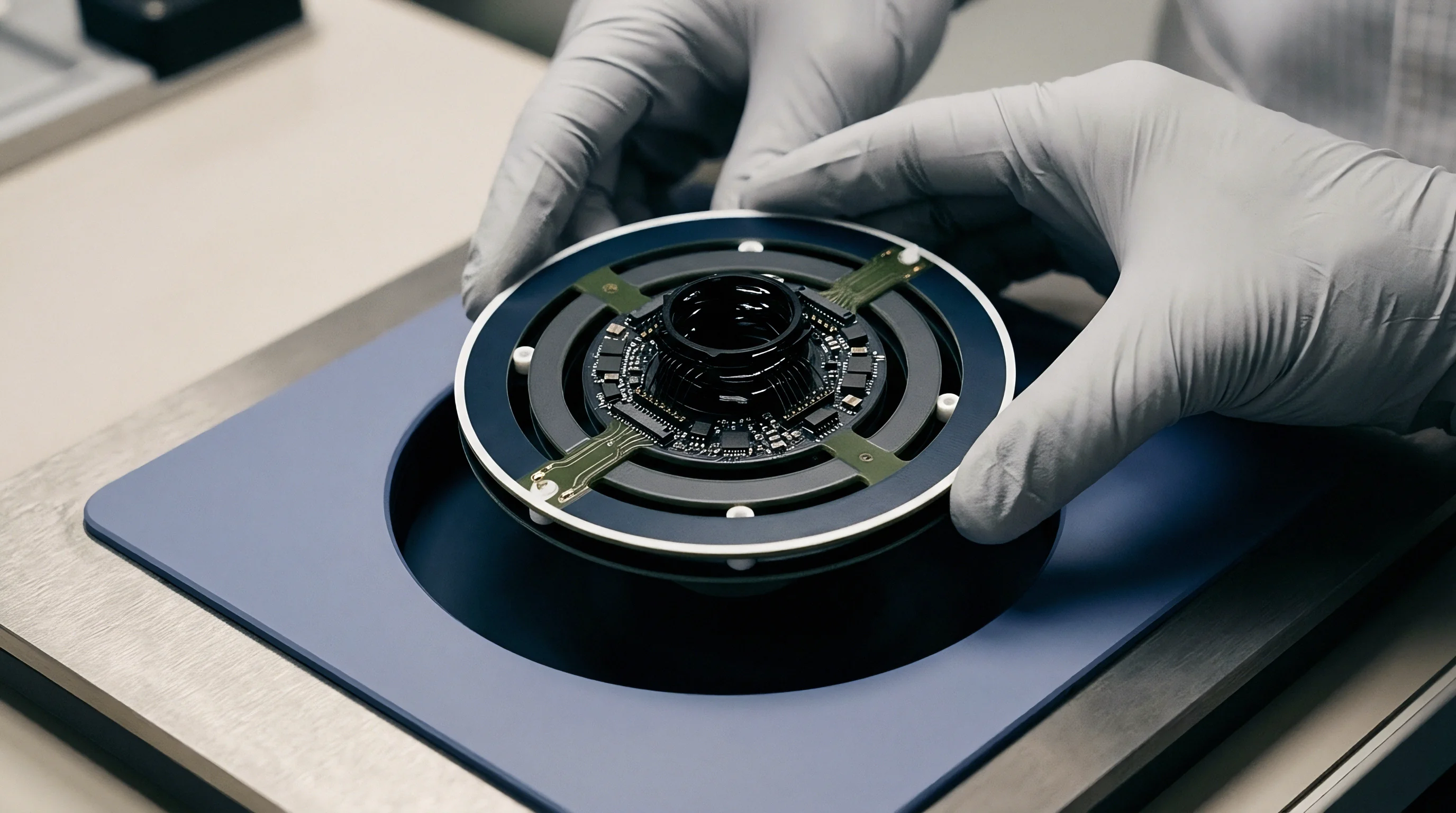
Dossier
Managing regulatory modification files across multiple international target markets demands structured lead-time arithmetic and clear financial modeling. Approval timelines vary significantly between self-declaration markets like the European Union and mandatory certification regimes in China, Japan, and South Korea. Scheduling chamber bookings, sample logistics, and local agency reviews determines whether commercial product launch windows remain on target.

Lead Time Arithmetic across Testing Laboratories
Global regulatory retesting programs depend on laboratory chamber availability and test sample readiness. Preparing test samples requires flashing dedicated factory test mode firmware, attaching high-frequency coaxial pigtails to internal package microstrips, and validating conducted power levels before shipping samples abroad. Laboratory queues for accredited three-meter and ten-meter anechoic chambers routinely run between four and eight weeks out.
Retesting timelines expand exponentially when cross-border filings require physical sample submissions to national regulatory test centers. China SRRC and South Korea KC regimes require in-country testing within designated domestic laboratories, adding shipping, customs clearance, and local agency queue delays to the certification schedule. Customs detains the unlabelled container.
Efficient planning sequences pre-qualification bench testing before dispatching physical samples to international test sites.

Multi Jurisdiction Retest Campaign Financial Model
Financial commitments required for multi-market modification retesting extend beyond basic laboratory hourly chamber fees. Budget projections account for local agent representation, translation of technical documentation, certificate modification fees, and potential production line holds. The financial model compares targeted partial retesting strategies against full re-certification costs for every destination market.
| Market Regime | Filing Classification | Laboratory Chamber Hours | Estimated Agency Fees (USD) | Total Lead Time (Weeks) |
|---|---|---|---|---|
| United States (FCC) | Class II Permissive Change | 12 to 24 Hours | 3,500 to 5,500 | 4 to 6 Weeks |
| European Union (CE) | TCF Risk Update & Declaration | 8 to 16 Hours | 1,500 to 3,000 | 2 to 3 Weeks |
| Japan (MIC Giteki) | Attribute Modification File | 16 to 32 Hours | 4,000 to 6,500 | 5 to 7 Weeks |
| China (SRRC) | Modification Application | 24 to 48 Hours | 8,000 to 12,000 | 8 to 12 Weeks |
| South Korea (KC) | Certificate Revision Filing | 16 to 30 Hours | 5,000 to 8,500 | 6 to 9 Weeks |
Budgeting models incorporate contingency reserves to cover retest cycles when initial chamber scans reveal unexpected harmonic spurs. Retesting delays increase total campaign costs while consuming critical market exclusivity windows for updated electronic products.
- Hardware Sample Provisioning Assembly of customized test boards with exposed RF test ports, dedicated power supplies, and serial interface control lines.
- Firmware Test Binary Validation Delivery of stabilized test firmware capable of forcing continuous transmission, hopping disablement, and modulation state selection.
- Regulatory Attestation Statements Formal letters signed by corporate officers detailing exact physical and electrical modifications executed within the package module.
- Comparative Measurement Data Sets Side-by-side tabular data comparing original baseline emissions against modified module performance across all operational modes.
The grant remains unamended. Administrative oversights in dossier compilation stall regulatory reviews, forcing engineering teams to answer technical clarification requests while launch deadlines pass.
Filing for a regulatory update before completing radiated emissions validation guarantees duplicate chamber bookings when harmonic drift exceeds initial estimates.
Submitting completed retest files to parallel international authorities simultaneously minimizes overall time-to-market latency compared to sequential filing strategies.


Grant
Final regulatory certification grants outline exact operational boundaries, host integration rules, and labeling requirements that bind host device manufacturers. Modifying encapsulated modules alters the legal coverage provided by modular approval grants, shifting legal liability back to host integrators if modification limits are breached. Certification record maintenance protects market access and prevents product seizures during routine market surveillance audits.

Host Integration Obligations and Boundary Restrictions
Modular grants grant host integrators authorization to install approved radio subsystems without repeating full transmitter authorization testing, provided integration instructions are strictly followed. Modifications to internal package silicon or mold compounds alter the underlying conditions of the original grant certificate. If internal changes alter output power or harmonic radiation structures beyond allowable permissive change thresholds, the original modular grant stops covering the modified module.
Host manufacturers must update product user manuals, technical compliance files, and external enclosure packaging when modular grant numbers or permissive change conditions change. Customs inspection agents verify physical device markings against online regulatory databases during entry clearance. Discrepancies between printed equipment identifiers and official database grant records cause immediate customs holds and shipment rejections at port-of-entry facilities.

Market Enforcement and in Country Verification Audits
National spectrum enforcement agencies regularly purchase commercial end-user products off retail shelves to perform market surveillance compliance verification scans. Regulatory audit laboratories strip down host devices, inspect internal package module markings, and execute radiated spurious emission sweeps in accredited chambers. When market surveillance identifies non-compliant harmonic emissions or unauthorized silicon modifications, regulators issue formal compliance notices, recall mandates, and financial administrative penalties.
Audit findings of non-compliance trigger full sales bans and force costly field recall actions across affected retail networks. Maintaining precise documentation linking internal engineering changes to accredited retest reports preserves regulatory defense integrity under enforcement scrutiny.
Customs authorities inspect physical modular markings against published database records during cross-border clearance.
Whether global regulatory bodies will eventually establish mutual recognition treaties that accept standardized single-point equivalence reports for encapsulated subsystem modifications remains an unresolved question facing cross-border hardware supply chains.