Calculating Tooling Amortization Balances in Semi Custom Module Contracts
Calculate module tooling balances by deducting verified landed unit amortization credits from the non-recurring principal, settling shortfalls via lump sum.

Stamp

Non-Recurring Engineering Tooling Assets
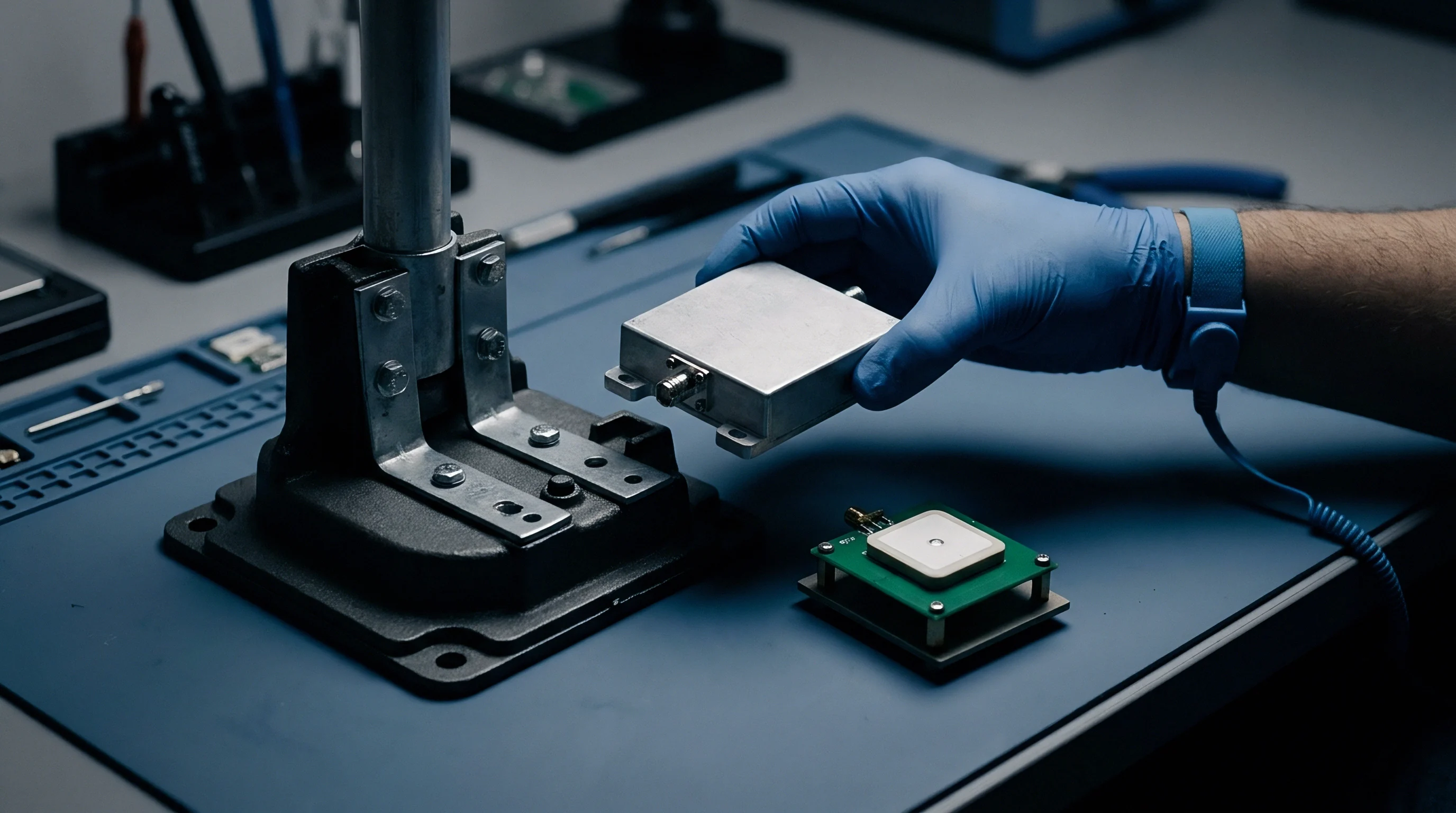
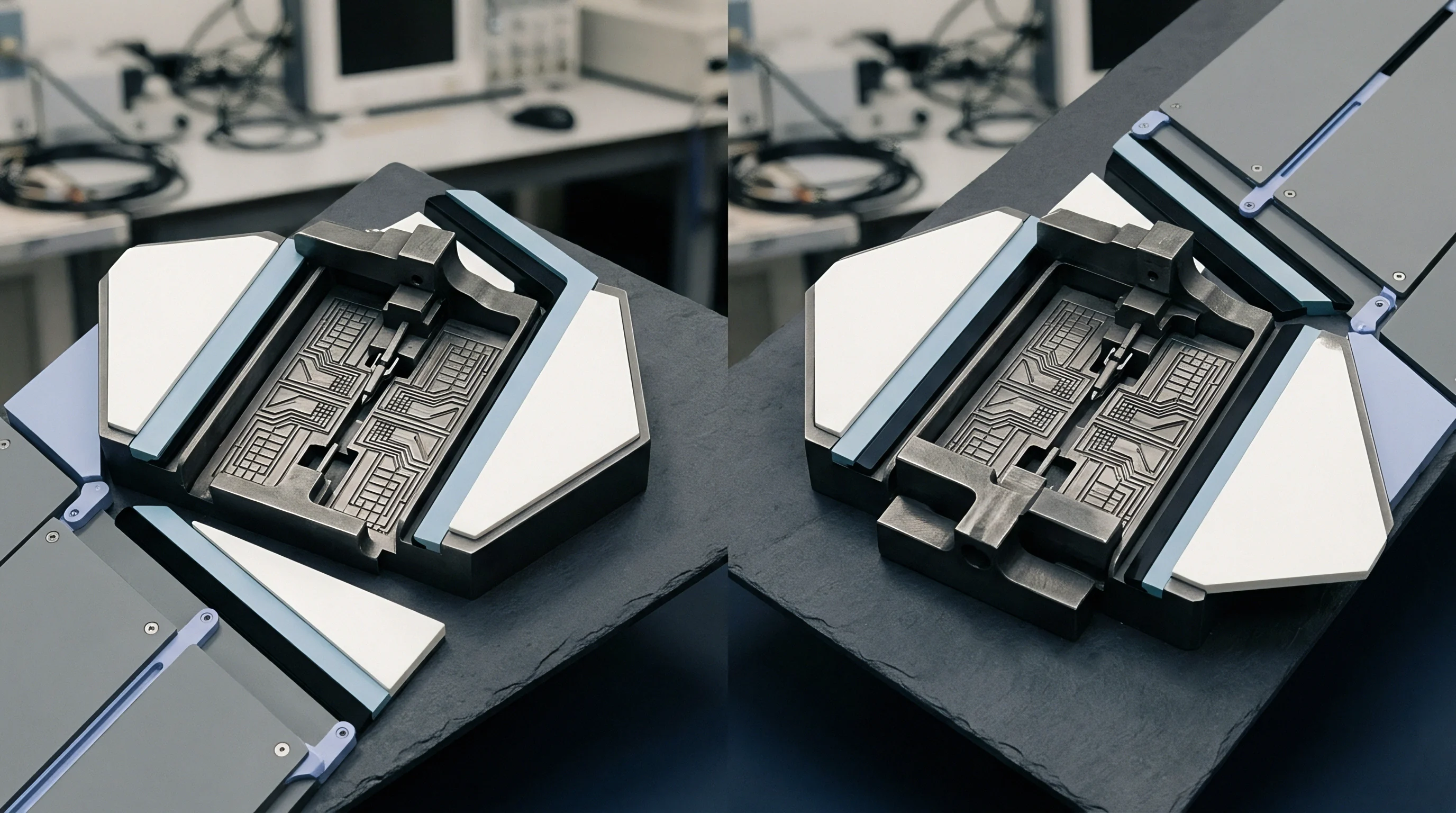
Procuring semi-custom modules usually requires modifying standard platform designs ~ rerouting substrates, tweaking surface-mount pick-and-place files, and building specialized tooling for localized mechanical changes. These physical alterations require upfront non-recurring engineering (NRE) expenditures. For a wireless module or power conversion board, the physical tooling suite might include surface-mount stencils, custom spring-pin test sockets, RF shielding injection molds, and automated programming fixtures.
Suppliers rarely absorb these capital expenditures into overhead; they either bill the tooling total upfront as an NRE charge or amortize it across a contractually defined production volume.
When a contract spreads asset costs across production runs, each shipped module carries a calculated amortization adder on its invoice. This commercial arrangement ties equipment lifecycles directly to the balance sheet. Because steel mold dies and acrylic test frames wear out at very different rates under thermal and mechanical stress, separating fixed tooling investments from recurring operational overhead is necessary to track unamortized tooling debt accurately.
A buyer who separates fixed fixture fabrication charges from variable module assembly costs prevents recurring line-maintenance adders from diluting physical asset equity.
Physical Asset Classification in Module Adaptation
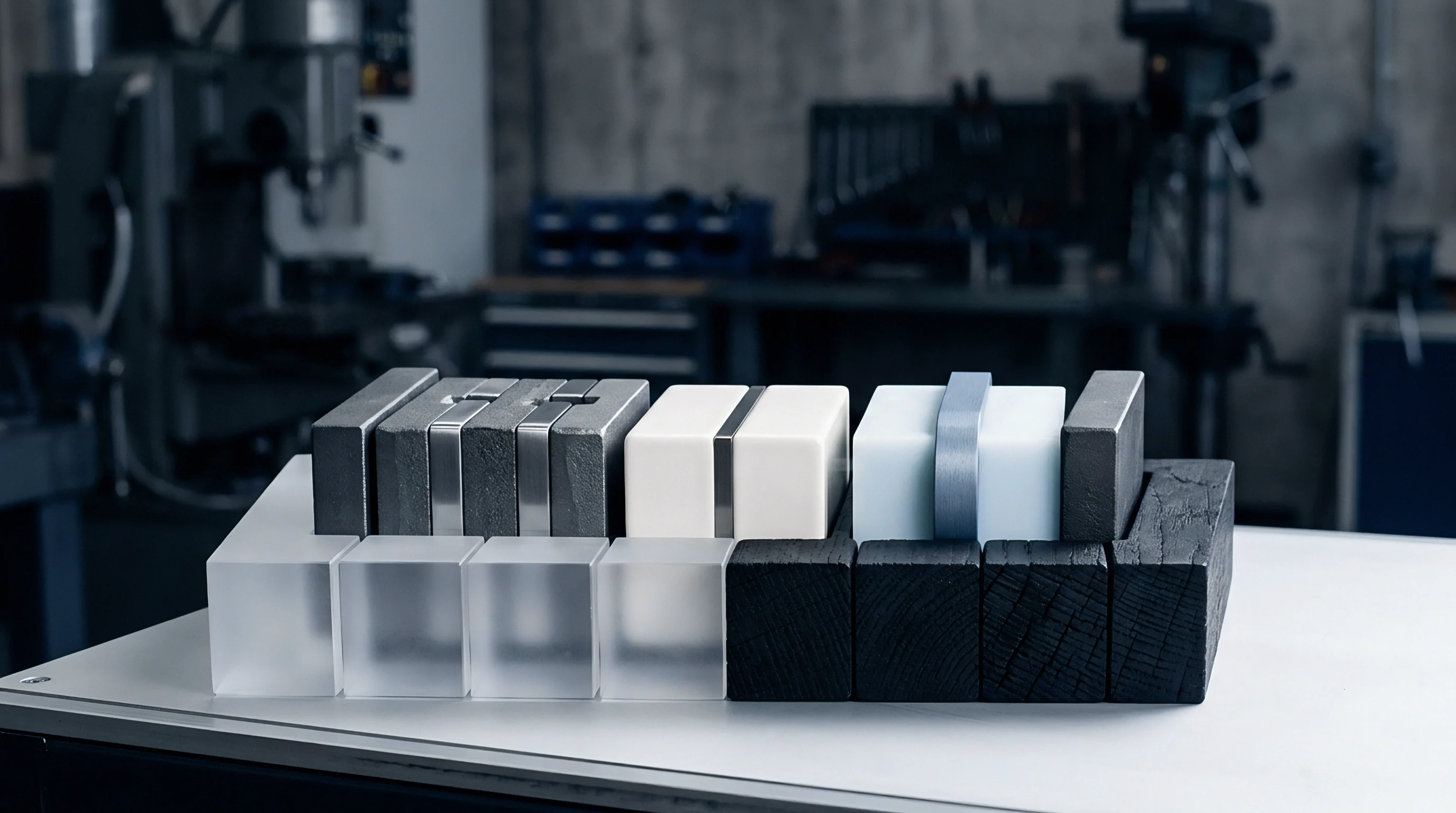
Classifying physical tooling requires mapping each custom item to its expected operating lifespan and ownership boundary. A high-volume stamping die for an integrated heat spreader can survive millions of strikes, while a circuit board test socket using Pogo pins may suffer contact fatigue after fifty thousand insertions. Standard physical tooling categories, expected lifespans, and contract allocation methods are summarized below.
| Tooling Asset Type | Physical Composition | Expected Lifespan (Cycles) | Standard Allocation Model |
|---|---|---|---|
| SMT Paste Stencils | Electroformed Nickel Foil | 100,000 prints | Upfront Non-Recurring Engineering |
| Custom RF Shield Dies | Tungsten Carbide Stamping Set | 1,500,000 strikes | Per-Unit Amortization Adder |
| Injection Mold Cavities | Hardened P20 Tool Steel | 500,000 shots | Per-Unit Amortization Adder |
| Functional Test Jigs | FR-4, Acrylic, Pogo Pins | 50,000 insertions | Sinking Fund with Pin Maintenance Adder |
| Laser Cut Carrier Trays | High-Density Polyethylene | 20,000 passes | Recurring Manufacturing Overhead |
Disputes often arise when physical fixtures suffer premature mechanical fatigue before reaching the target amortized volume. If an injection mold cavity cracks at two hundred thousand cycles, the contract must clarify whether the vendor or the buyer funds the replacement mold to complete the remaining balance.
Arithmetic

Sinking Fund Balance Decay Equations
Calculating the declining balance of a tooling fund follows a straightforward linear reduction equation, provided production volumes remain steady. The initial NRE total forms the starting balance, and each accepted module decrements this balance by the fixed unit amortization adder specified in the statement of work. The formula governing the remaining unamortized tooling balance after a given batch is expressed as follows:
Unamortized Balance = Initial Tooling Cost – (Invoiced Unit Volume x Per-Unit Amortization Adder)
When custom tooling adaptations require mid-program engineering revisions, incremental charges are added to the remaining principal balance. The updated equation splits the principal into original and secondary engineering pools, adjusting the per-unit adder across remaining contract volumes.
Worked Example of Amortization Adder Calculations
Consider a semi-custom cellular telemetry module where the buyer requests a customized pin-header interface and an aluminum heat-sink frame. The factory quotes $60,000 in non-recurring tooling to fabricate the frame’s injection mold and assemble three dedicated functional test fixtures. Amortizing this $60,000 expense across an initial baseline order of 30,000 units yields a baseline per-unit amortization adder of $2.00.
If delivery spans four quarterly tranches but customer demand fluctuates mid-year, actual shipped quantities will vary. The schedule below tracks balance decay across these variable volume shipments.
| Tranche | Delivered Volume | Unit Adder ($) | Tranche Credit ($) | Remaining Tooling Balance ($) |
|---|---|---|---|---|
| Contract Start | 0 | 0.00 | 0.00 | 60,000.00 |
| Quarter 1 | 8,000 | 2.00 | 16,000.00 | 44,000.00 |
| Quarter 2 | 10,000 | 2.00 | 20,000.00 | 24,000.00 |
| Quarter 3 | 5,000 | 2.00 | 10,000.00 | 14,000.00 |
| Quarter 4 | 4,000 | 2.00 | 8,000.00 | 6,000.00 |
After four quarters, 27,000 total modules have shipped, leaving an unamortized balance of $6,000. If the buyer decides to sunset the product at this stage, contract terms dictate how this remaining $6,000 balance is settled.
Under a linear $2.00 per-unit adder schedule on a $60,000 principal, a 10 percent volume shortfall at contract end leaves exactly $6,000 in unamortized vendor debt that demands immediate lump-sum reconciliation.
Discrepancies in tooling balance tracking generally stem from operational disconnects between shop-floor counts and accounting ledgers. Several common accounting breakdowns distort amortization balances during active production runs:
- Scrapped Board Inclusions occur when a factory applies amortization credits to modules that fail line testing and never ship, artificially over-crediting the balance.
- Unregistered Engineering Changes happen when minor mold adjustments are performed without updating the balance ledger, causing unexpected balance expansion at closeout.
- Volume Tier Misallocations arise when unit amortization adders are not adjusted after order volumes cross contracted tranche thresholds.
- Currency Rate Shifts distort balance tracking in cross-border contracts when tooling costs are incurred in one currency while unit adders are billed in another.
Ignoring yield deductions when calculating amortization credits distorts asset valuations. Buyers end up paying full amortization fees on assemblies scrapped on the factory floor, creating financial liabilities that surface during end-of-life contract auditing.


Paperwork
Contractual Sinking Fund Provisions
Legal agreements governing semi-custom electronics manufacturing must isolate non-recurring tooling balances within explicitly defined schedules. A robust Master Services Agreement separates the base module price from its amortization component, ensuring that once the targeted volume threshold is reached, the amortization adder automatically drops off the invoice.
Contract clauses must specify the exact trigger for balance decrements. Decrements typically take effect upon passage of title and risk of loss, tied directly to agreed Incoterms such as Free Carrier (FCA) at the factory floor or Delivered Duty Paid (DDP) at the destination warehouse.

What Happens to Unamortized Balances When Engineering Changes Retire the Tooling?
Engineering Change Orders (ECOs) during active production frequently modify physical tooling layouts. When a microcontroller revision requires shifting a connector cutout on an injection-molded enclosure, existing steel mold core inserts become obsolete, usually before the original tooling balance is fully paid off.
The contract must specify whether the remaining unamortized balance of the retired tooling gets rolled into the NRE cost of the new fixtures or settled immediately via a discrete invoice. Rolling balances forward increases the per-unit adder for subsequent runs and pushes out the break-even volume threshold.
Per IPC-2581 fabrication transfer rules, custom tooling modifications executed under an Engineering Change Order invalidate prior mechanical tolerances and demand immediate write-down or balance rollover of obsolete physical fixtures.
Maintaining clear tooling balance visibility requires specific procedural clauses in the commercial contract:
- Explicit Balance Decoupling mandates that every module invoice itemizes the base assembly cost and the tooling amortization fee as separate line items.
- Auditable Production Ledgers require the supplier to provide monthly unit shipping logs linked directly to the unamortized balance statement.
- Premature Sunset Settlement Terms define a fixed payment window, typically thirty days from notice, for clearing unrecovered tooling balances if a program halts early.
- Title Transfer Milestones establish that legal ownership of physical dies shifts to the buyer immediately upon full payment of the amortization principal.
In accordance with standard procurement governance provisions, if a buyer elects to terminate a module supply contract prior to complete balance liquidation, the supplier retains physical possession of all custom fixtures until the outstanding unamortized balance is paid in full.
Friction
Discrepancies in Volume Invoicing
Production reality inevitably disrupts theoretical amortization schedules. Factory scrap rates, incoming quality rejections, customer returns, and line-side damage create persistent gaps between the total units manufactured and the net volume accepted and paid for.
Disputes frequently arise over whether amortization applies to every unit entering final test or strictly to accepted modules reaching commercial inventory. Because tooling is used on every unit passing through production regardless of test results, clarifying whether credits depend on production entry or final acceptance is essential to avoid mid-contract friction.
Invoiced unit volumes, supported by signed receiving reports, serve as the sole authoritative basis for calculating tooling balance reductions.
Audit Sequences for Line Losses and Scrap
Reconciling disputed tooling balances demands a structured audit comparing factory production logs against financial disbursements:
- Request the supplier’s serial-number-level production log for all semi-custom module batches manufactured under the contract code.
- Cross-reference factory production logs against warehouse goods-received notes to isolate units lost to shipping damage, customs holds, or factory-side scrap.
- Filter out all non-accepted and returned units from the gross production total to establish the true net amortizable volume.
- Multiply the net amortizable volume by the contracted per-unit adder figure to derive the validated cumulative amortization credit.
- Subtract the validated cumulative credit from the initial tooling principal to determine the correct remaining balance.
Attributing early scrap losses to restrictive buyer specifications does not justify offsetting unamortized tooling balances with material scrap adjustments unless the contract explicitly links yield guarantees directly to amortization calculations.


Offset

Reconciliation at Contract Expiration
When a module product reaches end-of-life or meets its contracted volume threshold, the tooling amortization account undergoes final reconciliation. If total shipped volumes match the initial forecast exactly, the balance reaches zero and the unit price automatically drops by the amount of the amortization adder for any subsequent production extensions.
When contract volumes fall short of projections, the unamortized balance must be resolved through financial offset or direct buyout. Common contract closeout scenarios and their standard commercial resolution mechanisms are summarized below.
| Contract Scenario | Volume Status | Balance State | Standard Resolution Action |
|---|---|---|---|
| Full Volume Achievement | 100% of forecast shipped | Zero balance | Remove unit adder; transfer physical asset title to buyer |
| Volume Over-run | Exceeds forecast threshold | Zero balance achieved early | Revert to baseline unit price immediately upon threshold reach |
| Premature Buyer Termination | Shortfall against forecast | Positive unamortized balance | Lump-sum buyout paid by buyer within 30 days |
| Supplier Default / Breach | Shortfall due to vendor failure | Positive unamortized balance | Balance forfeited by vendor; immediate tooling release to buyer |
| Engineering Change Retirement | Tooling rendered obsolete | Residual balance remains | Balance absorbed into new NRE or settled via lump-sum ECO invoice |
Tooling Title Transfer and Buyout Settlement Mechanics
Settling an outstanding balance through a lump-sum buyout requires physical verification of the tooling assets. Upon receipt of the settlement wire, the supplier updates its asset registry to reclassify the dies, molds, and jigs from vendor-administered assets to buyer property, issuing a formal bill of sale alongside tool drawings, maintenance records, and wear-analysis reports.
If the buyer plans to transfer custom tooling to a second-source contract manufacturer, the original supplier must package the fixtures to international transit standards. Responsibility for crating, rust-proofing, and shipping costs is governed by the exit provisions defined in the original statement of work.