Resolving Cross Border Escrow Release Triggers for Proprietary Radio Frequency Matching Networks
Cross-border RF escrow triggers require automated VNA S-parameter validation, bit-for-bit compiler verification, and independent technical arbitration clauses.


Custodian
International intellectual property deposits for radio frequency hardware rely on independent holding agents to bridge distinct legal regimes. When matching circuit schematics, board layouts, and adaptive tuning algorithms cross borders, these agents often lack the technical infrastructure to verify that deposited files match contractually mandated release specifications. Standard escrow agreements store source code in compressed repositories without checking whether the files compile into executable bitstreams or correspond to actual printed circuit board revisions.
That disconnect creates severe technical exposure when contract disputes or supplier insolvencies trigger a release.
Legal entities managing hardware assets in multi-jurisdictional supply chains need clear verification protocols at the time of deposit. Overseas depositories frequently operate under civil law, where technical default requires a judicial determination before the buyer receives file access. Domestic depositories under common law allow automated release based on technical affidavits, as long as the contract specifies objective physical metrics.
Requiring dual-signoff deposit verification ensures the agent holds verifiable manufacturing collateral rather than incomplete schematic drawings.

Cross Border Escrow Deposit Architectures
Holding arrangements that span multiple jurisdictions require precise mechanical definitions for technical deposits. Depositories accepting high-frequency board designs must archive human-readable documentation alongside machine-executable fabrication files. Vendor lock-in occurs when deposited archives leave out proprietary design rules or component parameter libraries needed to compile matching layout netlists.
- Incomplete Board Fabrication Packages Archives contain static Gerber files missing stack-up layer definitions, dielectric constant specifications, or copper weight requirements for high-power impedance matching boards.
- Uncompiled Firmware Repositories Source code archives lack specific toolchain compiler versions, dynamic link libraries, or build scripts needed to generate functional adaptive matching binaries.
- Missing Test Bench Configurations Deposited packages omit Vector Network Analyzer calibration profiles and automated test software scripts required to verify target performance metrics.
- Proprietary Library Omissions Gerber exports exclude specialized component footprints and high-frequency passive S-parameter models proprietary to the initial design house.
Depositories operating in Asian manufacturing hubs frequently require localized legal structures to permit intellectual property transfers to Western entities. Placing deposits with a neutral party in a jurisdiction with established technical arbitration frameworks avoids regional judicial delays during default proceedings. Structuring escrow through dual-custody entities keeps technical assets accessible despite local trade restrictions or corporate restructurings.
| Jurisdiction Region | Deposit Audit Protocol | Legal Release Mechanism | Average Transfer Latency | Technical Asset Protection Level |
|---|---|---|---|---|
| North America | Automated checksum validation and build script compilation check | Ex parte affidavit release upon technical default declaration | 5 working days | High enforcement of trade secret provisions |
| European Union | Third-party technical auditor physical validation pass | Joint instruction certificate or emergency arbitration order | 14 working days | Strict compliance with cross-border transfer laws |
| East Asia | Local escrow agent inventory audit and seal verification | Local court injunction or bilateral release authorization | 30 working days | Variable protection depending on localized legal entity registration |
The escrow release clause executes automatically upon neutral auditor confirmation that return loss falls below twelve decibels across three consecutive manufacturing batches.
Binding technical deposits depend on explicit contract language governing file verification. A typical compliance clause specifies: “The escrow agent shall release the complete design package to the buyer within five business days following receipt of an independent technical auditor report confirming unmitigated hardware failure or vendor insolvency.”

Bench
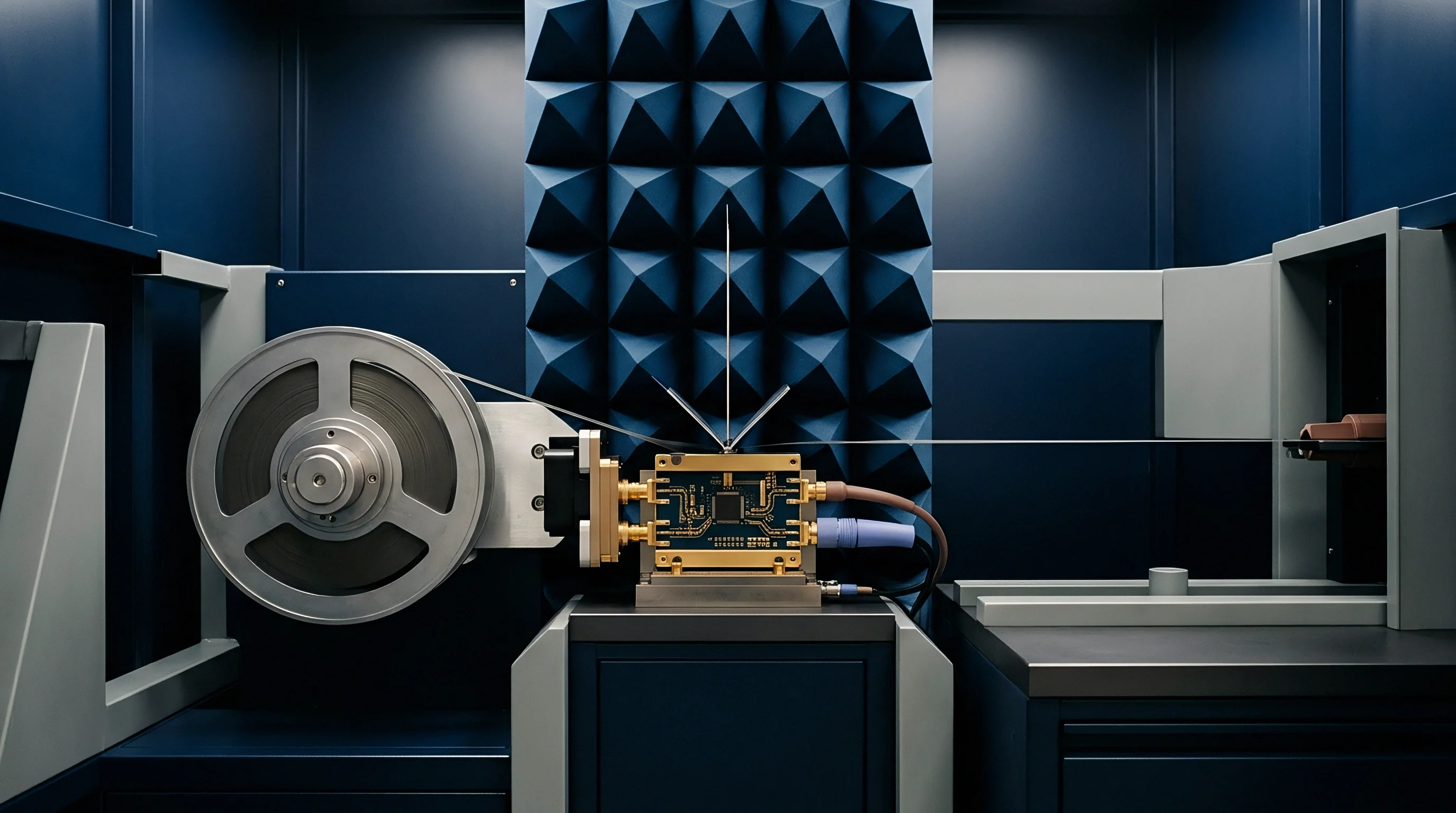
Objective physical metrics form the core of effective release conditions for proprietary matching hardware. Radio frequency matching circuitry maximizes power transfer between variable loads ~ like plasma chambers or dynamic antenna elements ~ and solid-state power generators. Static visual code inspections cannot prove operational performance.
Release conditions must instead set explicit RF performance bounds measured on calibrated test benches with standardized instrumentation.
Automated test procedures measure performance across defined frequency spectrums, ambient temperature ranges, and dynamic load impedance boundaries. Operating at frequencies from 13.56 megahertz up to 28 gigahertz, high-power matching hardware experiences thermal drift that shifts passive component values and semiconductor tuning states. Escrow contracts defining release triggers must specify exact return loss thresholds, total efficiency percentages, and tuning convergence times under severe impedance mismatch conditions.
Automated Impedance Validation Frameworks
Verifiable physical triggers require instrumented test environments set up for standardized S-parameter sweeps. Vector network analyzers measure scattering parameters to evaluate input reflection coefficients, insertion loss, and phase stability across the target operating band. Automated test software then controls mechanical or solid-state impedance tuners to simulate load reflection coefficients across all four quadrants of the Smith chart.
| Performance Parameter | Target Specification | Test Condition and Instrumentation | Escrow Release Defect Threshold |
|---|---|---|---|
| Input Return Loss (S11) | Greater than 20 dB | Continuous wave at nominal frequency, 50 Ohm reference, VNA measurement | Less than 12 dB for continuous 30 seconds |
| RF Power Efficiency | Greater than 94 percent | Full rated RF power into nominal load, calibrated directional coupler | Less than 88 percent at rated thermal equilibrium |
| Tuning Speed | Less than 50 milliseconds | Load VSWR step change from 1.5:1 to 5:1, automated controller tracking | Greater than 150 milliseconds to reach matched state |
| Thermal Drift Stability | Delta S11 less than 1.5 dB | Temperature chamber cycle from 0 to 70 degrees Celsius at full load | Exceeding 4.0 dB shift across operational spectrum |
Because silicon variance shifts tuning targets and component aging degrades tuning speed over operational lifecycles, standardized testing accounts for component tolerances by defining statistical pass rates across multiple test boards rather than relying on single board measurements.

Is Automated Vector Network Analyzer Verification Legally Binding?
Instruments tied to automated test software generate cryptographically signed logs that serve as objective evidence during disputes. Calibration standards traceable to national metrology institutes validate the physical accuracy of this data. Connecting vector network analyzers to automated test benches running open-source Python or LabVIEW verification scripts removes subjective interpretation from escrow release evaluations.
System efficiency measured under nominal 50 Ohm load conditions must exceed ninety-two percent at 13.56 megahertz with RF power input reaching two kilowatts continuous wave.
Physical measurement protocols require exact calibration standards to prevent false triggers. Test software records raw S-parameter files alongside automated Pass or Fail indicators. When automated test scripts show repeatable compliance failures across three independent test cycles, technical conditions for escrow release are satisfied.
Deploying incorrect matching network topologies in high-power applications causes severe reflected power spikes, leading to catastrophic amplifier failure, destroyed silicon components, and millions of dollars in unrecoverable field failure liabilities.


Verification
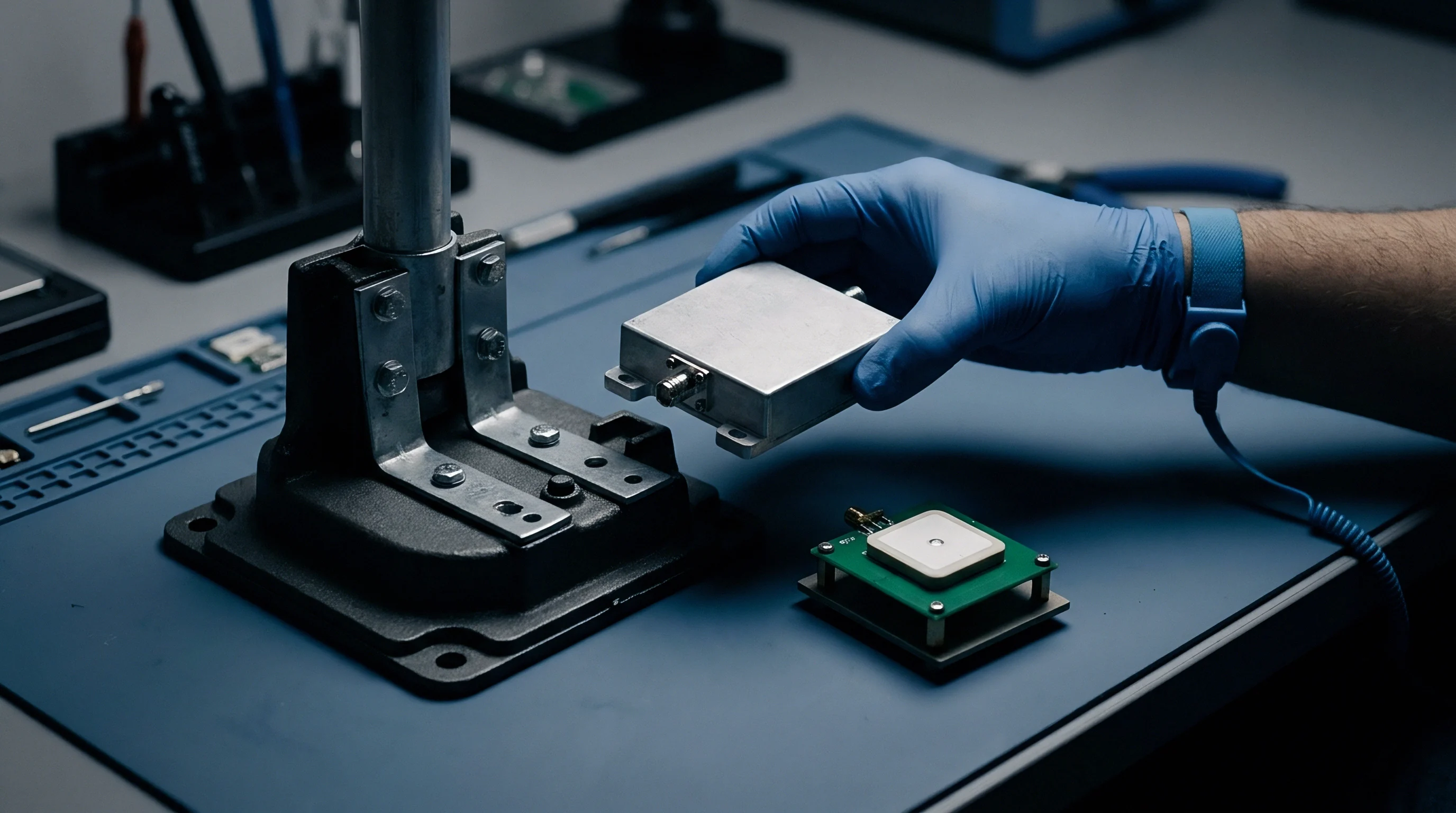
Technical release triggers demand proof that deposited digital assets actually recreate functional hardware designs. Software repositories, schematic source files, and PCB CAD packages must compile into identical physical hardware without needing proprietary vendor assistance. Hardware transfers use cryptographic hashing to confirm file integrity before and after escrow placement.
Bitstream compilation protocols verify that microcontroller or FPGA source code in escrow generates matching hex binaries when processed through specified compiler versions. Gerber X2 and IPC-2581 manufacturing files require netlist extraction algorithms to check board connectivity against original schematic capture files. Any discrepancy between deposited schematic netlists and layout files halts successful manufacturing transfers to secondary facilities.

Deterministic Hardware and Software Compilation
Ensuring complete design transfer requires systematic validation of every deposited deliverable. Independent technical auditors run compilation scripts inside isolated virtual environments to verify build reproducibility.
- Source Code Integrity Audit Evaluating repository commits against signed cryptographic hashes guarantees original source files remain uncorrupted during transfer.
- Toolchain Environment Isolation Instantiating defined operating system images and specific compiler toolchain versions ensures bit-for-bit software build parity.
- Automated Netlist Comparison Comparing schematic netlists against fabrication layout netlists exposes unrecorded physical trace modifications.
- BOM Component Availability Scan Scanning component lists against global distributor inventories identifies end-of-life parts requiring redesign.
- Physical Test Script Execution Running automated test scripts against physical prototype boards verifies performance parity between compiled code and hardware.
Because substrate tolerances alter dielectric constants, layout designs optimized for specific PCB stack-ups exhibit impedance shifts when transferred to alternate manufacturing lines. Audit routines verify that stack-up drawings contain explicit dielectric thickness, copper foil roughness, and laminate material series numbers.
Consider a semi-custom radio frequency module development program budgeted at 1.2 million dollars in total engineering expense. The buyer funds 450,000 dollars in non-recurring engineering fees to develop a proprietary high-power dynamic matching array. The contract stipulates an initial escrow release trigger based on baseline design file handover.
The vendor deposits schematic CAD files, but omits proprietary substrate layer definitions and automated tuning control source code.
If the escrow agent releases funds without deterministic verification, the buyer faces substantial losses. Onboarding a second-source manufacturer requires 160 hours of engineering rework to reverse-engineer trace impedances, costing 48,000 dollars in direct labor. Layout re-spinning and prototype fabrication runs add 85,000 dollars in tooling and PCB production costs.
Schedule delays add four months of lost time-to-market revenue, evaluated at 300,000 dollars in missed delivery milestones. Deterministic verification prevents premature fund release while design files remain incomplete.
Deposit integrity depends entirely upon the completeness of the bill of materials and fabrication files.
Audit processes conclude with signed technical validation certificates. A successful protocol yields complete build environments capable of reproducing operational control binaries without vendor intervention.

Arbitration
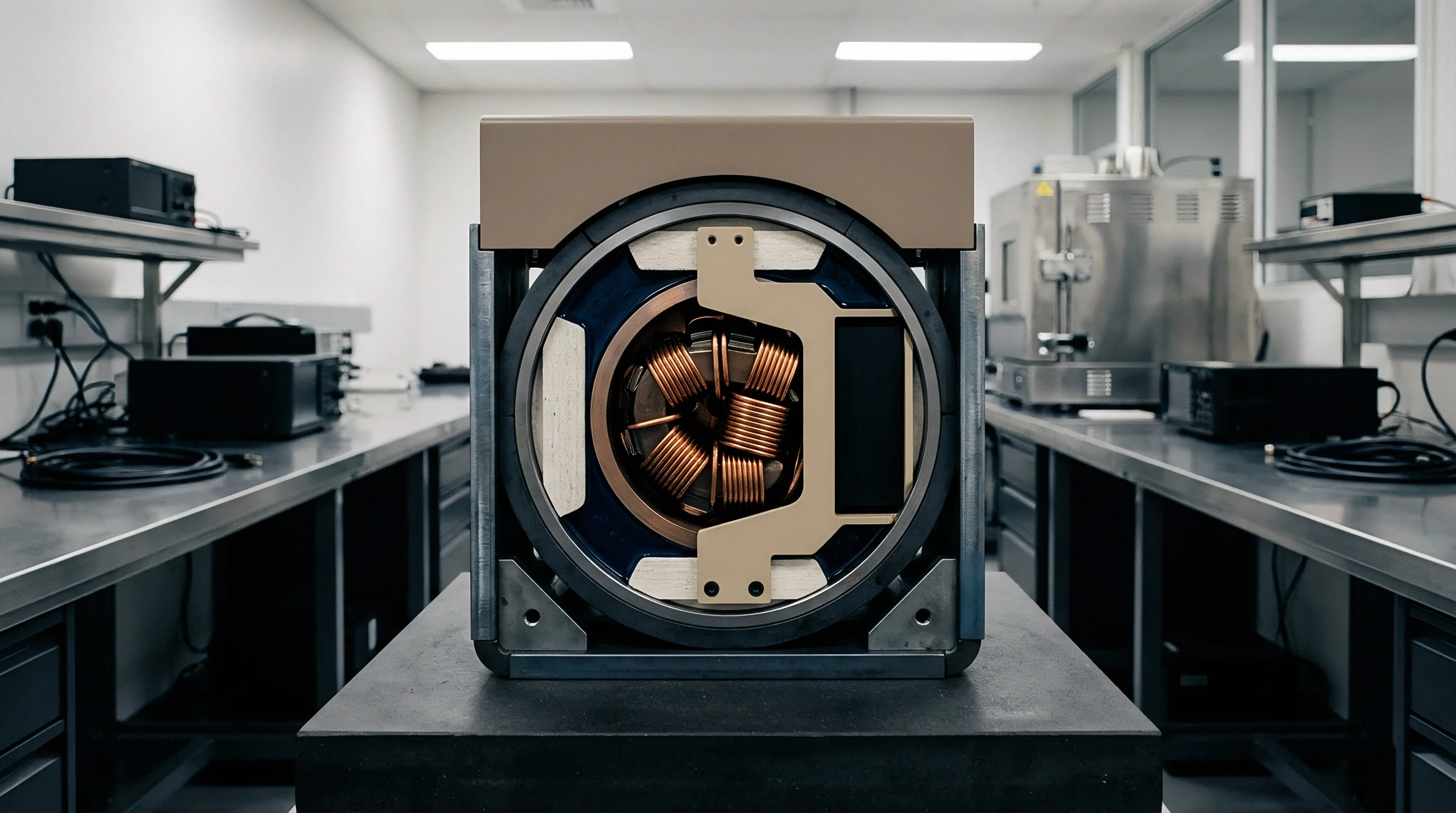
Resolving disputes over cross-border escrow releases requires structured technical arbitration. Courts lack the engineering background needed to evaluate radio frequency performance failures, return loss curves, or software compilation defects. Escrow agreements specify neutral technical referees to evaluate contested release demands using objective test logs.
Technical referees bring expertise in RF hardware engineering, board layout, and software build verification. When a buyer submits a default notice based on failed performance triggers, the vendor has a limited contractual window to dispute the finding. Referees re-run standardized test scripts in certified independent laboratories to arbitrate contested findings.

Technical Referee Selection and Dispute Mechanics
Binding dispute frameworks rely on clear procedural rules executed within set timelines. International arbitration centers provide established protocols for managing technical hardware disputes.
The sequence for managing technical release disputes follows defined procedural steps.
- Buyer files notice of default with the escrow agent, attaching certified vector network analyzer test logs proving performance trigger failure.
- Escrow agent notifies vendor, initiating a strict fourteen-day cure period or formal technical dispute window.
- Vendor submits technical defense affidavit or agrees to joint selection of an independent technical referee from an accredited engineering registry.
- Technical referee receives sealed duplicate hardware samples and escrowed software repositories directly from the holding agent.
- Referee executes automated test bench procedures in an ISO 17025 accredited testing facility without party intervention.
- Referee issues binding technical determination within ten business days, instructing the escrow agent to release assets or maintain deposit status.
Referees evaluate raw measurement data. Disputes often center on whether performance failures stem from vendor matching circuit defects or buyer system integration errors. Independent testing using standard 50 Ohm reference loads isolates matching module performance from host system variables.
Field measurement discrepancies can also stem from host platform noise, improper thermal grounding, or uncalibrated host test cables rather than flaws in the matching circuit.


Transfer
Releasing escrowed design packages initiates the manufacturing transfer to secondary production facilities. Acquiring raw schematic files and software source repositories is only the first step in establishing independent manufacturing. Second-source foundries require complete fabrication packages, assembly drawings, component sourcing lists, and calibration procedures to bring up production lines successfully.
High-frequency impedance matching circuits depend heavily on exact component placement, solder paste volume, and substrate material specifications. Transfer packages must include surface-mount assembly pick-and-place files, stencil geometries, and reflow thermal profiles. Without precise assembly instructions, secondary manufacturing lines suffer significant yield drops from parasitic impedance variations.

Second Source Foundry Onboarding and Calibration
Because factory recalibration takes four weeks, onboarding a second-source facility requires translating escrowed engineering files into factory-specific manufacturing formats. Substrate material substitutions require recalculating matching microstrip line widths to preserve target characteristic impedances.
| Transfer Deliverable | File Format Standard | Acceptance Verification Test | Manufacturing Onboarding Function |
|---|---|---|---|
| Schematic Capture Files | Native CAD, EDIF, or IPC-2581 | Netlist extraction and cross-probe validation | Defines electrical connectivity and net attributes |
| PCB Layout & Fabrication | Gerber X2 or IPC-2581 with IPC-D-356 netlist | Design rule check pass and stack-up verification | Drives bare board manufacturing line tooling |
| Firmware Source Code | C/C++ repository with build scripts and CMake | Clean compile yielding identical binary hash | Controls dynamic tuning algorithms and interfaces |
| Factory Test Jigs | Schematics, mechanical CAD, and test scripts | Self-test calibration pass on reference jig | Validates end-of-line manufacturing yield |
| Bill of Materials | Structured CSV/Excel with manufacturer part numbers | Automated component lifecycle and availability scan | Drives component procurement and supply chain |
Code compilation requires identical toolchains. Successful design transfers conclude when the receiving factory builds, tests, and validates an initial pilot batch of matching hardware modules that satisfy all return loss, efficiency, and dynamic response specifications.