
Integrated Circuit Lithography Shrink Impact on Interface Signal Integrity
Advanced lithography shrinks lower interface supply voltages and compress driver swing, requiring strict package channel extraction to prevent signal eye closure.
Advanced lithography shrinks lower interface supply voltages and compress driver swing, requiring strict package channel extraction to prevent signal eye closure.

Surface roughness forces high-frequency current through isolated micro-asperities, increasing contact resistance and insertion loss as skin depth shrinks.
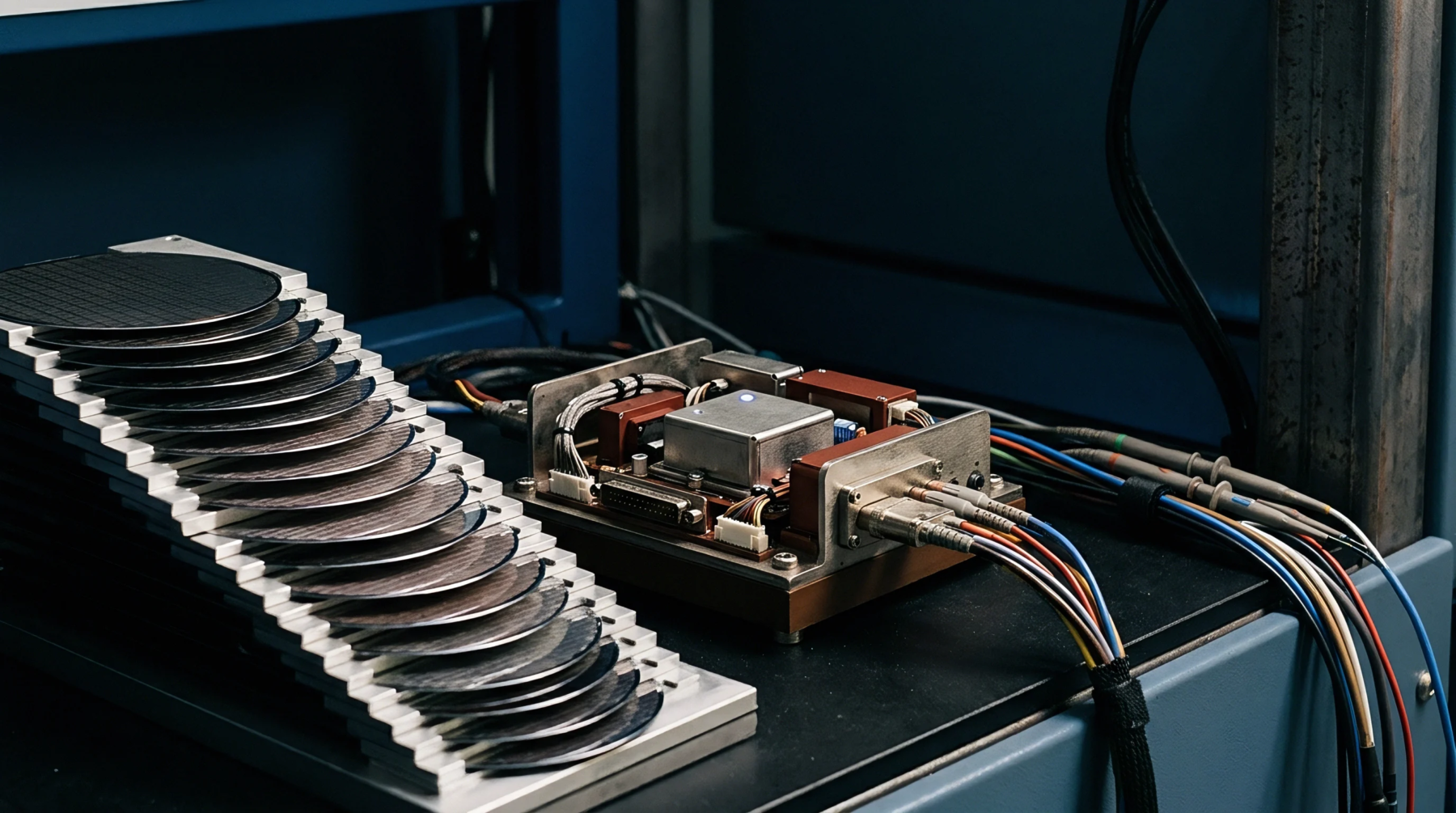
Dynamic impedance matching stabilizes RF power amplifier load lines during battery voltage droop to prevent signal distortion and premature device shutdown.
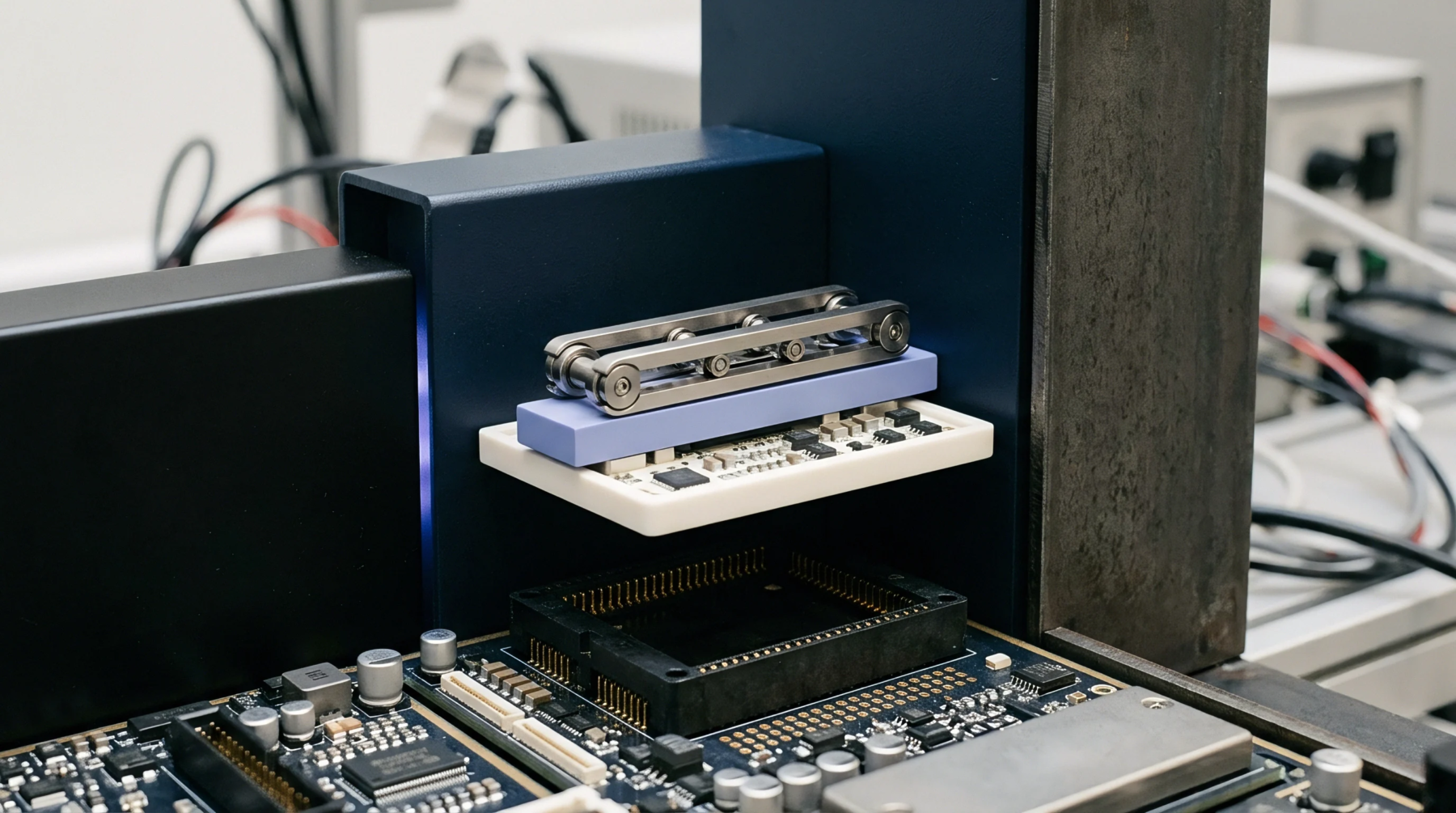
Contact oxide growth adds up to 3 dB insertion loss in RF interconnects, degrading link margin and driving retransmissions unless wiping force exceeds 0.3 N.
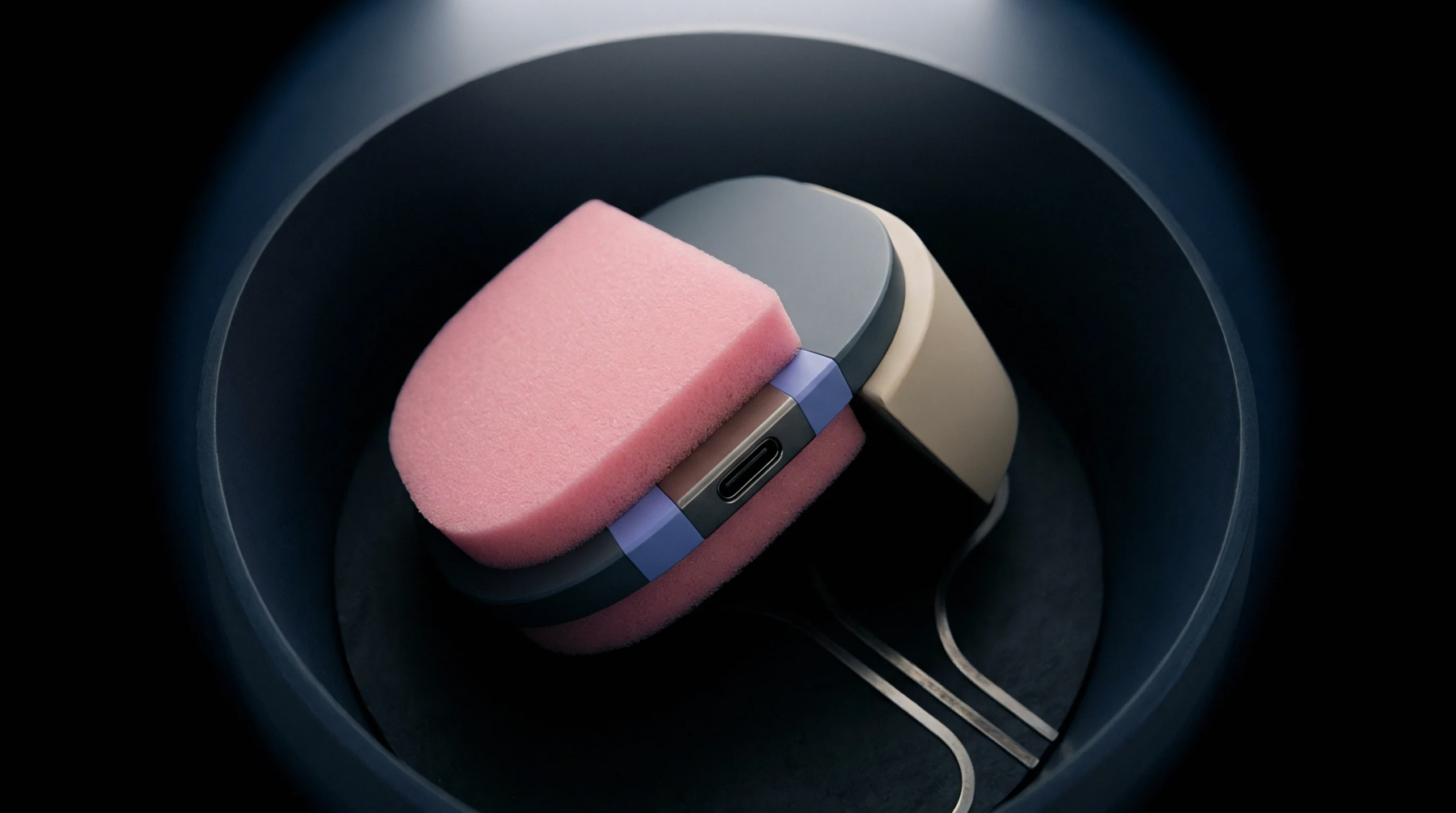
Initial contact resistance degradation in RF test sockets increases insertion loss and alters impedance matching, requiring dry-circuit Kelvin monitoring.

Minimizing loop inductance in fine-pitch layouts requires microvia-in-pad placement, thin dielectric cores under 50 µm, and tight power-ground via coupling.

Polymer radome transmission loss at mmWave frequencies depends on dielectric loss tangent and wall thickness precision to maintain regulatory EIRP compliance.
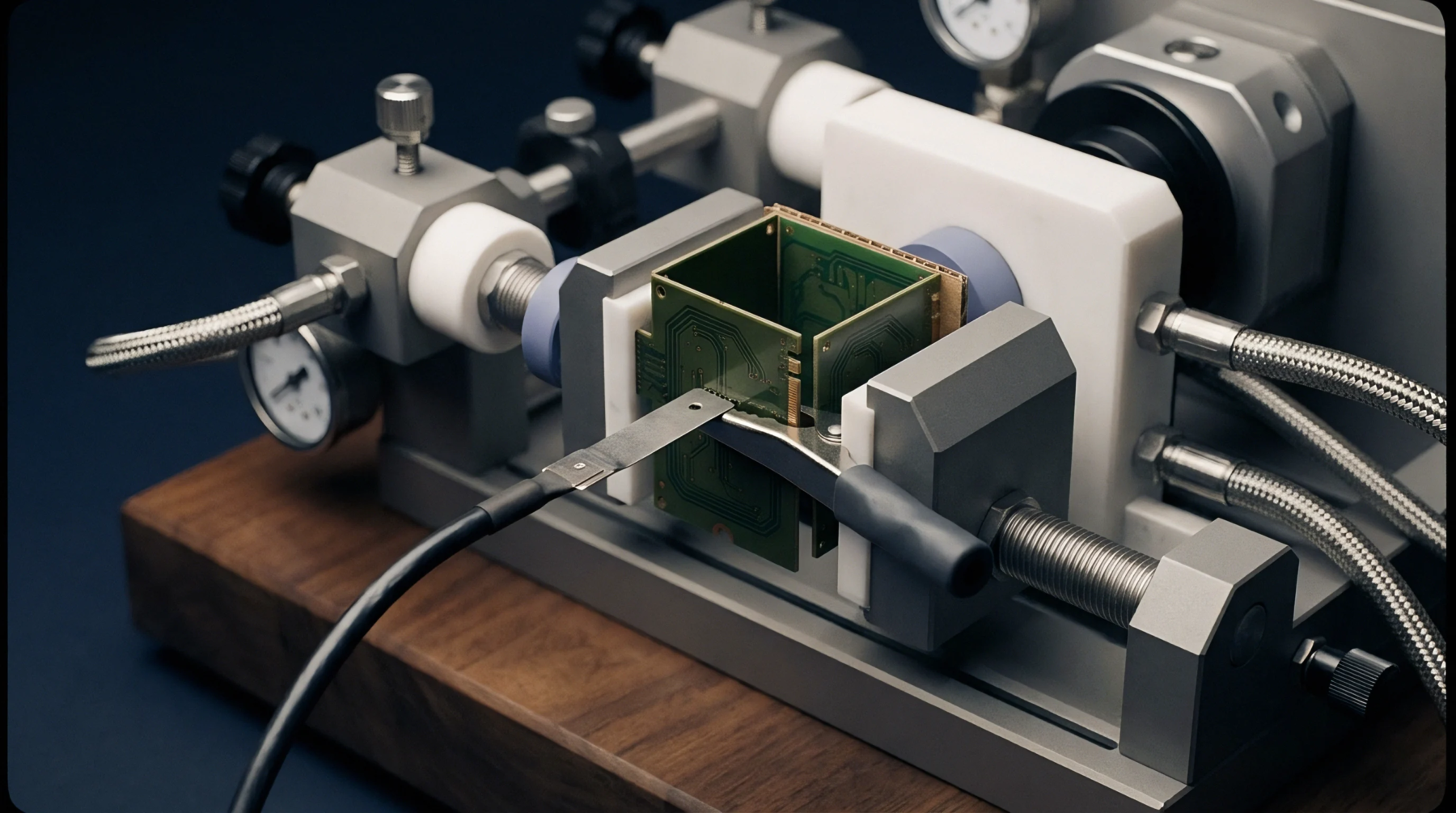
Silicon die shrinks accelerate output driver edge rates and elevate parasitic inductance, requiring full signal integrity auditing and updated IBIS models before drop-in assembly signoff.

Precision W-band free-space extraction of polymer permittivity prevents radar boresight shift and avoids costly Class II Permissive Change re-testing delays.

Schematic netlists define logical connections, but copying vendor reference designs without matching physical PCB substrate stackup and trace geometries destroys RF performance and causes immediate electromagnetic compliance failures.

High actuation frequency RF test sockets experience contact resistance instability through micro-fretting and oxide growth, corrupting signal integrity and yield.
Stripping test fixture phase delay and magnitude loss from raw vector network analyzer measurements ensures true S-parameter extraction.

Conductive polymer composite absorption depends on balancing complex permittivity and skin depth to eliminate surface reflection and satisfy radiated emission limits.
Expertise is a utility, not a secret. sentiention™ publishes its working knowledge as open reference: intelligence layer covering the materials it sources, the markets it enters, and the reference that serves both.