Meaning
A mechanical pressure perpendicular to mating conductive surfaces establishes and maintains electrical continuity across separable connector interfaces. The parameter defined as contact normal force breaks through surface oxides to establish metallic micro-contacts between mating terminals. The effective boundary terminates when mechanical stress exceeds the elastic yield point of spring materials.
Perpendicular Compression
Spring deflection curves describe how force develops as mating terminals engage within connector housings. Adequate contact normal force compresses surface asperities, creating gas-tight metal-to-metal contact areas that resist oxidation.
Interface Resistance
Electrical resistance across separable contacts decreases sharply as mechanical force increases toward a saturation threshold. When contact normal force reaches design specification, constriction resistance drops to stable milliohm levels, minimizing power loss across power supply pins. Low normal force leaves microscopic air gaps that generate non-linear contact behavior under RF signal currents, elevating passive intermodulation distortion products in sensitive receiver signal paths.
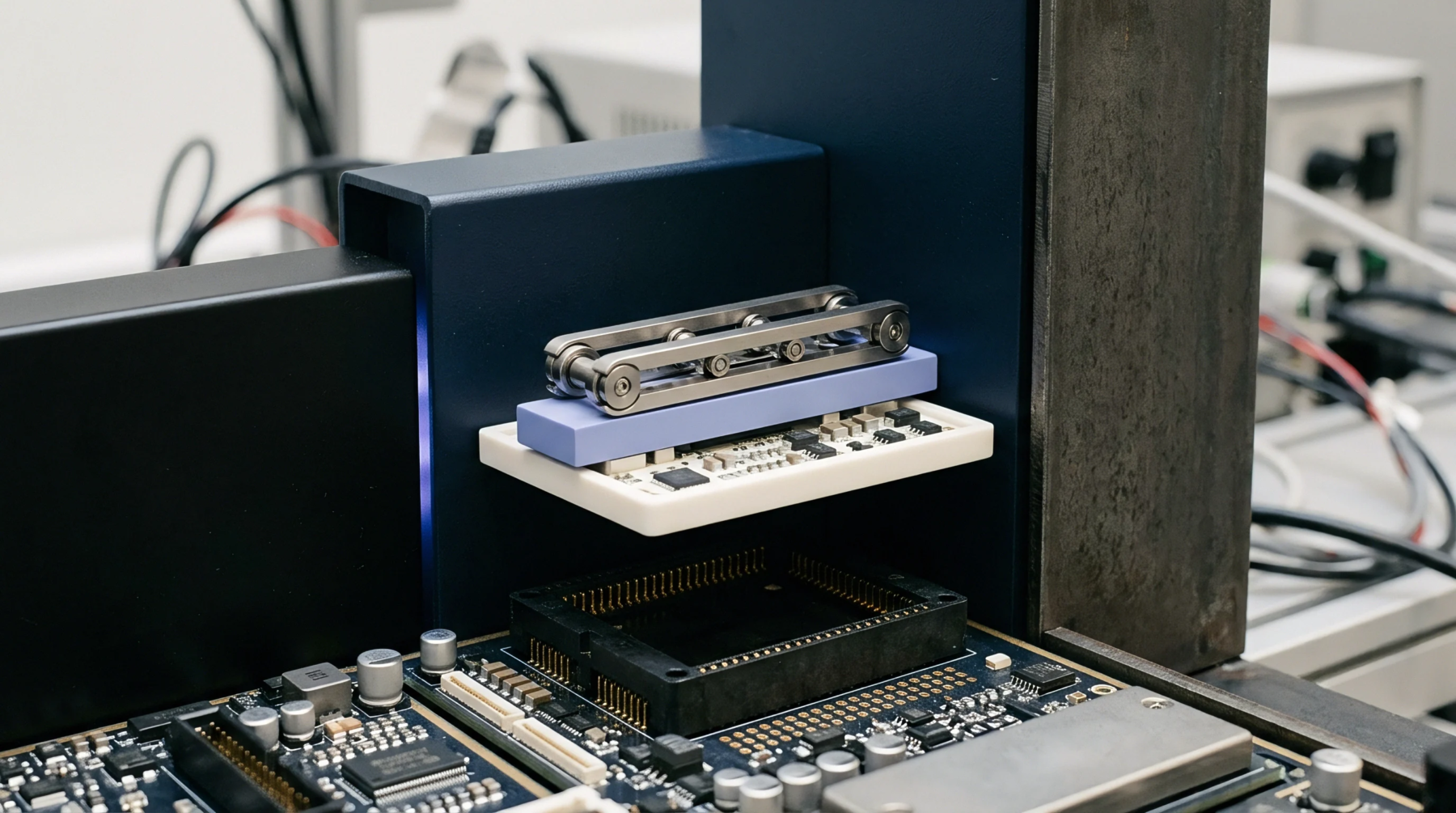
Test fixtures monitor contact resistance during incremental compression to establish optimal force thresholds.
Mechanical Qualification
Thermal exposure and vibration stress cause spring relaxation over extended operating lifetimes. Testing validates that contact normal force remains above minimum retention thresholds after thermal aging cycles. Product acceptance records specify initial and end-of-life force values required for production sign-off.