Configuring Cellular Profile Assistant Timers for Constrained IoT
Configure GSMA IoT Profile Assistant timers to exceed 3GPP network timers and transport layer retransmission windows under weak coverage to prevent profile corruption.


Anchor
Cellular engines operating on narrowband links bind their internal state machines to twin timing layers: one governing 3GPP radio registration states, the second managing GSMA remote provisioning procedures. In GSMA SGP.32 architectures for internet-of-things deployments, the IoT Profile Assistant coordinates downloading and switching profiles without direct end-user interface intervention. It relies on execution schedules issued by an external eSIM IoT Remote Manager.
When these profile timers collide with network power-saving states, cellular modules experience dropped provisioning sessions and corrupted eUICC profile state transitions.
3GPP Release 13 introduced Power Saving Mode alongside active timer T3324 and periodic tracking area update timer T3412. A device entering Power Saving Mode drops its radio frequency connection and shuts down internal receiver circuitry. Downlink IP packets arriving during this sleep window buffer at the Serving Gateway or drop completely, depending on carrier network configuration.
If the IoT Profile Assistant initiates an eUICC profile download sequence while the network stack prepares to force the modem into Power Saving Mode, the radio interface powering down abruptly terminates the underlying TCP or Transport Layer Security session.

Architecture of Profile Assistant Timers
The profile assistant operating within an embedded cellular module manages three primary operational timer boundaries. The acquisition timer bounds the time allocated for discovering and fetching an available eSIM profile package from a Subscription Manager Data Preparation platform. The download timer sets the maximum window permitted for transferring the encrypted profile package over the cellular bearer.
The enablement timer governs the post-download confirmation sequence during which the eUICC deactivates the operational profile, enables the target profile, and attempts initial network registration.
Timer conflicts happen when the profile assistant acquisition window exceeds active timer T3324 set by the serving cellular core network. Network operators assign T3324 values ranging from 2 seconds up to several minutes during the initial Attach or Tracking Area Update procedure. If the network configures a short T3324 duration such as 6 seconds, the modem returns to deep sleep immediately after completing uplink transmission.
An IoT Profile Assistant waiting for an incoming remote management trigger fails to process the payload because the receiver powered down before the remote server dispatched the payload profile envelope.

Interaction between GSMA and 3GPP States
Extended Discontinuous Reception provides an alternative sleep model where the modem periodically wakes up to monitor network paging frames. Paging hyperframe cycles under extended Discontinuous Reception range from 5.12 seconds up to 40.96 seconds on LTE-M networks, and up to 174.76 seconds on Narrowband IoT networks. When configuring profile assistant transport timers, the socket timeout parameter must account for these extended paging gaps.
Setting an HTTP download socket timeout to 30 seconds on a Narrowband IoT network utilizing a 174.76-second paging cycle guarantees socket termination prior to receiving the server ACK frame.
Cellular profile state engines must align local execution timers with the active paging windows granted by the radio access network. Downlink profile push notifications issued by an eSIM IoT Remote Manager cannot reach the modem while the device resides in an un-pageable Power Saving Mode state. The local profile assistant must initiate an uplink request or wake-up message to transition the radio stack into RRC_CONNECTED state before pulling profile payloads from the remote provisioning platform.
GSMA SGP.32 Clause 5.3 mandates that any eSIM profile activation sequence returns an explicit status report to the remote manager prior to the expiration of the local active window, altering module state handling by making unacknowledged profile switches invalid.


Socket
Transport protocols delivering profile packages across constrained cellular channels face throughput bounds established by channel quality. Under dense sub-GHz propagation with Reference Signal Received Power falling below -118 dBm, narrowband data rates sink to 20 kbps on LTE-M and below 3 kbps on NB-IoT single-tone allocations. Transmitting an encrypted eSIM profile package measuring 45 kilobytes requires sustained data transfers lasting over two minutes under high block error rate conditions.
TCP window size and segment size parameters directly influence profile transmission reliability over noisy links. High Radio Link Control retransmission rates cause severe packet delay variation. Standard transport layer socket timeouts defaulted to 30 seconds routinely expire while the modem waits for physical layer HARQ retries to resolve fading dips.
Expanding local socket read timeouts to 180 seconds prevents premature transport termination during multi-segment profile payload downloads.

Transport Layer Timeouts in Weak Coverage
Datagram Transport Layer Security over CoAP provides a lightweight alternative to HTTP over TLS for resource-constrained platforms. DTLS retransmission timers must accommodate physical layer latency spikes. Initial DTLS retransmission timeouts configured at 2 seconds cause storm conditions over NB-IoT networks operating at low signal levels.
Each unacknowledged handshake message triggers repeated retransmissions, saturating the narrow uplink bandwidth and triggering core network rate limiting.
RSRP levels below -118 dBm force packet transfer durations beyond 180 seconds for standard eSIM profile envelopes.
Setting DTLS backoff timers using exponential multiplication factors stabilizes transport sessions over degraded cellular links. An initial retransmission timer of 15 seconds scaling exponentially to 120 seconds prevents socket collapses while allowing the cellular physical layer sufficient time to complete Radio Link Control block delivery. The profile assistant application layer must align its internal transaction watchdog timer to exceed the cumulative sum of all underlying transport retransmission backoffs.

Protocol Stack Timer Synchronization
Disconnects between the application layer HTTP/CoAP timer, the TLS/DTLS session timer, and the cellular network RRC inactivity timer produce orphan sockets. The serving base station runs an RRC inactivity timer, typically set between 4 and 20 seconds. When no user data flows across the radio interface during this interval, the base station releases the RRC connection and moves the modem from RRC_CONNECTED to RRC_IDLE.
| Timer Parameter | 3GPP / GSMA Default | Constrained IoT Target | Impact of Misconfiguration |
|---|---|---|---|
| PSM Active Timer (T3324) | 54 seconds | 120 to 300 seconds | Modem enters sleep mid-download, dropping incoming profile payload segments. |
| eDRX Paging Cycle (T3412-ext) | 20.48 seconds | 40.96 to 81.92 seconds | Downlink management triggers miss active paging windows, causing server timeouts. |
| LPA Socket Read Timeout | 30 seconds | 180 to 240 seconds | Physical layer RLC retransmissions trigger premature application socket teardown. |
| TLS Handshake Retransmit | 1 second | 15 seconds (exponential) | Uplink congestion storm exhausts local power budget during coverage dips. |
| RRC Inactivity Timer | 10 seconds | Managed by operator | Network tears down RRC connection while LPA processes local eUICC script commands. |
Suboptimal timing configuration across these transport layers induces predictable system failure modes during field provisioning attempts:
- Incomplete Payload Segmentation occurs when the TCP socket timeout expires prior to receiving the final profile chunk, leaving the eUICC in an incomplete download state.
- Premature RRC Release Tear-Down happens when local eUICC APDU processing times exceed the base station RRC inactivity timer, forcing an unexpected network detach during activation.
- DTLS Handshake Amplification Failure arises when aggressive application retransmissions overload cellular buffers in coverage areas with RSRP lower than -120 dBm.
- Orphaned Profile State Lock occurs when the modem switches profiles locally but fails to transmit the confirmation ACK before network sleep timers force radio deactivation.
Selecting insufficient transport timeouts in high-attenuation environments forces repeated profile download abortions, consuming hundreds of milliamp-hours per failed attempt and exhausting module battery capacity within days.


Battery
Energy consumption during profile provisioning scales directly with channel throughput and transmission duration. A cellular transmitter operating at +23 dBm draws 220 mA from a 3.6V primary lithium thionyl chloride power source. Sustaining active RF transmission across extended profile downloads creates severe thermal and electrochemical stress on constrained power supplies.
Primary lithium thionyl chloride batteries exhibit passivation and internal resistance growth under current spikes. A prolonged profile download sequence pulling 200 mA continuously for three minutes causes severe voltage drop across the battery terminals. If the terminal voltage dips below the modem minimum operating threshold of 3.2 volts, the cellular module suffers a low-voltage brownout reset.
Brownout events occurring during eUICC non-volatile memory write cycles risk permanently corrupting the SIM file system.
Energy Budget Accounting
Profile provisioning operations consume significant energy relative to standard telemetry transmissions. A standard sensor telemetry report requires an active wake-up duration of 5 seconds at an average current of 80 mA, consuming approximately 0.4 Joules of energy. Fetching, verifying, and enabling an eSIM profile package requiring 45 kilobytes of transferred data under average coverage conditions consumes energy several orders of magnitude higher.
| Parameter / Condition | Strong RF (-85 dBm RSRP) | Moderate RF (-105 dBm RSRP) | Deep Coverage (-118 dBm RSRP) |
|---|---|---|---|
| Average Physical Layer Rate | 120 kbps (LTE-M) | 35 kbps (LTE-M) | 4 kbps (NB-IoT single-tone) |
| Total Session Airtime | 6.5 seconds | 18.2 seconds | 145.0 seconds |
| Average Current Consumption | 95 mA | 140 mA | 210 mA |
| Peak Voltage Drop (10 Ohm ESR) | 0.95 V | 1.40 V | 2.10 V |
| Total Energy Expended | 2.22 Joules | 9.17 Joules | 109.62 Joules |
To preserve battery headroom during profile download sequences, developers must synchronize device wake cycles with server polling schedules.
Aligning profile assistant execution windows with network paging frames prevents unnecessary radio wake-up events.
The following sequence optimizes terminal timer bounds to minimize power source stress during profile discovery and download operations:
- Configure the cellular engine active timer T3324 to 180 seconds during the initial provisioning Tracking Area Update request.
- Issue an uplink ping to confirm bidirectional data path availability before initializing the local profile assistant TLS context.
- Extend the local profile assistant read socket timeout to 120 seconds to accommodate physical layer HARQ retransmissions.
- Set eUICC APDU command execution wait limits to 15 seconds to allow internal flash memory block erase operations to complete.
- Execute an explicit HTTP CLOSE or TLS CLOSE-NOTIFY alert immediately following profile delivery confirmation to signal the base station for rapid RRC release.
- Reset T3324 back to the baseline operational value of 6 seconds once the target profile reaches ENABLED state.
Aligning profile assistant polling intervals with network paging cycles extends terminal operating life beyond the battery self-discharge threshold.

Recovery
Provisioning failures arising from transient signal fades require deliberate retry structures. Uncontrolled reconnect attempts under poor coverage exhaust battery reserves and trigger network access throttling by regional carrier core management systems.

What Triggers an Automatic eSIM Fallback Switch?
When an IoT Profile Assistant switches execution to a newly downloaded profile, it initiates a validation timer. The validation timer defines the maximum allowable period for establishing a functional network registration on the new carrier network. If the modem fails to attach, obtain an IP address, and establish a handshake with the remote management server before this timer expires, the profile assistant forces an automatic fallback to the previous operational profile.
Validation timers defaulted to aggressive values such as 60 seconds routinely fail in international roaming deployments. Network search, Public Land Mobile Network scanning, and attach procedures across multiple sub-GHz bands can consume up to 180 seconds when negotiating registration on visited networks. Setting a profile validation timer below 180 seconds leads to false-positive fallback events, reverting the device to a legacy profile despite the new profile being fully functional.
Exponential Backoff Structures for Unreachable Servers
Network operators enforce periodic updates. Persistent failure to reach the Subscription Manager server demands an exponential retry schedule with added random jitter. Linear retry loops attempting server connections every 30 seconds drain device energy reserves rapidly while adding congestion to degraded cellular cells.
| Retry Tier | Base Backoff Delay | Jitter Range | Target Device State |
|---|---|---|---|
| Initial Retry (1 to 3) | 60 seconds | +/- 15 seconds | RRC Idle, hold cellular registration active |
| Secondary Retry (4 to 6) | 15 minutes | +/- 3 minutes | Power Saving Mode enabled (T3324 = 0, T3412 active) |
| Extended Retry (7 to 10) | 2 hours | +/- 30 minutes | Deep Sleep, full radio shutdown |
| Fallback Trigger (Max Limit) | 24 hours | None | Revert eUICC state to primary bootstrap profile |
A structured retry policy requires strict evaluation of system recovery conditions before advancing to higher backoff intervals:
- Network Attach Verification checks physical layer sync and cell selection prior to spawning application transport sockets.
- APDU Command Auditing ensures the local profile assistant receives valid response codes from the eUICC before executing profile activation.
- Server Handshake Validation requires successful end-to-end TLS authorization with the remote eIM before closing the recovery window.
- Battery Margin Assessment measures local bus voltage under load to confirm sufficient energy reserves exist before attempting a profile write operation.
Profile switching failures occurring during active network registration stem from device-side timer misconfigurations rather than core infrastructure dropouts.

Bench
Laboratory validation of profile provisioning timers demands controlled attenuation and exact radio frame simulation. Simple functional testing under clear line-of-sight signal levels hides timing edge cases that cause bricked eUICC profiles in field deployments.
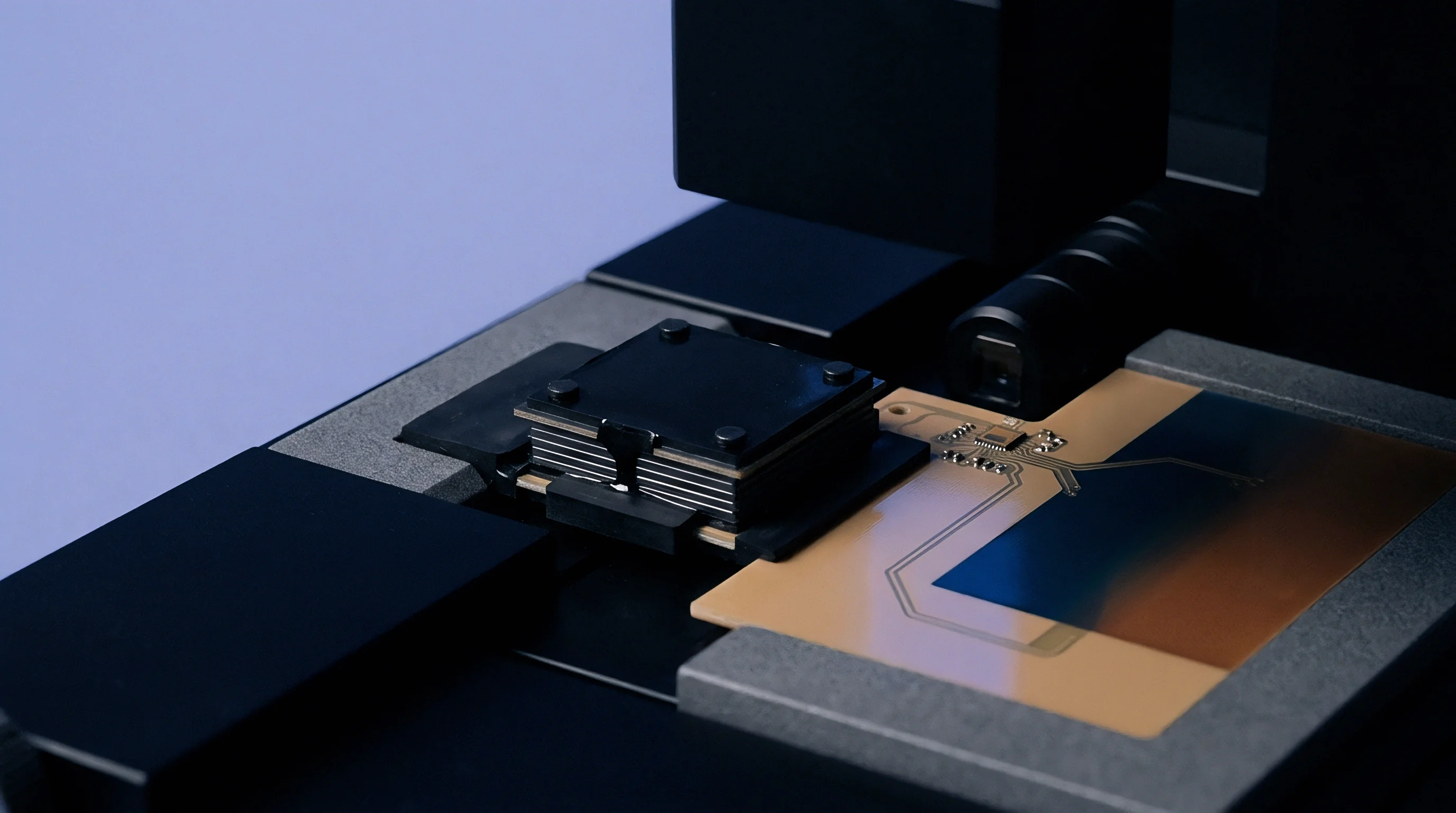
Measurement Rigs for Profile Execution
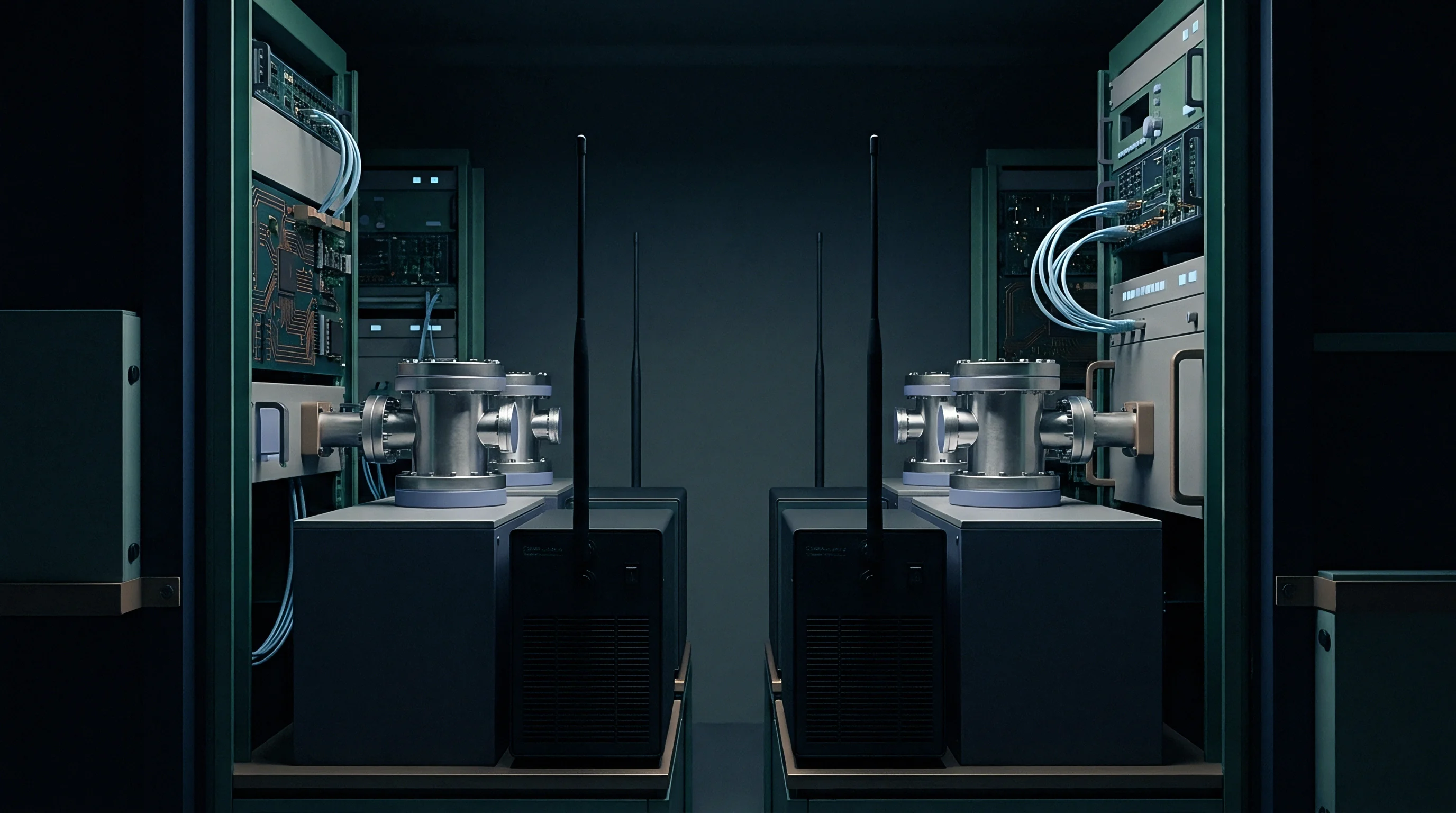
Validating profile assistant operation requires a test bench combining a signaling communication tester, a programmable DC power analyzer, and an RF shield box. The signaling tester acts as a simulated base station capable of injecting artificial packet delay, frame erasure rates, and custom 3GPP network timer parameters into the radio link.
By sweeping Reference Signal Received Power levels from -85 dBm down to -128 dBm inside the shield box, engineers measure exact timing margins for TLS handshakes, TCP segment retransmissions, and eUICC APDU command processing. Current profiling instruments map execution phases to current drain profiles, confirming that the modem does not enter unexpected power states during active profile script execution.
Bench testing under simulated -125 dBm RSRP conditions exposes timer collisions that remain invisible during standard laboratory evaluations.

Qualification Dossier Verification
Before releasing a cellular IoT design for mass production, engineers assemble a technical dossier documenting profile timing verification across target destination cellular bands. Re-evaluating timers under simulated regional network constraints prevents costly field recalls.
- 3GPP Parameter Matrix Dossier detailing granted T3324, T3412, and eDRX configuration values across target roaming carriers.
- Transport Layer Timeout Characterization recording measured TCP/TLS session survival rates across simulated 5%, 10%, and 20% block error rate conditions.
- eUICC State Machine Verification Traces providing logic analyzer and APDU trace logs covering profile download, installation, and fallback operations.
- Power Profile Waveform Records documenting peak current, average current, and bus voltage drop during maximum TX power profile provisioning sessions.
How will emerging satellite non-terrestrial network profile download profiles alter the minimum allowable local assistant timer bounds under high-latency orbital passes?