Applying Section XVI Legal Notes to Cellular Host Assemblies
Section XVI Legal Notes dictate host product classification based on principal function, directly altering landed customs tariffs and certification paperwork.
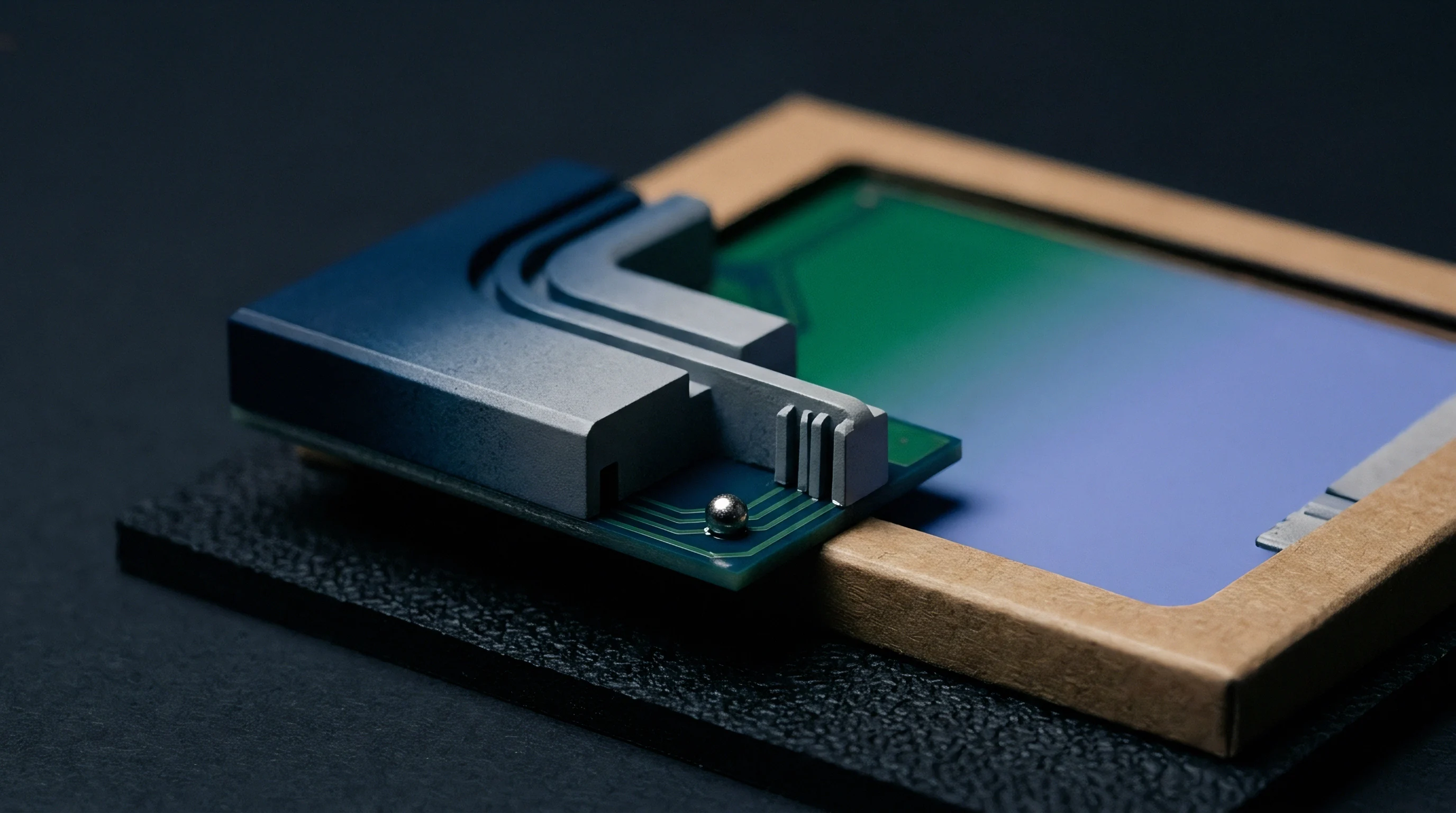

Tariff
International trade classification for electronic apparatus containing cellular radios rests upon the structure established in Chapters 84 and 85 of the Harmonized System. When a cellular module mounts onto a printed circuit board inside a host product, customs authorities apply Section XVI Legal Notes to determine the correct six-digit heading. Legal Note 2 dictates the treatment of isolated sub-assemblies, establishing that parts suitable for use solely or principally with a specific apparatus share that apparatus’s classification.
Soldered cellular modules imported independently fall under heading 8517.62 as apparatus for the reception, conversion, and transmission of data. That assignment shifts the moment the module integrates into a host chassis that executes a distinct mechanical, industrial, or analytical function.
Legal Note 3 governs composite machines containing two or more functional components fitted together to form an integrated unit. Under this rule, customs authorities classify the entire composite assembly according to the component that performs the principal function of the overall system. A smart water meter carrying an LTE-M baseband modem retains its classification under heading 9028.20 because fluid measurement represents the operational purpose of the machine.
Data transmission via cellular networks serves an auxiliary role by sending index values to a utility server. Conversely, when an assembly lacks a distinct non-communication purpose, customs inspectors reclassify the complete product under heading 8517.62, imposing different duty schedules, trade remedies, and import declarations.
Legal Note 4 expands this logical framework to functional units distributed across distinct physical enclosures. Where separate components connect by electrical cables or data buses to execute a single clearly defined function covered by Chapter 84 or 85, the complete system assumes the heading corresponding to that unified purpose. An agricultural soil monitoring network comprising remote sensor pods and a central cellular gateway unit falls under the heading governing analytical instruments.
Distinguishing between auxiliary connectivity and principal functional identity forms the central analytical exercise of import compliance.
Customs authorities in major import jurisdictions maintain precise boundaries between primary machinery duties and general data collection features. Misapplying Legal Note 3 during customs entry leads to re-classification decisions during retrospective audits. Importers facing audit re-assessments must defend the principal operational identity of their host designs using structural block diagrams, bill-of-materials cost allocations, and end-user marketing disclosures.

Harmonized System Chapter Structure for Connected Goods
Determining the statutory boundary between cellular communications gear and specialized host machinery requires evaluating the underlying purpose of the product. Chapter 85 covers electrical machinery and equipment, with heading 8517 encompassing base stations, routers, cellular modems, and transactional terminals. Chapter 84 contains mechanical appliances, computer processing units, and automated industrial machinery.
Specialized chapters, such as Chapter 90 for medical and precision instruments, take precedence when a host device’s primary function falls under their statutory definitions.
The insertion of cellular capability across industrial product lines forces customs teams to evaluate host function versus network interface value. An automated lawnmower integrating a 4G telemetry card remains classified under heading 8433.11 as a lawn-mowing machine. The cellular link provides remote anti-theft tracking and schedule adjustments, which remain secondary to mechanical grass cutting.
If the cellular connection becomes indispensable to the device’s basic operation, such as a remote cellular camera whose sole capability is transmitting imagery over LTE networks, heading 8517.62 takes precedence.
| Host System Category | Cellular Module Interface | Applicable Section XVI Legal Note | Primary HS Heading | Customs Tariff Scope |
|---|---|---|---|---|
| Industrial Utility Gas Meter | Soldered LTE-M / NB-IoT Chipset | Section XVI Note 3 (Composite Unit) | 9028.10 | Gas flow measurement takes precedence; cellular transmission classified as auxiliary report mechanism. |
| Automotive OBD Telematics Gateway | Surface-Mount LTE Cat-4 Module | Section XVI Note 2(a) / Heading 8517 | 8517.62 | Vehicle bus translation and wireless transmission form equal primary functions under general data equipment. |
| Automated Solar Inverter Gateway | Plug-in M.2 5G Sub-6 Module | Section XVI Note 4 (Functional Unit) | 8504.40 | Power conversion remains the core function; telemetry hardware operates as a functional subsystem. |
| Portable Patient Vital Monitor | Soldered 3G/4G Data Modem | Chapter 90 Note 3 / Heading 9018 | 9018.19 | Electro-medical monitoring dominates operational purpose; cellular data link serves remote patient tracking. |

Legal Note Scope and Functional Boundaries
Boundary analysis begins by evaluating the bill of materials, computational workload, and operational independence of the cellular module relative to the main host processor. If the host product functions completely when the cellular module is disabled or unpowered, the cellular connection constitutes an auxiliary feature under Section XVI Legal Note 3. Fluid meters, environmental sensors, solar inverters, and battery energy storage systems maintain core operational integrity without cellular connection, retaining their host-specific tariff codes.
When cellular connectivity is removed and the host product becomes completely non-functional, customs auditors question whether the radio link is integral to the primary purpose. An asset-tracking puck that cannot log, store, or display location data without active cellular towers derives its commercial value from wireless data transmission. Customs administrations routinely reclassify such single-purpose devices from general measuring instruments under heading 9031 into data transmission apparatus under heading 8517.62.
This classification shift impacts duty calculations, especially in regions imposing additional tariffs on electronic communication equipment.
A host machine retains its non-communication customs heading only when the primary physical work occurs independently of the integrated radio circuit.
Integrating a cellular module does not automatically convert a host into a telecommunications device to qualify for preferential tariff rates under the Information Technology Agreement. That argument collapses during customs inspections when examiners confirm that the host’s primary value stems from mechanical processing or physical sensing.

Assembly
Engineers integrating cellular baseband circuits into industrial, commercial, or medical host platforms face physical and functional trade-offs that dictate both trade classification and electromagnetic compliance. Surface-mount LGA modules, socketed M.2 cards, and solder-down System-in-Package radios establish physical connections to host mainboards through high-density pads. Layout choices directly influence noise coupling, thermal dissipation, antenna efficiency, and circuit isolation.
When host processing lines and power converters sit adjacent to baseband radio traces, switching noise from voltage regulators can bleed into radio frequency front-ends, degrading receiver sensitivity.
Physical mounting choices govern how customs auditors and regulatory test laboratories view the final assembly. A socketed cellular card installed via an M.2 keying slot signals a modular architecture where the radio operates as a interchangeable sub-assembly under Legal Note 2. Soldered LTE or 5G chipsets placed directly on the primary host printed circuit board create a monolithic system.
This monolithic design requires joint evaluation of host power supplies, digital processing circuits, and RF front-ends during regulatory testing.
Antenna placement introduces further mechanical challenges. Embedded surface-mount chip antennas, flexible printed circuit radiators, and external monopole elements require controlled ground planes and defined clearance zones to maintain performance. Placing an antenna inside a cast-aluminum industrial housing attenuates RF output, forcing power amplifiers to operate at maximum gain.
This maximum-gain state raises power draw, elevates operating temperatures, and increases radiated spurious emissions, pushing the host assembly outside regulatory limits.

Where Does Host Integration Alter Tariff Classification under Note 3?
Host integration alters classification under Legal Note 3 when the cellular interface becomes the defining commercial feature of the overall device. Customs authorities inspect the host platform’s physical architecture, software stack, and control flows to evaluate functional hierarchy. If the cellular baseband processor controls the main system bus, manages auxiliary sensors, and dictates operational state transitions, the host device risks reclassification into communications apparatus under heading 8517.62.
To evaluate host functional hierarchy during engineering design and customs pre-entry planning, regulatory teams review several physical and operational attributes:
- System Bus Control Structure determines whether the cellular modem acts as a peripheral client over AT-command UART lines or commands the primary host processor over high-speed PCIe channels.
- Power Budget Allocation compares the peak current drawn by cellular transmission bursts against the average power consumed by non-wireless functional loads.
- Firmware Architecture Separation evaluates whether the host execution stack operates independently of the cellular protocol stack or depends on modem firmware for operational booting.
- User Interface Independence checks whether the device can display, log, or act on operational data without transmitting those records across cellular infrastructure.
- Bill of Materials Valuation Ratio analyzes the direct manufacturing cost of the cellular sub-system against total electronic component costs.

Board Architecture and Multi-Function System Rules
Circuit trace routing and ground plane design establish the physical boundaries required by combined equipment standards. Shared ground planes between switching power supplies and cellular baseband processors introduce ground bounce, creating unwanted harmonic emissions that radiate from long sensor cables. Placing ground cut-outs, ferrite beads, and dedicated filtering arrays between the host logic board and the radio interface isolates noise sources before pre-compliance chamber scans.
Multi-function host platforms carrying cellular, Wi-Fi, Bluetooth, and satellite positioning radios simultaneously must manage co-location interference. Simultaneous transmission on adjacent frequency bands generates intermodulation products that fall within cellular receiver channels. Designing spatial separation, metallic shielding cans, and band-stop filters prevents internal receiver desensitization.
These hardware isolation measures preserve receiver performance and protect the host assembly from failing combined-radiator compliance tests.
Supply chain contracts for host assemblies must explicitly define regulatory boundaries and tariff classification indemnities. A well-drafted supply agreement establishes clear liabilities between host platform integration teams and sub-system suppliers.
Purchase order technical specifications dictate that the host integration team retains full liability for spurious emission failures resulting from ground plane modification or power supply layout changes.


Chamber
Testing cellular host assemblies inside an electromagnetic compatibility chamber evaluates the real-world performance of integrated hardware under controlled conditions. An accredited 3-meter or 10-meter semi-anechoic chamber isolates the device under test from external radio signals while absorbing reflections from walls and ceilings. The test sample sits on a motorized turntable constructed from low-permittivity materials, positioned opposite a calibrated receiving antenna mounted on an adjustable mast.
As the turntable rotates through 360 degrees, the mast shifts between 1 and 4 meters in height to locate peak radiated emissions.
Radiated spurious emission (RSE) testing evaluates unwanted signals generated by internal switching regulators, high-speed memory buses, and digital clocks that escape through the housing or attached cabling. When the cellular transmitter operates at maximum output power, host digital circuits can generate mixing products that exceed regulatory field strength thresholds. Under FCC Part 15 Subpart B and ETSI EN 301 489-52, emission limits apply across a broad frequency spectrum spanning 30 MHz to 40 GHz, depending on the cellular bands supported.
Total Radiated Power (TRP) and Total Isotropic Sensitivity (TIS) measurements evaluate over-the-air RF performance in anechoic chambers equipped with multi-axis positioning systems. TRP measures the total power radiated by the host antenna array across a spherical grid. TIS determines the minimum signal level required at the receiver antenna to maintain an acceptable bit-error rate in the presence of self-generated host noise.
Host processing noise that leaks into cellular receive frequencies degrades TIS, causing dropped connections and reduced data throughput in low-signal field environments.
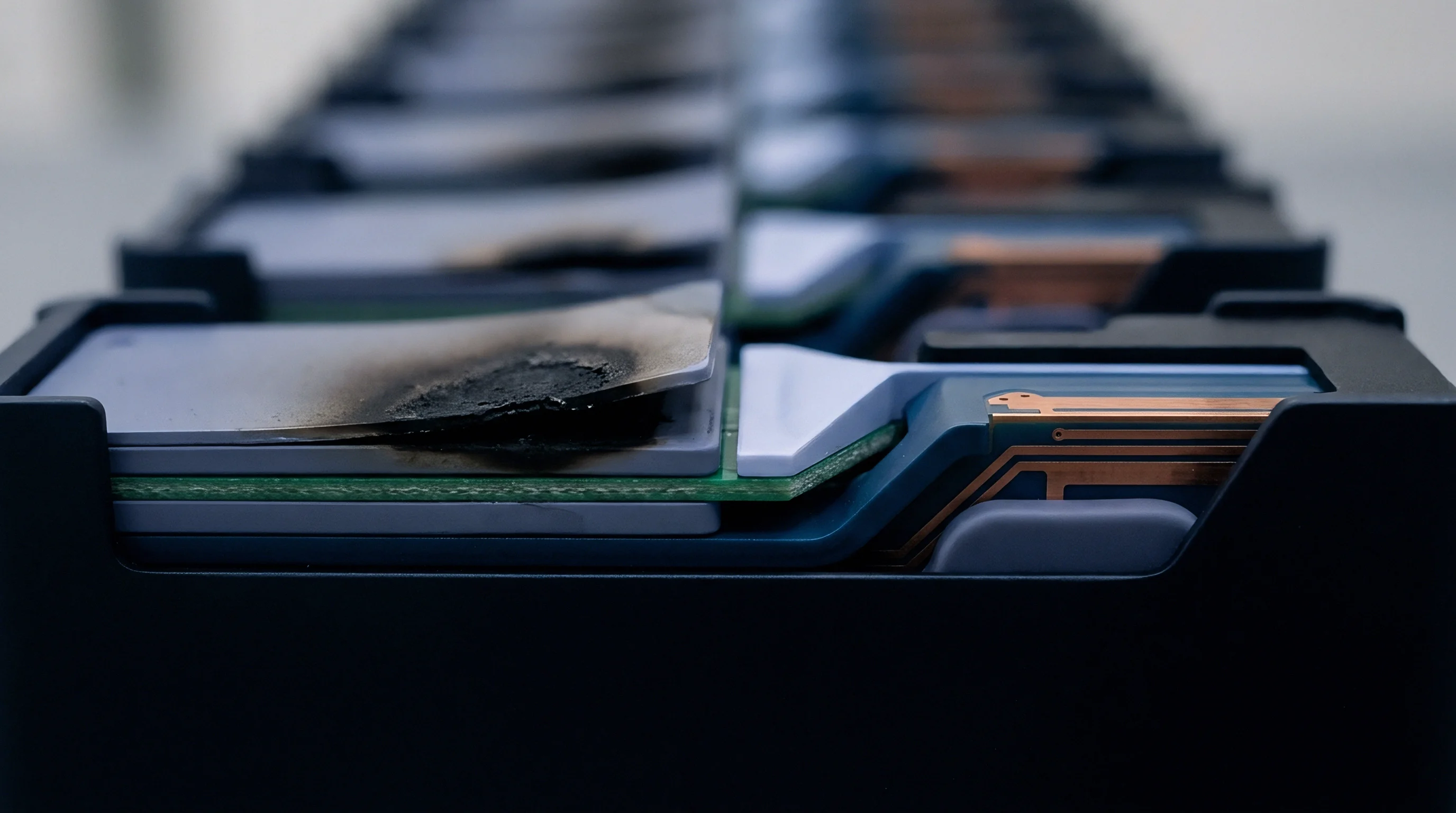
Radiated Spurious Emissions and Noise Floor Coupling
Integrated cellular host assemblies frequently fail pre-scan tests due to harmonic coupling between host switching power supplies and the cellular antenna. Unshielded buck converters operating between 400 kHz and 2.1 MHz generate wideband broadband noise that degrades LTE band receiver sensitivity. When cellular power amplifiers ramp up gain during edge-of-cell conditions, high current draw introduces voltage ripple into shared power rails, generating intermodulation products that leak into adjacent spectrum bands.
Mitigating noise coupling requires spatial isolation, local shielding enclosures, and passive filtering on dc power cables. Placing low-ESR ceramic capacitors near power amplifier pins suppresses transient voltage dips during transmission bursts. Common-mode chokes installed on external input/output signal lines prevent host cables from acting as efficient radiator antennas during spurious emission scans.
Radiated spurious emission scans on LTE-M hosts using internal planar inverted-F antennas exceed Class B limits by 6 dB near the 1.8 GHz second harmonic when power traces cross baseband ground planes.
| Regulatory Regime | Standard Reference | Host Operational Mode | Sample Count Required | Chamber Duration (Hours) |
|---|---|---|---|---|
| FCC Part 15B / Part 27 | ANSI C63.4 / ANSI C63.26 | Full Processing Load + Max RF Output | 2 Fully Functioning Units | 12 to 16 Hours |
| CE RED Article 3.1b (EMC) | ETSI EN 301 489-1 / -52 | Active Cellular Traffic + I/O Exercised | 2 Units (1 Conducted, 1 Radiated) | 8 to 12 Hours |
| CE RED Article 3.2 (Radio) | ETSI EN 301 908-1 / -13 | Fixed Test Frequencies (Low/Mid/High) | 3 Units with RF Test Firmware | 16 to 24 Hours |
| Japan Giteki / MIC | Radio Law Enforcement Rules | Continuous Unmodulated Carrier + Data Mode | 2 Modified Units with SMA Ports | 10 to 14 Hours |

Host Sample Preparation and Test Firmware Configuration
Preparing host assemblies for laboratory certification requires specialized hardware and firmware configurations. Standard commercial firmware that automatically adjusts power levels, changes operational modes, or enters low-power sleep states cannot be used during formal compliance testing. Laboratories require test firmware that locks the cellular modem to specific transmit frequencies, modulations, channel bandwidths, and power levels via serial AT commands or direct signaling software.
Physical sample modifications allow testing facilities to collect both conducted and radiated measurements without introducing extraneous measurement uncertainty.
- Install coax pigtails with female SMA connectors directly onto the PCB antenna traces, bypassing integrated antennas to allow direct cable connections to spectrum analyzers and radio communication test sets.
- Flash specialized RF test software onto the main host controller, enabling manual selection of cellular operating bands, channel numbers, power amplifier gain states, and continuous packet transmission modes.
- Break out high-speed serial UART and USB control buses to external test headers, isolating communication lines from the primary RF radiation path using shielded twisted-pair cables.
- Attach non-conductive mechanical supports to hold the host assembly securely on the turntable, preventing structural shifts during high-speed rotation.
- Prepare a continuous exercising script that loads host CPU cores, cycles memory read/write operations, and activates auxiliary interfaces to replicate maximum real-world noise conditions.
Failing a chamber test due to improper sample preparation or firmware lockups halts certification schedules and increases project expenses. Retest chamber bookings cost between $1,800 and $2,800 per shift, plus engineering rework charges and test sample shipping fees.


Grant
Navigating radio equipment approvals requires understanding the precise legal boundary between modular certification grants and full host platform compliance. In major regulatory markets, module suppliers obtain modular grants that certify a cellular radio for standalone operation under specific antenna types, gain limits, and trace layout rules. Under FCC Part 15 and Part 22/24/27, a full modular grant allows a host manufacturer to integrate the radio without repeating full baseband certification, provided the host assembly strictly adheres to all integration conditions specified in the grant manual.
Integrating an approved module into a host platform does not exempt the combined device from host-level testing obligations. Under FCC KDB 996369 D04 integration guidance, the host manufacturer assumes legal responsibility for verifying that the complete host assembly continues to comply with unintentional radiator limits under FCC Part 15 Subpart B. The host integrator must perform spot-check testing to confirm that no new spurious emissions or harmonic interference emerge when the radio operates inside the host enclosure alongside other active host electronics.
European market access under the Radio Equipment Directive (RED) 2014/53/EU operates on a integrated self-declaration framework. The European system does not issue modular certificates in the manner of the FCC. Instead, host manufacturers reference the module supplier’s test results under combined equipment guidelines set forth in ETSI EG 203 367.
The host manufacturer compiles a comprehensive Technical Construction File (TCF) and signs a Declaration of Conformity (DoC) accepting legal liability for the complete radio-host system.

Modular Scope Boundaries and Permissive Changes
Deviating from the module manufacturer’s original grant parameters voids modular compliance coverage, forcing host integrators to file permissive changes or complete new equipment authorizations. If a host designer selects an antenna with higher directional gain than the maximum value approved in the original modular grant, the host assembly exceeds allowable Equivalent Isotropically Radiated Power (EIRP) limits. This scenario requires a Class II Permissive Change (C2PC) filing under FCC rules, supported by fresh chamber test reports and RF exposure evaluations.
Co-location of multiple transmitters inside a single host chassis triggers additional evaluation requirements. When a cellular module operates within 20 centimeters of another transmitting radio, such as a Wi-Fi, Bluetooth, or satellite modem, standard standalone RF exposure guidelines no longer apply. The host manufacturer must perform simultaneous transmission MPE calculations or Specific Absorption Rate (SAR) testing to demonstrate that combined energy deposition remains within safe statutory limits.
Compliance with FCC KDB 996369 D04 requires host manufacturers to document standalone unintentional radiator tests even when integrating fully certified cellular modules.
- Modular Grant Restrictions dictate maximum antenna gains, RF cable trace impedance targets, and minimum separation distances to user bodies.
- Class II Permissive Changes require accredited lab testing, public filing fees, and certified test reports when trace layouts or antenna types diverge from original modular filings.
- RF Exposure Co-Location Thresholds demand combined SAR or MPE evaluation whenever multiple internal antennas operate within 20 centimeters of each other.
- European TCF Compilation mandates combining module test reports with host EMC and electrical safety evidence under IEC/EN 62368-1.
- Physical Enclosure Marking obligates host integrators to affix permanent external labels carrying host-level FCC IDs, CE marks, and regional radio registration numbers.

Combined Equipment Assessment under Radio Equipment Rules
Regulatory authorities in Asian markets enforce localized host verification procedures that run parallel to Western frameworks. China’s State Radio Regulatory Commission (SRRC) mandates type approval for all cellular devices sold within the domestic market, requiring host-level radio testing if modular integrational conditions change. In Japan, Technical Conformity Mark (Giteki) approvals under the Radio Law govern cellular host platforms, mandating clear physical mark visibility on the host exterior or via electronic display menus.
| Regulatory Jurisdiction | Original Module Grant Class | Host Integration Modification | Filing Path Needed | Lead Time Impact (Weeks) |
|---|---|---|---|---|
| United States (FCC) | Full Modular Grant | Antenna Gain Increased by 2 dBi | Class II Permissive Change (C2PC) | 4 to 6 Weeks |
| United States (FCC) | Full Modular Grant | Co-located with 2.4 GHz Wi-Fi (<20 cm) | MPE Evaluation / C2PC Filing | 3 to 5 Weeks |
| European Union (CE) | RED Assessment Report | Host Metal Enclosure Added | Updated TCF + RED Art 3.2 Spot-Checks | 2 to 4 Weeks |
| China (SRRC) | Modular Type Approval | Integrated into Non-Approved Host | Host-Level SRRC Verification Test | 6 to 10 Weeks |
Unresolved ambiguities remain concerning whether firmware modifications applied by host integrators to disable specific cellular frequency bands alter the original radio certification identity under international regulatory agreements.


Entry
Commercial deployment of connected host assemblies requires harmonizing import documentation, tariff classification codes, and regulatory grants before shipments clear customs clearance gateways. Customs brokers and import compliance managers align commercial invoice line items with official HS tariff schedules to calculate accurate landed costs. Discrepancies between customs declarations and regulatory compliance databases trigger automatic holds, border inspections, and administrative audits.
When an import entry declares a connected device under a host machinery heading carrying a 0 percent duty rate under the Information Technology Agreement, customs algorithms flag the clearance filing if attached shipping manifests reference cellular modems, radio IDs, or telecommunications gear. Customs officers review the shipment against Section XVI Legal Notes 2, 3, and 4 to verify whether the host performs a genuine non-telecom primary function. If an auditor concludes that cellular transmission constitutes the principal commercial purpose, the entry is reclassified under heading 8517.62, triggering duty adjustments, statutory interest charges, and potential misclassification penalties.
A worked landed-cost comparison illustrates the direct financial stakes involved in classification accuracy under HS Section XVI rules. Consider a production shipment of 10,000 smart fluid monitoring units imported into a market enforcing a 3.1 percent standard duty rate on gas and liquid meters under heading 9028.20, set against a 0 percent rate for communications equipment under heading 8517.62. Each unit carries a declare invoice value of $150, yielding a total customs entry valuation of $1,500,000.
Under correct classification under heading 9028.20, the importer pays $46,500 in standard import duties. If the importer incorrectly declares the shipment under heading 8517.62 to claim a 0 percent duty rate, an audit reclassification imposes the original $46,500 duty assessment, plus statutory misclassification penalties ranging from 50 percent to 150 percent of the unpaid duty amount. Additionally, container hold charges of $450 per day during the three-week administrative review accumulate $9,450 in direct demurrage fees.
Misclassification risks completely erase operating margins while stalling market entry schedules.

Customs Declaration Harmony and Compliance Audit Defense
Maintaining administrative alignment between customs documentation and regulatory filings requires cross-department coordination between supply chain, regulatory, and trade compliance teams. The product description appearing on commercial invoices, bills of lading, and customs clearance manifests must match the device name listed on Declarations of Conformity, FCC grants, and regional type approval certificates.
Customs agencies utilize automated data sharing with spectrum regulators to verify imported radio equipment before granting physical entry into host markets. If a customs entry declares a cellular router under heading 8517.62, but the accompanying FCC registration ID points to an uncertified modular sub-assembly rather than a full host-level approval, the shipment is quarantined at the port of entry pending regulatory review.
Customs clearance delays multiply landed costs faster than original regulatory lab fees during active product launches.

Landed Cost Modeling for Dual-Classified Assemblies
Accurate landed-cost models incorporate base tariff rates, trade remedy surcharges, regulatory laboratory fees, in-country local representative fees, and customs processing costs into unit economics. Importers of cellular host assemblies must calculate financial risk profiles across both optimistic and conservative classification scenarios.
In-country representation requirements add fixed operational costs to international market expansion plans. Regulatory authorities in China, Japan, Korea, and Brazil require a legal entity physically residing within the country to serve as the holder of type approval certificates. Foreign manufacturers operating without direct local subsidiaries contract third-party representation services, incurring annual maintenance fees ranging from $2,500 to $6,000 per market filing.
Regulatory strategy dictates that trade entry filings match physical laboratory reports before shipping commercial volumes across international borders.