Permissive Change Regulatory Compliance Boundaries for Wireless Subsystem Stepping Updates
Silicon stepping updates require rigorous delta EMC testing to verify that altered die geometries do not trigger mandatory Class II filings or new FCC IDs.
Silicon stepping updates require rigorous delta EMC testing to verify that altered die geometries do not trigger mandatory Class II filings or new FCC IDs.

Exceeding radiated spurious limits or specific absorption rate thresholds under close antenna co-location mandates a formal Class II Permissive Change filing.

Radiated spurious scanning determines whether wireless host modifications qualify for Class I permissive status or demand Class II re-filing.

Modular host integration triggers a Class II Permissive Change whenever trace redesigns, antenna swaps, or co-location alter SAR or radiated emissions profile.
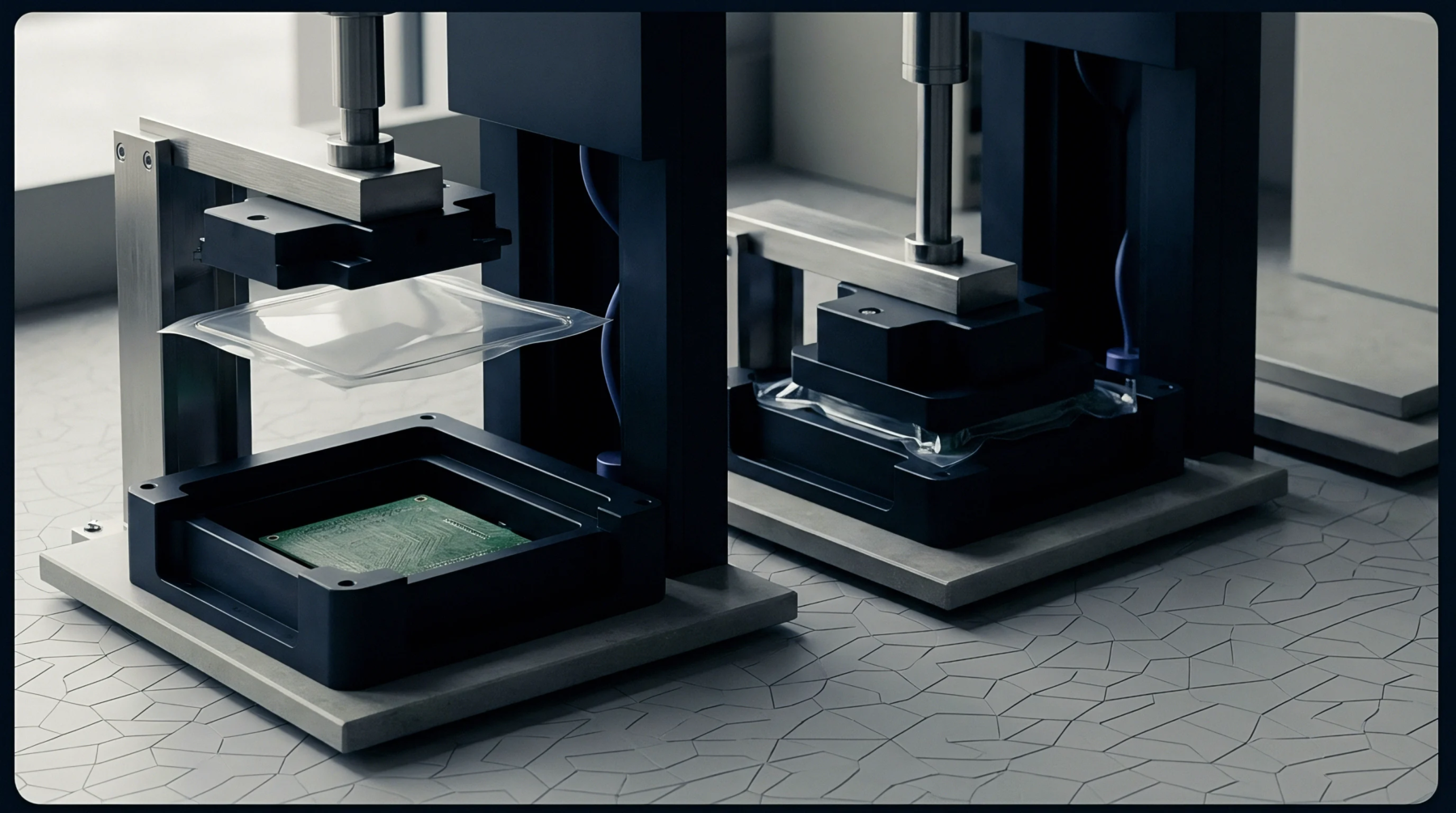
Classifying firmware delta impact before deployment prevents regulatory clock delays across multi-jurisdictional radio type approvals.

FCC rule changes governing modular radios demand precise classification of trace, antenna, and proximity shifts to prevent illegal radiated emissions.

Modular permissive change rules limit host modifications; crossing trace, antenna, or power boundaries forces costly multijurisdictional re-certification.
Expertise is a utility, not a secret. sentiention™ publishes its working knowledge as open reference: intelligence layer covering the materials it sources, the markets it enters, and the reference that serves both.