Adaptive Temperature Polling Frequency Limits in High-Transient Sub-GHz Radio Environments
Adaptive temperature polling in sub-GHz radios is constrained by regulatory airtime ceilings, crystal frequency drift, and battery voltage droop under thermal transients.


Gradient
A thermocouple bonded to an industrial cold-chain sensor captures a 14.2°C per minute thermal ramp as a walk-in freezer door opens into an unconditioned loading bay. Within ninety seconds, internal board temperature shifts by 21°C. Standard fixed-interval polling ~ configured to transmit every fifteen minutes to conserve primary cell energy ~ completely misses the event. The central gateway receives a normal ambient reading before the excursion and another stabilized reading long after the temperature spike has peaked and breached regulatory thresholds for pharmaceutical storage.
Shortening the static polling interval to thirty seconds tracks the thermal curve with high fidelity, but that change burns through the node’s 2.4 Ah primary battery in under seven months while congesting the local 868 MHz ISM spectrum.
Adaptive polling algorithms attempt to resolve this trade-off by adjusting measurement and transmission rates based on the rate of temperature change. When the derivative of the thermal signal remains near zero, the internal micro-controller sleeps for extended intervals, waking only for low-power analog-to-digital conversions. When a rapid thermal gradient appears, firmware shortens the sleep timer exponentially, pushing immediate RF packets to the gateway.
High-transient radio environments present sharp physical constraints to this model, however. Thermal mass differentials between the external sensor element, PCB copper planes, and crystal oscillator generate internal thermal gradients across the node layout, destabilizing RF frequency stability faster than software can adapt its transmission schedule.
A thermal gradient exceeding 8°C per minute introduces a 12 PPM crystal offset within 45 seconds, shifting the carrier outside a 6.25 kHz channel filter.
The rate of environmental temperature change dictates the upper dynamic bound of the sampling loop. In industrial heat-treating, food processing, and cryogenic transport, temperature transients regularly exceed 5°C per second. Capturing these dynamics without aliasing demands wake-up cycles every few hundred milliseconds, but the physical radio link cannot always sustain transmission at rates matching the sensor’s conversion rate.
Sub-GHz radio links face propagation and regulatory constraints that break naive adaptive sampling schemes during severe thermal transients.

Thermal Dynamics in High Excursion Radio Deployment
Heat transfers into a wireless node through conduction across the enclosure casing, convection through internal air gaps, and radiation onto exposed ground planes. The thermal time constant of the temperature sensor determines the baseline response time of the system. A miniature negative temperature coefficient thermistor encased in epoxy exhibits a time constant between 0.5 and 1.5 seconds, whereas a ruggedized platinum resistance thermometer mounted in a stainless steel probe carrier holds a time constant between 5 and 12 seconds.
The node enclosure itself acts as a low-pass thermal filter, dampening ambient fluctuations before they reach internal components.
This thermal filtering creates a time lag between external ambient excursions and internal PCB temperature changes. During rapid transients, the external probe senses the excursion seconds before the onboard crystal oscillator or primary battery experiences temperature shifts. Dynamic polling algorithms that rely solely on internal board temperature sensors fail to detect fast external transients until the external temperature has already passed critical limits.
Firmware must decouple the external sensing element polling rate from the internal radio diagnostic schedule.
The Mechanical Failure of Fixed Sample Intervals
Fixed sampling schedules rely on static assumptions about environmental stability. When deployed in unconditioned industrial zones, static systems expose operating profiles to catastrophic operational failures during unpredicted thermal shocks.
- Aliased Excursion Peak missed critical temperature spikes completely because the transient duration fell entirely between two widely spaced static report intervals.
- RF Buffer Overflow saturated the onboard micro-controller memory when transient event logging attempted to store unscheduled sensor frames during prolonged link loss.
- Passivation Voltage Collapse dropped the power rail below the low-voltage cutoff threshold when the radio transmitted at full power while the primary battery was cold.
- Frequency Offset Misalignment caused complete packet rejection at the receiver because rapid temperature shifts pulled the crystal oscillator frequency faster than receiver tracking logic allowed.
Thermal gradients alter board physical geometries and component characteristics simultaneously. Sub-GHz radio modules built with high-density surface-mount packaging undergo mechanical stress during rapid thermal expansion. Ceramic capacitors shift dielectric constants, altering matching network tuning and degrading receiver sensitivity by up to 6 dB during a 30°C thermal ramp.
Designing for high-transient sub-GHz environments demands evaluating radio performance across the dynamic thermal trajectory rather than at static thermal equilibrium points.
Failure to account for dynamic thermal lag between the sensing probe and the RF section leads to corrupted sensor telemetry, dropped packets, and premature system failure in industrial applications.

Ceiling
Adaptive polling algorithms cannot scale transmission frequency infinitely when thermal transients accelerate. Sub-GHz radio spectrum is strictly governed by national and international regulatory frameworks that dictate maximum duty cycles, dwell times, and channel access mechanisms. In Europe, the ETSI EN 300 220 standard establishes duty cycle caps across the 863 MHz to 870 MHz band.
A node operating in the 868.0 MHz to 868.6 MHz sub-band faces a hard duty cycle limit of 1.0%, corresponding to a maximum cumulative on-air time of 36 seconds within any rolling one-hour window. When a severe thermal transient forces an adaptive algorithm to increase its report frequency from once every ten minutes to once every two seconds, the node consumes its entire hourly duty cycle allowance in less than two minutes of continuous operation.
In North America, FCC Part 15.247 regulations for the 902 MHz to 928 MHz ISM band do not impose direct duty cycle percentages, but enforce minimum channel hopping counts or digital modulation bandwidth minimums. Unlicensed transmitters using direct sequence spread spectrum or chirp spread spectrum must maintain a minimum 6 dB bandwidth of 500 kHz, or employ frequency hopping across at least 25 discrete channels with maximum dwell times of 0.4 seconds per channel within a designated period. When an adaptive node increases transmission frequency during a thermal event, it risks exceeding maximum dwell time allocations on a single channel or violating channel occupancy rules if the hopping engine cannot re-arm fast enough between fast wakeups.
| Region | Frequency Band | Regulatory Standard | Duty Cycle / Airtime Limit | Max Adaptive Update Limit |
|---|---|---|---|---|
| Europe | 868.0 – 868.6 MHz | ETSI EN 300 220-1 | 1.0% max (36 sec/hour) | 360 packets/hr at 100ms payload |
| Europe | 869.4 – 869.65 MHz | ETSI EN 300 220-1 | 10.0% max (360 sec/hour) | 3600 packets/hr at 100ms payload |
| North America | 902.0 – 928.0 MHz | FCC Part 15.247 | 0.4s dwell time per channel | Limited by channel hopping table |
| Japan | 915.0 – 928.0 MHz | ARIB STD-T108 | Listen Before Talk (LBT) + limits | Requires 5ms carrier sense before burst |
Regulatory ceilings create a hard wall for adaptive polling software. When an environmental thermal gradient demands a transmission rate that exceeds local spectrum regulations, node firmware must enforce a secondary limit layer. This safety layer prevents the transmitter from violating legal spectrum usage even if the physical thermal event remains active and unrecorded.
Regional Sub-GHz Duty Cycle Ceilings
Operating in high-transient environments requires careful selection of the target sub-band. Sourcing sub-GHz connectivity modules for global deployments demands matching expected adaptive polling profiles against regional band plans before committing to hardware layouts. In the European Union, selecting the 869.4 MHz to 869.65 MHz sub-band permits up to 500 mW ERP radiated power and a 10% duty cycle ceiling.
This provides ten times the available airtime compared to the standard 868.1 MHz channel, allowing dense dynamic burst schedules during thermal spikes without breaching ETSI compliance.
Japan’s ARIB STD-T108 framework mandates Listen-Before-Talk (LBT) carrier sensing prior to every transmission burst. The radio must execute a minimum 5-millisecond clear channel assessment (CCA) period at a sensitivity threshold below -80 dBm. In high-transient industrial zones with heavy co-channel RF interference, continuous LBT backoffs prevent the adaptive algorithm from transmitting critical temperature alerts on schedule.
Firmware must calculate the energy cost of failed LBT cycles alongside the physical airtime spent during high-frequency reporting loops.

Airtime Caps for Dynamic Data Transmissions
Packet architecture directly governs how many temperature updates fit inside a given regulatory duty cycle quota. Minimizing airtime duration per packet extends the maximum number of allowable adaptive bursts before hitting regulatory ceilings.
- Strip Overhead headers by utilizing optimized radio payload formats that compress double-precision temperature floats into fixed-point 16-bit signed integers.
- Consolidate Telemetry frames by batching multiple transient samples into a single burst payload when real-time latency requirements permit short queuing delays.
- Dynamic Data Rate Adjustment shifts the radio modulation scheme to higher symbol rates during strong link conditions to minimize the packet preamble and payload duration on air.
- Enforce Token Bucket Limits inside the MAC layer firmware to mathematically guarantee that burst rates during extreme thermal shocks never breach sliding-window duty cycle caps.
Clause 7.2.3 of ETSI EN 300 220-1 limits continuous transmissions in the 868.0 to 868.6 MHz band to a 1% duty cycle, capping adaptive temperature updates to 36 seconds per hour.
When an adaptive polling loop hits a regulatory duty cycle ceiling during an active thermal transient, the node must pivot from real-time transmission to local non-volatile memory logging. Telemetry data stored during the ceiling blackout is transmitted later at lower data rates once the rolling duty cycle window clears. The node’s operating contract must specify how remote gateways interpret the resulting gap in real-time updates.
Offset
Sub-GHz wireless communication relies on tight crystal oscillator stability to hold narrow channel bandwidths and maintain link margin. Standard quartz crystals exhibit an AT-cut parabolic frequency deviation over temperature, centered at a turnover temperature near 25°C. The temperature coefficient of a standard crystal drives frequency errors described by a second-order polynomial. As board temperature strays from 25°C, frequency shifts downward according to a parabolic curvature coefficient between -0.03 and -0.05 PPM per degrees Celsius squared.
Under static thermal conditions, this drift is easily managed or compensated by onboard software lookup tables.
High thermal transients destroy static compensation models. When an industrial node undergoes a rapid temperature drop from 25°C to -20°C within two minutes, a steep spatial thermal gradient develops across the crystal package. The outer quartz blank cools faster than internal metallic mounting structures and the hermetically sealed gas environment.
This internal thermal stress creates temporary non-linear frequency offsets that diverge significantly from the static parabolic curve. Standard temperature-compensated crystal oscillators (TCXOs) feature internal thermistors designed to adjust varicap tuning circuits based on ambient package temperature. When the ambient thermal gradient exceeds 2°C per minute, the internal compensation sensor lags behind the actual quartz element temperature, generating severe transient frequency offsets.
| Oscillator Type | Thermal Gradient | Frequency Drift Offset | Channel BW Penalty | Packet Loss Rate at -115 dBm |
|---|---|---|---|---|
| Standard XTAL (32 MHz) | 2.0°C / min | 18.5 PPM | Requires +25 kHz BW | 4.2% |
| Standard XTAL (32 MHz) | 10.0°C / min | 42.0 PPM | Requires +50 kHz BW | 28.6% |
| Standard TCXO (0.5 PPM) | 2.0°C / min | 1.2 PPM | No BW expansion needed | 0.1% |
| Standard TCXO (0.5 PPM) | 10.0°C / min | 8.5 PPM | Requires +12.5 kHz BW | 6.8% |
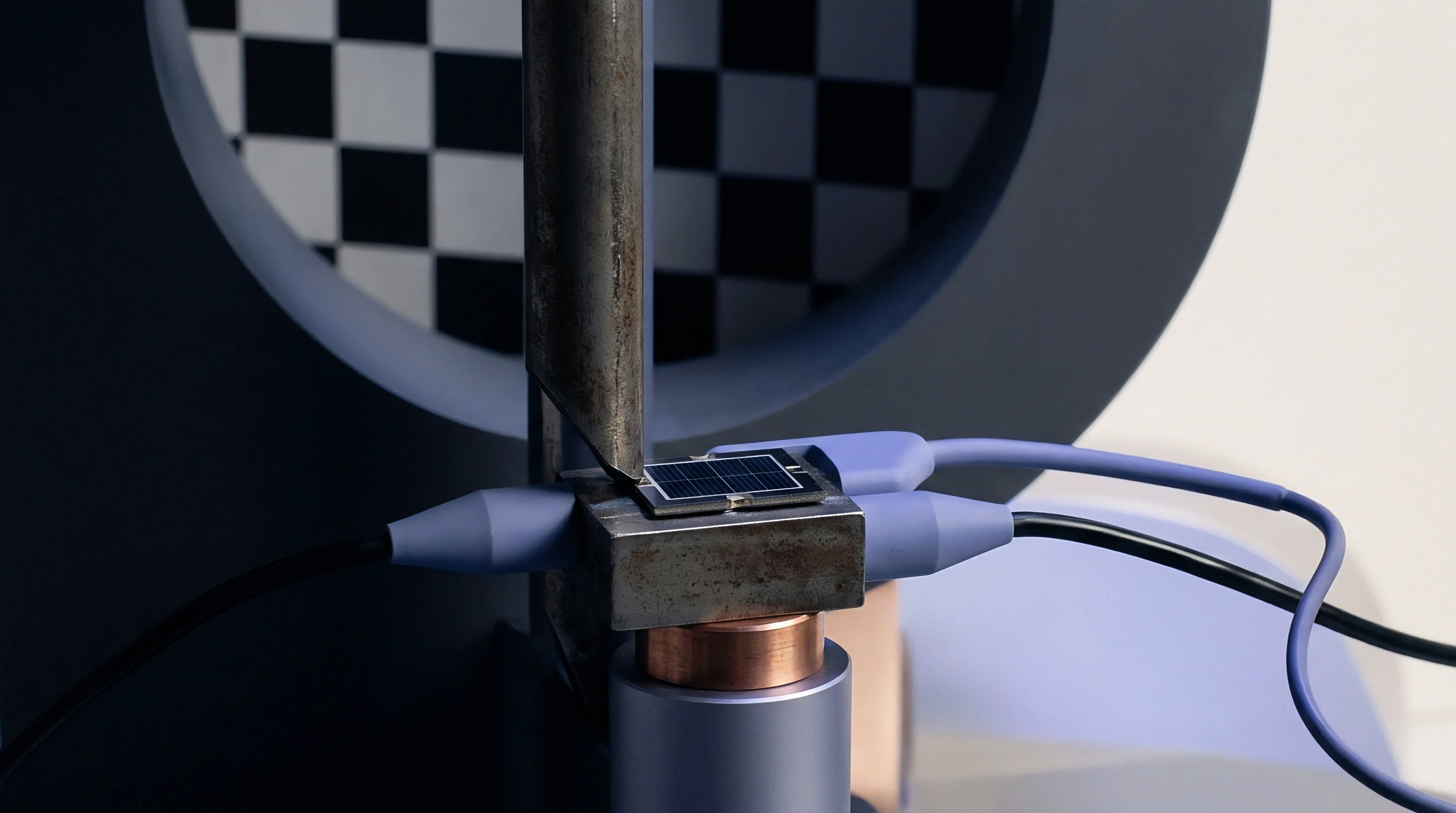
Narrowband sub-GHz systems operating with channel spacings of 12.5 kHz or 6.25 kHz suffer immediate signal loss when crystal offsets exceed a few parts per million. At 915 MHz, a 40 PPM frequency drift corresponds to a 36.6 kHz carrier shift. This shift moves the transmitted signal completely outside the receiver’s narrow intermediate frequency (IF) bandpass filter, causing total packet loss regardless of radiated transmit power.
Is Narrowband Sub-GHz Viable under Rapid Thermal Shocks?
Deploying sub-GHz narrowband communications into high-transient thermal environments forces a trade-off between receiver sensitivity and carrier frequency tolerance. Ultra-narrowband systems achieve link budgets down to -130 dBm by tightening receiver noise bandwidth, but narrow channel filters cannot accommodate frequency offsets generated by rapid thermal swings. Maintaining link stability during severe thermal ramps requires widening receiver channel bandwidth, which raises the noise floor and degrades sensitivity.
Wideband modulation schemes, such as LoRa chirp spread spectrum operating at 125 kHz or 250 kHz bandwidths, tolerate significantly higher frequency offsets without link dropouts. The fractional offset relative to total channel bandwidth remains small even under severe thermal shock. A 40 PPM frequency offset at 868 MHz represents a 34.7 kHz carrier shift, which falls comfortably within a 125 kHz LoRa receiver window.
This tolerance allows LoRa nodes to maintain connectivity during extreme temperature ramps where narrowband FSK systems fail without specialized TCXOs.
Modules using integrated standard crystals require wide RF channel settings to survive rapid cooling cycles, reducing theoretical link distance in industrial facilities.
Low field yield in rapid-chilling applications is often attributed to localized antenna detuning or RF interference, masking the underlying transient crystal drift that pulls carrier frequencies outside receiver demodulation bandwidths.
Selecting crystal component specifications requires evaluating dynamic frequency stability curves rather than static room-temperature tolerances printed on component packaging datasheets.

Pacing
Mathematical pacing models for adaptive polling balance dynamic temperature tracking accuracy against node operational lifespan. The core sampling algorithm relies on calculating the continuous time derivative of temperature measurements. Let T(k) represent the discrete temperature sample at time index k, and Δ t represent the current sample interval duration.
The estimated absolute rate of change is computed using a backward difference derivative, passed through a first-order exponential moving average filter to reject high-frequency sensor noise.
The filtered derivative magnitude |dotTf(k)| maps directly to the next scheduled sleep interval Tsample(k+1) through a non-linear transfer function bounded by fixed algorithm limits:
Tsample(k+1) = maxleft(Tmin, fracTmax1 + α · |dotTf(k)|βright)
Where Tmin is the minimum allowable sleep interval dictated by battery peak current constraints and spectrum regulatory duty cycle caps, Tmax is the baseline static polling interval used during steady-state ambient conditions, α is the dynamic tracking gain factor, and β is the non-linear scaling exponent. Setting β = 1.0 produces a smooth hyperbolic response, while β > 1.0 generates an aggressive step-response that rapidly collapses the sample interval at the onset of a thermal excursion.
To demonstrate this dynamic adaptation, consider a cold-chain monitoring node deployed in a transport container. Node firmware initializes with a baseline static sleep interval Tmax = 600 seconds, a minimum sleep interval Tmin = 2 seconds, a tracking gain α = 15.0 seconds/(circC/min), and a scaling exponent β = 1.5. During steady-state storage at 4.0°C, the temperature derivative remains near zero, resulting in a calculated sample interval equal to the maximum 600-second limit.
A loading door opens, exposing the node to warm ambient air that initiates a rapid thermal excursion reaching a rate of change of 8.5circC/miνte. The exponential moving average filter updates the rate derivative, yielding a filtered value |dotTf| = 8.5circC/miνte. Substituting these operational values into the dynamic transfer function produces the updated interval calculation:
Tsample = maxleft(2.0, frac6001 + 15.0 · (8.5)1.5right) = maxleft(2.0, frac6001 + 15.0 · 24.78right) = maxleft(2.0, frac600372.7right) = 1.61 seconds
Because the mathematically calculated value of 1.61 seconds falls below the safety boundary limit, firmware clamps the final sleep interval to Tmin = 2.0 seconds. The radio node shifts instantly into high-frequency reporting mode, transmitting temperature updates every two seconds to track the excursion accurately. As the container temperature stabilizes at the new ambient level, the derivative |dotTf| drops back toward zero, smoothly relaxing the sleep interval back toward the 600-second steady-state baseline, conserving remaining battery energy.
Setting the derivative gain parameter higher than the physical thermal mass response time causes sampling loop oscillation and premature battery depletion.

Mathematical Constraints for Adaptive Temperature Sampling
Determining optimal parameters for the adaptive transfer function requires matching algorithm gain coefficients to the physical thermal time constants of the system. Excessive derivative gain causes algorithm instability, where small sensor noise spikes trigger unwanted high-frequency transmission bursts. Insufficient gain creates lag, causing the system to miss transient peaks entirely.
Hysteresis must be integrated into the dynamic pacing engine to prevent rapid oscillation between high-frequency and low-frequency sampling regimes. The algorithm enforces different scaling gains depending on whether the temperature derivative magnitude is increasing or decreasing, establishing a directional stability barrier.
Executing an adaptive polling loop requires establishing a clear firmware control pipeline to maintain dynamic system stability during rapid environmental swings.
- Initialize the baseline configuration parameters including minimum sample time, maximum sample time, gain parameters, and non-volatile queue allocation buffers.
- Sample the temperature sensor output at the discrete interval established by the current sleep timer duration.
- Compute the unfiltered temperature derivative against the previous stored reading and apply the low-pass exponential moving average filter.
- Evaluate the filtered rate of change against dynamic upper and lower threshold limits to determine if an active excursion event is occurring.
- Calculate the target raw sample time using the non-linear hyperbolic mapping equation based on the current derivative magnitude.
- Clamp the calculated raw sample time between the absolute regulatory duty cycle safety boundary and the steady-state maximum sleep duration.
- Update the hardware real-time clock sleep timer with the bounded interval value and enter low-power sleep mode until the next wake event.
This systematic control loop protects the node from spectrum compliance violations while ensuring rapid response during true thermal emergencies.
What mathematically rigorous boundary condition prevents an adaptive polling algorithm from triggering continuous transmission cycles when exposed to sustained, non-monotonic thermal noise spikes near critical alarm thresholds?


Drain
Primary lithium batteries, particularly Lithium Thionyl Chloride (LiSOCl2) chemistries widely selected for sub-GHz industrial sensors, operate through complex electrochemical passivation mechanics. A thin insulating layer of lithium chloride (LiCl) crystals forms naturally on the metallic lithium anode surface during inactive storage periods. This passivation layer protects the cell from self-discharge, enabling multi-year operating lifespans.
The passivation layer presents high internal cell resistance during the initial milliseconds of an electrical load pulse.
When an adaptive node wakes from an extended three-hour sleep state to execute a high-power sub-GHz transmission, the initial current draw of 30 mA to 120 mA causes a sharp transient voltage drop known as voltage delay. In cold environmental conditions, where electrolyte conductivity is suppressed, this initial voltage drop pulls the cell terminal rail below the micro-controller’s brownout reset threshold (typically 1.8V to 2.2V), resetting the node before the radio frame completes transmission. Under adaptive polling, rapid succession wakeups deplete the passivation layer completely, reducing internal cell impedance and stabilizing the voltage rail.
The high frequency pulse trains rapidly consume available active chemical species, driving severe cell capacity derating.
| Operating Temperature | Polling Burst Interval | Passivation Voltage Dip | Effective Cell Capacity | Node Service Life |
|---|---|---|---|---|
| +25°C | Static 600 sec | 2.85 V (No reset) | 2400 mAh (100%) | 8.2 years |
| +25°C | Adaptive (2s to 600s) | 3.10 V (No reset) | 2150 mAh (89%) | 5.4 years |
| -20°C | Static 600 sec | 2.15 V (Marginal) | 1450 mAh (60%) | 3.8 years |
| -20°C | Adaptive (2s to 600s) | 1.75 V (Brownout Reset) | 820 mAh (34%) | 0.6 years (Failed) |
Pulse current drains under cold ambient conditions degrade chemical cell capacity exponentially. A 2.4 Ah LiSOCl2 bobbin-cell battery discharging at -20°C under continuous two-second adaptive bursts delivers less than 35% of its rated nominal room-temperature capacity. Power supply design demands integrating hybrid energy storage systems, such as parallel-connected hybrid layer capacitors (HLCs) or electric double-layer capacitors (EDLCs), to buffer peak transmission current pulses and shield the primary cell from severe transient voltage droop.
Cell Passivation and Internal Impedance under Peak Load
Designing power management systems for high-transient sub-GHz radios demands balancing passive cell depassivation against unnecessary energy expenditure. Firmware pre-pulse routines can deliberately discharge small current loads through an internal resistor to clear the LiCl passivation layer before firing the high-power RF power amplifier. These pre-pulse cycles consume valuable energy, requiring strict invocation rules based on measured sleep durations and operating temperatures.
When environmental temperatures drop rapidly, internal cell impedance rises instantly, long before the passivation layer undergoes current-induced breakdown. The energy budget model must account for the dynamic interaction between ambient temperature, cell state-of-charge, internal impedance, and target adaptive transmission rates.
Passivation breakdown on primary lithium batteries requires controlled pre-pulse loads before high-power RF transmission bursts occur.
Validating radio power supply stability under high-transient environmental conditions requires enforcing rigorous component selection criteria during module procurement.
- Hybrid Capacitor Integration mandates specifying parallel storage elements with ultra-low equivalent series resistance to suppress voltage delay dips during sub-Zero transmission bursts.
- Brownout Threshold Calibration requires setting micro-controller low-voltage trip points to minimum stable operation limits to maximize usable cell discharge voltage windows.
- Temperature-Aware Pre-Pulse Logic enforces dynamic activation of depassivation dummy loads only when sleep durations exceed threshold limits at low measured temperatures.
- Peak Current Bandwidth Limiting forces the radio power amplifier to operate at reduced output power steps when internal supply rails drop near safety limits during dynamic temperature events.
The total cost of operating an adaptive temperature monitoring network is defined by battery replacement cycles in field deployments. A node design that fails to account for passivation mechanics and internal cell impedance spikes during rapid thermal transients experiences premature battery failure during its first cold-season operational cycle. Integrating primary batteries with hybrid energy storage capacitors provides the peak current capability needed to sustain high-frequency adaptive transmissions while preserving multi-year service lifespans across extreme industrial environments.