
Foreign Radio Registration Control for Commercial Importers
Commercial radio importers hold legal liability for verifying modular grants, maintaining local agents, and securing regional type approvals before customs entry.
Commercial radio importers hold legal liability for verifying modular grants, maintaining local agents, and securing regional type approvals before customs entry.

Calculating peak location separation ratios determines whether co-located radio transmitters require volumetric SAR summation or qualify for test exemption.

Millimeter-wave phased array exposure limits in dense enclosures depend on vector near-field spatial summation and multi-band total exposure ratio validation.

Simultaneous transmission SAR requires ratio summation and SPLSR verification whenever colocated antennas exceed 1.6 W/kg total absorption within 20 cm.
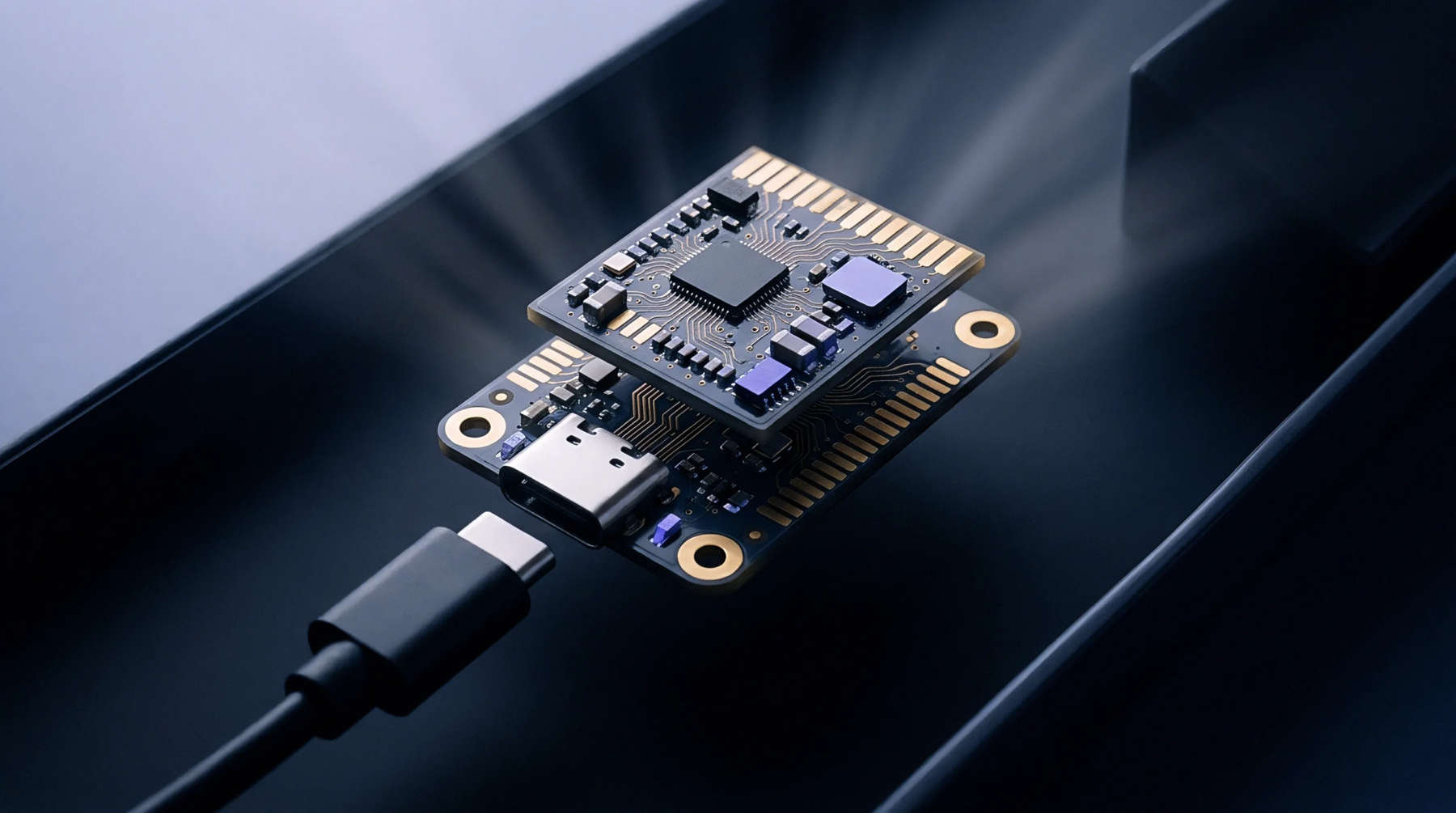
Firmware updates changing e-label graphics remain Class I permissive changes if radio parameters stay unaltered and label readability in three steps persists.

Dynamic e-label storage integrity relies on hardware-locked, write-protected flash sectors verified by cryptographic bootloader signatures across global approvals.

FCC e-label compliance requires 3-step menu access without special codes, non-volatile display storage, and temporary transit labels on packaging.

Unverified radio subsystem certificates expose host freight to severe port demurrage, emergency re-testing costs, and total cargo seizure at customs gates.

Collocated industrial radio compliance demands physical isolation and joint transmitter spurious measurements when passive non-linearities trigger intermodulation.

Class II Permissive Changes resolve multi-transmitter collocation by assessing composite radiated spurious emissions and aggregate RF exposure ratios before sale.

Integrating approved radio modules into industrial enclosures demands verifying radiated spurious limits, housing apertures, and permissive change scope.

Co-located radios generating third-order intermodulation products require dynamic power backoff sweeps during radiated pre-scans to prevent regulatory rejections.

Modular radio integration requires strict host layout isolation, explicit grant scope verification, and full product unintentional radiator retesting to ensure global access.

Mitigate multi-market Asian radio liabilities by maintaining direct certificate control, validating modular host integration boundaries, and securing supplier indemnities.

Firmware adjustments altering multi-radio output power or duty cycles past established regulatory delta thresholds mandate targeted radiated spurious chamber retesting.

Altering host enclosures or antennas invalidates modular radio grants, demanding radiated spurious testing and formal permissive changes before product launch.

Modular radio host integration preserves the original grant only when antenna type, gain, trace layout, and RF exposure separation strictly match certificate conditions.

Uncontrolled resin curing shifts housing permittivity, detuning antennas and triggering costly Class II recertifications through failed harmonic limits.

Controlling near-field dissipation loss demands sub-0.1 µg/cm² ionic cleaning of flux residues to prevent dielectric antenna detuning and grant failures.
Expertise is a utility, not a secret. sentiention™ publishes its working knowledge as open reference: intelligence layer covering the materials it sources, the markets it enters, and the reference that serves both.