Meaning
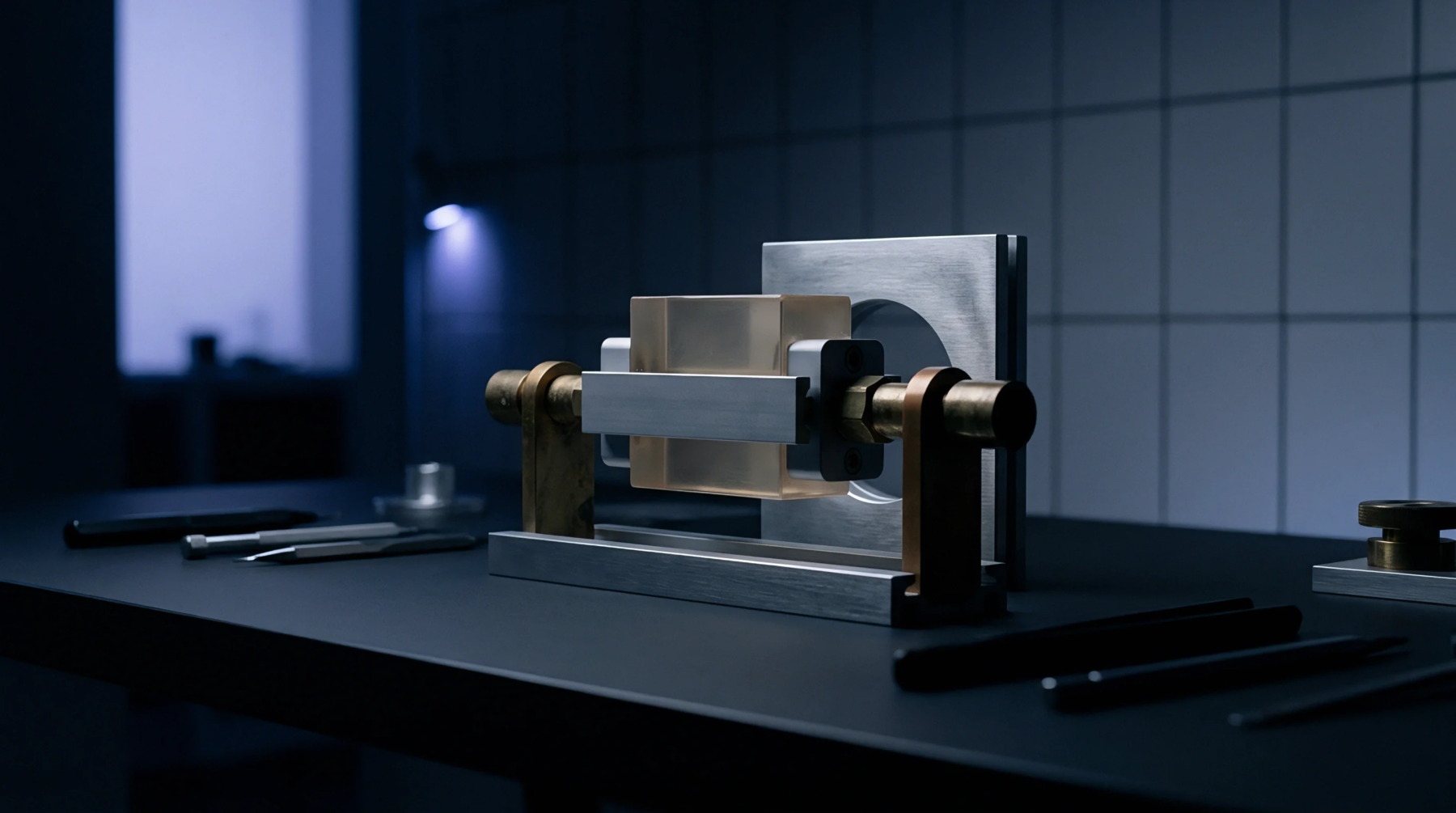
Laboratory apparatus utilizing optical principles to manipulate and measure millimeter wave signals allow for the non contact characterization of materials and antenna radiation properties. A quasi optical bench is a specialized testing platform designed for frequencies where the wavelength is small enough to be treated like a beam of light, yet large enough that diffraction effects are still significant. This technique bridges the gap between traditional microwave engineering and classical optics.
By using lenses and mirrors and other optical components, engineers can focus and direct radio frequency energy with high precision. This is particularly useful for measuring the dielectric properties of material samples and the gain of high frequency antennas. The bench provides a controlled environment that minimizes reflections and interference from the surrounding laboratory.
System Configuration
The layout of the bench is carefully designed to maintain the integrity of the electromagnetic beam as it passes through the various components. A typical quasi optical bench consists of a source of millimeter wave energy and a series of focusing elements and a detector. These components are mounted on a rigid rail or table to ensure precise alignment.
Corrugated horn antennas are often used to create a well defined beam with low sidelobes and high polarization purity. Lenses made from low loss plastics, such as teflon or polyethylene, are used to focus the beam into a small spot or a parallel beam. This allows for the measurement of small material samples or the characterization of the radiation pattern of an antenna.
The entire system is often automated to allow for rapid and repeatable measurements.
Analytical Precision
The use of optical techniques provides a level of accuracy that is difficult to achieve with traditional waveguide or coaxial measurements. A quasi optical bench allows for the measurement of materials without the need for complex sample preparation or electrical contact. This eliminates the errors introduced by gaps or misalignments in a test fixture.
By analyzing the transmission and reflection coefficients of a sample, engineers can determine its complex permittivity and permeability with high precision. This data is essential for the design of radomes and lenses for high frequency radar and communication systems. The technique also allows for the characterization of frequency selective surfaces and other advanced electromagnetic structures.
The high sensitivity of the detectors used on the bench enables the measurement of very low levels of signal attenuation.
Experimental Scope
The versatility of the platform makes it suitable for a wide range of research and development tasks in the millimeter wave and terahertz bands. A quasi optical bench can be used to study the properties of new materials and the performance of novel antenna designs and the behavior of complex electromagnetic systems. It is an essential tool for companies developing next generation wireless technologies, such as six gigahertz and beyond.
The bench can also be used for non destructive testing, such as detecting defects in composite materials or measuring the thickness of coatings. As the demand for higher bandwidth and more precise sensors grows, the importance of these optical measurement techniques continues to increase. The resulting data helps to refine the models used in electromagnetic simulation and ensure the reliability of the final product.