
Legal and Technical Recourse for Binary Blob Vulnerabilities in Semi Custom Modules
Isolate opaque module binary blobs using MPU sandboxing while securing source escrow execution rights in procurement contracts to force rapid vendor updates.
Isolate opaque module binary blobs using MPU sandboxing while securing source escrow execution rights in procurement contracts to force rapid vendor updates.

Contractual risk allocation for third-party firmware defects requires dual-bank storage architecture, explicit liability cap carve-outs, and mandatory SBOM audit rights to cover field remediation costs.

Firmware defect attribution in embedded MCUs requires register-level crash logging and explicit hardware-software liability boundaries in supply contracts.

Stochastic jump point modeling maps sudden tariff discontinuities across bonded assembly chains, quantifying landed cost volatility and framing scope contracts.

Dynamic dual-sourcing tooling allocation mitigates tariff volatility by balancing fixed asset amortisation against stochastic landed cost triggers across trade corridors.

Regional sourcing splits for wireless connectivity modules balance regulatory compliance, component provenance, and NRE against landed unit costs.

Secondary source lead time asymmetry locks procurement schedules, requiring prefunded die banks and synchronized frozen windows to permit volume reallocation.

Dual-source landed cost models balance component volume discounts against logistics tariffs, quality yield deltas, and risk mitigation premiums.

Populated circuit board classification requires determining principal function under Section XVI notes rather than declaring bare substrate heading 8534.

Continuous buffer auditing and strict milestone-linked escrow arbitrate working capital drag while insulating multi-tier supply lines from latent defect costs.

Reconciling electronics BOM sourcing against regional tariff rules demands tracing component origin and verifying tariff shifts at every manufacturing stage.

Foreign module conversion expenses isolate pure assembly, packaging, and test machine runtime from bill of materials costs to control true landed margins.

Dynamic temperature-dependent matrix compensation reconciles multi-site RF test fixture dielectric shift to maintain measurement accuracy across production sweeps.

De-embedding high-frequency S-parameters on production lines requires IEEE 370 2x-thru calibration, automated fixture removal, and continuous contact wear tracking.
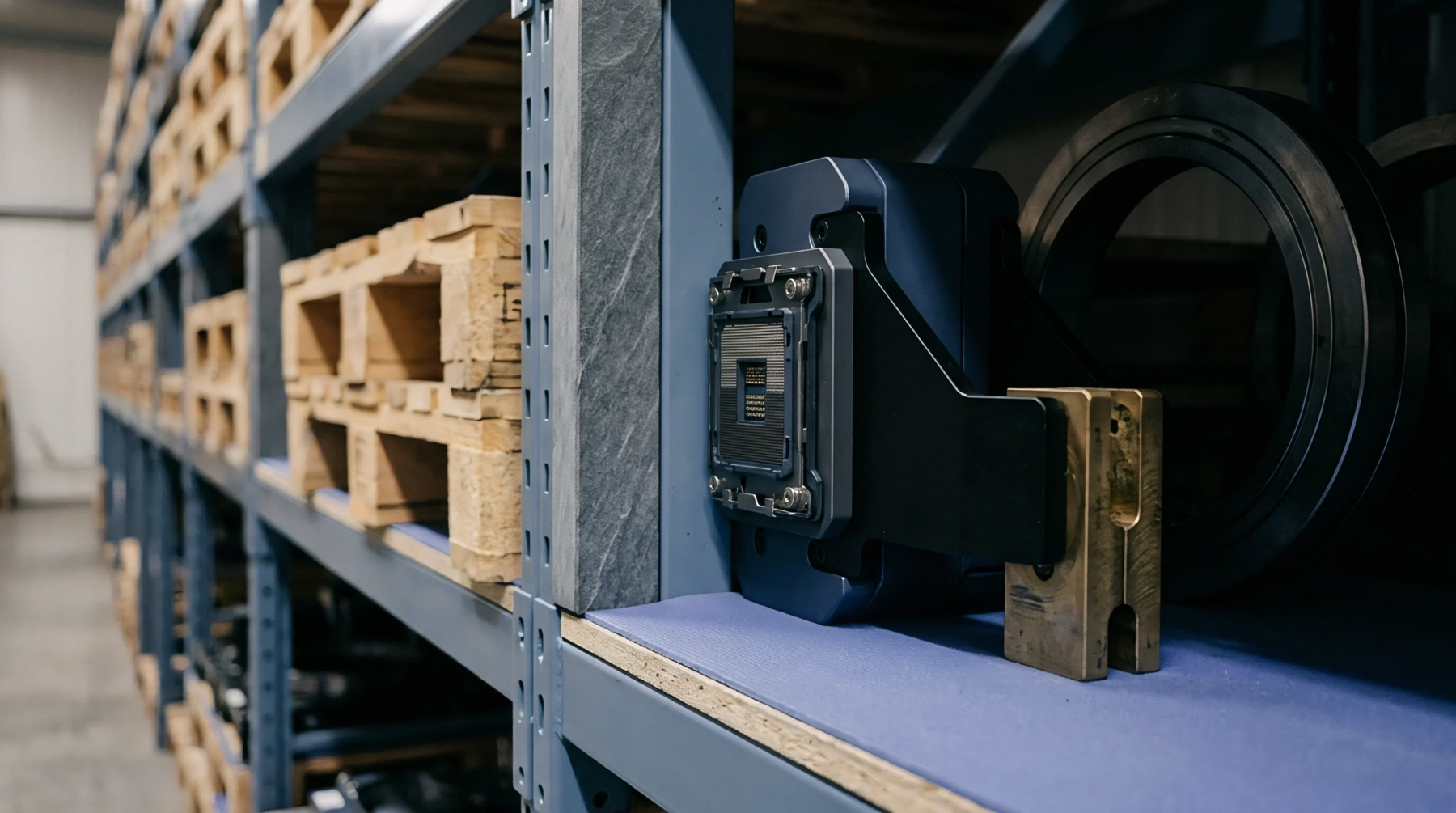
Factory RF test fixture attenuation drifts up to 1.4 dB from socket wear and thermal expansion, requiring automated daily de-embedding to prevent false scrap.

Reconciling multi-vendor laminate inventories requires automated extraction of glass weave pitch and resin content to adjust routing angles and prevent skew failure.

Embedding secondary laminate substitution matrices inside IPC 2581 files prevents unapproved shop floor material swaps and protects high-speed signal integrity.
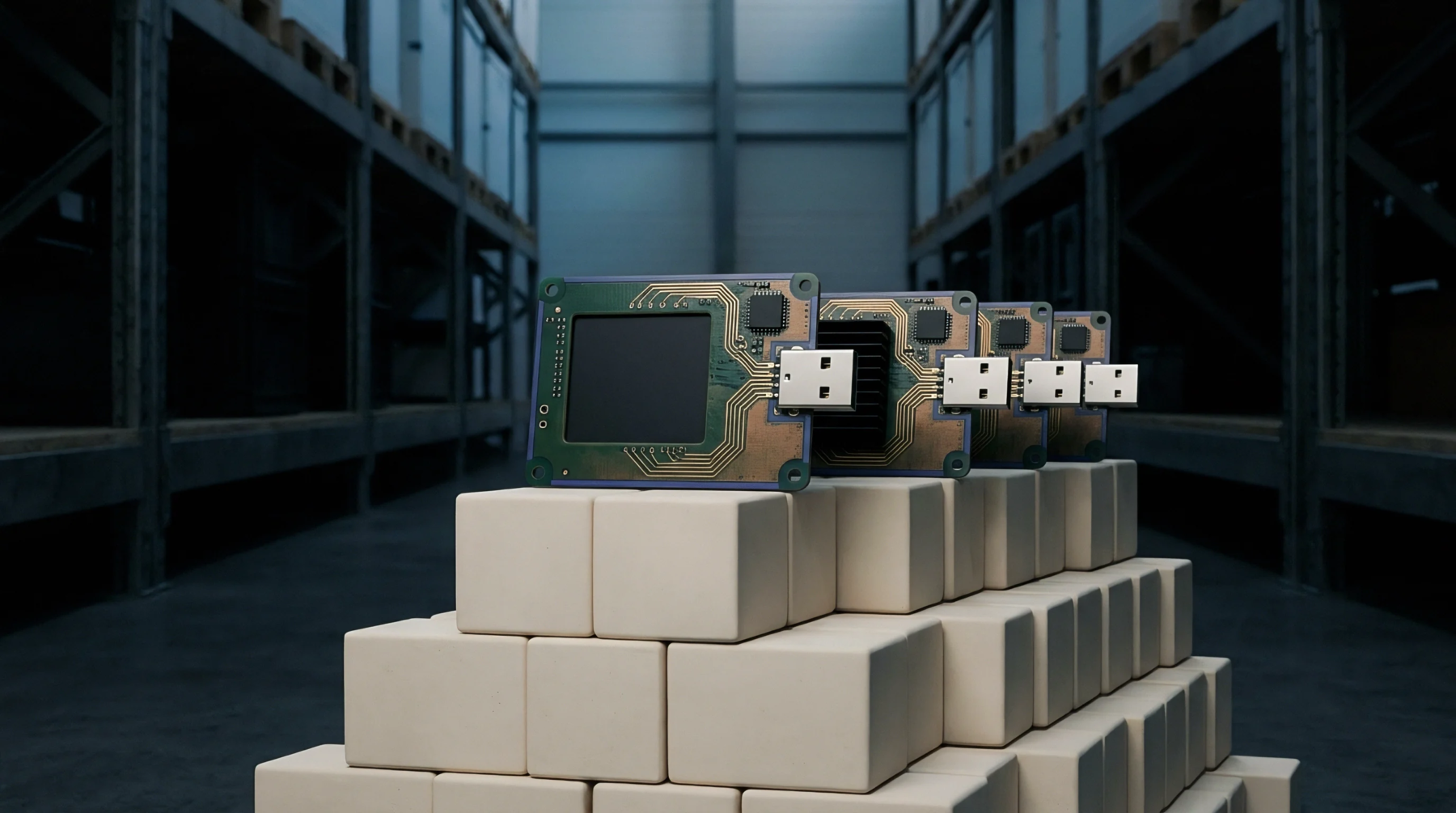
Automating IPC-2581 dielectric stackup verification extracts XML layer parameters directly into field solvers to validate impedance before factory lamination.

Auditing vendor toolchains requires binary diffing, containerized build trees, and contractual source delivery to eliminate cross border integration failures.

Automated Gerber to native source cross-checking isolates CAM conversion faults by running vector boolean diffs and netlist extractions before PCB tooling.

Extracting netlists directly from manufacturing Gerber files and cross-checking them against schematic IPC data prevents silent hardware translation failures.

Dynamic parametric bin limits require cryptographic payload decoupling to harmonize multi-site manufacturing yields without exposing raw firmware source IP.

Complete dual source module scopes mandate native uncompiled CAD and firmware files, containerized toolchains, duplicate test fixtures, and joint ECO approval.

Calculating landed premium spreads requires blending primary contract prices, grey market spot markups, firmware porting NRE, freight, and scrap rates.

SMT board yield variance tracking requires normalizing defect counts into DPMO and RTY across SPI, AOI, and AXI gates to isolate machine drift from material scrap.

Escrow contracts must pair uncompiled raw CAD databases and dockerized toolchains with calibrated golden units to enable rapid secondary test jig bring-up.

Secondary factory tooling and qualification costs split between physical fixtures and bring-up labor; detailed SOWs secure asset ownership and yield stability.

Cryogenic vacuum cycling accumulates interfacial shear strain in sputtered kinematic coatings, causing delamination and micron-level positioning failure.

Evaluating friction coefficients in high-preload sphere-in-groove interfaces requires accounting for GPa-level Hertzian stresses and micro-slip hysteresis.

Cryogenic micro-yield in monolithic titanium flexures is suppressed by using high-purity Grade 1 stock with less than 0.12% oxygen and chemical recast etching.
Expertise is a utility, not a secret. sentiention™ publishes its working knowledge as open reference: intelligence layer covering the materials it sources, the markets it enters, and the reference that serves both.