
Cross Border Tooling Custody Enforcement Mechanics under Foreign Arbitral Treaties
Cross-border tooling custody enforcement requires emergency arbitral turnover orders backed by bilateral judicial interim protocols to bypass factory liens.
Cross-border tooling custody enforcement requires emergency arbitral turnover orders backed by bilateral judicial interim protocols to bypass factory liens.

Draft engineering test requirements by binding parametric limits to specific fixture loss compensations, statistical sampling schemes, and clear failure remedies.

Transfer circuit files using IPC-2581 or Gerber X2 with IPC-D-356 netlists to ensure automated CAD validation and prevent assembly errors.

Choosing between radio modules and discrete layouts balances upfront NRE fees and compliance testing against per-unit BOM costs and production volume thresholds.

White-label products sold by competitors share baseline hardware, exposing both brands to identical silicon errata, component supply shocks, and vendor lock-in.

Valuing foreign custom tooling in arbitration requires Depreciated Replacement Cost disaggregation backed by verified shot logs and disaggregated unit price invoices.

Cryptographic key custody requires FIPS 140-3 HSM injection, credit-metered factory proxies, and strict scrap certificate revocation.

Dual-bank flash partitioning enables fail-safe firmware updates by isolating execution to Bank A while writing and verifying new images on Bank B before reset.

Lock bills of materials contractually and require automated feeder verification to eliminate unannounced component substitutions in turnkey electronics sourcing.

Firmware escrow succeeds only when deposits include containerized toolchains, signing keys, and test scripts verified by automated clean-room compilation audits.

Resolving cross-border latent module defect disputes requires combining forensic physical analysis with disciplined notice and structured arbitration clauses.

Contractual allocation of RF redesign costs requires an Interface Control Document stackup baseline, binding change orders, and tiered liability thresholds.

A complete wireless design transfer requires native CAD databases, test fixture software, and clear grant ownership to prevent dual-source failure.

Decoupling engineering scope from bill of materials costs requires upfront NRE milestone gates, open-book component auditing, and native file handovers.

Unrecoverable field recall losses stem from gaps between tier-one indemnity caps and sub-tier supplier liability waivers during component root cause disputes.

Nested ANOVA protocols isolate individual spindle mechanics from global gantry thermal drift, establishing enforceable mechanical requalification baselines.

Cross-border transfers of physical layout files trigger high-risk OECD transfer pricing audits unless backed by contemporaneous DEMPE labor logs and arm's length valuation.

Dual site binary blob integration relies on deterministic checksum gating, synchronized flash partition maps, and hardware security module key isolation across lines.
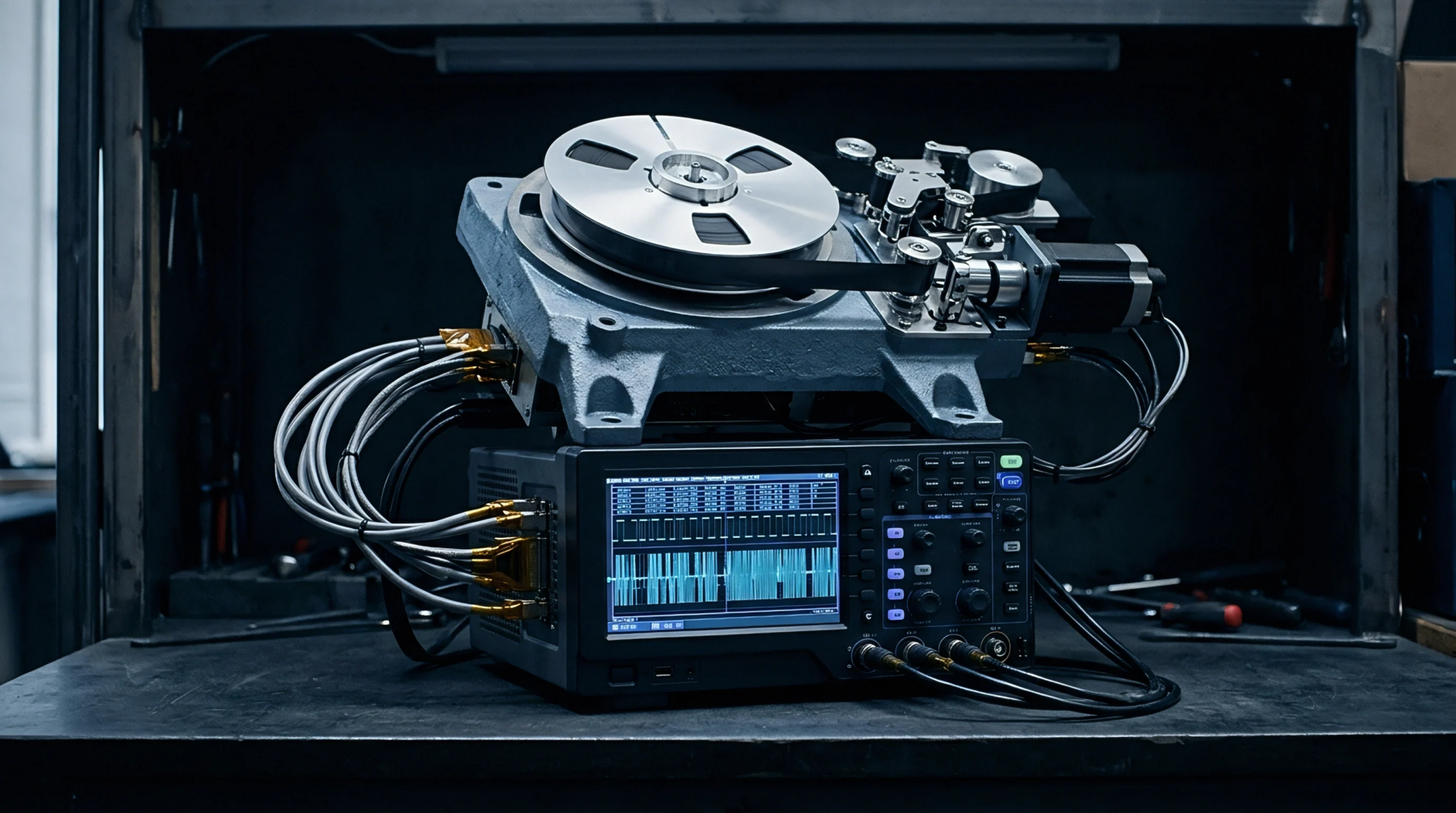
Cast aluminum plate delivers isotropic thermal expansion across all orthogonal axes due to its stress-relieved equiaxed grain structure.

Continuous integration firmware escrow verification relies on deterministic build containers and automated physical test vector benches to resolve synchronization disputes.

Unbundling engineering deliverables separates physical component supply from native design files, firmware repositories, and test fixtures, ensuring dual-sourcing rights and transparent landed costs.

Baseband register drift across silicon steppings requires dynamic runtime register lookup tables tied to hardware ID registers to prevent silent write failures.

Structuring cross-border packaging indemnification demands uncapped IP liability carve-outs, IPC-2581 design escrow, and unbroken sub-tier flow-down covenants.

Regulatory certification failure liability depends on linking contract milestone payments and indemnification clauses to accredited lab test reports.

Substrate dielectric tolerance and etch variance shift trace impedance, raising return loss and degrading RF power amplifier efficiency in custom module designs.

Module IP management requires defining baseline assets, acquiring raw CAD and containerized build packages, and securing clear derivative assignment.
Liquidated damage allocations for optical inspection failures require multi-tiered downtime formulas backed by cryptographic system logs to withstand cross-border enforceability challenges.

Quantifying shear rates and gate geometry limits prevents fiber length attrition, tool surface erosion, and mechanical strength loss in molded composite parts.

Foreign statutory possessory liens defeat emergency arbitral surrender orders under lex situs unless substitute financial security is deposited to release the asset.

A test fixture statement of work must specify pin contact physics, calibration traceability, measurement uncertainty budgets, and native design deliverables.
Expertise is a utility, not a secret. sentiention™ publishes its working knowledge as open reference: intelligence layer covering the materials it sources, the markets it enters, and the reference that serves both.