
Turnkey Module Source Schematic Handovers before NRE Payment Authorization
Schematic handovers before NRE release require full native CAD project files, netlists, and manufacturing data verified on the bench prior to invoice authorization.
Schematic handovers before NRE release require full native CAD project files, netlists, and manufacturing data verified on the bench prior to invoice authorization.

Maintaining transferred firmware repositories requires containerized build environments, physical testing rigs, and explicit SLAs to allocate silicon errata costs.

Dynamic volume splitting balances supply risk by adjusting dual-hardware manufacturing quotas based on real-time factory yields, quality limits, and tooling amortisation floors.

Compensate laser tracker atmospheric error using Edlen index calculations, distributed sensor arrays, and line-integral math to eliminate scale bias.

Ground allocation distributes warranty liability across hardware tiers based on integration depth, physical root cause, and explicit contract caps.

Silicon die shrinks accelerate output driver edge rates and elevate parasitic inductance, requiring full signal integrity auditing and updated IBIS models before drop-in assembly signoff.

Automated inspection system acceptance hinges on partitioning sensor variance from part variance through rigorous gage repeatability and guardband verification.

Value design transfer packages by auditing native CAD and firmware source completeness against secondary bring-up friction and NPV returns.

Dual sourced wireless module manufacturing package files require synchronized substrate stackups and hardware sensing firmware to resolve binary divergence.

Uncoupling engineering charges from unit component costs prevents perpetual margin penalties and secures design ownership for secondary factory transfers.

Deterministic register verification requires post-reset bitwise snapshotting, shadow register diffing, and strict bit-masking HAL drivers across multi-site handovers.
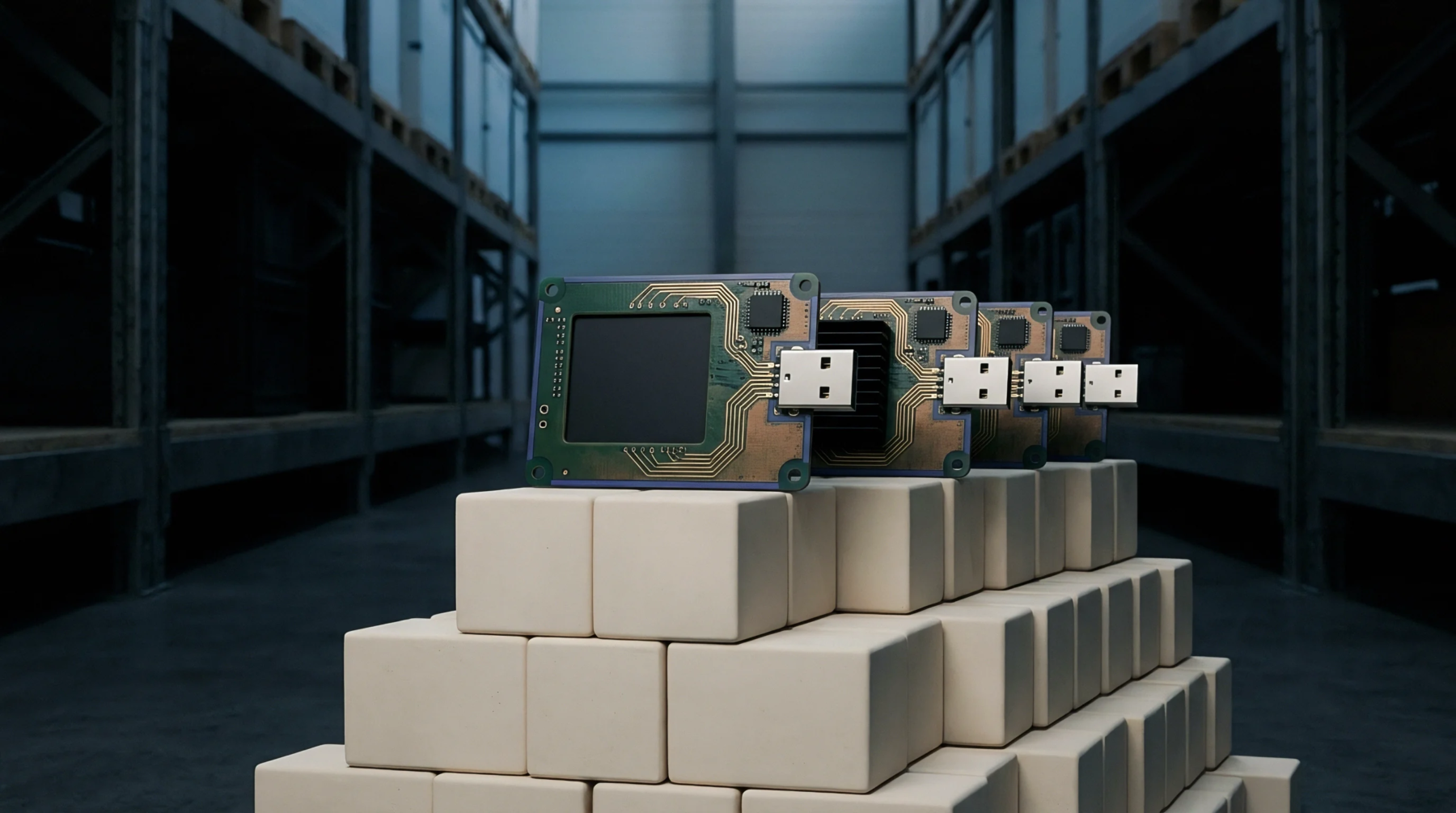
Proportional software recall liability relies on game-theoretic Shapley value modeling applied to static and dynamic program slice dependencies

Long term landed cost models for dual sourced hardware must account for localized BOM markups, transit carrying charges, labor tact times, and duty rules.

Auditing transfer packages demands verifying native CAD files, bit-for-bit firmware build parity, ATE jig calibration logs, and ECN histories before tooling.

Split hardware sourcing increases initial unit costs by 12 to 38 percent through volume tier loss, duplicate tooling, and secondary line qualification.

Kinematic flexure interfaces isolate dissimilar metal thermal expansion mismatch by matching degree-of-freedom constraints to prevent micro-yield and hysteresis.

Precision tool transfer requires distributed atmospheric compensation and multi-station laser tracker network bundling to prevent structural drift errors.

Multi tier hardware contracts assign liability by linking component change notifications directly to delta qualification matrices and capped pass-through indemnities.

Verifying component process changes requires validating raw S-parameters, mechanical coplanarity, and firmware regression logs against baseline specs.

Line requalification demands baseline MSA verification below ten percent GRR followed by phase-gated subgroup testing before releasing automated lines.

Delta test coverage verification isolates modified netlists, updates physical probe vectors, and validates structural defect models to eliminate uninspectable SMT nodes.

Valuation models for secondary design repositories rely on weighted reproduction cost and royalty relief methods adjusted by technical completeness factors.

Validating factory fabrication packages for multi-sourced wireless modules requires IPC-2581 layer mapping, netlist verification, and RF calibration parity.

Unbundling firmware drivers and test fixtures requires explicit source repositories, containerized builds, physical CAD files, and audited fixture escrow.
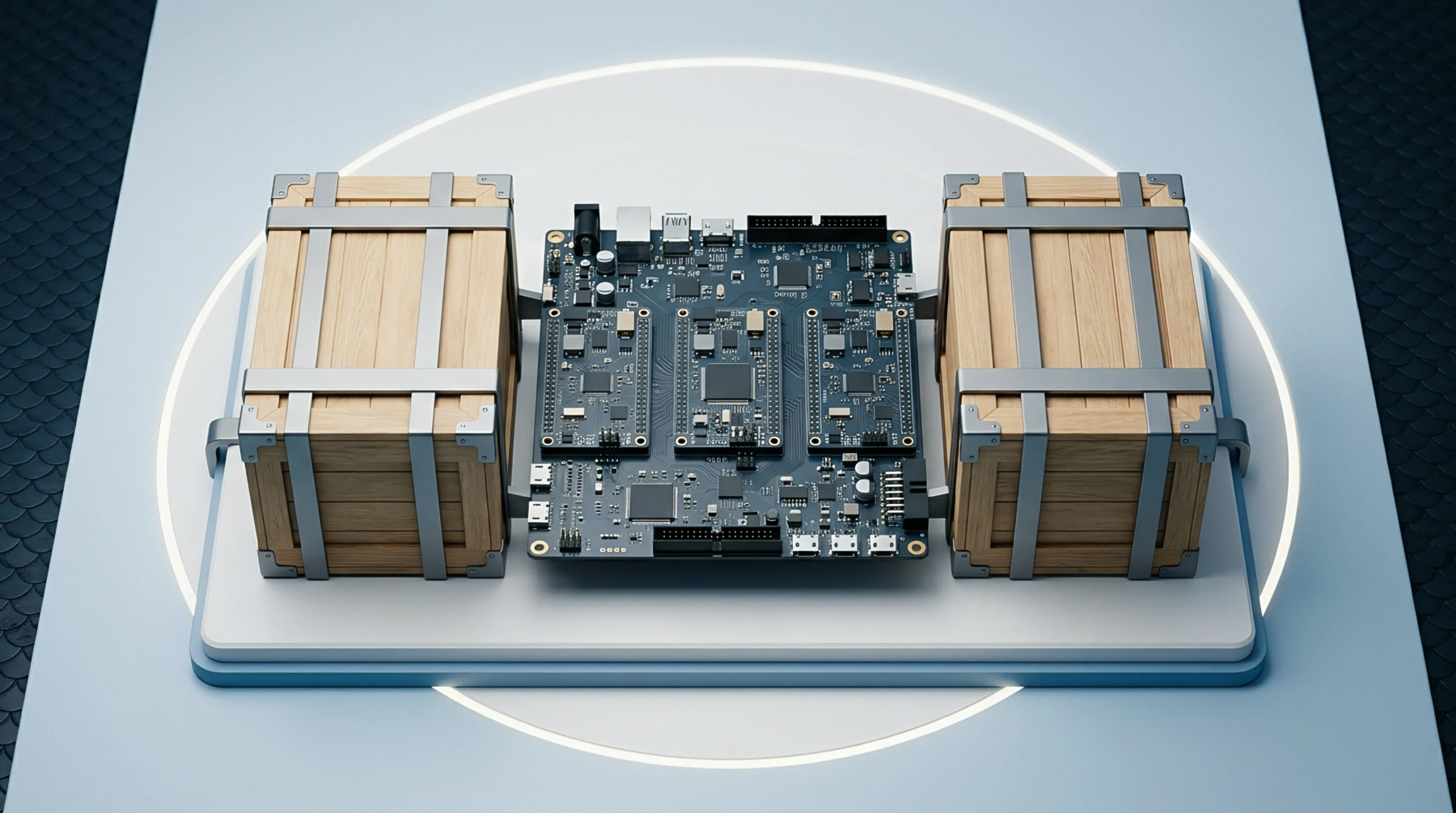
Unbundling NRE from unit pricing via explicit amortization schedules establishes clear buyout terms and secures total ownership of manufacturing design assets.

Resolving unmapped microcontroller errata during dual site handoffs requires signal mapping, containerized builds, and binary symbol escrow.

Evaluating source file completeness and build environment isolation guarantees secondary production autonomy through verified bit-deterministic firmware compilation.

Shared bootloader driver failures assign financial liability using static code lineage ratios, register mutation indices, and hardware lockup duration metrics.

Establishing automated test fixture criteria requires defining pin mechanics, software source rights, telemetry specs, and NRE asset transfer in module supply contracts.

Evaluating dual source transfer packages requires auditing source documentation completeness, matching physical substrate parameters, and tracking landed costs.
Expertise is a utility, not a secret. sentiention™ publishes its working knowledge as open reference: intelligence layer covering the materials it sources, the markets it enters, and the reference that serves both.