
Verifying Native Source Files in Design Transfer Packages
Verifying native CAD and firmware source files during design transfer prevents unlinked components, build failures, and costly manufacturing delays.
Verifying native CAD and firmware source files during design transfer prevents unlinked components, build failures, and costly manufacturing delays.

Splitting manufacturing allocations causes yield divergence from stencil, reflow, and ATE variances, driving landed cost premiums up through scrap and NRE.

Amortizing non-recurring engineering fees hides volume risk, while secondary supplier setup demands complete native design files and independent test jig duplication.

Optimizing surface coatings and flexure compliance resolves thermal hysteresis limits in high-preload kinematic mounts by preventing interfacial micro-slip.

Monolithic Ti-6Al-4V ELI bipod flexures isolate cryogenic optical mirrors from thermal deformation when precision wire EDM recast layers are chemically removed.

Calculating thermal joint expansion requires resolving member spring compliance against differential expansion growth to prevent high temperature yield and subzero load loss.

Volumetric residual covariance matrices isolate transport strain from frame manufacturing defects, enabling rapid target spatial alignment for airframe tooling.

Unified spatial metrology bundling combines multi-station optical observations into single coordinate frames to eliminate drift during tool transfers.

Delta qualification test matrices isolate process node change risks, balancing reduced life testing with targeted silicon stress vectors.

Enforcing pass-through liability for sub-tier material changes requires BOM freezes, 180-day PCN triggers, uncapped recall indemnities, and offshore arbitration.

Process change notices demand technical baseline audits, J-STD-046 notifications, and JESD47 qualification data to clear component changes without recall risk.

Recalibrate SMT control baselines after verified physical line stabilization to isolate assignable mechanical wear from true common-cause variance.

Automated boundary scan coverage verification across padless revisions uses IPC-2581 CAD parsing, BSDL fault modeling, and revision differential net scoring.

Vector synthesis for modified assemblies requires delta netlist verification, BSDL timing re-validation, and algorithmic backdrive current bounds.

Extracting structural defect models for modified surface mount nets maps parasitic RLC shifts to maintain signal integrity and structural test coverage.

Transferring analog blocks across secondary foundries requires mapping PCM covariance matrices to maintain targeted circuit yield distributions.

Managing multi-vendor RF design transfers requires native IPC-2581 data structures, synchronized change controls, and standardized ATE test files.

Validating PCB manufacturing files for wireless modules demands automated netlist audits, explicit impedance stackup definitions, and aperture rule checks.
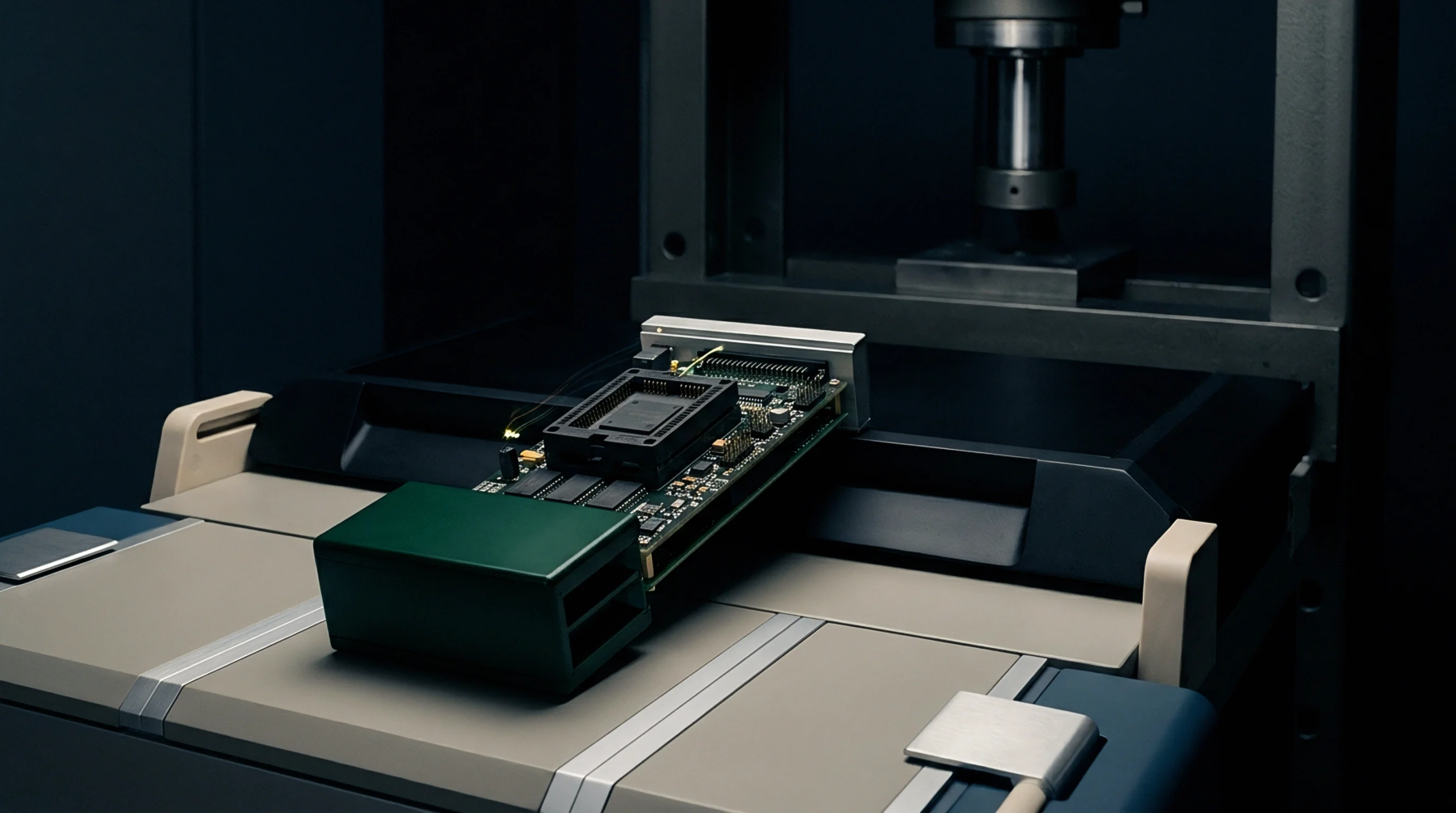
Verify ATE fixture escrow deposits by executing golden unit loopback tests on independent builds while enforcing pogo pin replacement at 100k cycles.

Decoupling HAL code requires isolating vendor driver calls behind abstract C interfaces, securing raw source files, and contracting explicit API acceptance tests.
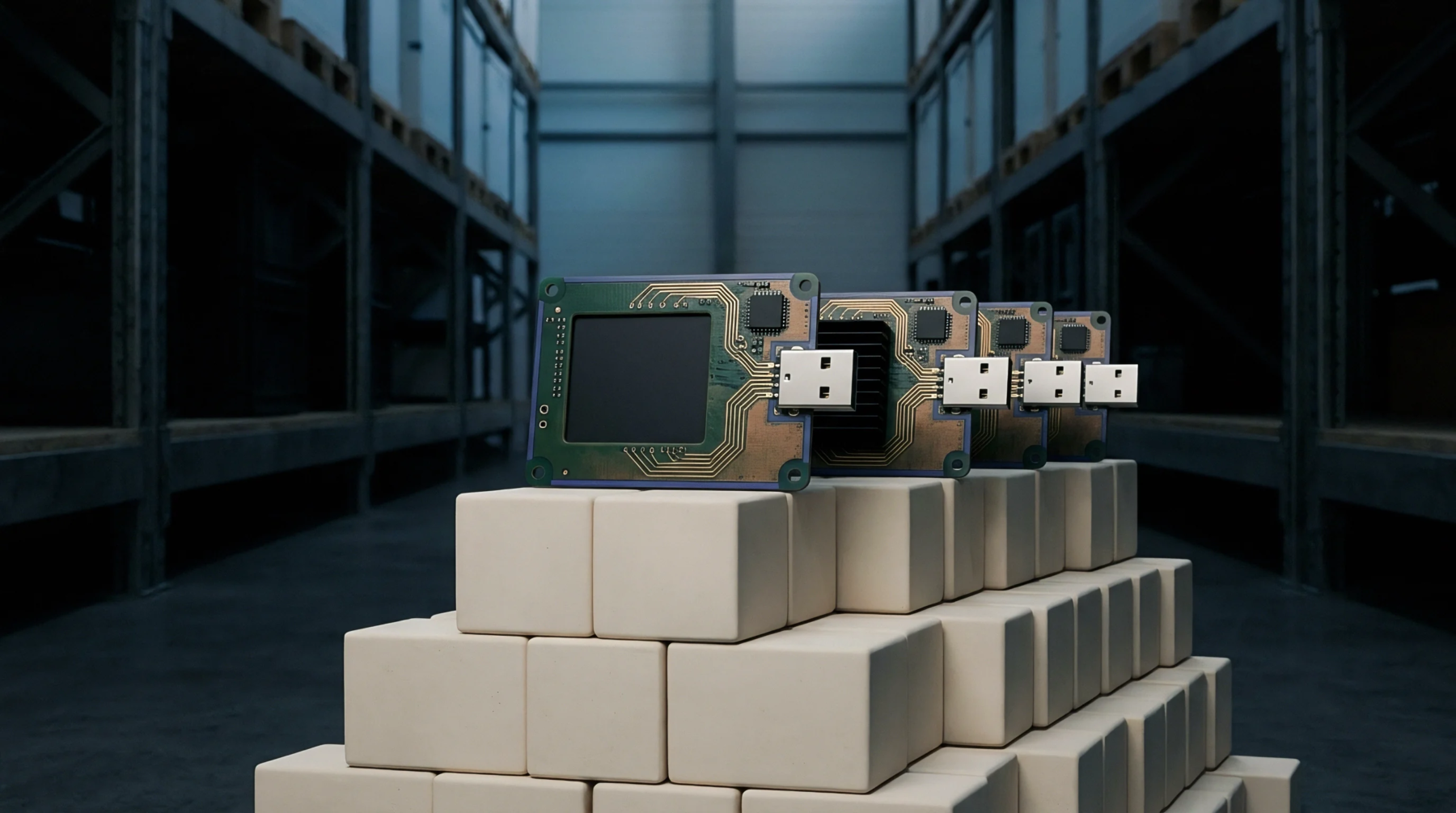
Unbundling module driver source code eliminates vendor lock-in, exposes silicon errata, and guarantees host OS porting control at predictable NRE costs.

Auditing physical asset wear and unfulfilled engineering deliverables offsets unamortized NRE claims during second-source semi-custom module transitions.

Isolating undocumented silicon errata requires bare-metal assembly isolation routines, stepping identification, and precise SOW change-control terms.

Auditing subcontractor fabrication assets and firmware sources requires clean-room compilation, vector validation, and milestone retainage enforcement.

Standardizing hermetic compiler containers and prefix mapping flags resolves binary non-determinism during secondary factory firmware bring-up qualification.

Pinned toolchain containers eliminate host environment drift, delivering bit-for-bit binary reproducible firmware builds for secondary contract manufacturing transfers.

A secondary firmware audit verifies build hermeticity, toolchain parity, third-party software licensing, secure provisioning routines, and binary patch parity.

Verify multi-core shared peripheral register isolation using hardware-in-the-loop stress testing under concurrent bus access and voltage variation conditions
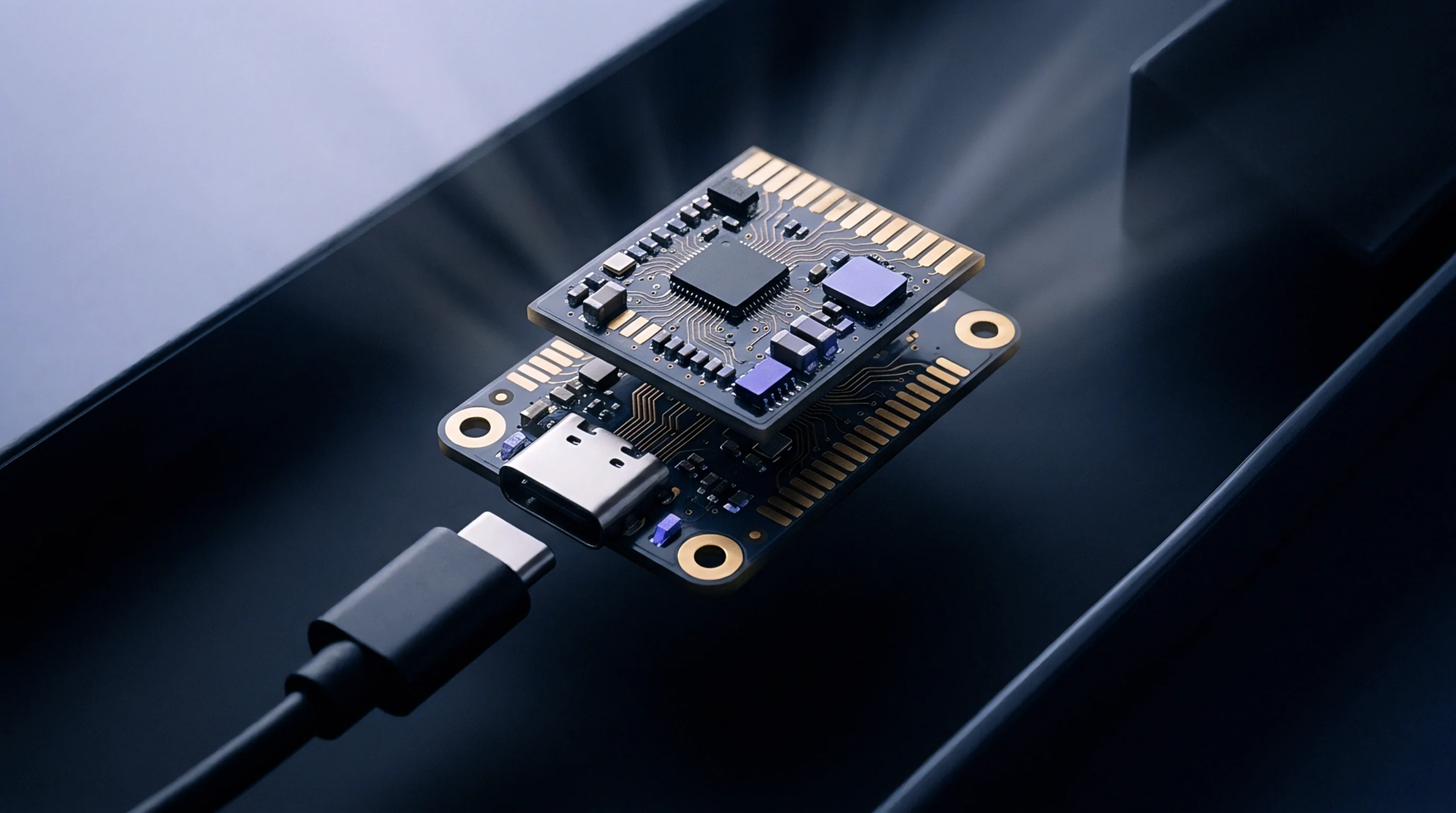
Shared bootloader driver fault allocation requires hardware register trace validation and mathematical probability modeling to attribute field firmware update failures.
Enforce hardware timestamping, API software modularity, and work-for-hire escrow clauses to resolve multi-factory telemetry and fixture IP boundaries.
Expertise is a utility, not a secret. sentiention™ publishes its working knowledge as open reference: intelligence layer covering the materials it sources, the markets it enters, and the reference that serves both.