
Subterranean Radio Propagation Path Loss and Cellular Module Coupling Mechanics
Subterranean cellular operation trades battery lifespan for reach through coverage enhancement modes that overcome soil attenuation and aperture slot coupling loss.
Subterranean cellular operation trades battery lifespan for reach through coverage enhancement modes that overcome soil attenuation and aperture slot coupling loss.
Thermal drift in crystal resonators forces wider MAC guardband windows, multiplying receiver active listen times and accelerating battery depletion.
Dynamic carrier steering roaming scans pull continuous multi-hundred milliamp current bursts that prematurely exhaust battery reserves without backoff tuning.

Autonomous firmware backoff algorithms convert continuous cellular roaming search loops into stateful sleep cycles, preserving battery life during network denial.

Modem attach retries at peak RF output drain battery packs rapidly; firmware must enforce exponential backoff and PSM sleep to preserve battery life.

Optimizing unattached transceiver backoff timers prevents severe passivation voltage dips and extends primary lithium battery service life past ten years.
Cross-border cell search draws peak currents up to 2.1 A during band scans, requiring conservative timer limits and profile rules to avoid battery brownout.

Cellular attachment current drops significantly when restricted band scanning and extended PSM timers prevent full-spectrum RF searches during initial registration.
Cellular IoT power management matches PSM and eDRX timers to application frequency while decoupling peak pulse currents from battery internal resistance.
Receiver preamble guard windows must equal twice absolute drift uncertainty plus preamble length minus baseband correlation time to maintain link budget.

Uncompensated 32kHz tuning-fork crystal thermal drift expands sub-GHz node receive guard windows, consuming battery capacity during sleeping cycles.

Integrating instantaneous frequency offset polynomials over sleep intervals expands receiver guard windows accurately without wasting battery capacity in low power nodes.

IMSI switching consumes fixed 1.5 to 18 Joules; executing switches becomes energy-efficient only when roaming timer backoffs exceed four attach retries.

Managing visited cellular network NAS overrides requires firmware that accepts assigned timers, prevents aggressive attach retries, and protects battery life.

Configuring T3412 and T3324 timers requires balancing network-assigned limits against terminal sleep current to ensure multi-year battery operational life.

Multi-transmitter host permissive changes require vector SAR summation or spatial separation when combined 1g SAR exceeds 1.6 W/kg and SPLSR exceeds 0.04.

Modular host integration triggers a Class II Permissive Change whenever trace redesigns, antenna swaps, or co-location alter SAR or radiated emissions profile.

FCC Part 15 modular rules allow pre-certified radios in host devices provided shielding, power regulation, labeling, and antenna limits match grant guidelines.

Predictive thermal state-space feedforward models compensate for rapid power amplifier self-heating, keeping crystal-less cellular RC oscillators within 3GPP frequency limits.

Eliminating external crystals reduces hardware costs but expands receiver guard windows, requiring tight thermal calibration loops to protect battery life.
Atomic layer deposition alumina-nitride passivation nanolaminates hold interface trap density below 10^11 cm^-2 eV^-1, preventing high-power RF current collapse.
Trap-rich polysilicon layers suppress parasitic surface conduction in high-resistivity silicon transceivers, lowering second harmonics below -85 dBc at +25 dBm RF input.

Phase noise margin calculations near arc welders demand adding reciprocal mixing degradation figures directly to local oscillator phase noise floors.

Heavy RF reflection forces extended guard intervals and capped spatial streams matched to channel rank, preventing throughput collapse from inter-symbol interference.

Selecting industrial Wi-Fi modules demands matching transmit power, receiver sensitivity, and hardware coexistence mechanisms to plant RF noise floor profiles.
Inter-carrier steering forces prolonged radio frequency scanning and timer renegotiations that accelerate battery passivation collapse and premature field failure.
Autonomous flash scrubbing telemetry prevents thermal bit flips in field radios by scheduling background memory rewrites during radio sleep windows.
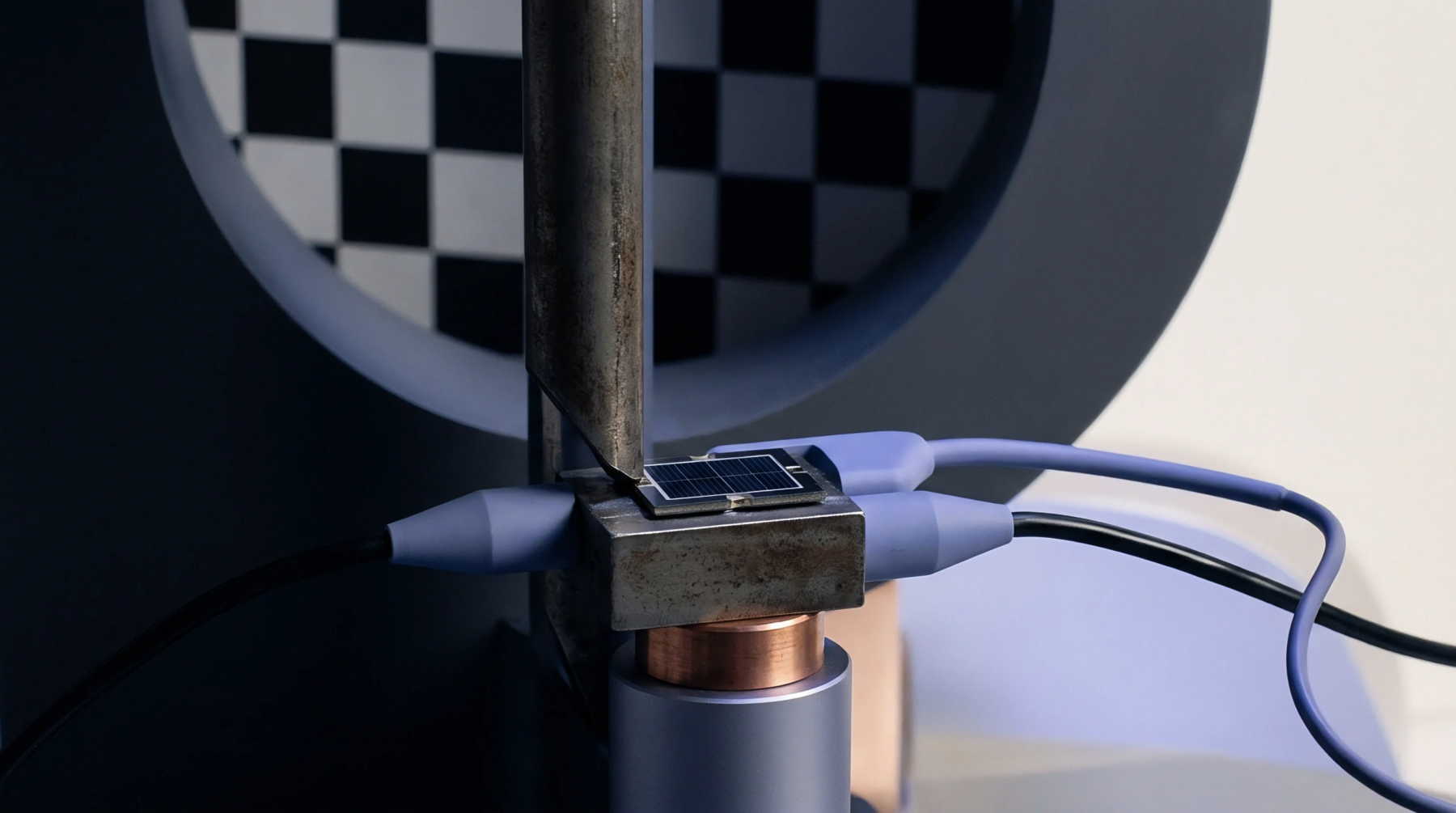
Static 1.1 eV Arrhenius acceleration overestimates cycled industrial flash data retention by up to 940 times under low-temperature trap-assisted leakage.

High ambient heat accelerates non-volatile memory charge leakage through thermionic emission and trap tunneling, degrading stored radio calibration data over time.

Dynamic Time Averaged Radiated Power Control replaces static power attenuation by dynamically allocating energy across rolling windows to maintain compliance.
Expertise is a utility, not a secret. sentiention™ publishes its working knowledge as open reference: intelligence layer covering the materials it sources, the markets it enters, and the reference that serves both.