
Sensor Hardware Integration for Dynamic Thermal Gradient Correction in Metrology
Dynamic thermal gradient correction requires low-impedance interface shims, pulsed excitation front ends, and owned firmware to eliminate spatial phase lag.
Dynamic thermal gradient correction requires low-impedance interface shims, pulsed excitation front ends, and owned firmware to eliminate spatial phase lag.

Warranty recovery across module tiers requires decoupling host board electrical and mechanical stresses from component-level manufacturing defects using IPC standards.
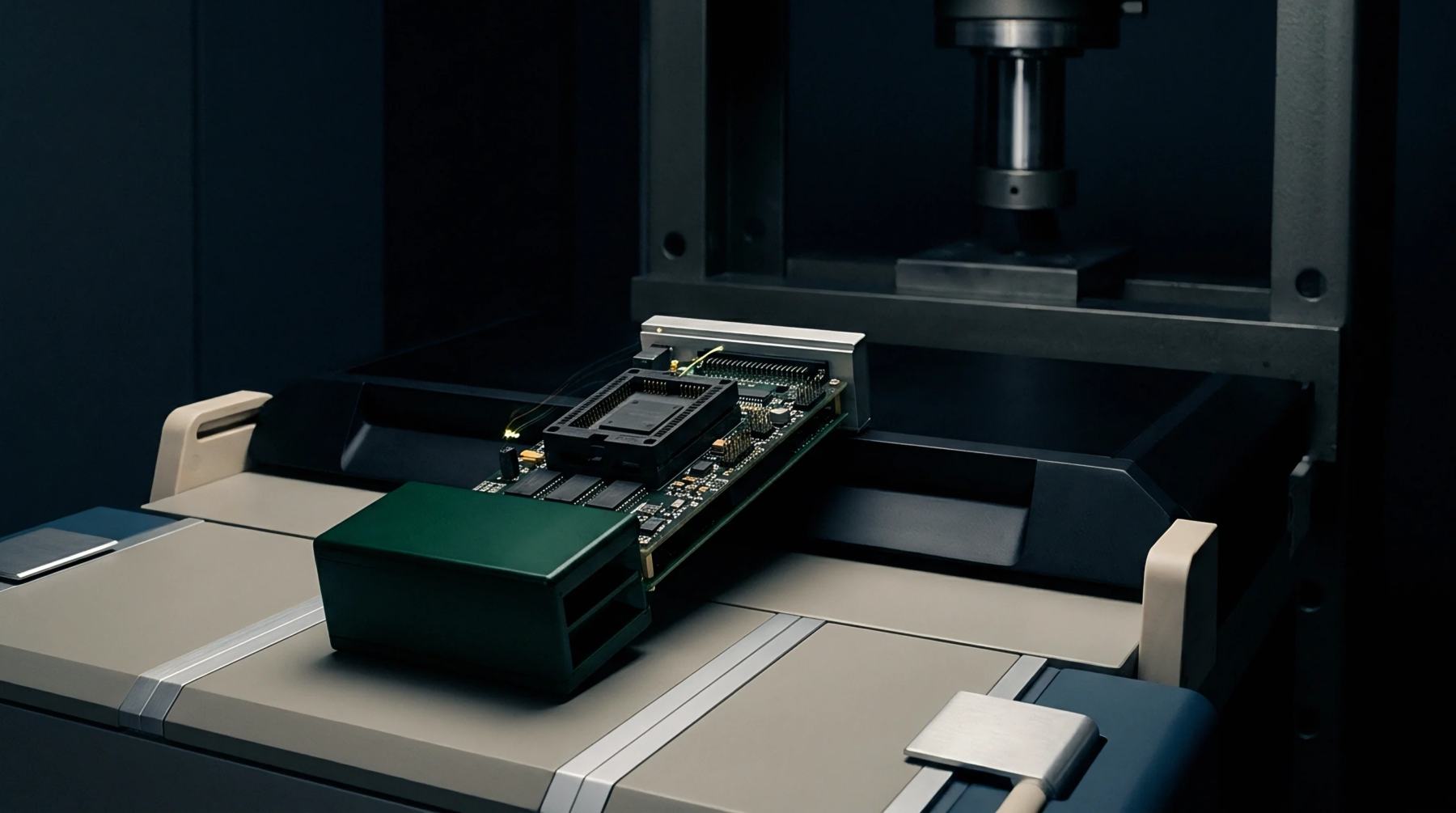
Hardware telemetry logging integrity requires physical root-of-trust silicon, bus-level sensor attestation, and immutable cryptographic chaining.

Optimize semi-custom module pinouts by interleaving ground lines and isolating power planes to prevent crosstalk and maintain target return path integrity.

Allocate dedicated return pins for high-speed lines to minimize loop inductance, ground bounce, and costly tooling revisions across custom interfaces.

Clear register ownership and explicit thermal calibration boundaries prevent field liability disputes and performance degradation in semi-custom board builds.

Modeling parasitic inductance during optical die shrink transitions prevents high-frequency peaking, preserves eye linearity, and controls module re-tooling costs.

Backside power grids preserve sub-5nm transient margins by cutting rail resistance, but signoff demands vector-based AC simulation to prevent silent field drops.

Resolve microcontroller process variations by mandating multi-corner IBIS files, bench correlation gates, and re-spin liability terms in sourcing dossiers.

Package redistribution channel loss scales with dielectric tangent and edge roughness, requiring dual-damascene copper polishing and low-k organic passivation.

Inline thermal drift qualification for AOI cells demands gantry growth mapping, illuminator heat isolation, and calibrated glass target verification.

Kinematic mount material selection for dynamic thermal gradients requires balancing thermal diffusivity against expansion coefficients to prevent contact micro-slip.

Resolving multi-sensor triangulation cross-coupling under vibration requires dynamic off-diagonal covariance matrix updating derived from workpiece structural mode shapes.

Rigid kinematic isolation, deterministic clamping vectors, and stable optical projection are mandatory to prevent fixture-induced calibration drift on the line.

Dual sourcing models evaluate upfront duplicate engineering investments and unit price variance against probability-weighted disruption costs over multi-year horizons.

Dual sourcing under compressed product cycles requires qualification capital payback within 25 percent of remaining sales life at positive blended margins.

Secondary manufacturing bring up valuation hinges on itemized fixture tooling, defined debug rates, and explicit scrap liability caps before line transfer.

Electronics design transfer valuation depends on reproducible native CAD files, uncompiled firmware source trees, and functional test fixtures, not manufacturing outputs.

Managing multi-site builds across silicon revisions requires containerized deterministic build pipelines, explicit hardware abstraction layers, and physical HIL verification test benches.
Structure multi-factory tooling amortization with audited cycle counters, separate NRE schedules per plant, and direct title retention to prevent double-charging.

Verifying firmware escrow deposits for secondary sourcing demands deterministic containerized compilation and physical bench test execution on target silicon.
Unbundled dual sourcing demands active OEM ownership of reel-level PCN tracking to prevent mismatched component steppings from breaking alternate SMT layouts.

Evaluating embedded module transfer packages requires auditing EDA source files, firmware build reproducibility, test jig code, and explicit IP assignment clauses.

Unbundling non-recurring engineering fees isolates hardware design assets, secures native CAD source files, and establishes transparent unit pricing.

Hardware trace profiling protocols isolate interconnect arbitration faults by capturing cycle-accurate bus state packets via embedded cross-trigger monitors.

Mitigating microcontroller peripheral errata requires encapsulated driver wrappers with atomic register access, memory barriers, and automated recovery loops.

Formal cooperative game models allocate shared SRAM fault liability across concurrent bus masters by deriving Shapley values from on-chip trace snoop logs.
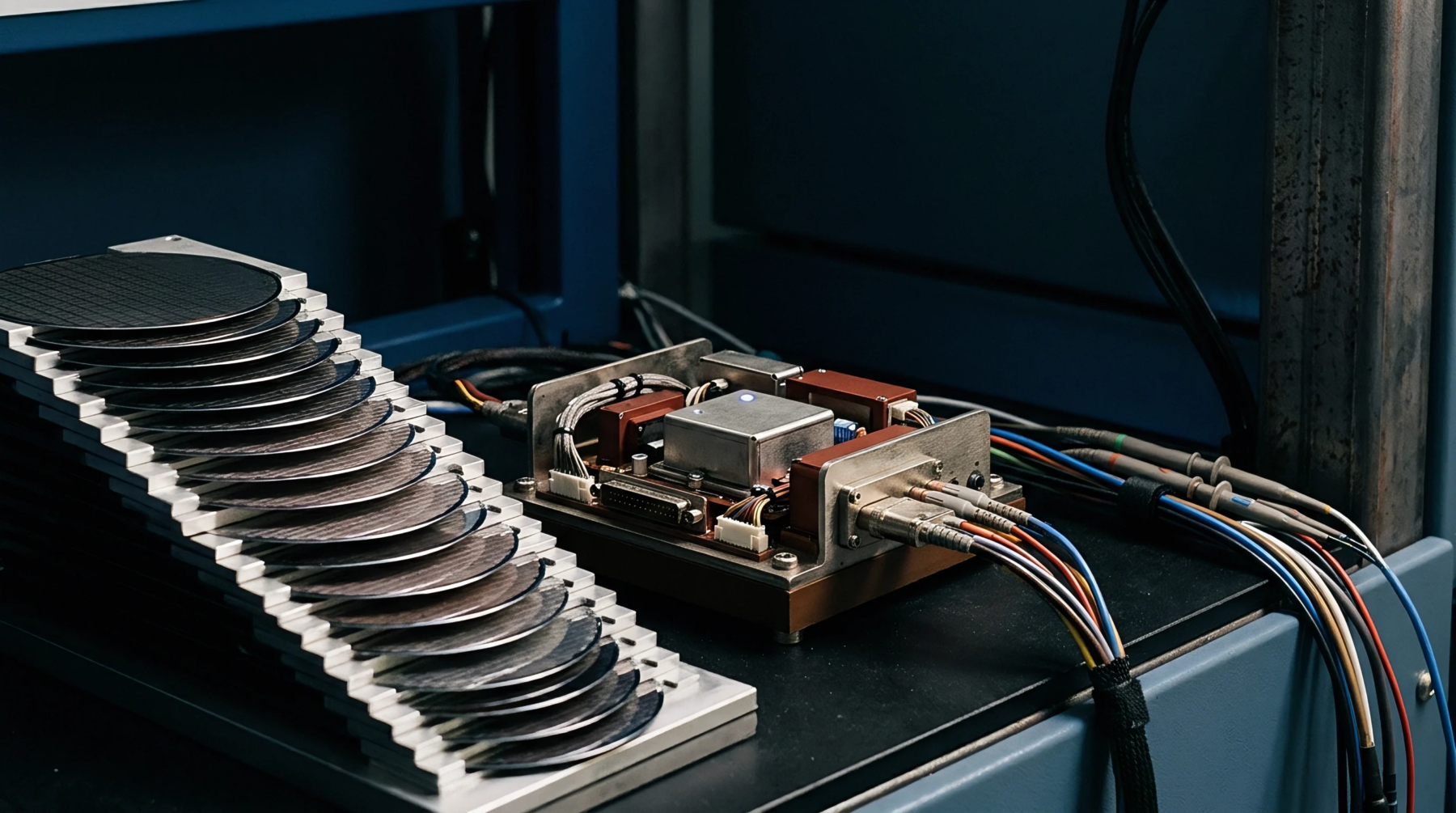
Mathematical liability apportionment in multi-core automotive firmware relies on Shapley value models and hardware trace bus logs to split cost exposure.

Arbitrating silent silicon errata requires isolated hardware signal traces, stack transaction logs, and contract clauses linking firmware defects to chip steppings.

Dynamic dual-sourcing tooling allocation mitigates tariff volatility by balancing fixed asset amortisation against stochastic landed cost triggers across trade corridors.
Expertise is a utility, not a secret. sentiention™ publishes its working knowledge as open reference: intelligence layer covering the materials it sources, the markets it enters, and the reference that serves both.